AI Overview search results don’t appear for every query, and when they do, the pages cited often don’t match what you’d expect from traditional rank tracking. That disconnect makes it hard to judge whether your content is actually visible in overviews or just eligible for them. The difference between appearance, eligibility, and citation matters more than most reporting accounts for. CMAX works with enterprise teams sorting through exactly these signals at scale.
AI Overviews Appear Only When Google Finds Added Value
Where AI Overviews Appear
AI Overviews appear inside the standard Google Search results page, sitting alongside the blue links, knowledge panels, and other SERP features you already track. They do not replace the results page with a separate AI-only experience. When present, an AI Overview search result sits alongside standard blue links and occupies a position within the same layout, which means the rest of the SERP remains visible and continues to function as it normally would.
Understanding what is AI search in the context of Google’s results page starts with how the feature coexists with classic blue links. The AI Overview is one SERP feature Google layers onto classic results only when it judges synthesis to add value beyond what standard links already provide.
Eligibility Does Not Guarantee Serving
Indexing and snippet eligibility are the baseline, but they do not trigger an AI Overview on their own. Google runs two separate decisions for every query: first, whether that query benefits from a synthesised answer at all; second, which sources best support that answer if one is warranted.
A page can pass every technical eligibility check and still play no visible role in an Overview, because Google may judge that the query is already resolved cleanly by classic results. The decision to surface an Overview is made at the query level, not the page level. That distinction shapes how visibility should be measured and what conclusions can reasonably be drawn when an Overview does or does not appear for a given search.
Query Characteristics Shape When an AI Overview May Appear
Queries More Likely to Trigger
An AI Overview search response is more likely when the query asks Google to compare options, explain a topic, or work through a multi-step decision. These searches require pulling several pieces of information together into a single, coherent answer, and that’s where a synthesised layer adds something classic results alone may not. When evaluating AI Overview search triggers, it helps to understand how AI search broadly handles queries that require combining multiple pieces of information into a single synthesised answer.
A navigational query, say, searching for a specific brand or website, rarely triggers one. The intent is retrieval, and a direct result handles it. The AI search questions most likely to produce an overview are those requiring comparison, explanation, or multi-step reasoning, where the answer depends on weighing multiple factors.
When AI Overviews Stay Absent
When the existing SERP already resolves the intent cleanly, Google has less reason to add a synthesised layer. A direct fact, a strong website match, or a local pack can each satisfy the query without synthesis.
This matters for how you read SERP data. The absence of an AI Overview for a given query is often a signal that classic results are doing the job, not that something is broken or missing from the page. A query that returns a fact box or a clear top result may never trigger an Overview, regardless of how well the supporting content is structured. The feature appears when it adds value; when it doesn’t, it stays out of the way.
Evidence Shows Appearance and Citation Are Separate Systems
Google’s Baseline Requirements
Google’s public guidance positions AI Overviews as an added Search feature that activates when it improves usefulness beyond what classic results already deliver.[1] The baseline for supporting an AI Overview is the same as for any other Search feature: normal indexing and snippet eligibility.[1] There is no separate markup, no AI Overview schema, and no submission path. If a page meets standard indexing requirements and is snippet-eligible, it is technically in the pool. Whether Google draws from it is a separate decision entirely. Treating AI search optimisation as a distinct discipline starts here, because the eligibility threshold is identical to standard SEO.
Citation and Ranking Differ
AI Overview citations do not map neatly to traditional ranking positions. A page’s AI ranking in the synthesised answer does not mirror its position in standard results. That gap is significant for measurement: teams relying on rank tracking alone will miss citation activity happening outside their tracked positions. This is why AI Overview search visibility should not be judged from rank tracking alone. AI Overview visibility requires its own observation layer, separate from standard rank data.
Research into AI Overview search behaviour confirms that AI search Google operates citation and ranking as distinct systems, meaning a page can support a synthesised answer without holding a prominent classic ranking position. Effective AI search engine optimisation accounts for this separation by tracking citations independently of classic SERP positions.
Long-Tail Page Proof Point
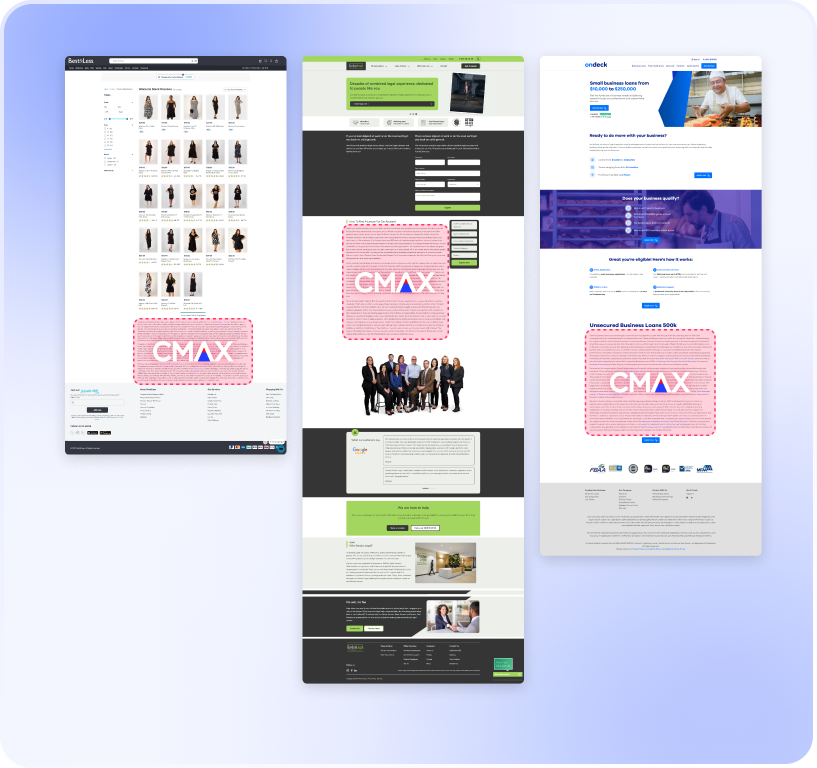
The citation pool may be wider than a head-term ranking view suggests. In one CMAX engagement, a B2B omnichannel hospitality retailer deployed 5,000 long-tail product pages and reached $1M+ per month in incremental SEO revenue within 8 months. The same indexed-page depth that drove that organic result also expands the surface area available to AI Overview citation systems, which may draw from a broader set of relevant pages than a narrow ranking report captures.
A side-by-side SERP check makes the trigger distinction clearer.
Compare Nuanced and Direct Queries
Two closely related searches can produce noticeably different SERP layouts. Take a query like “what should I consider when choosing a business bank account” versus “best business bank account.” The first asks Google to weigh multiple factors across a decision, a strong candidate for an AI Overview. The second points toward a specific destination or list, which classic results may resolve cleanly on their own.
The wording shift is small. The structural difference in what Google needs to do is significant. One query may produce an AI Overview search block while a near-identical query does not. One query calls for synthesis; the other calls for retrieval. That distinction, more than any single keyword, shapes whether an AI Overview appears at all. A visual lookup, such as an AI image search, may sometimes trigger a different SERP layout, illustrating that query type can shape which features appear.
Running a side-by-side SERP check for AI Overview search queries on the Google AI Search engine is one of the clearest ways to observe how the same topic can produce different result layouts depending on whether Google judges synthesis to be additive.
Why Supporting Links Change
Supporting links within an AI Overview can shift between closely related searches, and that variability is by design. Google may probe adjacent subqueries, weigh different evidence sets, and build a fresh overview for that specific results context rather than pulling from a fixed citation pool.
A page cited for one version of a query may not appear for a slightly reworded version, even when both queries seem to cover the same topic. This means a single SERP check at a single point in time gives an incomplete picture. The practical response is to run repeat checks across query variants and record what appears each time, rather than treating one observation as a stable baseline.
Clear Expectations Prevent False Assumptions About Visibility
AI Overview Expectations Checklist
AI Overview presence in a given search does not confirm that every indexed, snippet-eligible, or ranking page will be cited. Treat it as one feature layered onto the SERP, operating alongside classic results rather than replacing them.
Before drawing conclusions about visibility, run through these checks:
Query type. Does the query ask for an explanation, a comparison, or a multi-step decision? Those are the cases where synthesis is more likely to add value. A navigational or single-fact query may produce no Overview at all.
Classic result sufficiency. Does the existing SERP already resolve the intent cleanly through a fact box, a strong website match, or a local pack? If it does, Google has less reason to add a synthesised layer.
Indexing and snippet eligibility. A page that is not indexed or is blocked from snippet generation cannot support citation. Confirm eligibility before assessing why a page does or does not appear in an Overview.
Setting accurate expectations around AI Overview search visibility is a useful extension of broader web search optimisation practice, since both disciplines require separating indexing eligibility from actual feature appearance.
Live SERP check. AI Overview presence can differ between closely related queries even when the wording shifts by a single word. Check the actual results page for the exact query in question.
Citations versus rankings. A cited page may rank outside the standard top results, or may not appear in classic rankings at all for that query. Citation and ranking are separate signals and should be tracked separately.
Following these checks reduces common AI Overview mistakes such as conflating citation with ranking or assuming every indexed page will appear.
Check repeat searches over time, because Google can reassess the same query context and change whether an AI Overview appears.
Separate the Visibility Signals
Search visibility for AI Overviews is not a single metric. Split the assessment into four distinct checks: does the feature appear for the query at all, which URLs are cited when it does, is the page indexed and snippet-eligible, and where does it rank in classic results.
Each signal can move independently. A page may gain a citation without improving its classic ranking position. An AI Overview may disappear for a query that previously triggered one, without any change to the underlying page. Classic rankings can shift while citation status stays flat. Treating any one signal as a proxy for the others produces a misleading read.
Repeat the checks across time. Google can reassess the same query context and serve a different result on a later visit, which means a single observation is not a reliable baseline. Run checks across multiple sessions before drawing conclusions about whether an AI Overview is consistently present or absent for a given query. Consider using an AI search visibility checker to help automate repeat SERP checks, flagging when a feature appears or drops between sessions so that manual spot-checking is not the only method in play.
Tracking AI Overview search presence across repeat checks is a necessary first step before exploring how to rank in AI overviews, because appearance and citation signals must be measured separately before any content adjustments are considered.
The four-signal split keeps the diagnosis clean. If the feature is absent, the question is whether Google finds synthesis useful for that query at all. If the feature appears but the page is not cited, the question shifts to indexing, snippet eligibility, and content fit. If the page is cited but ranks poorly in classic results, that confirms citation and ranking operate as separate systems. Work the signals in sequence rather than collapsing them into a single visibility score. Splitting these four checks is the clearest way to assess AI Overview search presence over time.
Frequently Asked Questions (FAQ)
Why isn’t my content appearing in AI Overviews?
Three separate issues can explain absence. First, Google may decide the query doesn’t need a synthesised answer at all. Second, even when an overview does appear, another source may fit the assembled answer more precisely. Third, the page itself may not be sufficiently indexable or snippet-eligible to support citation. Ruling out each cause in sequence is more productive than treating absence as a single problem.
How do I track AI Overview visibility?
Record whether the feature appears for each priority query, then log which URLs are cited when it does. Compare those observations against standard ranking and indexing data across repeat checks. Movement in one signal won’t automatically explain the others, so keeping the four checks separate, feature presence, cited URLs, indexing status, classic rank, gives you a cleaner picture over time.
How do I get cited in AI Overviews?
There’s no separate submission path. The practical focus is publishing clearly structured, indexable pages that answer specific query variants in language Google can recognise as useful supporting evidence.
When researching AI Overview search, some practitioners encounter the term aio SEO, which is not an official Google concept but generally refers to the practice of structuring and indexing pages so they may support AI Overview citations.
Why is AI Overview not showing up?
Google may judge the query fully answered by classic results, a local pack, or a direct fact, with no synthesised layer needed.
Can you turn off Google AI Overviews?
Searchers generally can’t switch off AI Overviews globally. The more useful question is which queries trigger them and how their presence reshapes the surrounding SERP.
Most Search Traffic Hides in the Queries You Haven’t Written For
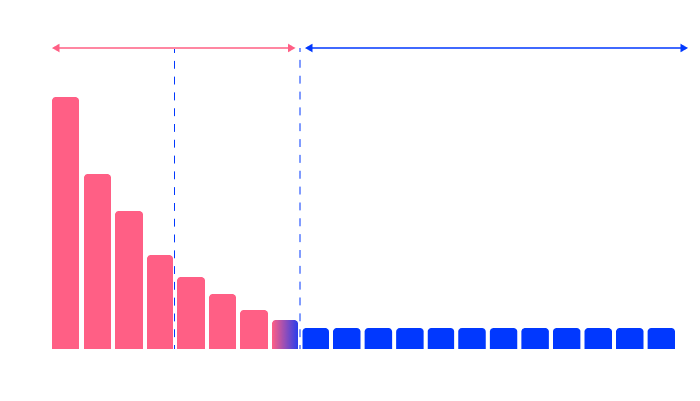
Over 90% of search demand sits in long-tail keywords, the specific, high-intent phrases your team doesn’t have the bandwidth to cover manually.
CMAX is an agentic SEO platform that deploys and continuously updates content across thousands of those queries with just two lines of code. Our AI-powered agents target the long tail at a scale and speed traditional workflows can’t match, so you capture traffic that competitors leave on the table. Results typically start showing within six weeks.
When features like AI Overviews reshape how search results appear, broad coverage of relevant long-tail queries gives your content more opportunities to surface where it matters.
References [1] – https://developers.google.com/search/docs/fundamentals/ai-optimization-guide
Author
Jeremy Tang
Founder and CEO of CMAX
Jeremy Tang is the Founder and CEO of CMAX. With over 2 decades of experience in business consulting and digital marketing, he has successfully driven seven startup businesses, six of which achieved $1 million in revenue from zero in less than 16 months, 5 of which grew to multi-million dollar a year ventures without any external funding. Jeremy's expertise lies in streamlining business processes through technology and leveraging digital (in particular SEO) for business growth. He resides in Australia, travels extensively, and draws inspiration from his global experiences.