The phrase Google AI Search engine suggests Google replaced its search system with something new. It didn’t. Google added AI features on top of the same crawling, indexing, and ranking infrastructure it already runs. The difference is in how answers get assembled and displayed, not in whether traditional search results still exist. That distinction matters if you’re responsible for organic visibility, because what changed (presentation) and what stayed the same (retrieval) affect strategy in different ways. CMAX works within this evolving search landscape, helping teams track and respond to how AI reshapes result formats.
Google Search now uses AI, but it has not become a separate AI engine.
Search retrieval still comes first.
The phrase Google AI Search engine suggests a standalone system, but Google still runs Search the same way it always has. It crawls, indexes, retrieves, and ranks pages through the same Search infrastructure it has relied on for years. AI features sit on top of that system. When Google generates an AI-powered answer, it pulls from information surfaced through existing retrieval and ranking processes, not from a separate AI-built index of the web. The underlying pipeline has not been replaced.
The Google AI Search engine is often described as a fundamental shift, but AI search is better understood as a set of generative features layered onto the same crawl-and-index infrastructure Google has always used.
Presentation changed more than retrieval.
The material change is on the results page itself. Google can now synthesise an answer before or alongside the standard blue links, compressing information from multiple indexed pages into a single displayed response. That synthesis still originates from indexed web content. A separate public web index does not power it. What changed is the layer between retrieval and the reader: Google now has the ability to assemble and present information rather than simply list the pages that contain it. The source material is the same; the packaging is different.
AI Overviews and AI Mode change how answers are assembled.
AI Overviews vs AI Mode.
AI Overviews and AI Mode are distinct features, and conflating them leads to real confusion about how Google’s AI search engine behaves. What people call a Google AI Search engine is really these features working on top of retrieval.
AI Overviews appear directly on the main results page. Google synthesises a compressed answer from indexed sources and places it above or alongside organic links. The user gets a summary without leaving the results page, though the cited sources remain accessible. The introduction of AI Overview as a synthesised answer layer has meaningfully changed how information is presented at the top of the page.
AI Mode works differently. It supports a conversational prompt chain where each follow-up can narrow the scope, expand the angle, or redirect the search entirely. Rather than a single synthesised answer, the user moves through a sequence of responses shaped by how the conversation develops. Each turn can pull from a different set of retrieved pages.
Query fan-out broadens retrieval.
Query fan-out can help explain why two near-identical prompts can return different sources, different framing, or different cited pages.
When Google processes a query, fan-out can extend retrieval beyond the exact words used. It pulls in pages related to the query’s meaning, context, and likely intent. A prompt phrased one way may retrieve different material than the same question phrased slightly differently, because Google is interpreting what the user likely needs, not just matching strings.
For anyone tracking which pages get cited in AI-generated answers, this has a direct implication: citation patterns can shift across sessions even when the underlying question stays the same.
Source trust depends on checking both the summary and the links
AI features use different patterns
For practitioners focused on AI search engine optimisation, source trust starts with recognising that an AI-generated summary and the organic blue-link list below it are not the same output. They can draw from overlapping sources, but the selection logic differs. A page that ranks in position one for a query may not appear in the AI Overview at all, while a page sitting further down the organic list may be cited prominently in the synthesised answer.
Treat the summary as a separately assembled layer. It reflects what Google’s AI chose to pull together for that specific prompt, not a reordering of the standard ranked results. Assuming the two lists mirror each other can lead to misreading which sources actually shaped the answer you’re reading.
The Google AI Search engine assembles summaries from multiple cited sources rather than a single top-ranked page, so readers curious about how to rank in AI overviews should first understand that inclusion depends on retrieval patterns that do not map one-for-one onto traditional organic positions.
Verify summaries against cited pages
The practical check is straightforward: read the summary’s main claims, then open the cited pages and compare. This step is central to sound search engine optimisation Google practitioners can rely on, especially when the answer blends several sources, compresses caveats, or omits conditions that the original source treated as significant.
A synthesised answer can accurately represent one part of a source while leaving out the qualifications that sit two paragraphs later. When the query touches anything with exceptions, thresholds, or context-dependent conclusions, the cited pages carry detail the summary may not. Click through before acting on the answer. What separates effective AI search optimisation from guesswork is this habit of verifying cited material rather than accepting the summary at face value. The same discipline applies to AI engine optimisation workflows, where confirming source accuracy feeds back into content strategy decisions.
A Numbered Correction List Clarifies What Google’s AI Search Changes, and What It Doesn’t
AI Search Changes vs Constants
A few persistent misconceptions about the Google AI Search engine are worth correcting directly.
- Google’s AI search changes how answers are assembled and displayed. Crawling, indexing, ranking, and linked source pages remain part of how results are produced. The underlying retrieval infrastructure has not been removed or bypassed.
- Google has added AI features to Search. It has not replaced Search with a separate public search engine. The same index that powers standard results also powers AI-generated responses.
- AI Overviews are a response format inside Search. They are not a standalone index of the web. The synthesis draws from indexed content, then presents it differently on the page.[1]
- AI Mode changes how a search continues. Each follow-up prompt can reshape what Google retrieves and how it frames the next answer, which means the conversation itself influences what surfaces.
- Standard organic links still matter. They remain the clearest route to source pages and can supply material for AI-generated responses. Visibility in standard results and visibility in AI features are related, though not identical.
- Similar questions can return different summaries. Expanded retrieval interprets wording, context, and follow-up intent, so near-identical prompts may surface different sources or different framing.
The term Google AI Search engine describes added capabilities, not a replacement system. AI search Google covers how those generative answer formats interact with the organic results that have always anchored the page.
The core distinction: presentation has changed significantly; the retrieval foundation has not.
An AI summary is not the same as source verification, so important claims should be checked against the cited pages.
Rankings help, not guarantee inclusion.
A strong organic ranking improves a page’s chances of being pulled into an AI-generated answer, but it does not lock in that outcome.[1] Google’s AI features assemble responses by drawing on retrieved content that fits the query’s meaning and context at that moment. A page can rank in position one for a given term and still be absent from the AI Overview if another source covers a specific angle of the query more directly, or if the synthesised answer draws from a combination of lower-ranked pages instead.
That gap between ranking and citation has a practical consequence. Even when a Google AI Search engine summary looks complete, the cited pages remain the verification layer. Readers who rely on an AI summary without opening the cited sources are working from an assembled layer, not a direct read of the original material. Summaries can compress caveats, blend claims from several pages, or omit conditions that the source document treats as significant. The cited links are the check, not a formality.
Knowing how the Google AI Search engine surfaces and cites content is a useful starting point before exploring aio SEO as a discipline focused on improving a page’s chances of appearing within AI-generated responses. Tools described as an AI detector – Google search layer attempt to flag machine-written text, but the more reliable check remains comparing the summary against its cited sources.
For any answer where precision matters, the reliable approach is to open the cited pages and compare their actual content against what the summary states. Where the summary blends multiple sources, check each one. Where a cited page covers only part of the answer, treat the uncited portion as unverified. A high-ranking page that does not appear in the AI response is still accessible through the standard results list and may carry detail the summary left out.
Search behaviour now requires comparing retrieval with presentation.
Compare one query across formats.
Run the same question through Google and you may get three different outputs: a standard blue-link results page, an AI Overview that synthesises an answer above those links, or an AI Mode session where each follow-up prompt reshapes what Google retrieves next. The underlying query is identical. What changes is how Google chose to package the retrieved information for that surface, at that moment. Treating those outputs as equivalent leads to gaps, what appeared in the AI Overview may not reflect the full set of pages Google ranked, and what AI Mode surfaces in a follow-up thread may differ again. Treating each query as one of many AI search questions helps frame the comparison habit.
The Google AI Search engine packages the same retrieved content in different ways depending on the query, which is why comparing a standard results page with AI Overview search output can reveal how presentation choices diverge from underlying retrieval.
Compare summaries, links, and results.
A practical habit: read the AI summary, open the cited source pages, and scan the standard results list before acting on any answer where nuance, exceptions, or precise wording carry weight. The summary compresses; the source pages do not. A cited page may support one specific claim in the summary without covering the full scope of the assembled answer. The standard results list can surface pages that the AI summary did not cite at all, and those pages may contain the qualifying detail the summary left out. For anything consequential, the three-step check, summary, cited sources, organic list, takes under two minutes and closes the gap between what Google retrieved and what it chose to show.
Frequently Asked Questions (FAQ)
How do AI Overviews impact SEO and rankings?
AI Overviews can shift where attention lands on the results page. A synthesised answer placed above organic links may reduce clicks to individual pages, but traditional rankings still carry weight. Source pages remain part of how users click through to verify detail, and Google can draw on those same pages to ground its AI-generated responses.
What most people mean by Google AI Search engine is the set of AI features now layered into Google Search results. That shift in how answers are assembled and displayed makes it worth revisiting the fundamentals of web search optimisation to understand which signals still influence whether a page is retrieved and cited.
Can I track AI Overview performance in Google Search Console?
Search Console reports aggregate search performance, but it does not cleanly separate AI Overview visibility and clicks from other Google Search surfaces. That gap makes feature-level attribution difficult, so performance shifts tied specifically to AI Overviews can be hard to isolate in the data.
How does Google AI Overview select and link content?
AI Overviews can pull from several pages to assemble a single answer, then attach citations to specific parts of that synthesis. A linked page may support one sentence in the summary without covering the full response, so citation does not mean the source was used end to end.
How does AI Overview selection differ from traditional organic search?
Traditional organic search ranks and displays individual pages in sequence. AI Overviews can combine information from multiple sources into one response, then attach citations based on the assembled answer rather than on a single ranked document.
How does search intent affect AI Overview inclusion?
Search intent influences whether Google shows a synthesised answer at all. Queries that invite direct explanation are more likely to trigger an AI Overview, while others are better served by standard result listings, source comparison, or task-specific pages. Because is Google AI free is a common follow-up, it is worth noting that these AI features currently appear within standard Google Search at no additional cost to the user.
Google’s Search Results Changed, CMAX Changed With Them
Most SEO strategies were built for ten blue links. That model is shrinking.
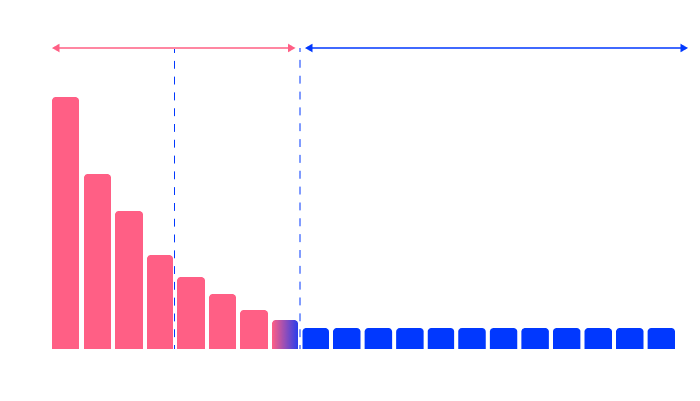
As Google layers AI Overviews and AI Mode into search, the way content gets retrieved, synthesised, and cited is shifting fast. Over 90% of search and AI demand now sits in long-tail queries, the thousands of specific phrases your customers actually type. CMAX is an agentic SEO platform built to target those queries at a scale and speed manual teams can’t match, deploying and constantly updating content with just two lines of code.
If Google’s AI search engine reshapes how answers surface, your content strategy should already account for it.
References [1] – https://developers.google.com/search/docs/fundamentals/ai-optimization-guide
Author
Jeremy Tang
Founder and CEO of CMAX
Jeremy Tang is the Founder and CEO of CMAX. With over 2 decades of experience in business consulting and digital marketing, he has successfully driven seven startup businesses, six of which achieved $1 million in revenue from zero in less than 16 months, 5 of which grew to multi-million dollar a year ventures without any external funding. Jeremy's expertise lies in streamlining business processes through technology and leveraging digital (in particular SEO) for business growth. He resides in Australia, travels extensively, and draws inspiration from his global experiences.