AIO SEO is showing up in more strategy conversations, but the label can feel slippery when AEO and GEO seem to describe the same work. The practical question is simpler than the terminology suggests: can Google crawl your page, find the answer quickly, and connect it to the query someone actually asked? If those foundations are weak, no amount of AI Overview optimisation will matter. What follows is a diagnostic approach to assessing and improving that readiness. CMAX works with enterprise teams applying this kind of structured, measurable SEO adaptation at scale.
AIO SEO is AI-Overview-focused SEO.
AIO as SEO adaptation
In practice, aio SEO means adapting standard SEO so Google can crawl, interpret, and potentially reuse a page’s answer inside an AI Overview. It’s an adjustment in emphasis, not a separate discipline with its own playbook.
Beyond the standard SEO definition, AIO adds an eligibility lens: it starts with what an AI Overview actually is, the AI-generated summary Google surfaces above traditional results for many queries.
The practical shift is narrow but deliberate: instead of optimising purely for a blue-link position, you’re also asking whether Google can lift a clear, specific answer from your page and surface it in a generated response. Crawlability, answer clarity, and contextual signals all carry more weight in that evaluation. The underlying mechanics, technical accessibility, content structure, internal linking, are the same ones that drive conventional rankings.
AIO, AEO, and GEO overlap
The labels circulating in the industry, AIO, AEO (Answer Engine Optimisation), and GEO (Generative Engine Optimisation), describe overlapping territory. Each term has its own framing, but the operational work they point to is largely the same: publishing answer-led pages that search systems can parse, trust, and match to specific query intent.
For practical purposes, treat them as variations on a single question: can Google find your page, read your answer, and connect it to the query a searcher actually typed? If the answer is yes, the page is better positioned across all three frameworks. The label matters less than the readiness check behind it.
AI Overview Eligibility Depends on Crawlability, Clarity, and Evidence
Eligibility Signals, Not Guarantees
Strong rankings, valid schema, and readable formatting all make a page easier for Google to process. None of them guarantee a citation in an AI Overview.
Google selects AI Overview sources at query time, weighing factors that aren’t fully disclosed and that shift as the model updates. A page that appears in an AI Overview today may not appear tomorrow for the same query. That selectivity is worth stating plainly, because teams that treat eligibility signals as a checklist to “unlock” AI Overviews will misread the results they get back.
The practical framing is readiness, not targeting. For teams evaluating SEO Australia readiness, the same eligibility signals apply regardless of market size. Improve the signals Google uses to evaluate a page, and the page becomes a stronger candidate across more queries, whether the scope is broad or as specific as SEO Perth. Aio SEO eligibility is shaped by how well your pages satisfy AI search Google, the AI-powered layer of Google Search that evaluates whether a page’s answer is clear, crawlable, and contextually matched to a query.
Foundations Still Determine Eligibility
AI Overview readiness runs on the same foundations as conventional SEO. Google cannot reuse a page in any Search feature if it can’t crawl the page, index it, or clearly identify what question the page answers and what claim it supports.
That means a page blocked by a robots rule, buried under weak internal linking, or structured so that the primary answer appears after several paragraphs of preamble is already at a disadvantage before any AI-specific consideration applies. The answer has to be findable and legible at a basic technical level first.
Chasing AI Overview inclusion without auditing those foundations is working in the wrong order. Aio SEO does not replace web search optimisation, it extends it, because the same crawlability, indexing, and content-clarity principles that help pages rank in traditional results also determine AI Overview eligibility.
The first AIO adaptation step is diagnosis.
AI Overview readiness checklist
Before adjusting templates, commissioning new content, or rebuilding reporting dashboards, run a quick audit on your key answer pages. An aio SEO readiness check starts with five checks, and each one maps to a specific way Google can fail to reuse a page in AI Overviews.
Crawlability and indexation. Confirm the page is crawlable and indexed. Robots rules, noindex tags, canonical mismatches, and weak internal linking can all quietly remove a page from Google’s eligible pool before any content quality question even arises.
Answer placement. The primary answer should appear near the top of the page. Google should not have to scroll past a long introduction, a full-width banner, or a navigation-heavy layout to identify what question the page answers. If the answer is buried, move it above the fold.
Internal linking with descriptive anchors. Internal links pointing to the page with descriptive anchor text give Google clearer signals about which query themes the page should be associated with. Generic anchors like “click here” or “learn more” carry no topic signal.
Structured data validity. Any schema markup on the page should be valid, relevant to the visible content, and free of errors or mismatches. Markup that contradicts the on-page content weakens Google’s confidence in the page structure and reduces the likelihood it will be reused.
Run this checklist across your highest-priority answer pages first. It takes less time than a content brief and surfaces the gaps most likely to affect AI Overview eligibility. Running an aio SEO readiness audit means asking whether your pages are structured for the Google AI Search engine to parse, trust, and match to specific query intent, not for traditional ranking signals alone.
The page can be measured before and after edits through Search Console impressions, query patterns, indexed status, and a changelog that ties visible outcomes to specific on-page updates.
Surface answers and reinforce context
Start with one page. Pick a key answer page where the primary response is buried below a long introduction or pushed down by navigation elements. Move that answer above the fold so Google can recognise the page’s main claim without parsing through content that doesn’t serve the query. The goal is to optimise SEO performance at the individual page level before scaling changes across the site.
Then reinforce it. Add internal links from related pages using descriptive anchor text that signals the topic clearly. This gives Google two things at once: a cleaner answer signal on the target page, and stronger topical context from the pages pointing to it. The same surfacing principle applies whether the focus is SEO local SEO or national queries.
Before making either change, pull a Search Console baseline. Record the page’s current impressions, click-through rate, indexed status, and the query set it’s earning. Log the edit date and exactly what changed. After four to six weeks, compare the same metrics. Shifts in impressions or query breadth indicate whether Google is reading the page differently.
This approach works because it’s traceable. A changelog that ties a specific edit to a specific outcome gives you evidence you can present internally, and it separates genuine eligibility improvements from normal search volatility. One change at a time also keeps the signal clean. If you restructure the answer, update schema, and revise the copy simultaneously, you lose the ability to identify which lever moved the needle.
Progress should be measured with before-and-after evidence.
Use observable before-and-after signals
Gut feel won’t tell you whether your edits are working. Search Console will. The clearest sign that aio SEO work is progressing is a measurable lift in impressions on the queries a page targets. Track impressions and indexed-page counts before you make any changes to a page, then check again four to six weeks after. If impressions rise on the queries that page targets, Google is surfacing the answer more often. If the indexed count grows after you fix crawl blocks or add answer-first content, Google is finding more of your inventory. Query shifts matter too: a page that starts earning impressions on adjacent long-tail variants is a signal that Google has built a clearer picture of what that page covers. Document every edit with a date and a description. Without a changelog, you can’t connect a visible outcome to a specific on-page decision.
Proof point on scalable coverage
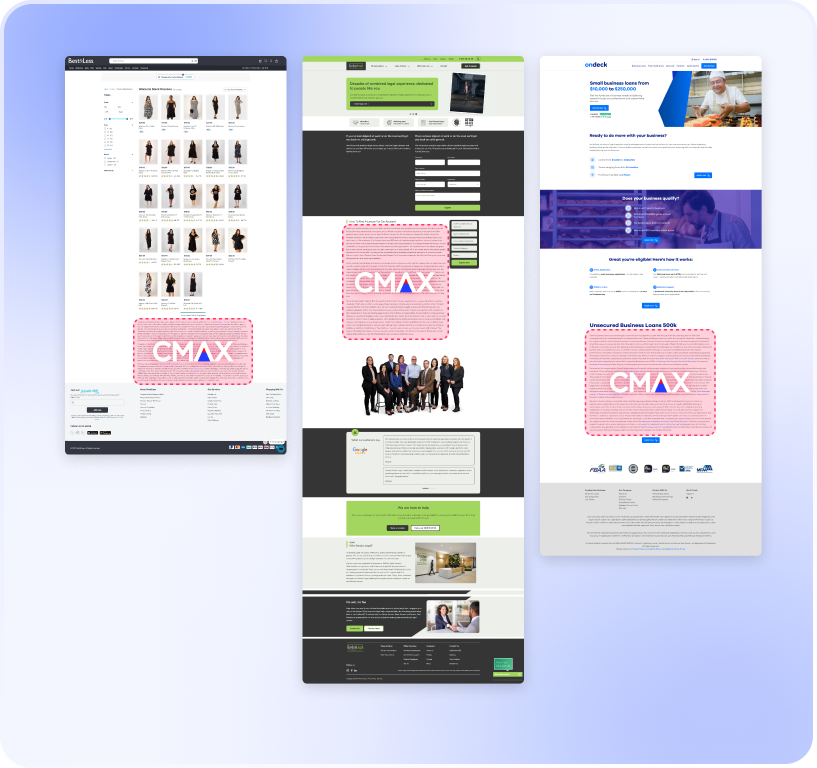
Scale amplifies these dynamics. In one CMAX engagement, a B2B omnichannel hospitality retailer added 5,000 long-tail product pages and reached $1M+/month in incremental SEO revenue within 8 months. The mechanism is straightforward: more indexable answer pages give Google more eligible surfaces to crawl and match to long-tail queries. A single well-optimised page competes for a handful of queries. Five thousand pages compete for thousands. The measurement logic stays the same at any scale: track indexed coverage, watch impression growth across the expanded query set, and tie revenue movement back to the pages driving it.
The practical takeaway is measured adaptation, not special tricks.
Prioritise crawlable, contextual answers
The pages worth prioritising first are the ones where Google can find the answer quickly, recognise why the page is relevant, and connect it to a query a real searcher needs resolved. That means crawlability and clarity come before any other optimisation consideration. A page that buries its primary answer behind a long introduction, or sits poorly linked in the site architecture, gives Google less to work with regardless of how well the content is written. Fix the access problem before refining the answer itself.
AIO is a readiness discipline
AIO SEO is most useful as a readiness audit, not a separate ranking system. Foundational SEO still does most of the work: crawlability, indexing, clear answer structure, and relevant internal linking are the same signals that determine whether a page is eligible for AI Overview inclusion. That inclusion remains selective and unpredictable. Google does not publish a formula, and no on-page change guarantees a citation. What teams can control is whether their pages meet the conditions that make selection possible. When implementation demands exceed internal capacity, specialist SEO services can help translate audit findings into concrete page-level changes. Treat AIO SEO as a recurring eligibility check: audit answer accessibility, validate structured data, track Search Console signals, and document what changes. That discipline compounds over time in ways that one-off optimisation tactics do not, which is why aio SEO is best understood as a readiness discipline, not a separate system.
Aio SEO is ultimately about making your content eligible for AI search, the broader shift in how search engines retrieve and synthesise answers rather than simply ranking links.
Frequently Asked Questions (FAQ)
How do I rank in Google AI Overviews?
AI Overviews don’t work like traditional blue-link rankings, so there’s no direct targeting mechanism. The practical goal is to publish pages with clear answers, strong contextual support, and solid technical accessibility. Google may choose to reuse those pages in an AI Overview, but eligibility and selection remain at Google’s discretion.
AIO SEO reframes the question of how to rank in AI overviews by shifting focus from targeting a placement to building pages whose answers Google can reliably find, interpret, and choose to reuse.
How do AI Overviews choose sources?
Google hasn’t published a selection formula. AI Overviews appear to favour sources that are easy to crawl, specific in their wording, and closely matched to the query’s intent. Meeting those conditions improves a page’s eligibility; it doesn’t lock in a citation.
Do AI Overviews affect SEO traffic?
The effect varies by query. AI Overviews can resolve some questions directly on the results page, reducing clicks for those queries, while other queries still drive traffic through. Page-level impressions, clicks, and query-set shifts in Search Console give a more accurate read than broad assumptions about overall traffic gain or loss.
How do I track AI Overview visibility?
Compare Search Console data before and after making answer, structure, and internal-linking changes. Watch for shifts in impressions, indexed-page counts, and the query set each page begins to earn. That before-and-after pattern is the most reliable signal of improving readiness.
How does AIO differ from SEO?
aio SEO differs mainly in emphasis because it asks teams to audit whether their existing SEO makes answers reusable in AI-generated search features, not just competitive in traditional rankings. The foundational work is the same; the diagnostic lens is different.
Related labels such as LLM SEO describe the same shift toward answer-reuse readiness.
Practitioners working on AIO SEO often find that improving their standing in AI Overview search requires the same foundational work, crawlability, answer clarity, and internal linking, that underpins traditional SEO.
Most Search Traffic Is Long Tail, CMAX Was Built to Capture It
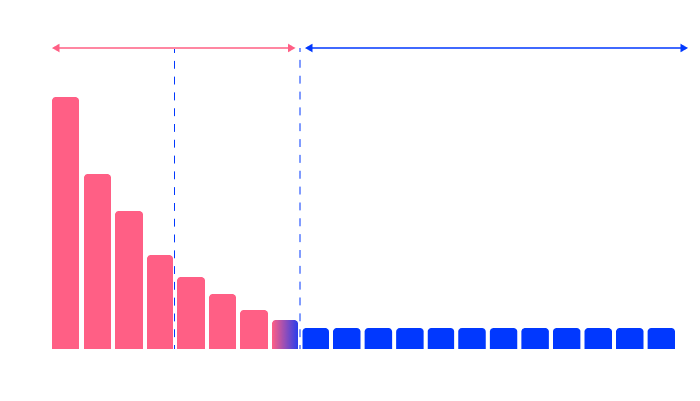
Over 90% of search and AI demand sits in long-tail queries, yet most teams lack the bandwidth to target them at scale.
CMAX is an agentic SEO platform that deploys and continuously updates content across thousands of high-intent keyword variations, with just two lines of code. Our AI-powered agents work at a speed and scale manual workflows can’t match, turning each new page into another node in a growing traffic net. Results typically begin surfacing within six weeks.
If your current strategy plateaus at head terms while long-tail opportunity goes uncaptured, CMAX closes that gap.
Author
Jeremy Tang
Founder and CEO of CMAX
Jeremy Tang is the Founder and CEO of CMAX. With over 2 decades of experience in business consulting and digital marketing, he has successfully driven seven startup businesses, six of which achieved $1 million in revenue from zero in less than 16 months, 5 of which grew to multi-million dollar a year ventures without any external funding. Jeremy's expertise lies in streamlining business processes through technology and leveraging digital (in particular SEO) for business growth. He resides in Australia, travels extensively, and draws inspiration from his global experiences.