Most conversations about website search optimisation start with a checklist of fixes. But a site can tick every technical box and still underperform if the pages that matter most aren’t crawlable, relevant to the queries people actually type, usable once someone lands, or measurable in a way that proves what changed. Those four layers work together, and a gap in any one of them can stall the others. CMAX helps enterprise teams identify and close those gaps at scale, across thousands of pages, with performance data tied to each change.
Website Search Optimisation Has a Specific Meaning
SEO Health, Not Site Search
For most readers, website search optimisation refers to SEO health: how well search engines can crawl, interpret, index, and surface your pages. It does not refer to the internal search box visitors use to find products or content within your site. The two problems call for entirely different fixes, so the distinction is a practical one. This article focuses on the former, the signals and structures that determine whether your pages appear in external search results at all.
Website search optimisation is best understood as a health-check discipline within the broader practice of search engine optimisation, covering how well crawlers, indexing systems, and users can each find and act on your pages.
The Four Search-Ready Traits
Website search engine optimisation, at its core, requires a search-ready website to satisfy four conditions. Commercially important pages are crawlable, meaning bots can fetch and render them without hitting technical barriers. Those pages are relevant, meaning they match the actual query a searcher typed, not just a broad topic category. They are usable, meaning a visitor who lands can quickly find what they need and take the intended action. And they are measurable, meaning Search Console and analytics data can confirm whether a change to any of those three areas produced a real shift in impressions, clicks, or landing-page performance.
These four traits are connected. A page that ranks but frustrates visitors wastes the crawl budget spent getting it there. A page that loads cleanly but targets the wrong query earns impressions that never convert. Web search optimisation requires all four to hold at once.
Search Readiness Depends on Four Connected Layers
Crawling, Rendering, and Indexing
Crawling, rendering, and indexing are three distinct checks, and a page can pass the first while failing the other two. A search engine can fetch a URL successfully and still miss the content if JavaScript that loads key text is blocked. Conflicting canonical tags can redirect signals to a different URL entirely, leaving the intended page out of contention. Duplicate URLs, www versus non-www, HTTP versus HTTPS, trailing slash versus none, split authority across versions rather than concentrating it on one.
Each failure mode has a different fix, which is why treating these three stages as a single search engine optimisation bucket leads to misdiagnosis. Verify them separately.
Relevance, Links, and Usability
Once a page is crawlable and indexed, it still has to earn the click and hold the visitor. Pages are more likely to satisfy search intent when the title names the topic and its modifier precisely, not a broad category label, but the specific angle a searcher typed. Vague titles lose relevance signals before a user even lands. Website search optimisation addresses the same four connected layers, crawlability, relevance, usability, and measurement, that practitioners work through under web search optimisation more broadly.
Internal links carry two jobs simultaneously: they help crawlers discover and contextualise related pages, and they give visitors a clear path to adjacent information. A page that sits in isolation, with no links in or out, is harder to rank and harder to use.
Layout closes the loop. When the page hierarchy makes the next action obvious, a decision, a download, a contact, visitors act. When they have to hunt for context, they leave.
A four-layer audit reveals where sites fall short.
Search Optimisation Checklist
A website search optimisation audit should test four layers in one pass: crawlability, relevance, usability, and measurement. This lets you pinpoint exactly where a site is losing ground, whether that’s an indexing fault, a content gap, a broken internal-linking structure, or a reporting blind spot that’s been hiding the problem.
Website search optimisation becomes measurable when a four-layer audit frames every fix within the wider discipline of search optimisation, connecting crawl health, relevance, usability, and reporting into a single assessment pass.
Work through each layer in turn.
Crawlability. Check that important pages can be fetched and rendered without blocked resources, broken internal links, redirect chains, or conflicting duplicate URLs that leave search engines uncertain about which version to index.
Relevance. If you are evaluating search engine optimisation for my website, start with this layer. Each page should target a distinct query, intent, product variant, location, or use case. If two pages repeat the same broad topic, they compete with each other rather than covering more ground. The fix is either consolidation or clearer differentiation, not more content on the same theme.
Usability. A visitor landing on the page should be able to identify its purpose immediately, locate the information needed to compare or decide, and complete the intended action without friction. Weak heading hierarchy, missing context, and unclear next steps are the most common failure points, and they cost clicks that rankings alone won’t recover.
Measurement. Without tracking in place, you can’t confirm whether a fix worked. Search Console impressions, clicks, queries, and landing-page data are the baseline. If those aren’t being reviewed after each change, the audit cycle has no feedback loop.
Run all four checks together. Fixing one layer while ignoring the others produces partial results.
Search Console and analytics data can show whether impressions, clicks, queries, and landing-page performance changed after a fix, so improvements are judged on visibility and page-level outcomes, not rankings alone.
Use Search Console Beyond Rankings
Rankings are a lagging, noisy signal. A page can move from position 8 to position 6 and generate no additional clicks, while a different fix quietly doubles impressions for a cluster of queries that never appeared in a rank tracker.
Search Console gives you the layer beneath that. Impressions tell you whether Google is surfacing a page for a given query at all. Clicks tell you whether searchers are choosing it. The queries report shows which search terms are actually triggering the page, which often reveals intent mismatches that title tags and meta descriptions can fix directly. Landing-page data ties all of this to specific URLs, so you can confirm that a technical or content change moved the right page, for the right terms, in the right direction.
That specificity is critical when you’re reporting to a board or a CFO. “Rankings improved” is a claim that invites scepticism. “Impressions for this URL increased 40% in the six weeks after we resolved the conflicting canonical” is a claim with a mechanism and a timeframe attached.
Treat Search Console as the primary verification layer for website search optimisation work. Run a before-and-after comparison at the URL level after each significant fix, and filter by query to separate genuine visibility gains from seasonal or algorithmic noise.
AI visibility still relies on search fundamentals.
Clear Answers Improve AI Visibility
AI-driven search systems pull from pages that are already well-structured for traditional crawlers. As a discipline, AI search engine optimisation depends on pages that answer a specific question directly, use clear entity language to name the topic, product, or service without ambiguity, and keep content accessible to bots, making it far easier for these systems to interpret and reuse in generated responses.
Website search optimisation provides the technical and content foundation that AI search optimisation builds on, since AI-driven systems still depend on pages being crawlable, clearly structured, and answering specific questions directly.
Technical barriers work against you here. If key content sits behind blocked JavaScript or is hidden from crawlers, AI systems face the same access problem as Googlebot. The same foundations that drive website search optimisation also determine how AI systems interpret a page. The fundamentals that make a page indexable also make it eligible for AI-driven visibility.
Proof Point on Long-Tail Coverage
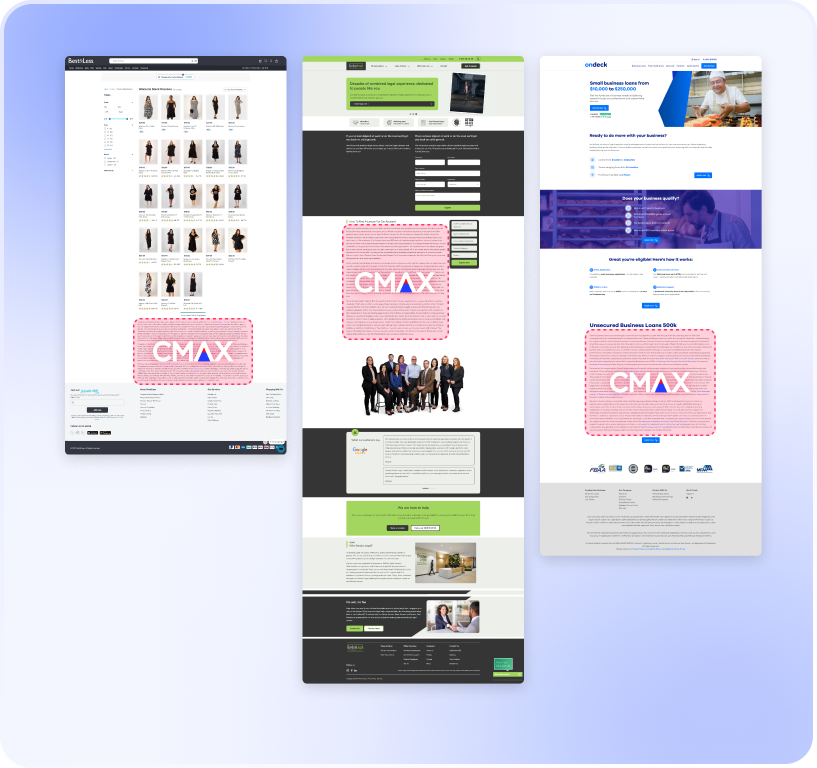
In one CMAX engagement, a B2B omnichannel hospitality retailer added 5,000 long-tail product pages and lifted organic traffic 255% in 12 months.
The mechanism behind that result applies broadly. Sites that have already optimised core category pages often still miss the specific product, feature, or use-case searches that head-term SEO leaves uncovered. Each of those gaps is a query with real demand and no matching page to capture it. Catalogue-scale coverage closes that gap systematically, and the same pages that satisfy long-tail search queries give AI systems more precise, specific content to draw from when generating answers for niche or high-intent searches.
Effective AI search optimisation increasingly intersects with AI search, as the same crawlability and content-clarity principles that satisfy traditional search engines also help AI-driven systems interpret and surface pages.
Search-ready websites are crawlable, relevant, usable and measurable.
Common Signs of Weak Optimisation
Weak website search optimisation rarely announces itself as a single failure. It tends to show up as a cluster of smaller problems that compound: blocked resources that prevent pages from rendering correctly, title tags so vague they could belong to a dozen different pages, duplicate URLs splitting signals across versions that should never have existed, and content coverage so thin that real search demand goes unmet. The most telling sign is a page that earns impressions in Search Console but consistently fails to attract clicks. That gap between visibility and engagement points to a relevance or usability problem, not a crawl one, and the two require different fixes. These patterns are the clearest signs that website search optimisation has stalled.
Website search optimisation that resolves blocked resources, vague titles, and thin coverage also strengthens a site’s position for AI search engine optimisation, because the same signals that satisfy traditional crawlers help AI systems interpret and reuse page content.
The Practical Search-Ready Test
Anyone asking what is search optimisation can apply a simple test: can both users and crawlers find the right page, read exactly what it covers, and complete the action that page is built to support?
If a crawler hits a blocked resource before it can render the page, the answer is no. If a user lands and cannot tell within a few seconds whether the page addresses their query, the answer is no. If the intended action, whether that is a form submission, a product selection, or a content download, requires more effort than it should, the answer is still no.
A page that passes all three checks is crawlable, relevant, and usable. Add measurement through Search Console and analytics, and you have a site that can verify its own progress after every change.
Frequently Asked Questions (FAQ)
How long until I see impact in search results?
Timing depends on what changed. Across search engine optimisation Australia, timing varies based on the type of fix applied. Crawl and indexing fixes can be recognised relatively quickly once search engines revisit the page, because the technical barrier is removed and the page becomes eligible to appear. Content coverage, internal linking, and authority improvements take longer before they shift impressions, clicks, and landing-page performance. Track changes in Search Console against the date of each fix so you can attribute movement accurately.
Is there enough demand to justify a page?
A page is usually justified when it serves a distinct query, audience, product variant, location, or problem that existing pages do not answer clearly enough. If combining two topics on one page would blur intent or force a visitor to work out which answer applies to them, they warrant separate pages. Understanding the search engine optimisation cost of creating and maintaining each page helps ensure the investment is proportionate to the demand it captures.
What should I write so the page is useful?
Define the exact topic, answer the main question early, and include the detail a searcher needs to compare, decide, or act. Avoid reusing generic copy across pages. When multiple pages sound interchangeable, search engines have no clear signal about which one to surface.
Website search optimisation questions increasingly extend to AI search engine optimisation, and the consistent answer is that pages answering specific questions clearly, with accessible structure and no technical barriers, perform better across both traditional and AI-driven results.
Is there a standard number of pages a website should have for optimum SEO value?
There is no standard page count. The right number depends on how many genuinely distinct topics, products, services, locations, or use cases the site needs to cover without creating duplicates that compete with each other. A search engine optimisation specialist can help determine the scope by mapping existing content against the queries the site should serve.
What is the difference between crawling and indexing?
Crawling is when a search engine fetches a page to inspect its content and technical signals. Indexing is when that page is stored and made eligible to appear in search results. A page can be crawled and still fail to be indexed if signals such as conflicting canonicals or blocked resources prevent it from being stored correctly. Businesses exploring website optimisation Perth or any other local market will find that resolving these technical barriers is the essential first step before any content or authority work can take effect.
Most Search Traffic Is Long Tail, and Most Businesses Ignore It
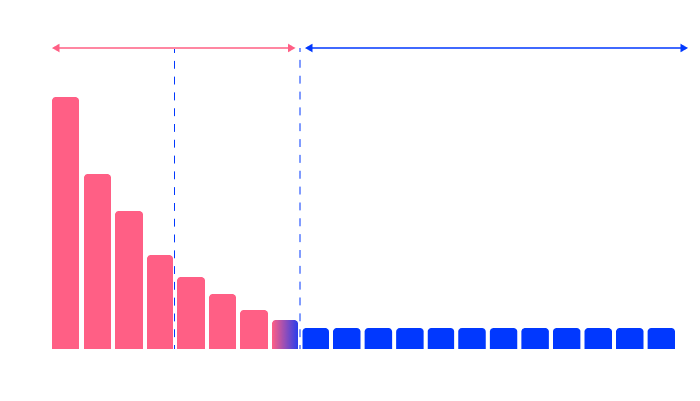
Over 90% of search demand sits in long-tail keywords, the specific phrases real buyers actually type.
CMAX is an agentic SEO platform built to capture that demand at scale. Two lines of code deploy thousands of pages targeting high-intent queries across both traditional and AI-driven search, and our agents continuously update that content so it stays relevant as algorithms shift. Results typically begin within six weeks of deployment.
If your website search optimisation strategy only covers a handful of head terms, you’re competing for a fraction of the traffic available to you.
Author
Jeremy Tang
Founder and CEO of CMAX
Jeremy Tang is the Founder and CEO of CMAX. With over 2 decades of experience in business consulting and digital marketing, he has successfully driven seven startup businesses, six of which achieved $1 million in revenue from zero in less than 16 months, 5 of which grew to multi-million dollar a year ventures without any external funding. Jeremy's expertise lies in streamlining business processes through technology and leveraging digital (in particular SEO) for business growth. He resides in Australia, travels extensively, and draws inspiration from his global experiences.