Most teams shopping for an AI search optimisation agency already know the basics of SEO. The harder question is whether a prospective partner can cover both conventional rankings and the AI answer surfaces that increasingly sit above them, without sacrificing editorial quality as page counts scale into the thousands. That combination of scope, oversight, and measurable proof is what separates a credible shortlist from a long one. CMAX is one agency built around that problem, particularly for enterprise long-tail programmes where operational scale and content quality have to coexist.
The Right Agency Covers AI and Classic Search
Platform Coverage Beyond Rank Tracking
Rank tracking tells you where a page sits in a list of blue links. It does not tell you whether your brand is being cited in a Google AI Overview, summarised in an answer engine response, or skipped entirely when a user gets a direct answer without clicking through.
For enterprises evaluating search engine optimisation Australia firms cover, platform scope is the first filter. An AI search optimisation agency should name the surfaces it actively optimises for. Google Search, Google AI Overviews, and answer engines each surface content differently, and a programme built only around position tracking will miss the visibility signals that count most when users never reach page one in the traditional sense. The same principle applies whether the spelling convention is search engine optimisation Australia or the British variant, since the audit criteria remain identical.
An AI search optimisation agency should clearly define which AI search engines it actively optimises for, since visibility across answer surfaces like Google AI Overviews requires a different strategy than conventional rank tracking. Buyers scoping an SEO optimisation Australia provider should apply the same platform-coverage test before shortlisting any partner.
Ask any prospective agency to list the surfaces it covers and show how it measures performance on each one. If the answer defaults to rank and traffic, the programme has a gap.
Scope Across AI SEO and SEO
Conventional SEO and AI search optimisation are related disciplines, but they are not the same work. Conventional SEO covers crawling, indexation, internal linking, and rankings. AI search work covers citation readiness, answer extraction, entity coverage, and content structured to match how users phrase direct questions to AI systems.
A credible enterprise scope separates these two workstreams clearly, then shows where a single page can serve both. A well-structured product or service page can rank in classic results and supply the factual, attributable content that answer engines draw from. Agencies that treat AI SEO as a bolt-on to a standard retainer rarely build pages with both outcomes in mind from the start.
A credible AI search optimisation agency will articulate how AI and SEO work together across the same page, covering both citation readiness for answer engines and the crawling, indexation, and ranking signals that conventional search still requires.
Human oversight is the quality control buyers should verify.
Helpful content matters more than automation
Automation handles volume. It does not handle judgement. When evaluating an AI search optimisation agency, ask specifically how the agency keeps published content useful, accurate, and attributable, because Google’s guidance on helpful, reliable content holds automated pages to the same quality bar as manually written ones.[1]
The failure mode is predictable: a template pulls structured data, generates a page, and publishes it before anyone checks whether the sourcing holds up, the claim is accurate, or the answer is meaningfully different from the fifty pages around it. At long-tail scale, that gap between drafting and quality control is where thin content spreads fastest.
What separates a credible AI search optimisation agency from a content mill is the willingness to name the mechanism, not just the principle. Who reviews the content? At what stage? Against what standard?
Review workflows prevent thin page sets
On high-volume long-tail programmes, one weak template does not produce one weak page. It produces hundreds or thousands of them before the pattern surfaces in reporting.
Editorial review, source checks, and approval gates are the controls that catch a misread intent or an unsupported claim before it propagates. These are the operational difference between a scalable content system and a liability.
When assessing an agency, ask for the specific points in their workflow where a human reviews strategy, checks source material, and signs off on final page approval. If those checkpoints are vague or absent, the programme carries risk that compounds with scale.
Measurable Growth Depends on Baselines, Methods, and Reporting
Baselines Tied to Page Launches
Growth claims without baselines are noise. A usable AI search engine optimisation measurement plan compares pre-launch and post-launch visibility at the page-group level, broken down by query type and reporting window. That granularity is critical because sitewide traffic charts absorb too many variables: seasonal demand shifts, existing brand search, algorithm updates, and unrelated technical changes can all move aggregate numbers in ways that have nothing to do with the pages you just launched.
An AI search optimisation agency should be able to show how it uses AI search analytics to tie post-launch visibility changes to specific page sets, query classes, and reporting windows rather than relying on sitewide traffic charts alone.
Ask any AI search SEO agency how it isolates the signal. The answer should reference specific page cohorts, the query classes those pages targeted, and a defined window for measuring change. If the methodology cannot separate a new product page set from a concurrent sitewide migration, the reported lift is not attributable. A credible partner offering AI search optimisation (the US spelling of the same discipline) will present baseline data segmented at the page-group level before reporting any gains.
Why an AI Search Optimisation Agency Is Worth Considering
An AI search optimisation agency earns consideration when it can walk through results in sequence: which pages went live, which query classes they targeted, what changed in visibility, conversions, or revenue after launch, and who approved the template, exceptions, and measurement rules that governed the programme.
That last point carries weight internally. When a CFO asks why a particular page set underperformed, “the algorithm changed” is not an answer. Named decision owners, documented approval gates, and query-level reporting give the team something concrete to defend, adjust, or escalate. Agencies that report only at the channel level cannot provide that accountability, regardless of how the traffic chart looks, which is why an AI search optimisation agency is worth evaluating on these terms.
Enterprise fit comes from scalable long-tail operations.
Scaling logic for complex page sets
Enterprise catalogues break most agency production models. When a site spans thousands of product, category, location, or service combinations, the challenge is repeatable output that stays differentiated, not a single well-crafted page, but a system that holds quality across every variation.
Template rules, entity logic, and exception handling are the practical signs an agency has solved this. Template rules define what each page type must contain and how it adapts to its data inputs. Entity logic ties each page to the right product attributes, locations, or service parameters so the content reflects genuine differences. Exception handling catches the edge cases: discontinued SKUs, ambiguous categories, thin data sets, before they publish as near-duplicate copy at scale.
Repeatable template logic is what makes an AI search optimisation agency enterprise-ready. An agency that can’t articulate all three is likely running a manual process dressed up as a programme.
CMAX proof point for enterprise scale
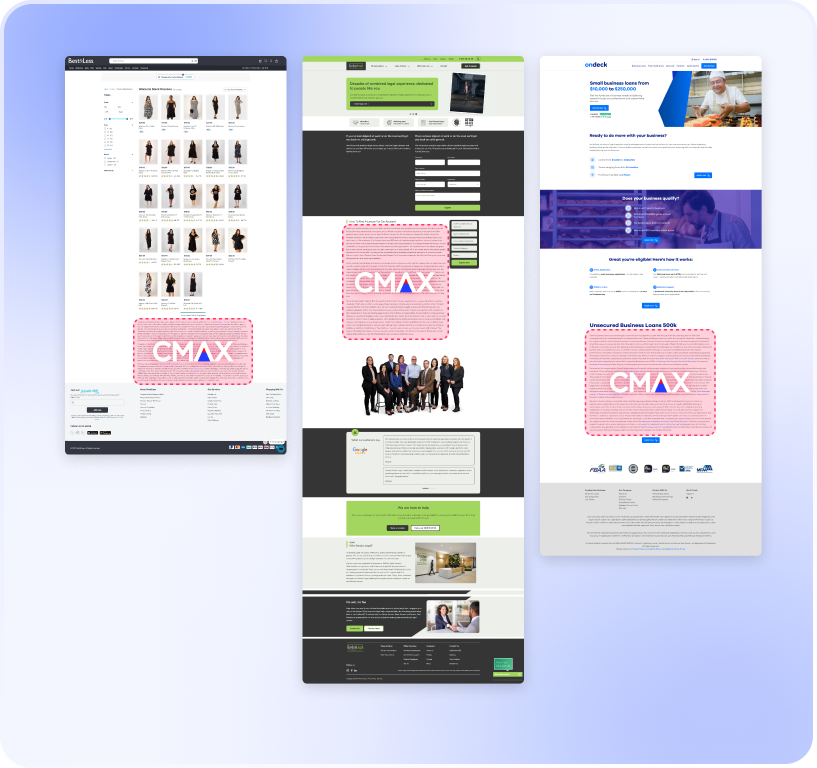
In one CMAX engagement, a B2B omnichannel hospitality retailer added 5,000 long-tail product pages and generated over $1M per month in incremental SEO revenue within 8 months.
The underlying problem that result addresses is common across enterprise sectors: long-tail demand exists across hundreds or thousands of product and service combinations, but a conventional agency workflow covers them one page at a time, if at all. At that pace, the catalogue never catches up to the query volume.
An AI agency Australia enterprises trust at scale needs repeatable production logic, not ad-hoc publishing. Operational scale, deploying and maintaining large page sets without sacrificing page-level relevance, is where the gap between a standard agency and an enterprise-ready platform becomes measurable in revenue.
Enterprises evaluating an AI search optimisation agency for regional growth may also explore SEO services Melbourne as part of a broader location-specific long-tail strategy that scales across city-level demand.
A practical shortlist comes from five selection criteria.
Five agency selection criteria
Shortlisting an AI search optimisation agency is easier to defend internally when every candidate is scored against the same five criteria. Whether a buyer needs a search engine optimisation Sydney teams can deliver locally or a national partner, the same five criteria apply. Isolated claims about traffic volume, AI capability, or publishing speed are hard to compare and harder to verify. A consistent scorecard removes that ambiguity.
Coverage. The agency names every search surface it actively optimises for, including classic search results, Google AI Overviews, and other answer experiences. Vague references to “AI search” without specifying surfaces signal a gap.
One of the clearest selection signals for an AI search optimisation agency is whether it can demonstrate a documented process for improving citation readiness within Google AI Search, not just conventional blue-link rankings.
Human oversight. The agency shows exactly where humans review strategy, source material, and final page approval. Automated drafting is a production tool; human review is the quality control layer that catches factual gaps and weak sourcing before they scale.
Scale controls. The agency explains how it prevents thin, duplicated, or low-value output when expanding long-tail page sets. Template logic, entity rules, and exception handling should be documented, not described in general terms.
Granular reporting. The agency reports results by page set, query class, and reporting window. Sitewide traffic charts do not show which pages drove which outcomes or whether a specific long-tail programme moved the needle.
Decision ownership. The agency makes clear who approves templates, exceptions, and measurement rules. Named decision owners and defined approval gates are the difference between a programme that can be audited and one that cannot.
Score every agency on all five before a shortlist reaches the CFO.
The Agency Makes Decision Ownership Clear, Including Who Approves Templates, Exceptions, and Measurement Rules
Compare Coverage, Scale, and Accountability
An AI search optimisation agency earns trust when decision ownership is documented. When comparing one against alternatives, three questions cut through most vendor noise: Can it expand long-tail coverage at operational scale? Can it tie outcomes to named deliverables and defined reporting intervals? And can it name the person or role accountable for each decision?
Coverage without scale is a pilot, not a programme. Scale without accountability is a liability. The most reliable shortlist weighs all three together.
Ask each agency to show you a live example of template governance: who approved the rules, who handles exceptions when a page type falls outside the template logic, and how that decision gets documented. If the answer is vague, the programme will drift the moment volume increases.
Reporting intervals matter for the same reason. A sitewide traffic chart tells you something changed; it does not tell you which page set drove it, which query class responded, or whether the lift holds after the initial crawl cycle. Named deliverables tied to specific page groups and reporting windows give you something defensible to bring to a CFO or board review.
Buyers who want to define SEO before comparing vendors will find that an AI search optimisation agency extends that foundation into answer-engine citation, entity coverage, and prompt-relevant content that conventional definitions do not yet capture.
Decision ownership is the clearest signal of operational maturity. An AI optimisation agency that can name who approves strategy, who signs off on source material, and who owns the measurement framework has run programmes at scale before. That clarity is what separates a vendor you can present internally from one you cannot.
What is the difference between programmatic SEO and AI SEO?
Programmatic SEO is a publishing method: it scales pages from structured data and templates, making it possible to cover thousands of query variations without writing each page from scratch. AI SEO is a broader optimisation discipline that can include content generation, entity coverage, answer-engine visibility, citation readiness, and content structured to match how users phrase questions. The two often work together, programmatic methods handle scale, while AI SEO shapes what those pages need to say and where they need to appear. Any search engine optimisation service that combines both approaches should be able to show how templates and AI-driven content strategy reinforce each other.
Does Google penalise AI-generated content?
The practical issue is whether the published page is original, accurate, useful, and properly reviewed. Automation does not remove the need for quality checks, and it does not catch factual gaps, weak sourcing, or intent mismatches. Human review at the strategy, source, and approval stages is what separates a compliant page set from a liability.
What is the difference between AEO and SEO?
Understanding what is AI search helps clarify why AEO and SEO differ. SEO focuses on earning visibility in search results. AEO, Answer Engine Optimisation, focuses on making content easy for answer systems to extract, summarise, and cite when users ask direct questions and expect a complete answer on the results page, without clicking through.
How do you measure ROI for programmatic SEO?
Link the cost of each page set to post-launch changes in qualified traffic, conversions, and revenue or lead value over a defined reporting window. Compare those gains against the baseline that existed before the pages launched to isolate genuine lift from background noise.
How do you optimise for AI Overviews?
Pages perform better in AI Overviews when they answer a narrow query directly, use clear factual structure, match headings to search intent, and support important claims with reliable sources where the topic requires attribution.[2]
When assessing an AI search optimisation agency, buyers should ask which AI search engine surfaces the agency monitors, since Google AI Overviews, Bing Copilot, and other answer experiences each surface content differently.
Long-Tail Coverage at Scale, Not Another SEO Retainer
CMAX is an agentic SEO platform built for one job: capturing the long-tail search demand most strategies leave on the table.
Our AI agents deploy and continuously update content across thousands of keyword variations, the specific, high-intent queries your customers actually type. Two lines of code connect CMAX to your site, and measurable traffic gains have been observed within weeks, not quarters. Every page is programmatically generated, individually optimised, and kept current so it earns its place in both traditional results and AI-driven search experiences.
If you’re evaluating an AI search optimisation agency, CMAX can help fill the gap between your existing SEO programme and the scale required to compete across Google AI Overviews and answer engines.
References [1] – https://developers.google.com/search/docs/fundamentals/creating-helpful-content [2] – https://developers.google.com/search/docs/appearance/ranking-systems-guide
Author
Jeremy Tang
Founder and CEO of CMAX
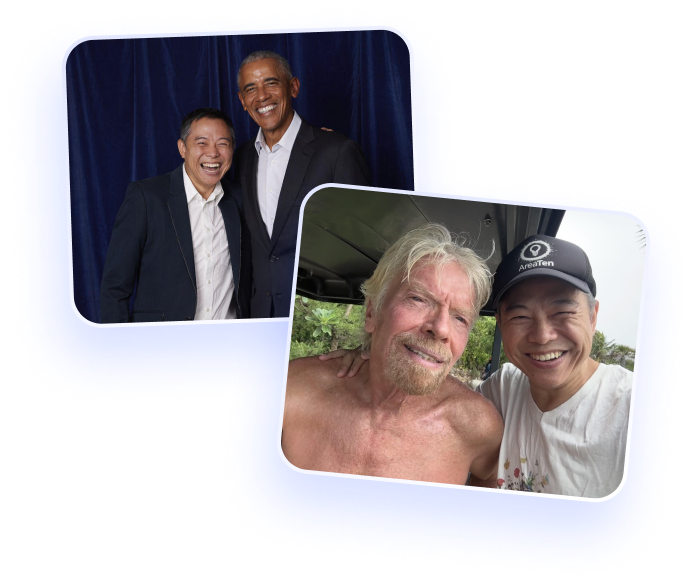
Jeremy Tang is the Founder and CEO of CMAX. With over 2 decades of experience in business consulting and digital marketing, he has successfully driven seven startup businesses, six of which achieved $1 million in revenue from zero in less than 16 months, 5 of which grew to multi-million dollar a year ventures without any external funding. Jeremy's expertise lies in streamlining business processes through technology and leveraging digital (in particular SEO) for business growth. He resides in Australia, travels extensively, and draws inspiration from his global experiences.