Most providers selling Sydney GEO services will hand you a deliverables list without first showing where your business actually fails to appear, gets cited from irrelevant sources, or is described inaccurately in AI-generated answers. The useful starting point is separating those gaps: crawlability, brand mentions, citation presence, and recommendation accuracy are four distinct signals, and a fix aimed at one rarely solves the others. For Sydney teams evaluating providers on that basis, CMAX offers structured visibility audits built around prompt-level measurement and local relevance.
Sydney Businesses Need GEO Providers That Can Prove AI Visibility
Find, Cite, and Describe Accurately
When evaluating Sydney GEO services, the first question is whether AI systems can actually locate the right page for a given query. For any business investing in GEO Sydney, AI visibility for priority Sydney queries breaks down into four distinct checks. First, can AI systems find the correct page? Second, do they surface third-party mentions of the business? Third, do they attach relevant citations when generating a response? Fourth, do they describe the business accurately, without conflating services, swapping locations, or introducing factual errors?
A provider that can’t answer all four questions with tracked data isn’t auditing AI visibility. They’re guessing at it.
Sydney GEO services are built around the principles of GEO generative engine optimisation, which focuses on helping AI systems locate, cite, and accurately describe a business for priority local queries. This discipline, GEO optimisation (also spelled GEO optimisation), applies structured auditing to each of those four visibility checks rather than treating them as a single pass-fail.
Separate the Core Visibility Signals
Crawlability, brand mentions, citation presence, and recommendation accuracy are four separate signals, and they fail independently. A business can be fully indexable and still never appear in a cited response. It can earn citations and still be pulled from sources with no relevance to Sydney buyers. It can appear in generated answers and still be described with the wrong service area or an outdated offer.
Measuring these as a single combined score hides exactly where the problem sits. A credible Sydney GEO provider tracks each signal separately, so a drop in citation presence doesn’t get masked by stable crawlability scores, and an accuracy problem in generated descriptions doesn’t disappear inside an aggregate metric. Separate measurement is what makes the diagnosis actionable.
The strongest Sydney GEO services show measurable gaps before proposing fixes.
Baseline Sydney prompt performance
A credible provider doesn’t open with a proposal. They open with a baseline. That means running a defined set of priority Sydney prompts across AI discovery surfaces and recording five signals for each: mention rate, citation position, sentiment, factual accuracy, and movement over time.
The prompt set has to be structured by suburb, service type, and problem-led query. A broad city-level test like “marketing agency Sydney” won’t surface the gaps that matter to a Parramatta-based buyer searching for a specific service. Granular prompt groups are what allow any change in visibility to be traced back to a specific location, service, and query type rather than attributed to general improvement. When baselining prompt performance, Sydney GEO services teams should evaluate GEO services Sydney providers on whether they track mention rate, citation position, and factual accuracy before recommending any changes.
Without that baseline, there’s no way to tell whether a provider’s work moved the needle or whether the market shifted on its own. Among the growing range of AI services Sydney businesses can access, AI-visibility auditing stands out as one of the most diagnostic, and it starts with this kind of structured baselining.
Sydney AI-visibility gap scorecard
A scorecard gives teams a structured way to compare Sydney GEO providers on the inputs that actually shape local AI visibility. Deliverables alone don’t answer the question that matters: did visibility improve, and where?
The scorecard should map directly to the signals in the baseline: mention rate, citation position, sentiment, factual accuracy, and local source relevance. A provider who can’t show pre- and post-state data for each of those signals hasn’t demonstrated a method. They’ve described one. That distinction is what separates a provider worth shortlisting from one worth passing on.
Does the provider map prompts by suburb, service, and problem, instead of testing only a single broad city term that hides local gaps?
A provider running one prompt, “best [service] in Sydney”, is measuring a fraction of how buyers actually search. AI systems field queries shaped by suburb (“Surry Hills bookkeeper”), service type (“commercial fit-out contractor Parramatta”), and problem framing (“who handles strata disputes in the Inner West”). Each variation can return a different set of citations, a different mention position, and a different factual description of your business.
Testing only the broad city term produces a single data point that can look healthy while suburb-level and problem-led queries return no mention at all. A Sydney professional services firm, for example, might appear confidently in a generic city prompt yet be absent from five suburb-specific queries that reflect where its actual clients are searching. That gap stays invisible until someone maps it.
A credible provider builds a prompt set that covers the suburb, service, and problem combinations relevant to your market before any optimisation work begins. That structure lets the baseline capture mention rate, citation presence, and factual accuracy at the query level, not averaged across a broad term that flattens local variation. Some buyers search for aeo Sydney when looking for this type of audit, though the correct framework is GEO (Generative Engine Optimisation), which is the methodology covered throughout this article.
Sydney GEO services providers that map prompts by suburb and service type use a comparable methodology to what a GEO agency Brisbane would apply for Queensland-specific query sets, making the evaluation criteria transferable across markets.
When evaluating providers, ask to see the prompt taxonomy they plan to test. If the list is short, generic, or city-only, the audit will miss the gaps that matter most to Sydney buyers searching with specific intent. Suburb-level prompt mapping is the clearest sign that Sydney GEO services are built to surface real performance data rather than a single reassuring headline metric.
Does the baseline record mention rate, citation position, sentiment, and factual accuracy for each prompt set, so teams can see what changed and where?
A baseline that lumps all Sydney prompts into a single aggregate score tells you almost nothing. What you need is prompt-level data: mention rate, citation position, sentiment, and factual accuracy recorded separately for each suburb, service, and problem-led query group.
That granularity is critical because performance varies sharply across prompt types. A capable SEO agency Sydney teams rely on will record mention rate, citation position, sentiment, and factual accuracy at the individual prompt level. Without that breakdown, a provider might appear consistently in citations for a broad Sydney service query while going unmentioned across five suburb-specific prompts, and the gap stays invisible until a competitor fills it.
The four signals each catch different failure modes. Mention rate shows whether the business appears at all. Citation position shows where in the generated answer it lands. Sentiment flags whether the description is neutral, positive, or qualified in ways that reduce conversion likelihood. Factual accuracy catches the cases where AI systems describe the wrong service, the wrong location, or a mix of both.
Tracking these signals over time against the same defined prompt sets is what turns a one-off audit into a measurement plan. When a change is made, whether to an owned page, a third-party listing, or a citation source, the next tracking cycle shows whether mention rate moved on the specific prompts that were targeted, not just across the account as a whole.
Sydney GEO services that baseline mention rate, citation position, sentiment, and factual accuracy for each prompt set are applying GEO optimisation in a measurable way that lets teams see exactly what changed and where.
Ask any Sydney GEO services provider to show you a sample baseline report. If it doesn’t break results down by prompt set and signal type, it can’t tell you what changed or why.
Does the audit separate owned-page issues from third-party citation gaps and brand-mention gaps, instead of treating them as one problem?
Treating AI visibility as a single problem produces fixes that miss the actual failure point. A Sydney business can have technically sound, crawlable pages and still be absent from AI-generated answers because the third-party sources citing it are thin, off-topic, or geographically irrelevant. Equally, a business can hold strong brand mentions across the web and still receive inaccurate descriptions in generated responses because the owned-page content contradicts or omits key service details. Separating owned-page issues from third-party gaps is where Sydney GEO services prove their diagnostic value.
A rigorous audit separates three distinct layers:
- Owned-page issues — structured data gaps, crawl barriers, thin service descriptions, or missing suburb-level specificity that prevent AI systems from reading and interpreting the page correctly.
- Third-party citation gaps — the absence of, or over-reliance on, low-relevance sources when AI systems retrieve supporting evidence for Sydney-specific queries.
- Brand-mention gaps — instances where the business is referenced across the web but those mentions carry no citation link, appear in the wrong service context, or attach to the wrong location.
Each layer has a different fix. Owned-page problems require on-site content and technical changes, and providers offering SEO services Sydney should scope these separately from AI citation work. Citation gaps require source development and outreach to Sydney-relevant publishers and directories. Brand-mention gaps require consistency work across third-party profiles and earned coverage.
The broader landscape of SEO in Sydney still leans heavily on traditional ranking factors, which is why audits that separate owned-page issues from third-party citation gaps make the SEO vs GEO distinction practical, showing which signals belong to traditional ranking factors and which belong to AI citation visibility.
A provider that audits all three as one undifferentiated problem will apply the wrong remedy to the wrong layer, and the tracked metrics won’t show why visibility failed to move.
Does reporting show whether cited sources are genuinely relevant to Sydney buyers, not just authoritative in the abstract?
A high domain authority score is often read as a signal that a source ranks well globally. It does not tell you whether a Sydney buyer would trust it, recognise it, or act on it.
When AI systems generate answers for queries like “best commercial fit-out company in Parramatta” or “Sydney payroll software for mid-size teams,” they pull citations from sources that appear relevant to the specific query, not just sources that are broadly credible. A citation from a national directory with thin Sydney coverage carries less weight for those prompts than a mention in a recognised Sydney industry publication, a suburb-specific review platform, or a local trade body listing.
Reporting that only flags citation presence misses this. The question worth asking a provider is whether their audit distinguishes between citations that reflect genuine local relevance, such as sources Sydney buyers actually consult, and citations that are technically present but geographically or contextually misaligned.
Practically, this means the audit should identify which sources are currently citing the business for priority Sydney prompts, assess whether those sources carry local credibility for the relevant service and suburb, and flag gaps where stronger local sources exist but are not yet citing the business. This applies across disciplines: a content marketing services Sydney firm produces, for example, should be earning citations from locally credible publications, not just high-authority domains with no geographic relevance.
A provider who reports “you have citations” without qualifying the source relevance to Sydney buyers is measuring presence, not performance. The two are not the same, and conflating them produces a scorecard that looks healthy while local AI visibility stays flat.
Frequently Asked Questions (FAQ)
How do AI engines choose which content to cite?
AI engines prioritise content they can access and parse without ambiguity.[1] From there, they favour sources that answer the query directly, stay consistent with other retrieved information, and carry enough specific detail to support a generated response.[1] Thin pages, inconsistent business descriptions, and content that hedges rather than answers are routinely passed over in favour of clearer alternatives.
How quickly do GEO measures take effect?
GEO changes tend to show up first as improvements in citation coverage, more stable mention presence, or more accurate business descriptions on tracked prompts. Downstream enquiry impact takes longer to read clearly, because buyers typically encounter a business across several touchpoints before converting. Tracking prompt-level signals from a fixed baseline is the only way to separate GEO-driven movement from background noise.
How can GEO success be measured?
Sydney GEO services should be judged by prompt-level mention rate, citation presence, citation position, sentiment, and factual accuracy. Then check whether shifts in those signals align with qualified enquiries or assisted conversions. Visibility metrics without a commercial tie-back leave too much open to interpretation.
Sydney GEO services sit within a broader strategic conversation that includes aeo vs SEO, helping businesses understand which optimisation layer governs traditional search rankings versus AI-generated answer visibility.
Which AI systems does GEO cover?
GEO covers AI-assisted discovery surfaces that summarise, recommend, or cite web content. That includes large-language-model interfaces and search experiences that generate answers from indexed and retrieved sources.
Sydney GEO services address a distinct layer of AI-driven discovery that sits alongside aeo SEO disciplines, each contributing differently to how a business surfaces across both traditional and generative search experiences.
What makes local SEO different from general SEO?
Local SEO weights geographic intent, service-area relevance, and location-specific evidence more heavily. Pages and citations need to reflect Sydney suburbs, nearby demand patterns, and the exact phrasing local buyers use when searching, not just broad category terms that could apply anywhere.
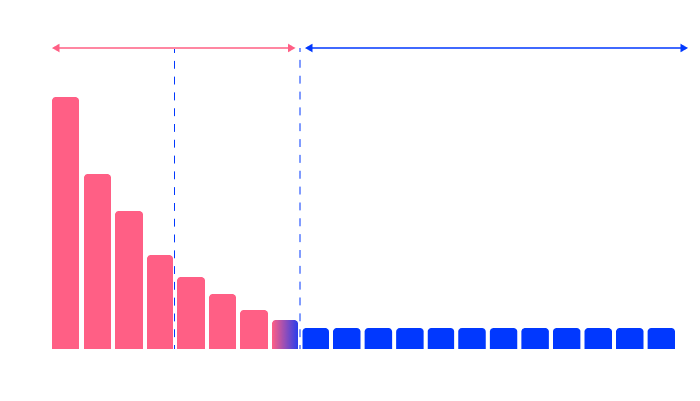
CMAX Targets the 90% of Search Traffic Most Businesses Miss
Most SEO platforms focus on the same high-volume keywords everyone else is chasing.
CMAX is an agentic SEO platform built to capture long-tail search demand at scale, the thousands of specific, high-intent queries your customers actually type. With two lines of code, our AI agents deploy and continuously update content across search and AI surfaces, covering the niche variations that drive qualified traffic. Teams using CMAX have reported measurable results within six weeks of deployment.
For Sydney businesses evaluating GEO services, that same infrastructure helps surface your brand where AI systems pull citations and recommendations for local queries.
References [1] – https://developers.google.com/search/docs/fundamentals/creating-helpful-content
Author
Jeremy Tang
Founder and CEO of CMAX
Jeremy Tang is the Founder and CEO of CMAX. With over 2 decades of experience in business consulting and digital marketing, he has successfully driven seven startup businesses, six of which achieved $1 million in revenue from zero in less than 16 months, 5 of which grew to multi-million dollar a year ventures without any external funding. Jeremy's expertise lies in streamlining business processes through technology and leveraging digital (in particular SEO) for business growth. He resides in Australia, travels extensively, and draws inspiration from his global experiences.