GEO optimisation is often mistaken for location targeting, but in the context of AI search, it refers to generative engine optimisation: improving how your pages are retrieved, cited, and represented in AI-generated answers. If your SEO foundations are solid yet your brand rarely appears when prospects ask AI tools the questions you already rank for, the gap is usually page clarity, not page quality. Most of the practical work overlaps with what strong SEO teams already do, applied to a different surface. CMAX works with enterprise teams adapting their existing SEO investment to AI-answer visibility.
GEO Optimisation Targets AI Answer Visibility
GEO Means Generative Engine Optimisation
Generative engine optimisation GEO is the full term behind the abbreviation. GEO stands for generative engine optimisation. In this context, GEO optimisation refers to how a page is interpreted and restated in AI-generated answers. The discipline has nothing to do with geographic SEO or location-based rankings. It focuses on how a page is selected and restated by AI systems when they generate an answer, not where it appears in a list of blue links.
That distinction changes the work. Ranking signals and answer-selection signals overlap in places, but they are not the same target. A page can rank well and still be misrepresented, ignored, or skipped entirely when an AI system assembles a response. Some practitioners and tools refer to this work as GEO optimisation, an alternate spelling readers may encounter in US-published material.
GEO optimisation is built around improving how content is retrieved and restated in AI-generated answers, and GEO generative engine optimisation covers exactly that discipline in full detail.
Mentions, Citations, and Answer Accuracy
GEO shifts the performance target from rank position to three specific, checkable outcomes.
The first is mention: does the right brand or page appear in the AI-generated answer at all? The second is citation: when the system displays source links, does it attach one to your page? The third is answer accuracy: does the AI restate your content without altering the claim?
Each outcome is measurable in its own right. A page can earn a mention without a citation. It can earn a citation while the answer misrepresents what the page actually says. Tracking all three separately gives a clearer picture of where AI visibility is breaking down and what needs fixing first.
AI Systems Surface Sources Through Retrievability and Corroboration
Retrieval Depends on Page Clarity
AI systems do not rank pages the way a search engine does. They retrieve content, match it to a prompt, and paraphrase it into an answer. That three-step process breaks down when a page is hard to crawl, when entities are named inconsistently, or when a key passage buries its claim across several sentences. Generative engine optimisation depends on each of these factors working together.
When pages are crawlable, entities are named plainly, and key passages each make one clear claim, a model has a cleaner source to work with. It can match that source to the prompt more precisely, cross-reference it against other sources, and paraphrase it with less risk of distorting the original meaning. Vague or fragmented copy gives the model less to work with and increases the chance the answer misrepresents the source.
Core SEO Still Supports AI Visibility
GEO builds on the same technical foundations as SEO. Technical accessibility, helpful content, and clear page purpose make a site easier for both search engines and AI systems to process. Neither discipline benefits from pages that are blocked, slow, or structured around multiple competing intents. This overlap is why generative search optimisation and conventional SEO share so much common ground. GEO optimisation builds on the same technical and content foundations that underpin aeo SEO, since crawlability, clear entity naming, and helpful page structure benefit both AI-answer retrieval and conventional search visibility.
The change GEO optimisation introduces is the surface being optimised. Traditional SEO targets blue-link rankings. GEO targets whether a page gets retrieved, cited, and described accurately inside an AI-generated answer. The underlying requirement for solid SEO basics does not change; the destination for that work does. That is why GEO optimisation builds on, rather than replaces, existing SEO work.
GEO Work Is Mostly SEO Applied Differently
What GEO Involves in Practice
GEO work usually means fixing the parts of a site that make retrieval, citation, or answer accuracy less reliable for AI systems. The fixes are familiar. The target is different.
Start with crawlability. Key pages need to be accessible and indexable before any AI system can retrieve them. That baseline has not changed.
From there, GEO optimisation gets more specific to how AI models read and reuse content:
- State entities, products, and services in plain language. A model needs to identify exactly what a page is about before it can match that page to a prompt. Ambiguous naming creates retrieval gaps.
- Add quotable passages that answer likely prompts directly. When copy is scattered across a page, a model has to assemble an answer from fragments, which increases the chance of distortion. A single, self-contained passage reduces that risk.
- Align titles, headings, and body copy around one search intent. A page that sends one consistent signal is easier to match, cite, and paraphrase accurately than a page trying to cover several angles at once.
- Remove conflicting claims across similar pages. When different URLs contradict each other, AI systems have competing signals to reconcile. That can suppress citation or introduce inaccuracy in the answer.
The output of these steps is GEO optimised content that AI systems can retrieve, match, and cite with minimal distortion. None of these steps require platform-specific files or AI-generated copy. They are the same structural disciplines that support strong SEO, applied with AI answer accuracy as the additional measure of success. The GEO vs SEO distinction is less about different tactics and more about a different target surface.
GEO work typically involves fixing crawlability, tightening page-topic alignment, and expanding long-tail coverage, and businesses seeking hands-on support in New South Wales can explore GEO services Sydney to see how that practice applies locally.
Expand Long-Tail Pages Where Important Prompt Patterns or Query Variants Have No Dedicated Source to Retrieve
Measure with Repeated Prompt Tests
GEO measurement does not produce a single clean metric. The most practical method is to build a fixed prompt set that reflects the queries your audience actually runs, then test it before and after any content changes. An optimisation agency will usually maintain a fixed prompt set and run it on a repeated schedule, tracking shifts across each iteration.
Run each prompt, record which pages appear in the AI-generated answer, note whether a citation is attached, and capture how the answer describes the source. That last point is significant: a page can be retrieved and still be misrepresented if the source language is ambiguous or the page covers too many topics at once.
Repeat the same prompt set across multiple AI tools after changes go live. What you are looking for is a directional shift: more of the right pages appearing, citations attached more consistently, and answer descriptions that reflect what the page actually says. No single prompt run is conclusive. The pattern across repeated tests is the signal.
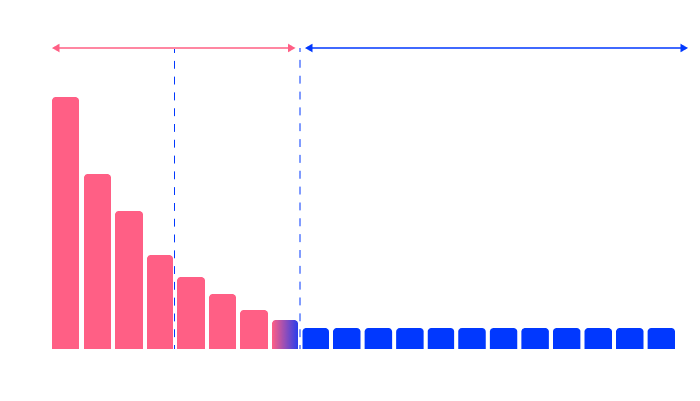
This approach also surfaces gaps. If a prompt returns no citation from your site, and the query maps to a real customer need, that is a case for a dedicated page rather than a content tweak. Long-tail pages built around specific prompt patterns give AI systems a closer match to retrieve, which is the same coverage logic that drives programmatic SEO at scale.
Scaled long-tail coverage can expand citation chances.
Long-tail scale can widen coverage
Coverage volume can affect how often AI systems find a close match for a narrow prompt. In one CMAX engagement, a B2B omnichannel hospitality retailer added 5,000 long-tail product pages and grew organic traffic 255% in 12 months.[1] The same dynamic applies to GEO: each query-specific page is another potential source an AI system can retrieve, match to a prompt, and cite. A site with one broad category page gives a model one retrieval option. A site with hundreds of pages targeting distinct query variants gives it hundreds. For narrow, high-intent prompts, that difference in coverage is often the difference between appearing in an answer and being absent from it entirely.
GEO optimisation strategies that rely on broader long-tail coverage and clearer source language are increasingly in demand across Australian markets, and Sydney GEO services outlines how that approach is being applied for businesses in the region.
GEO does not need special hacks
Clear page structure and direct language are what make GEO optimisation work without platform-specific hacks. The first practical fixes are structural: clear page architecture, direct language that names entities and topics plainly, and better coverage of the query variants your audience actually uses. Those changes make pages easier to retrieve and match, which is where most GEO gaps begin. Specialist tooling or platform workarounds are rarely the constraint at the start.
The practical takeaway is that GEO complements SEO.
GEO complements strong SEO foundations
GEO is SEO adapted to AI answer environments. The discipline does not replace what already works; it extends it toward a different surface. When strong SEO optimisation foundations are paired with clearer source language, tighter page-topic alignment, and broader long-tail coverage, AI-answer visibility may improve as a result.
That pairing matters because AI systems appear to draw on similar signals that make a page useful to a search engine: crawlability, clear entity naming, and a page that commits to one topic. GEO work sharpens those signals for a retrieval model that needs to match a page to a prompt, paraphrase it accurately, and corroborate it against other sources.
GEO optimisation does not replace traditional search work but shifts the target surface, which is why the SEO vs GEO comparison is worth reviewing to understand where the two disciplines overlap and where they diverge.
Judge GEO by citation quality
Generic visibility claims are not a useful GEO measure. The question worth tracking is whether AI systems surface the right page for the prompts that matter, cite it when citations are shown, and describe its content without adding or distorting detail.
That standard is testable. Run a fixed prompt set before and after content changes, record which pages appear, whether citations are attached, and how the answer frames the source. Improvement in those three outcomes, across repeated tests, is what meaningful GEO progress looks like. A rising mention count with inaccurate descriptions is not a win; accurate citation of the right page for the right prompt is.
The most useful measure of GEO optimisation is whether AI systems surface the right page and cite it accurately. Practitioners exploring how AI-answer optimisation relates to traditional search often find the discussion around aeo vs SEO a useful reference point for framing those distinctions.
Frequently Asked Questions (FAQ)
How is GEO impacting my site’s analytics?
GEO impact rarely shows up as a single clean reporting line. It’s usually inferred from a combination of signals: referral traffic from AI interfaces where that data is available, shifts in long-tail organic visibility, and prompt-test evidence that your pages are being surfaced or described more accurately over time. Treat it as a pattern across sources rather than a single metric. Teams pursuing optimisation Australia-wide can apply the same prompt-test method across platforms.
What kind of content works best for GEO?
One page, one specific query. Content performs best for GEO when it names the relevant entity or topic directly and includes at least one passage a model can quote or paraphrase without distorting the meaning. Pages that try to cover too much give AI systems less to work with when matching against a narrow prompt.
How can we tell if our content is being featured in AI tools?
Keep a fixed prompt set, run it on a regular schedule, and record which brands or pages appear in answers. After content updates, compare changes in mentions, citations, and how the answer describes your source. Consistency in the prompt set is what makes the before-and-after comparison meaningful.
How do AI engines choose which content to cite?
AI engines tend to favour content they can retrieve easily, match closely to the prompt, and corroborate against other signals or sources. Direct claims, consistent terminology, and a clear page purpose carry more weight than broad topical coverage spread across loosely related copy.
Do we need to optimise differently for each AI tool?
Most teams don’t need a separate GEO strategy per platform at the outset. Clear pages, strong technical accessibility, and query-specific coverage transfer across platforms even when citation behaviour and answer formats differ between tools.
GEO optimisation questions around measurement, content structure, and AI-answer visibility are common for businesses across Australia, and those based in Queensland looking for specialist support can find relevant guidance through GEO agency Brisbane.
SEO Captures Clicks, CMAX Captures the Other 90%
Most organic strategies fight over the same head terms while long-tail demand goes uncontested.
CMAX is an agentic SEO platform that deploys and continuously updates content across thousands of long-tail keywords, the queries that make up over 90% of search and AI demand. Two lines of code integrate it into your site. Results typically start appearing within six weeks, not quarters.
As AI-generated answers reshape how visibility works, including what GEO optimisation aims to address, the volume of searchable surface area matters more than ever. CMAX builds that surface at a scale and speed manual teams can’t match.
References [1] – https://ahrefs.com/blog/long-tail-keywords/
Author
Jeremy Tang
Founder and CEO of CMAX
Jeremy Tang is the Founder and CEO of CMAX. With over 2 decades of experience in business consulting and digital marketing, he has successfully driven seven startup businesses, six of which achieved $1 million in revenue from zero in less than 16 months, 5 of which grew to multi-million dollar a year ventures without any external funding. Jeremy's expertise lies in streamlining business processes through technology and leveraging digital (in particular SEO) for business growth. He resides in Australia, travels extensively, and draws inspiration from his global experiences.