Most pitches from a GEO agency Brisbane buyers receive look the same: a renamed SEO retainer with AI language layered on top, but no dated prompt evidence, no suburb-level query sets, and no clear owner for implementation. If you’ve been asked to evaluate one of these proposals, the gap between what’s claimed and what’s verifiable is probably already bothering you. What follows is a checklist for staging expectations, pressure-testing proof, and separating setup work from commercial impact. CMAX operates in this space and publishes the local evidence standards referenced here.
A credible Brisbane GEO agency proves local visibility first.
Proof of Brisbane AI visibility
A credible GEO agency Brisbane engagement should be backed by prompt-level evidence, not repackaged SEO reporting. Brisbane GEO is evidenced by one thing: whether a business appears in AI-generated answers for specific local service queries. A retainer relabelled as GEO without prompt-level evidence, dated captures, and a clear record of which answer surfaces were checked is SEO with a new name.
The distinction is worth raising at the proposal stage. Any AI agency Brisbane provider can claim AI visibility. Credible agencies show which prompts were run, which AI surfaces returned answers, and whether the business appeared in those answers before and after implementation. Without that record, there is no baseline, and without a baseline, there is no way to measure movement.
When evaluating a GEO Brisbane provider, it helps to know that the discipline sits within the broader practice of GEO generative engine optimisation, where local prompt evidence and dated citation records are the baseline expectation.
Questions buyers should ask
Brisbane buyers can pressure-test AI visibility claims with a short list of direct questions:
- What is the exact local query set used, and how were prompts grouped by suburb and service?
- Which business entities and citation sources were tracked across those prompts?
- Which AI answer surfaces were checked, and how were results captured and dated?
- What did the AI answer show before work began, and what changed after implementation?
If an agency cannot answer those questions with documented examples, the visibility claim is unverified. Working with an AI SEO agency Brisbane provider requires dated before-and-after examples tied to named suburbs and service lines as the minimum standard of proof a Brisbane buyer should accept before signing anything.
Early GEO expectations should be staged and measurable.
Stage-by-stage GEO checklist
A Brisbane GEO engagement is easier to assess when each stage has a defined output, so the team can distinguish setup work from visibility movement from commercial impact. Without that structure, a month of activity can look identical to a month of progress. Any GEO marketing agency proposing a staged engagement should show how aeo SEO frameworks inform the distinction between traditional ranking signals and the citation or mention patterns that AI systems use to surface local businesses.
Four components make a staged GEO agency Brisbane engagement assessable.
Baseline query documentation. Queries are recorded by suburb, service, and device before work begins. Later checks run against the same prompt set, so any change in AI answer appearances reflects actual movement rather than a different sample.
Entity mapping. The business name, service lines, locations, priority pages, and citation sources are mapped and aligned across the site and external references. AI systems draw on consistent, corroborated signals; gaps in that alignment reduce the likelihood of appearing in a generated answer. Effective GEO optimisation depends on closing those gaps before any content or outreach work begins.
Named implementation owners. Technical fixes, content updates, schema, internal links, and tracking changes each need an assigned owner before the engagement starts. Recommendations that sit unassigned between SEO, content, web, and development teams do not ship, and unshipped work does not move visibility. An aeo agency (the term some buyers use interchangeably with GEO provider) should specify who owns each deliverable at the proposal stage.
Early citation and mention reporting. Initial reports show whether the business is starting to appear in AI answers for the tracked local prompts, and whether those appearances reference the correct service lines and Brisbane suburbs. Appearances for the wrong services or unrelated locations are a signal the entity mapping needs tightening, not a reason to claim early wins.
Later reporting connects those visibility changes to enquiries, lead quality, or revenue over a longer measurement window, so the business can separate early discovery signals from confirmed commercial impact.
First 90-day deliverables
The first 90 days of a GEO engagement have a specific job: establish the baseline, lock in tracking, confirm delivery ownership, and surface early citation or mention patterns for the tracked Brisbane query set. Revenue impact is a separate measurement layer, and conflating the two in early reporting creates a false read in both directions.
Sales cycles, lead volumes, and attribution lag all affect how quickly commercial impact becomes legible. A Brisbane service business with a two-to-four-week sales cycle will see a clearer commercial signal sooner than one with a longer pipeline. That gap is not a failure of the work; it’s a function of how the business converts. A credible GEO proposal names that window upfront rather than presenting AI mention counts as a proxy for pipeline.
What the first 90 days should produce: a documented baseline of local prompts by suburb and service, confirmed tracking against those prompts, named owners for each implementation stream, and early data on whether the business is appearing in AI-generated answers for the right queries. That output gives the team something to compare against at the six-month mark, when attribution depth is sufficient to connect visibility movement to qualified enquiries or service-line growth.
Early signals and commercial outcomes are both worth tracking. They just belong in separate columns.
Delivery ownership matters as much as strategy.
Who implements the work
A GEO strategy only moves visibility when someone ships the work. What separates a workable GEO agency Brisbane proposal from a slide deck is named implementation owners for each workstream before the engagement starts: who handles technical fixes, who updates content, who implements schema, who manages internal linking, and who sets up tracking. Without that, recommendations sit in a shared doc while AI answer patterns stay unchanged.
This matters more in GEO than in traditional SEO because the signal set is broader. Schema, entity consistency, crawlable service pages, and citation sources all interact. If technical and content work land in different queues with no named owner, the implementation gaps compound. Any credible optimisation agency should assign named owners to every implementation task because GEO optimisation only moves visibility metrics after technical fixes, schema updates, content changes, and tracking configurations are actually shipped rather than recommended.
Ask the agency to show you the delivery structure, not just the strategy deck.
Escalation when performance stalls
Visibility movement and commercial impact can diverge. AI mentions may increase while enquiry volume stays flat, which points to a different problem: attribution gaps, conversion friction on the landing page, or a mismatch between the prompts being tracked and the intent driving actual leads.
A workable escalation path names what triggers a review, who owns the diagnosis, and which lever gets pulled first. If recommendations sit unimplemented across marketing, web, and development teams, the bottleneck is delivery, and the fix is operational. If mentions are rising but leads are not, the bottleneck may be the page the AI answer points to.
Both scenarios need a named owner and a defined response, paired with a report that identifies the gap and resolves it.
Brisbane Proof Should Be Specific Enough to Verify
Before-and-After Brisbane Query Sets
A before-and-after query set is the clearest form of local visibility evidence. A GEO agency Brisbane claim is only as strong as the dated query sets behind it. It records what AI answers showed for a fixed set of Brisbane service prompts before work began, then checks the same prompts after implementation to see whether the business is now cited, mentioned, or recommended. That comparison should include the exact prompts used, the suburbs and services they covered, the AI surfaces checked, and the dates of each capture. Screenshots without that context cannot confirm whether visibility changed or whether the sample was cherry-picked after the fact.
A provider offering GEO Sydney or national coverage should still show Brisbane-local query evidence before earning a Brisbane engagement, just as GEO services Sydney are evaluated against Sydney-relevant query sets and local entity signals rather than generic AI visibility claims.
Signals AI Systems Can Interpret
AI systems surface businesses they can consistently identify. Crawlable service pages, business entities that match across the site and external references, and correctly implemented structured data all contribute to that recognition. A credible proposal names which of those signals are currently weak, what will be done to strengthen them, and how each change will be verified after rollout. Vague references to “optimising for AI” without specifying the technical layer are a gap worth pressing on.
Local Proof by Shared Mechanism
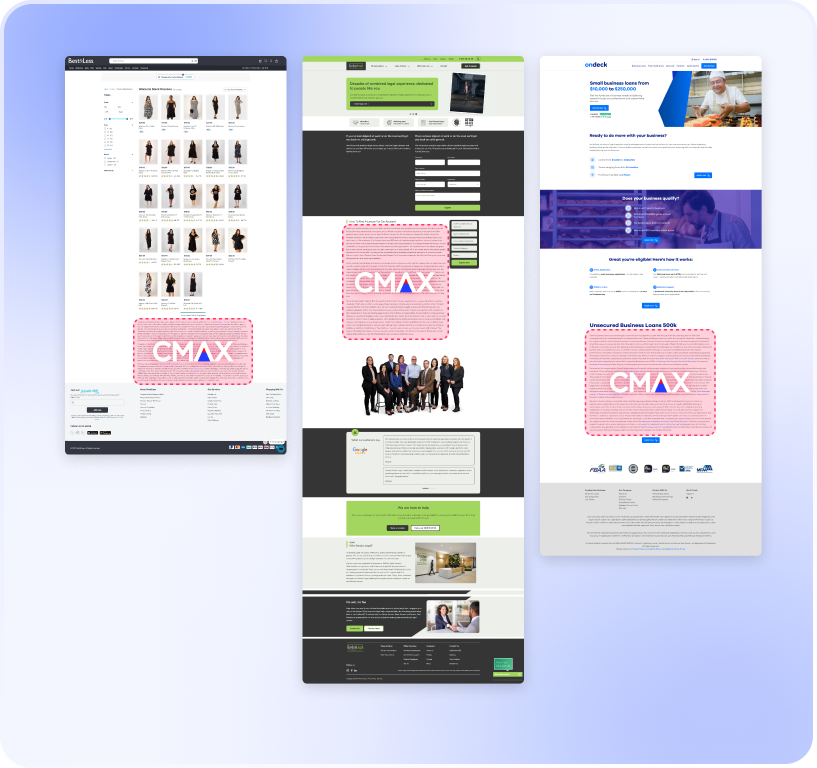
Based on CMAX’s client data, a regional internet provider built 6,637 suburb-specific pages and improved organic traffic 86% in 12 months. Brisbane buyers search the same way: suburb plus service, often combined with a problem or comparison. A standard agency site rarely covers those combinations at the depth AI systems need to confidently surface a local provider. Scale of local coverage is a structural signal, and the proposal should address it directly.
The right agency proposal makes accountability clear.
What reports must include
A polished AI visibility report with no baseline is a before photo without an after. For a report to carry weight with stakeholders, it needs to show the query sample used, what AI answers returned at the start of the engagement, who owned each implementation task, the milestones those owners were held to, and the business outcome the work was meant to move. Without those five elements, there is no way to tell whether visibility shifted, whether the shift came from the agency’s work, or whether it translated into anything commercial. A CFO reviewing that report will ask the same questions. The report should answer them before the meeting starts.
What makes a proposal credible
A Brisbane GEO proposal earns trust when it connects three things: local prompt research tied to specific suburbs and service lines, named implementation owners for technical, content, schema, and tracking work, and attribution methods that link visibility changes to qualified enquiries, suburb coverage, or service-line growth. When those three are present, AI visibility becomes a measurable input to pipeline rather than a reporting layer that sits beside it. When they are absent, the proposal is describing activity. A credible proposal describes outcomes, states who is responsible for reaching them, and defines the period in which they will be measured.
A GEO agency Brisbane proposal that names implementation owners and defines measurable milestones follows the same accountability standard expected of Sydney GEO services, where delivery ownership and attribution methods must be tied to commercial priorities rather than polished reports alone. That level of transparency is what makes a GEO agency Brisbane proposal worth shortlisting.
Frequently Asked Questions (FAQ)
How will you establish our AI visibility baseline?
A credible baseline starts with a fixed set of Brisbane service prompts. Each prompt is run, the AI answer is recorded, and the business is marked as absent, mentioned, or recommended. From there, the entities, pages, and citations most likely to influence those results are mapped so there is a clear starting point to measure against.
How will you connect prompts to business priorities?
Prompts are grouped by service line, suburb, intent, and conversion value. That grouping lets the business separate high-visibility prompts that rarely convert from lower-volume prompts tied to stronger enquiries, better-fit leads, or priority service areas.
How are they searching through AI?
AI search tends to be more conversational than traditional search. A single prompt often combines location, problem, comparison, and urgency together. Tracking should cover natural-language local queries, including suburb-plus-service, problem-led, and comparison prompts, rather than short keywords alone.
Buyers researching a GEO agency Brisbane often arrive with broader questions about the search landscape, including the aeo vs SEO debate, which can help frame why AI-answer visibility requires different measurement signals than traditional ranking metrics.
Why would an AI system recommend your brand in the first place?
An AI system is more likely to surface a brand when it can consistently identify what the business does, where it operates, which pages support those claims, and which external sources corroborate them. Crawlable pages and consistent mentions across the web are the foundation.
How long does GEO take to show results?
Early signals, including indexed updates, clearer entity alignment, and shifts in mention patterns, can appear before any revenue movement. Meaningful commercial impact takes longer because enquiry volume, sales cycles, and attribution depth vary by business.
Brisbane buyers assessing a GEO agency Brisbane for the first time frequently ask about SEO vs GEO to understand whether their existing organic investment already addresses AI-answer visibility or whether a separate prompt-level strategy is needed.
Two Lines of Code, Thousands of Long-Tail Keywords
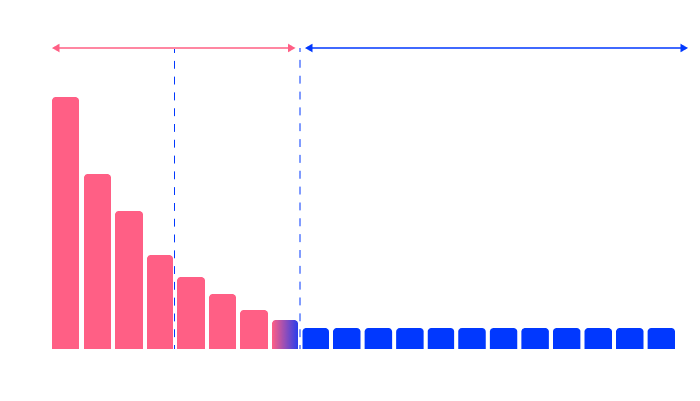
CMAX is an agentic SEO platform built for one job: capturing the long-tail search traffic most businesses never reach.
Our AI agents deploy and continuously update content across the thousands of query variations your customers actually type, including location-specific searches like those driving Brisbane’s emerging GEO demand. The platform targets over 90% of search and AI traffic that sits beyond head terms, using programmatic content generation at a scale and speed manual teams can’t match. Results from documented accounts have been observed within six weeks of deployment.
If you’re evaluating a GEO agency in Brisbane, CMAX gives you the infrastructure to own local long-tail visibility with just two lines of code, no agency retainer, no content bottleneck.
Author
Jeremy Tang
Founder and CEO of CMAX
Jeremy Tang is the Founder and CEO of CMAX. With over 2 decades of experience in business consulting and digital marketing, he has successfully driven seven startup businesses, six of which achieved $1 million in revenue from zero in less than 16 months, 5 of which grew to multi-million dollar a year ventures without any external funding. Jeremy's expertise lies in streamlining business processes through technology and leveraging digital (in particular SEO) for business growth. He resides in Australia, travels extensively, and draws inspiration from his global experiences.