For many marketing teams, deciding whether to work with a GEO agency starts with a simpler question: do SEO and GEO actually do different things? The practical answer is that both depend on the same starting point: pages that Google can find, read, and index.
Because AI engines retrieve from the web, AI search optimisation still relies on content Google has already crawled and stored. The real question is whether your current pages cover enough specific searches to show up in both places.
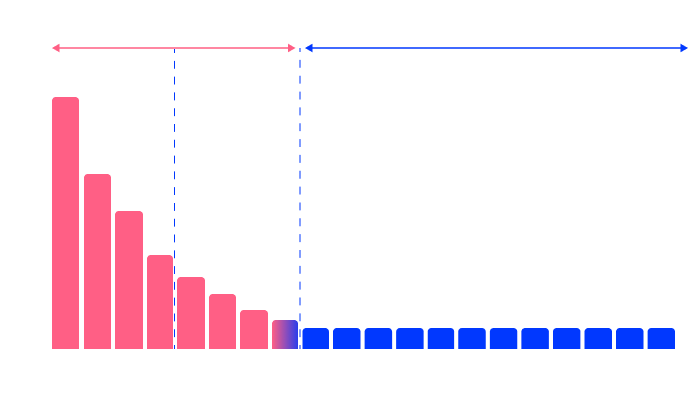
Most brands appear prominently on a handful of terms and still miss the far larger set of specific questions customers actually type. That is exactly where AI tools go looking for answers.
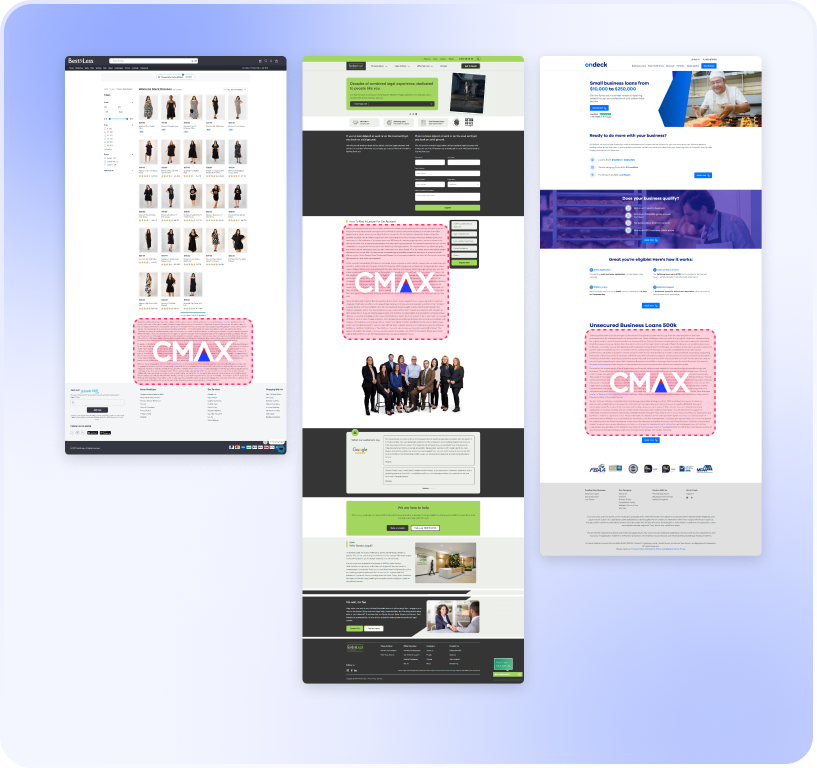
What is search engine optimisation now extends beyond a short list of headline terms to the specific long-tail topics, the detailed, specific searches people type rather than broad general terms, that Google and AI engines retrieve from. CMAX works on that gap, expanding long-tail coverage on your existing site so both Google and AI systems have more of your content to draw from.
SEO and GEO Work Best as One Broader Visibility Strategy
SEO Still Shapes AI Visibility
AI engines retrieve answers from content that first has to be discovered, crawled, and stored in Google’s index, which is Google’s library of every page it has found and read. Clear site architecture, indexable pages, and strong topical signals decide whether a page enters the pool of sources AI systems can draw from.
Think of it like a wholesaler and a network of retailers. Google is the wholesaler: it sources, checks, and stocks the shelves.
AI engines are the retailers drawing their inventory from that same warehouse. If a product never reaches the wholesaler, no retailer can sell it.
In this context, SEO is the work you do to get your pages into that warehouse: well-structured, regularly indexed content is what AI engines can then retrieve and cite.
For teams thinking about specific markets, a GEO agency Australia or generative engine optimisation agency can align regional signals, Australian spelling and local intent, with the broader search and AI visibility strategy.
GEO Expands Reach into AI Answers
Generative engine optimisation extends classic SEO by helping content get retrieved and cited in AI answers, not just featured on a short list of head terms. Answer engine optimisation Australia requires Australian spelling and regional signals while keeping the same crawlable content foundations as any SEO programme.
That means building more content surface area: comparisons, use cases, objections, and niche intents that traditional SEO plans routinely leave uncovered. GEO pushes the same content investment further.
The biggest difference is not replacement, it is coverage, freshness, and retrieval.
SEO ranks terms, GEO expands coverage.
Traditional SEO concentrates effort on a short list of commercial terms. Over 90% of search and AI demand is in the long tail, beyond those head terms, which is where the SEO vs GEO framing becomes useful.
That shift also clarifies what is generative engine optimisation: content broad enough to answer the specific intents that support both search visibility and AI retrieval.
Fan-out rewards freshness and connections.
One prompt to an AI tool triggers eight to twelve Google searches as it assembles an answer. Query fan-out is what happens when you ask an AI tool a single question and it runs several smaller Google searches in the background before it replies.
Because AI retrieval pulls across adjacent topics, effective GEO services depend on pages that stay fresh, answer narrow intent clearly, and link to related pages so Google can read the surrounding topic cluster.
That is why answer engine optimisation services focus on updating content and strengthening internal paths. Pages that get recrawled and reinterpreted regularly are the ones that surface when the topic shifts.
CMAX Treats SEO, GEO, and AEO as One Search and AI Visibility Programme
CMAX Scales Coverage with Brand Control
CMAX is the Agentic SEO Platform, trained on human-reviewed, client-approved content. Within CMAX, the SEO vs GEO question does not produce two separate channels or two separate budgets.
One controlled content programme supports both search visibility and AI retrieval, and the same content standards apply across search and AI visibility. That is what GEO SEO means in practice: no separate GEO retainer to manage.
CMAX Closes Long-Tail Retrieval Gaps
Dynamic Internal Linking connects related pages so deeper content is discoverable by both users and crawlers. AI search engine optimisation uses those connections to strengthen the topical context that supports AI retrieval.
A practical answer to what is answer engine optimisation starts with Search Console data, the queries, impressions, clicks, and average position your site already produces, to identify long-tail gaps and decide which pages need refreshing first. Search Console is Google’s free tool showing which searches your site appears for.
Start with Foundations, Then Expand
Start with crawlable pages, clear information architecture, relevant content, and internal linking. Then cover the comparisons, use cases, and specific intents your current content has not reached.
AI systems reward breadth across connected subtopics.
Once those foundations are in place, CMAX targets the majority of search demand sitting in the long tail: the comparisons, use cases, and specific intents missing from your existing pages. Clients see first clicks in 6-8 weeks, with programmes maturing around month six.
Frequently Asked Questions (FAQ)
How do I measure GEO success?
Track the same signals you would use for SEO: Search Console impressions, clicks, query growth, and page-level visibility across long-tail topics.
Also watch for assisted outcomes: growth in non-brand impressions, more pages receiving impressions, and rising direct visits. Most ChatGPT users are on the free plan, which strips referral data when they click through, so analytics tools record those visits as direct rather than attributing them to AI.
Measuring GEO vs SEO comes down to whether coverage is expanding across the customer questions that AI tools and Google both retrieve from.
How often should I audit my AI visibility?
When reviewing SEO vs aeo performance, audit monthly and again after major publishing, product, or SERP changes, because retrieval patterns shift as content ages and new queries appear.
Google does not guarantee it will crawl, index, or serve every page, so regular checks matter when freshness and coverage are part of the strategy. Regular audits of SEO vs GEO vs aeo should check crawling, indexing, and freshness after major publishing, product, or results-page changes.
Why do AI models give different answers to the same questions?
AI models retrieve from different sources, weigh recency differently, and fan out the same prompt into different supporting searches, so the answer you see today may differ from tomorrow’s.
Clear, well-structured, regularly updated pages improve the chances of retrieval and citation across those variations. Differences between GEO vs SEO become clearer when you consider that AI models are running multiple searches behind a single question, while conventional search is ranking one page against another.
Answer engine optimisation services address both by keeping content fresh and structured.
SEO Vs GEO Starts With Coverage
SEO vs GEO is usually framed as a choice. CMAX takes a broader view of aeo vs SEO: AI visibility still depends on established search foundations, then extends through wider coverage, fresher pages, and stronger internal connections.
Within CMAX, generative engine optimisation expands long-tail coverage through useful content that keeps updating from real performance data. As the Agentic SEO Platform, CMAX helps brands add and keep updating useful content across the many specific ways customers search, so search and AI visibility grow from the same content system.
AI search visibility optimisation and AI search engine optimisation are both outputs of that one programme, not separate workstreams.
The most useful next step is finding out where your current gaps actually are, across both search and AI, before deciding what to do about them.
If you’re curious as to how you’re performing on AI, book in a Missing Customer Map review with our Growth Team.
Author
Jeremy Tang
Founder and CEO of CMAX
Jeremy Tang is the Founder and CEO of CMAX. With over 2 decades of experience in business consulting and digital marketing, he has successfully driven seven startup businesses, six of which achieved $1 million in revenue from zero in less than 16 months, 5 of which grew to multi-million dollar a year ventures without any external funding. Jeremy's expertise lies in streamlining business processes through technology and leveraging digital (in particular SEO) for business growth. He resides in Australia, travels extensively, and draws inspiration from his global experiences.