Most teams searching for a saas SEO agency have already learned that generalist SEO work stalls once the obvious category terms are covered. The gap is rarely effort. It’s that SaaS buyers search by integration, role, workflow, and competitive comparison, and a standard keyword strategy treats all of that as secondary. Closing it requires query mapping tied to how evaluation actually happens, not just where volume is highest. CMAX works with SaaS teams at that inflection point, pairing programmatic scale with the technical and commercial specificity the category demands.
SaaS SEO demands a different agency standard.
SaaS intent is more fragmented
A saas SEO agency has to account for fragmented intent across tasks, stacks, and roles rather than optimising for a handful of head terms. SaaS buyers don’t arrive at a decision through a single search. They search by task (“automate invoice approvals”), by stack (“integrate with HubSpot”), by team role (“RevOps reporting tool”), by migration problem (“switch from Salesforce”), and by replacement scenario (“alternatives to Monday.com”). Each of those queries signals a different stage of evaluation, a different objection, and a different buyer.
An agency that optimises for head terms alone captures the top of that picture and misses most of it. The queries that signal active evaluation, the ones where a buyer is comparing options, testing fit, and building a shortlist, sit further down the intent curve. That’s where the decision actually forms.
While a saas SEO agency focuses on fragmented product, integration, and comparison intent across a software funnel, an ecommerce SEO consultant typically prioritises category, brand, and transactional queries tied to product listings and purchase intent.
Coverage goes beyond category terms
Ranking for a broad category term is a starting point, not a coverage strategy. Shortlist-stage buyers search differently: they look for integration pages that confirm compatibility with their current stack, versus and alternatives queries that let them test trade-offs, role-based pages that speak to their specific function, and workflow use cases that show whether the product fits how their team actually operates.
Those page types do specific work. An integration page answers a procurement question. A versus page handles an objection before a sales call. A role-based page speaks to a finance leader’s priorities rather than a developer’s. A generalist agency rarely builds for that depth because its brief doesn’t start there.
Specialist agencies work from funnel depth and technical reality.
SaaS technical SEO constraints
SaaS products create crawl and indexing problems that generalist agencies rarely encounter at the same frequency. JavaScript-rendered pages can leave product features invisible to search engines if rendering isn’t handled correctly.[1] Documentation hubs often sit behind login walls, which cuts off crawl access to content that could otherwise support evaluation-stage queries. Mixed subfolder and subdomain setups fragment authority and make it harder for search engines to connect product information to the conversion paths that count. An SEO agency for saas accounts for all of these variables during the initial technical audit, before setting expectations.
Each of these constraints changes what a technical audit needs to cover, how indexing is prioritised, and which pages can realistically rank. Just as a real estate SEO agency must map hyper-local and property-type demand across a fragmented buyer journey, saas SEO agencies must structure coverage across the many role-based and use-case queries that signal active software evaluation.
Revenue matters more than traffic
Traffic volume is a weak proxy for commercial performance in SaaS. A page ranking for a broad category term can pull thousands of sessions from audiences who will never start a trial, request a demo, or enter a qualified pipeline. An SEO agency for saas companies focuses reporting on the metrics that reflect actual commercial contribution.
This is why a saas SEO agency ties every brief to trial starts, demo requests, and pipeline. That mapping lets the team identify which traffic is genuinely contributing to acquisition and which is inflating session counts without reaching the right accounts or use cases. When reporting goes up to a CFO or board, that distinction is what separates a credible growth programme from a vanity metric exercise.
Search coverage grows through structured query mapping.
SaaS use-case query breakdown
Effective SEO for saas companies separates demand by search behaviour. That separation lets teams see exactly where broad visibility ends and where evaluation-stage opportunities remain uncovered.
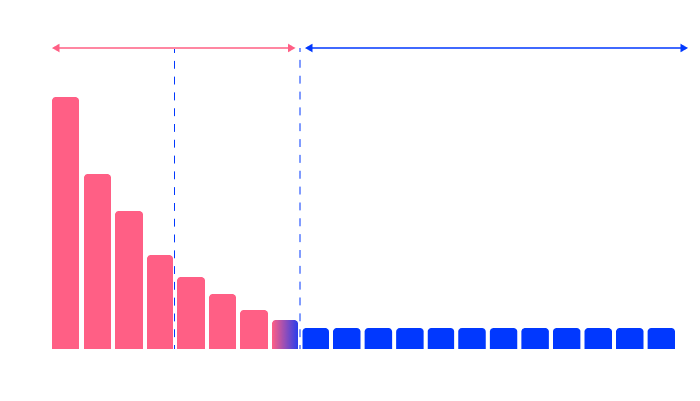
What separates a saas SEO agency from a generalist is how it structures query maps across product, integration, comparison, and role-based demand. Most SaaS sites rank reasonably well on category terms. The gap shows up when you break demand into the query types that shortlist-stage buyers actually use.
When a SaaS team first considers SEO for my website, a specialist will typically reframe the brief around query mapping across product, integration, comparison, and role-based demand rather than broad traffic volume alone.
Product queries target what the software does. These include feature-led, capability-led, and solution-specific searches where the buyer describes the outcome they want, not the product category they’re browsing.
Integration queries capture how the product connects with named tools, platforms, data sources, or systems already embedded in the buyer’s workflow. A buyer evaluating a RevOps platform will search for its Salesforce sync or HubSpot compatibility before they ever book a demo.
Comparison queries cover versus, alternatives, and replacement searches. These come from buyers who are actively narrowing a shortlist and testing trade-offs between two or three specific options.
Role-based queries reflect how different stakeholders search. A finance leader evaluating spend management software searches differently from the IT manager who will own the implementation. Marketers, RevOps teams, support managers, and procurement leads each carry different priorities and objections, and each generates a distinct query pattern.
Mapping these four types against current rankings typically reveals the same pattern: broad category coverage with thin or absent coverage across the queries that appear closest to a purchase decision. Comprehensive saas SEO services translate this query map into a prioritised content and technical roadmap tied to each stage of the buying cycle.
Workflow Queries
Workflow queries map to jobs-to-be-done language: reporting, onboarding, handoff, automation, approval processes. A buyer searching “how to automate approval workflows in [software category]” is describing an operational problem, and they want to know whether your product solves it before they book a demo. These searches sit at the edge of active evaluation, where intent is high and competition is often thin.
Query Maps Reveal Evaluation Demand
A before-and-after query map tends to surface one gap immediately. A SaaS product ranking well on a broad category term can still have zero visibility across comparison searches, integration lookups, and role-specific workflow queries, even though those are the pages buyers read when they are narrowing a shortlist.
A saas SEO agency applies the same principle of intent-specific page targeting that underpins SEO for insurance agents, where each audience segment requires distinct query coverage matched to its decision criteria and workflow context.
Broad category rankings tell you the product is discoverable. They do not tell you whether it appears when a RevOps lead searches for a handoff automation solution, when a finance manager looks for approval workflow software that connects to their ERP, or when a buyer compares two shortlisted tools side by side. For a SaaS team choosing an SEO agency Sydney buyers shortlist, the same query-mapping standard applies: each of those queries represents a distinct moment in the selection process, and each requires a page built around that specific intent.
The map makes the gap visible in concrete terms: which query clusters have coverage, which have partial coverage, and which have none. A Sydney SEO agency that maps workflow queries to jobs-to-be-done language can use that view to prioritise page development where evaluation-stage demand already exists but the product is absent from results.
The right hiring decision depends on evidence and constraints.
What to check before hiring
Before hiring a saas SEO agency, check whether it can explain how it measures commercial outcomes and prioritises technical constraints. Can they walk through how trial starts, demo requests, and qualified pipeline are tracked, rather than traffic volume? Can they explain how they prioritise technical constraints, such as JavaScript rendering or subdomain architecture, when those issues compete for development time? Can they tell you what happens in the first 30 to 60 days, specifically? And does their method align with Google’s published guidance on what to expect from an SEO provider?
If the answers are vague, that’s the answer. A credible agency can explain its sequencing, name the metrics it tracks, and point to the reasoning behind its approach. Promises without mechanisms are a risk you carry, not them.
Teams evaluating an SEO agency Melbourne businesses rely on should check the same evidence criteria outlined above. As an SEO agency in Melbourne with SaaS-specific experience, the provider should demonstrate how it maps commercial outcomes to SaaS buyer behaviour.
Whether the team works with a Brisbane SEO agency or a provider in another market, the evaluation checklist remains the same.
A saas SEO agency operates under similar specialist-versus-generalist pressures as a healthcare SEO agency, where deep vertical knowledge of buyer intent and compliance-sensitive content shapes every strategic decision.
SaaS proof through adjacent mechanism
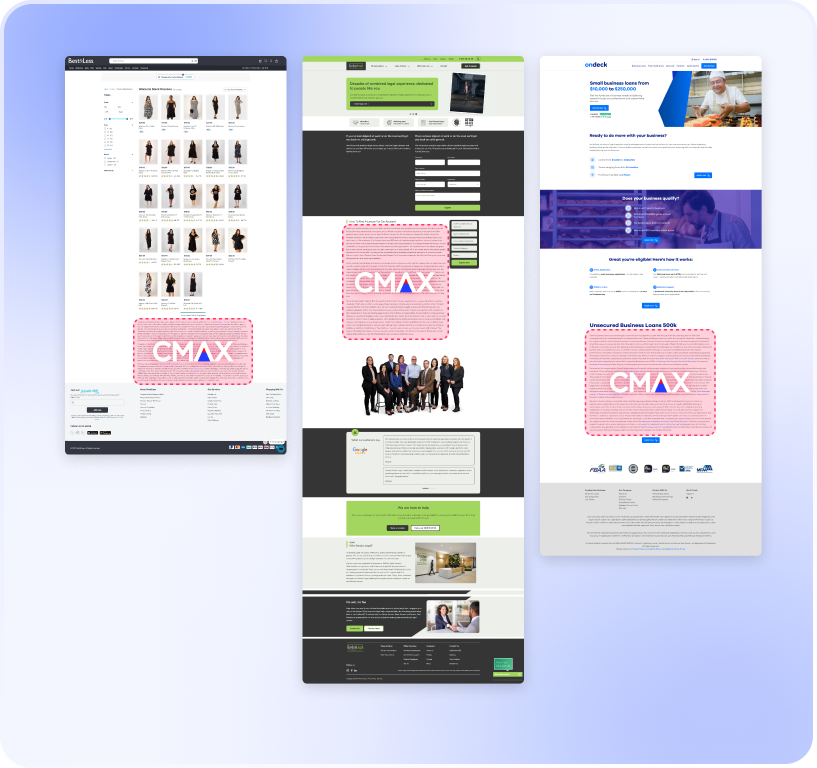
In one CMAX engagement, a fintech lender generated 1,400+ new rankings within 6 weeks by expanding beyond head terms into suburb-level and long-tail demand. The mechanism was coverage, not optimisation of existing pages.
SaaS teams face the same gap. A product may already rank on its primary category term while remaining invisible across comparison queries, integration lookups, and role-specific workflows, the searches that appear when a buyer is actively narrowing a shortlist. Expanding into that demand follows the same logic: more coverage across the ways buyers actually search, built at a scale that manual content production can’t match.
How to optimise for AI Overviews?
Structure pages around specific questions with concise answers placed close to supporting detail. AI Overview systems prioritise clear attribution and directly stated facts, so explicit entity relationships matter more than broad marketing copy.[2] A page that states “X integrates with Y to do Z” gives a summary system something to cite. Vague positioning copy does not.
A saas SEO agency evaluating modern search visibility should understand how AI and SEO interact, particularly as AI-generated summaries increasingly influence which SaaS pages earn organic clicks.
Does programmatic SEO risk Google penalties?
Scale alone does not typically trigger penalties. Problems arise when pages repeat the same copy, add little original value, or fail to answer a distinct query. Each page in a programmatic set needs a clear search purpose and a differentiated answer. If those conditions hold, the programme scales without risk.[3]
How to measure programmatic SEO ROI?
Compare indexed page growth, qualified non-brand traffic, assisted conversions, and pipeline or revenue contribution against content production and maintenance costs. Page volume is an input metric. Commercial value shows up in qualified traffic and pipeline, so those are the numbers worth tracking.
How to map content for SaaS personas?
A saas SEO agency should pair each persona with recurring jobs, objections, and tool-stack context before mapping content. Then match those inputs to query types: use case, integration, comparison, and role-based searches. A RevOps lead and a support manager both evaluate the same product differently, and their search behaviour reflects that.
As part of any forward-looking saas SEO agency brief, teams should assess how AI search engines surface product and comparison content differently from traditional results pages.
How to transition to programmatic SEO?
Start with one repeatable page pattern, validated query clusters, editorial rules, and technical QA. Test indexing, engagement, and conversion quality at small scale before expanding output. A controlled first batch surfaces structural problems early, when they are cheap to fix.
Most SaaS Search Traffic Is Long-Tail, and Most Agencies Ignore It
CMAX is an agentic SEO platform built for the way SaaS buyers actually search.
Over 90% of search and AI demand sits in long-tail queries, product comparisons, integration questions, role-specific use cases, yet most agencies focus on a handful of broad category terms and call it a strategy. CMAX deploys AI-powered agents that create, publish, and continuously update content across thousands of these high-intent queries, using just two lines of code. Teams typically start seeing measurable results within six weeks.
If you’re evaluating a specialist SaaS SEO agency, the real question isn’t who ranks for vanity keywords, it’s who can cover the fragmented demand your buyers generate every day.
References [1] – https://developers.google.com/search/docs/crawling-indexing/consolidate-duplicate-urls [2] – https://developers.google.com/search/docs/appearance/ranking-systems-guide [3] – https://developers.google.com/search/docs/essentials/spam-policies
Author
Jeremy Tang
Founder and CEO of CMAX
Jeremy Tang is the Founder and CEO of CMAX. With over 2 decades of experience in business consulting and digital marketing, he has successfully driven seven startup businesses, six of which achieved $1 million in revenue from zero in less than 16 months, 5 of which grew to multi-million dollar a year ventures without any external funding. Jeremy's expertise lies in streamlining business processes through technology and leveraging digital (in particular SEO) for business growth. He resides in Australia, travels extensively, and draws inspiration from his global experiences.