In practical terms, SEO AI is artificial intelligence applied to search visibility, content coverage and optimisation.
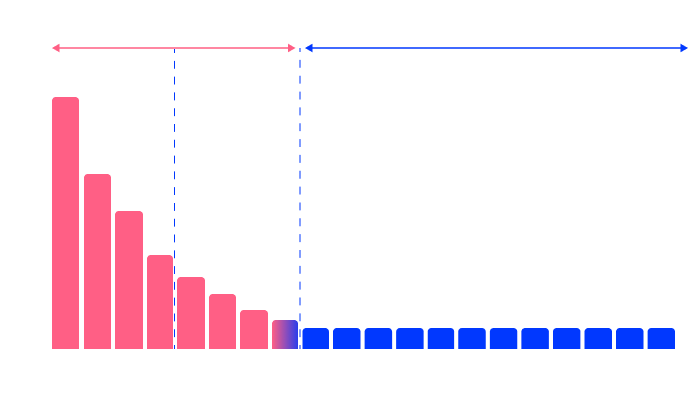
Most AI SEO software focuses on the head term, the one big keyword everyone fights over. The bigger pattern sits elsewhere.
Over 90% of search and AI demand is in the long tail: the specific, detailed searches people type when they compare options or check whether something fits their problem. Picture a florist with only red roses in the window.
Customers walk in asking for something for a 60th birthday, no lilies, under $50, and the florist has no answer for most of them. In this context, long tail means the specific requests customers actually make, and AI and SEO work means having a page ready for each request, beyond the roses in the window.
AI helps you find those gaps and draft at scale. People still need to check tone, accuracy and whether a page helps a buyer decide, and that applies to ChatGPT for content and SEO as much as anything else.
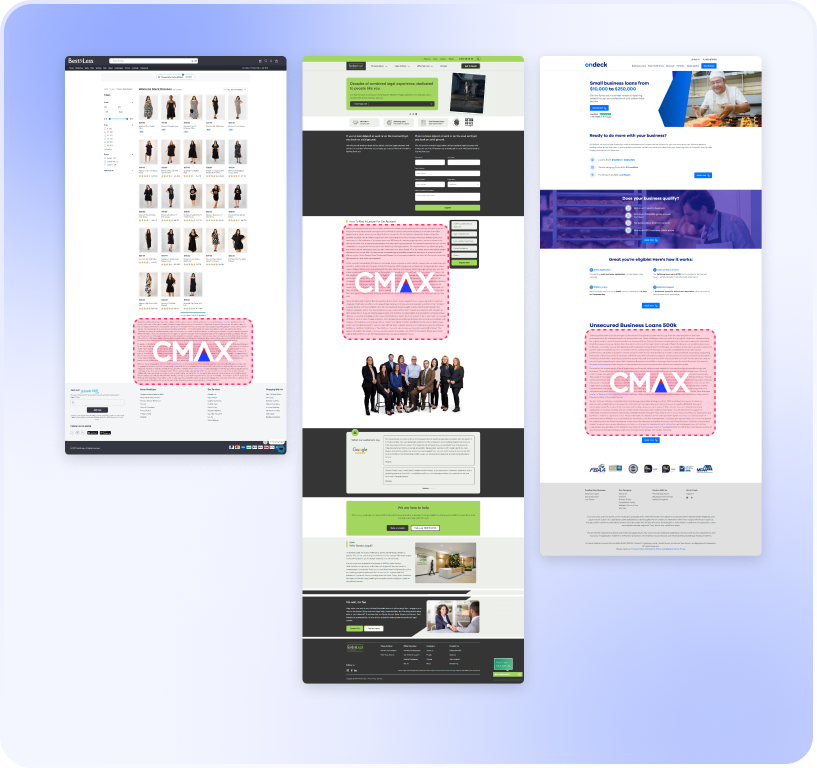
CMAX uses AI to scale content across thousands of search variations, grounded in approved brand claims and product language.
How AI and SEO grow long-tail visibility with human control
Long-tail demand drives most visibility
That changes the SEO question. “Do we rank for the main term?” becomes “How many of the ways customers search do we have a useful answer for?”
Our agents apply AI for keyword research to find the specific questions your site doesn’t answer yet. That is where AI based SEO helps: it widens your content surface area to cover more of what customers ask.
AI scales work, people keep control
Google’s guidelines allow appropriate use of AI. Using it mainly to manipulate search results breaks spam policy.
Responsible machine learning in SEO keeps people accountable for claims, compliance, tone and product fit. The split is simple.
AI finds search patterns, drafts page updates, flags gaps and surfaces ageing content. People check claims, tone, product fit, compliance and whether the answer helps a buyer decide.
AI handles scale, freshness and structure; people handle quality
Breadth and freshness beat narrow tactics
Schema can make a page eligible for rich results. It won’t rescue thin content.
A label on an empty box is still an empty box.
Prompt tracking software and many generative AI SEO platforms show where your brand is missing from ChatGPT answers. The best AI SEO software reports the problem, but it doesn’t create the pages AI engines pull from.
When an AI tool fans out across eight to 12 related Google searches to build its answer, the brands that appear have useful, current pages already ranking across those related queries. AI powered SEO keeps those pages current.
Human-trained agents scale approved content
CMAX is trained on human-reviewed, client-approved content. Outputs stay aligned to your product language, approved claims, legal constraints and brand tone.
The Agentic SEO Platform publishes useful content across the thousands of ways customers search, then refreshes it as demand, position and click data shift. Static templated pages get published and left alone.
An AI SEO content generator on its own works that way. Generative SEO holds up only when pages get refreshed.
Measure progress with Search Console, crawl frequency and content performance
Measure searches, crawling and links
Prompt tracking alone shows mentions. AI and SEO together connect Search Console impressions and clicks to the pages responsible for them.
For complex sites, AI SEO specialists group queries by intent: comparison, product fit, problem-led and location-led. Then they track whether each group shows growing impressions, clicks and average position.
An AI SEO analyser may flag slow responses or isolated pages, and AI SEO optimisation turns those flags into fixes. Google’s Crawl Stats report shows crawl frequency alongside response times and availability issues.
Pages that are rarely crawled, slow to load or isolated from related pages are harder to grow.
How CMAX accelerates long-tail clicks
Through SEO machine learning, CMAX targets the bulk of search demand that sits in the long tail by combining Dynamic Internal Linking with Full Body SEO. This connects published content to related pages so Google can recognise topical context.
Most SEO programmes run by conventional agencies, using outdated methods, tell clients to expect results in six months. CMAX’s methods allow clients to start seeing clicks in 6 to 8 weeks.
Timelines still depend on the site, its competition and how the work is done.
Frequently Asked Questions (FAQ)
Does Google penalise AI-generated content?
Google does not penalise content because AI helped produce it. Under Google’s spam policy, AI and SEO done well pair scalable drafting with accountable review.
The practical test: is the page accurate, original enough to be useful, clearly written and reviewed by someone accountable for the claim?
Do AI Overviews reduce organic clicks?
AI Overviews can reduce clicks on informational searches by answering part of the question on the results page. The effect varies by query type.
Ahrefs found the presence of an AI Overview correlated with a 58% lower average click-through rate for the top-ranking page. Alongside Google AI Overviews and ChatGPT answers, perplexity AI SEO reflects the same shift from traditional result pages toward generated responses.
Read any claim about ChatGPT for SEO by query type. Track Search Console by query pattern: a drop on basic definitional searches matters less than growth on comparison, category and buying-intent queries.
Can AI-generated images hurt SEO?
AI-generated images do not hurt SEO by default. Generic visuals, product misrepresentation, slow load times and images disconnected from the surrounding copy can weaken a page.
Google’s image guidance centres on descriptive filenames, useful alt text and placing images near relevant copy. Real product imagery and accurate diagrams keep AI and SEO grounded where visual accuracy affects buyer trust.
AI And SEO Scale Long Tail Coverage
AI and SEO work when scale keeps control. CMAX connects generative AI and SEO through the Agentic SEO Platform.
The job is publishing useful content across the many specific searches customers use, then updating it as demand, position and click data change.
You can’t rank for searches you don’t cover. For teams that want growth beyond a handful of head terms, AI driven SEO through CMAX connects breadth, freshness and internal linking so long-tail visibility produces measurable clicks.
The quickest way to see which customer searches have no page answering them is to map them. The review does exactly that.
If you’re curious as to how you’re performing on AI, book in a Missing Customer Map review with our Growth Team.
Author
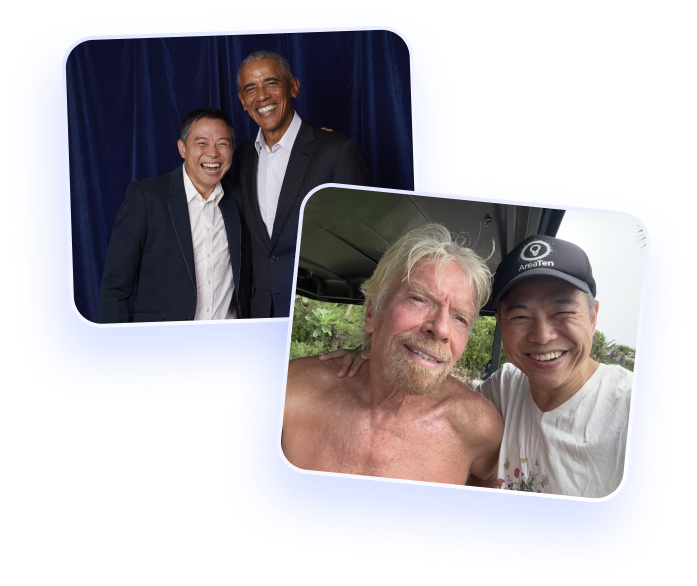
Jeremy Tang
Founder and CEO of CMAX
Jeremy Tang is the Founder and CEO of CMAX. With over 2 decades of experience in business consulting and digital marketing, he has successfully driven seven startup businesses, six of which achieved $1 million in revenue from zero in less than 16 months, 5 of which grew to multi-million dollar a year ventures without any external funding. Jeremy's expertise lies in streamlining business processes through technology and leveraging digital (in particular SEO) for business growth. He resides in Australia, travels extensively, and draws inspiration from his global experiences.