Most people searching for SEO for my website already have a site live but no clear sequence for what to work on first. The temptation is to start everywhere at once: rewriting pages, adding keywords, installing plugins. But without a baseline and a short list of technical faults, early effort tends to scatter. The practical starting point is smaller than it looks: record what you have, fix what blocks visibility, then build from there. CMAX works with enterprise teams at exactly that stage, helping scale organic coverage once the foundations are set.
SEO Work Starts With a Realistic Baseline
Ranking Goals and Matching Pages
Starting SEO for my website means establishing a realistic baseline before changing anything. Before touching a single page, list the search terms that actually matter to the business. Then match each term to the page that already best answers that search.
This exercise does three things at once. It shows where intent already has a home on your site. It surfaces cases where two pages are competing for the same query, splitting authority instead of concentrating it. And it identifies gaps where no suitable page exists yet, so you know whether the next move is to improve something or build something new.
That mapping step is worth doing before any content work begins. Without it, updates tend to strengthen the wrong pages or create overlap that dilutes rather than builds ranking potential.
Baseline Tracking and Index Coverage
Record your current numbers before making any changes: impressions, clicks, indexed pages, and top queries in Google Search Console, alongside whatever analytics platform the site uses.
That baseline is what separates real improvement from reporting noise later. A page that gains 200 impressions after a content update looks very different when you can compare it against a documented starting point rather than a rough memory of where things stood.
The baseline also tells you what kind of problem you’re actually solving first. Low impressions on priority pages usually point to an indexing or visibility issue. Reasonable impressions with low clicks suggest a page-query alignment problem. Those two problems have different fixes, and conflating them wastes time.
Technical basics usually deserve the first fixes.
Crawlability, Indexation, and Linking
Before adding a single new page, check that search engines can actually reach the ones you already have. Pages blocked by robots directives, carrying accidental noindex tags, pointing to the wrong canonical URL, or sitting outside your internal linking structure will not appear in search results regardless of how well the content is written. The first technical pass on SEO for my website should target crawl and indexation barriers. The topic can be perfectly relevant and the page will still be invisible.
Internal linking is often the quietest culprit. A page that no other page links to is effectively orphaned. Search engines discover content by following links, so if a priority URL sits outside your navigation and has no supporting links pointing to it, it may never be crawled consistently.
Fix these barriers first. Expanding content on top of indexation problems adds work without adding visibility.
Quick Audit Issues to Fix
A short technical audit does not need to cover everything. The fastest way to check SEO for my website is a focused crawl-and-index review of priority URLs. Focus on faults that directly stop important URLs from performing.
Three issues cause the most damage at this stage:
- Accidental noindex tags on priority pages. These are easy to add during development and easy to miss after launch. A single tag on a key service or product page removes it from search entirely.
- Broken internal links. A 404 on a link that was meant to pass discovery to a deeper page cuts off that path completely.
- Duplicate title tags. When two pages share a title, search engines have less signal about which one should rank for a given query, and both can underperform as a result.
Resolve these before moving to content or keyword work. The technical audit priorities central to SEO for my website are equally relevant in a real estate SEO agency context, where crawlability and duplicate listing pages are among the most common barriers to organic visibility.
Useful content should follow audience demand.
Intent Mapping and Content Gaps
The content side of SEO for my website works best when each page answers a distinct intent. Keyword research only earns its place when it drives a clear decision for each term. There are three: improve the existing page because it already targets that intent, create a new page because the intent is genuinely different, or leave the term alone because a page you already have covers it well enough.
That three-way split does real work. It stops you publishing thin pages that add nothing, and it stops two of your own pages competing for the same query. Both outcomes quietly damage performance, and both are avoidable before a single word is written.
Run every candidate term through that filter before you commission or update anything. If a term maps cleanly to a page you already own, the answer is to strengthen that page, not create a second one.
AI Content Review Standards
AI-assisted drafts can accelerate production, but speed is only useful if the output is accurate, original, and actually answers the query the searcher typed. A fast draft that answers the wrong question, repeats the same claim three times, or relies on weak sourcing does not perform better because it was produced quickly. Treating AI SEO tools as a starting point rather than a finished product keeps quality where it needs to be.
Every AI-assisted draft needs a human review pass that checks three things: factual accuracy against reliable sources, originality relative to what already ranks, and fit with the specific query the page is targeting. If the draft answers a slightly different question than the one the searcher asked, it will not rank for that search, regardless of how well it reads.
When building content for SEO for my website, understanding how AI and SEO interact can help you decide where automated drafting tools fit into your review and publishing workflow.
Review is the step that makes AI-assisted content useful. A skilled SEO website copywriter adds the factual accuracy, tone, and specificity that automated drafts lack. Without that pass, you are publishing at speed without the quality control that search engines and readers both require.
Early SEO progress follows stages, not instant jumps.
SEO Expectations Checklist
SEO progress on a new or newly optimised site follows a predictable sequence. Setup and indexing signals come first. Stable rankings, traffic lifts, and lead outcomes come later. Skipping ahead in that sequence is not possible; each stage depends on the one before it.
Use this checklist to confirm the foundations are in place before judging whether the work is performing:
- Tracking is live. Impressions, clicks, indexed pages, and key conversions are recorded in Google Search Console and your analytics platform. Later changes can then be tied to specific page performance rather than channel-wide averages.
- Priority pages are accessible. Each page you want to rank is crawlable, indexable, and linked from relevant navigation or supporting pages. Search engines need to find a page and place it in site context before they rank it.
- Pages are mapped to queries. Existing pages each have a clear target query, and content gaps are listed separately. That separation keeps updates focused on strengthening the right pages rather than creating overlap.
- Impressions appear before traffic. New impressions and broader query coverage typically arrive before meaningful traffic lifts. Search engines test pages across a wider range of searches before rankings settle.
- Recrawl precedes ranking gains. Ranking improvements become visible only after technical fixes and content updates have both been recrawled. That recrawl is when search engines can reassess the full page and site context.
Work through the list in order. If an item is incomplete, that is where the constraint sits. Choosing SEO services for my website is easier to evaluate once tracking is in place and early signals are visible.
The staged expectations that apply to SEO for my website also hold for an ecommerce SEO consultant engagement, where product-page indexation and long-tail coverage typically move before category-level rankings or revenue metrics shift, which is why SEO for my website follows stages rather than instant jumps.
Lead or revenue impact is assessed last, once visibility and traffic patterns have had time to settle, because conversion changes are the last signal in the chain, not the first.
Early Signals Before Results
Leads and revenue are the outcomes most stakeholders want to see first. They’re also the last metrics to move.
Early SEO progress shows up as impressions climbing in Google Search Console, more URLs appearing in the index, and queries you weren’t previously ranking for starting to register. Those signals confirm that search engines have found your changes and are beginning to test your pages across a wider range of searches. Rankings, traffic, and conversions follow only after that testing phase resolves.
The lag exists because search engines don’t immediately promote a revised page. They recrawl it, compare it against competing pages, and reassess where it fits before committing to a stable position. That process takes time, and it runs independently for each page you’ve changed.
Tracking impressions and indexed URL counts from the start gives you something concrete to report during that window. A page gaining impressions without traffic yet is still progressing. A page with no impressions at all signals a crawl or indexation problem worth investigating before drawing conclusions about content quality.
An SEO company website engagement is best judged after visibility and traffic patterns have settled, so conversion data becomes meaningful only once traffic has stabilised at a volume worth measuring. Judging SEO performance on leads during the first few weeks conflates a timing problem with a strategy problem. Set the expectation early: visibility moves first, rankings follow, traffic builds on top of that, and revenue impact is the final read.
The same patience required when measuring lead outcomes from SEO for my website applies to SEO for insurance agents, where trust signals and local intent layers mean conversion impact is typically the last metric to move after impressions and rankings stabilise.
Long-tail gaps often explain why growth stalls.
CMAX Long-Tail Proof Point
Based on CMAX’s work with one B2B omnichannel hospitality retailer client, the retailer added 5,000 long-tail product pages and reached $1M+ per month in incremental SEO revenue within 8 months. That result came from coverage, not from reworking the pages that already ranked.
The same pattern holds across enterprise sites with large catalogues or broad service sets. When SEO for my website plateaus, the cause is usually missing coverage across thousands of specific, high-intent searches rather than weak head-term targeting on the terms the site already owns.
While SEO for my website typically starts with foundational fixes and content gaps, a saas SEO agency focuses on the scaled, product-led growth challenges that arise once a platform needs to compete across thousands of feature and use-case queries.
Why Large Sites Plateau
Once core category and service pages are built, most large sites stop growing organically because those broad pages can’t cover the full range of narrower searches people run when they know exactly what they want.
The site ranks for the obvious terms. It misses the specific variations that carry stronger purchase or conversion intent. That gap widens as catalogues grow and search behaviour fragments across more precise queries.
A retailer offering website SEO Perth customers rely on, or website SEO Melbourne businesses use daily, still needs long-tail pages to capture specific product searches that broad category pages leave uncovered.
The principles behind SEO for my website apply broadly across industries, though a healthcare SEO agency addresses the additional compliance, trust, and YMYL content standards that general-purpose guidance does not fully cover.
The constraint is coverage. A visitor searching for a specific product configuration, service variant, or use-case combination won’t find a page built for a broad category. No amount of revision to existing pages fills that gap. New, distinct pages targeting those specific queries are the only way to capture that demand, and at scale, that requires a systematic approach rather than one-off content additions.
How to scale organic traffic for large websites?
Large websites scale organic traffic more effectively by expanding coverage across structured long-tail topics, templates, or product variations that people actually search for. Repeatedly revising the same core pages does not generate new demand, it just refines what already exists. Growth comes from reaching searches you are not yet visible for.
How to measure SEO ROI for enterprise brands?
Whether a brand operates from Perth, where SEO Perth strategies differ by industry mix, or from Sydney, where SEO Sydney campaigns compete in a denser market, the fundamentals of measuring ROI remain the same. In Brisbane, SEO Brisbane efforts face their own regional dynamics, and in Melbourne, SEO Melbourne programmes must account for a highly competitive local landscape. Track organic sessions, assisted conversions, lead quality, and revenue by page type or keyword group. That split separates existing brand demand, searches you would have captured anyway, from the incremental effect of new SEO work. Without that separation, it is difficult to present organic performance to a CFO with any precision.
How to fix a plateau in organic traffic growth?
First, identify whether the constraint is technical, content-related, or demand-coverage related. Publishing more pages will not resolve blocked indexation. Technical fixes alone will not fill missing query gaps. The right fix depends entirely on which constraint is actually limiting performance.
What is the best way to target long-tail keywords at scale?
Group related query patterns, then create distinct pages only where the intent genuinely differs. Keep templates specific enough that each page answers a real search need. Pages that are too similar in structure and content produce near-duplicates, which dilutes rather than builds coverage.
How to optimise for AI search overviews?
Pages that answer a narrow question clearly, use consistent terminology, and include concrete details are more likely to be reused in AI-generated search summaries. Ambiguous phrasing and vague claims are harder to quote or synthesise accurately, which reduces the chance of appearing in those results.
As SEO for my website evolves, staying informed about AI search engines helps you understand how your pages may be surfaced or summarised in AI-generated results rather than traditional ranked listings.
Most Search Traffic Is Long Tail, CMAX Was Built to Capture It
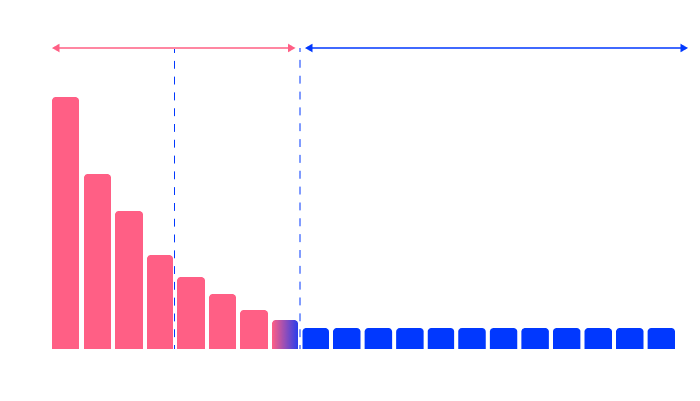
Over 90% of search demand lives in long-tail keywords most businesses never target.
CMAX is an agentic SEO platform that deploys and continuously updates content for the thousands of ways customers actually search for what you sell. Two lines of code connect it to your site, and AI-driven agents handle content creation at a scale and speed manual teams simply can’t match. Results typically begin within six weeks.
If you’re figuring out SEO for your website, CMAX turns that early momentum into compounding organic growth, one keyword at a time, at thousands of keywords wide.
Author
Jeremy Tang
Founder and CEO of CMAX
Jeremy Tang is the Founder and CEO of CMAX. With over 2 decades of experience in business consulting and digital marketing, he has successfully driven seven startup businesses, six of which achieved $1 million in revenue from zero in less than 16 months, 5 of which grew to multi-million dollar a year ventures without any external funding. Jeremy's expertise lies in streamlining business processes through technology and leveraging digital (in particular SEO) for business growth. He resides in Australia, travels extensively, and draws inspiration from his global experiences.