Hiring an ecommerce SEO consultant usually starts with a simple question: what exactly will they deliver? Most proposals mention audits and recommendations, but few spell out who implements the changes, which page types get prioritised, or how results will be measured beyond traffic. If you’re running a mid-to-large store, that ambiguity makes it hard to scope the engagement, assign internal resources, or report outcomes to leadership. CMAX works with ecommerce teams facing exactly these decisions, and the standards below can help you evaluate any consultant or agency before work begins.
An Ecommerce SEO Consultant Should Clarify Deliverables Before Work Begins
Core Deliverables
A useful ecommerce SEO consultant engagement should spell out four things before work starts.
Store owners searching for an ecommerce SEO consultant often start from a broader question about SEO for my website before realising that catalogue size, platform constraints, and transactional page types require a more specialised scope of work.
First, a prioritised technical audit, ranked by business impact and implementation effort, not a flat list of every crawl error the tool surfaced. Second, page-level recommendations scoped to category and product templates, because those pages carry the commercial weight of the site. Third, implementation guidance that tells internal teams exactly what to change, who owns each change, and in what order. Fourth, reporting that connects organic landing pages to conversions, revenue, and assisted outcomes, not rankings, not sessions alone.
If any of those four are missing from the scope document, the engagement lacks the structure to produce measurable commercial results.
Platform-Specific SEO Constraints
Platform experience shapes what’s actually fixable and how fast. Shopify, BigCommerce, Magento, and WooCommerce each handle collection pages, faceted filters, URL templates, canonicals, and analytics pipelines differently.
On Shopify, some canonical and URL structure decisions are locked at the platform level and can’t be overridden without workarounds. On Magento, faceted navigation and indexing behaviour typically require developer involvement. WooCommerce gives more flexibility but introduces inconsistency across plugin combinations. BigCommerce has its own constraints around filter pages and template inheritance.
A consultant without hands-on experience across these platforms will misread which issues sit in settings, which need theme or extension changes, and which require a developer sprint to resolve. That distinction determines whether a recommendation is actionable in a week or queued for the next development cycle.
The Right Engagement Model Depends on Scope and Catalogue Complexity
Consultant Versus Agency Fit
An ecommerce SEO consultant is often the better fit when the immediate need is diagnosis, strategy, and prioritisation. If your store has stalled organic growth and you need a senior expert to identify what’s broken, rank the fixes by business impact, and hand a clear roadmap to your internal team, a consultant can deliver that without the overhead of a full agency retainer.
Agency support becomes more practical when the work also requires managed delivery across development, content production, and link acquisition simultaneously. An ecommerce SEO company is structured to field multiple specialists moving in parallel, removing the capacity constraint a single consultant faces. For buyers who need local managed delivery, an ecommerce SEO agency Sydney team can pair proximity with hands-on execution across those workstreams. When evaluating fit, an ecommerce SEO consultant typically focuses on store-specific audit and prioritisation work, whereas a saas SEO agency is structured around the recurring content, pipeline, and conversion demands of software businesses with fundamentally different page architectures.
The decision usually comes down to one question: does the store need a sharper plan, or does it need more hands executing one? Retailers searching locally may also find that an ecommerce SEO company Sydney provider offers the same specialist depth with the added benefit of face-to-face collaboration.
Ownership for Complex Rollouts
Large catalogues, replatforming projects, and international storefronts typically need named owners for each workstream. Template changes, hreflang rules, and faceted navigation decisions cut across SEO, development, merchandising, and analytics. Without clear ownership, those dependencies stall.
A consultant can define what needs to happen and in what order. What advice alone cannot do is resolve the coordination gaps between a developer who owns the template, a merchandiser who controls category structure, and an analytics team that hasn’t instrumented the new pages yet. When those gaps exist at scale, the engagement model needs to account for them before work starts, not after the audit lands. Choosing an ecommerce SEO consultant over a generalist becomes clearer when you compare adjacent verticals, much like SEO for insurance agents demands expertise in local intent, trust signals, and regulated content rather than the product-template and faceted-filter challenges central to ecommerce.
Buying Confidence Comes From Concrete Scope and Measurement
What to Expect at Each Stage
Before hiring, agree what will be delivered, who implements it, and how success will be measured. A credible ecommerce SEO consultant should be able to walk you through each stage of the engagement before work starts, so responsibilities, dependencies, and success criteria are visible from day one.
Discovery is the foundation of any ecommerce SEO services engagement. It confirms catalogue size, platform setup, analytics quality, and commercial priorities, including which page types drive the most revenue. This stage sets the baseline; without it, audit findings have no commercial context.
Audit findings are ranked by likely business impact, implementation effort, and dependency on developers or merchandisers. That ranking is what separates a useful audit from a list of issues. Teams know what to fix first rather than treating every flag as equally urgent.
Page strategy is where an ecommerce SEO consultant maps search intent to specific category, product, brand, and supporting content page types. The goal is to match demand to the right template, so the site captures queries at the right level rather than routing every search into a category page that was never built for it.
Implementation guidance defines exactly what changes need to be made, by whom, and in what order. A skilled ecommerce SEO specialist will specify whether a change sits in platform settings, a theme template, navigation logic, or a content workflow. Vague recommendations that stop at “fix your titles” leave internal teams without a clear path forward and stall progress between audit delivery and measurable results.
Reporting tracks landing-page performance against conversions, revenue, and assisted outcomes, so teams can see which page groups influence sales and which only add traffic.
Revenue-based SEO reporting
Traffic growth and commercial impact are not the same thing, and good reporting keeps them separate. Business reporting should connect organic landing pages to revenue, conversions, and assisted outcomes, so teams can see whether gains are coming from category pages, product pages, or other landing-page types. A session spike on a blog cluster that never touches a product page tells a different story than a 20% lift in organic revenue from category templates. Grouping landing pages by type and mapping each group to conversion and revenue data makes that distinction visible, and gives the team something defensible to bring to a CFO. For a store evaluating ecommerce SEO Perth providers, revenue-based reporting is the clearest way to compare engagements.
An ecommerce SEO consultant focused on revenue-based reporting should also know how AI and SEO intersect, particularly as AI-driven ranking signals increasingly influence which product and category pages surface in organic results.
Prioritisation and measurement questions
Before work begins, a credible ecommerce SEO consultant should be able to answer three questions directly: how recommendations will be prioritised, who is expected to implement them, and which business metrics will be used to judge progress. Asking these questions upfront is a reasonable due-diligence step, and any consultant who deflects them is signalling a process gap. Prioritisation criteria typically include business impact, implementation effort, and dependency on developers or merchandisers. Measurement should be agreed in advance, not retrofitted once results are in, so both sides are working toward the same definition of progress from day one. These metrics let teams judge whether the ecommerce SEO consultant engagement is delivering commercial value.
A Credible Provider Should Show Proof Without Inflated Promises
Red Flags to Screen For
Ranking guarantees are the clearest signal to walk away. No consultant controls Google’s algorithm, and any provider who promises specific positions is either misinformed or selling something that won’t hold.
Watch for vague process descriptions too. If a consultant can’t explain what the audit covers, how findings are ranked, or who is expected to implement each recommendation, the engagement will stall the moment it moves past the slide deck.
Reporting that stops at traffic is another common gap. Sessions and impressions don’t tell a commercial team whether organic is contributing to revenue. A credible ecommerce SEO consultant should be able to show catalogue-level proof, not just traffic screenshots. Case studies that show only traffic charts, with no mention of how product pages, category templates, faceted filters, or URL structures were actually changed, offer no evidence of relevant ecommerce experience.
A credible ecommerce SEO consultant should be aware of how AI search engines are reshaping product discovery, since visibility in AI-generated results is becoming a meaningful complement to traditional organic rankings for catalogue-scale stores.
Catalogue-Scale Proof Point
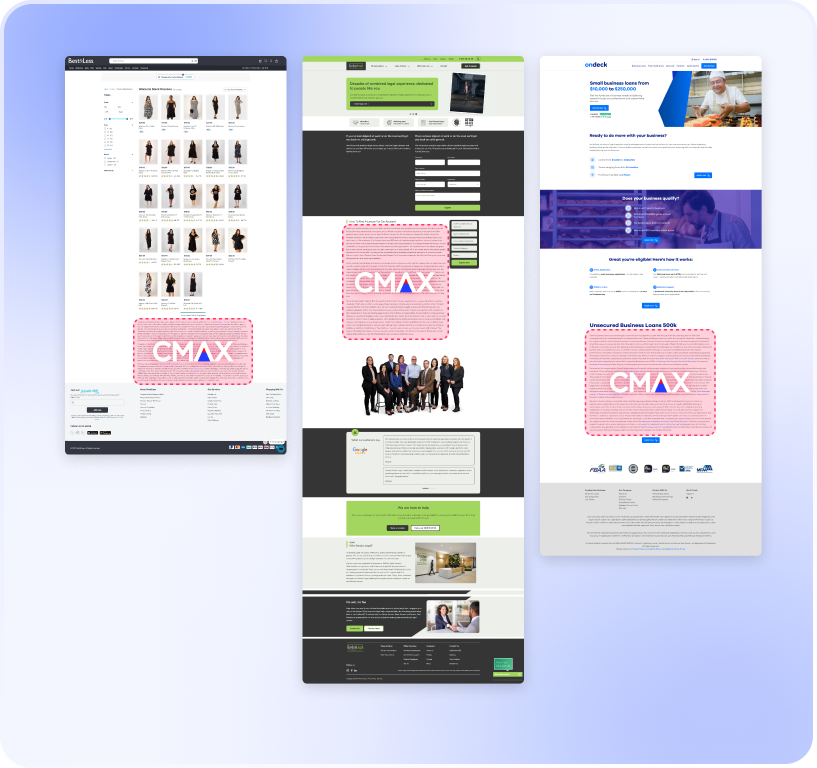
In one CMAX engagement, a B2B omnichannel hospitality retailer added 5,000 long-tail product pages and reached $1M+ per month in incremental SEO revenue within 8 months. That result came from targeting product-level and long-tail demand that core category pages weren’t covering, which is a pattern that applies directly to large-catalogue ecommerce stores.
Retailers who need ecommerce SEO Melbourne teams can trust should ask for catalogue-scale examples like these before signing any engagement. Likewise, stores seeking ecommerce SEO Gold Coast providers can rely on should expect the same level of commercial proof tied to SKU-level outcomes.
Prioritisation for Large Catalogues
A 10,000-SKU store typically gains more from a prioritised audit and page roadmap than from spreading equal effort across every template. Indexing gaps, internal linking problems, duplicate or near-duplicate page patterns, and category intent mismatches rarely affect the whole catalogue evenly, so the audit needs to surface which issues carry the most commercial weight first.
What are the red flags when hiring an ecommerce SEO consultant?
Ranking guarantees top the list. No consultant controls Google’s algorithm, and any promise of a specific position should end the conversation. Beyond that, watch for unclear deliverables, dashboards that report sessions without revenue context, and case studies that show traffic lifts without naming the page types or templates involved. A credible consultant can also tell you, before work starts, exactly who will implement recommendations after the audit is delivered. Any SEO consultant Australia retailers shortlist should be willing to walk through their methodology in detail before contracts are signed.
While an ecommerce SEO consultant is scoped around product catalogues and transactional page types, verticals with stricter compliance requirements, such as those served by a healthcare SEO agency-illustrate why matching specialist experience to the specific industry and regulatory context is a core hiring criterion.
Ecommerce SEO consultant vs agency: which is better for enterprise?
Enterprise teams typically bring in a consultant when the priority is senior diagnosis and prioritisation across a technically complex store. An ecommerce consultant Melbourne retailers rely on should show platform-specific proof that their recommendations translated into measurable commercial outcomes. An agency becomes the more practical fit when execution requires multiple specialists moving at the same time across engineering, content production, international SEO, and digital PR. For teams based in New South Wales, a SEO consultant Sydney professional can offer the same senior-level diagnosis with the added benefit of proximity for on-site workshops.
How to measure the ROI of an ecommerce SEO consultant?
Connect organic landing pages to revenue, conversions, and assisted conversions, then track implementation progress alongside those outcomes. Compare the total against the cost of the engagement and the equivalent spend in paid acquisition to arrive at a defensible ROI figure. A SEO consultant Brisbane business owners trust will tie every reporting cycle back to these revenue benchmarks rather than vanity metrics.
How to scale ecommerce SEO for large product catalogues?
Large catalogues scale better when teams prioritise indexable page types, resolve internal linking and template issues first, and build page roadmaps around real search demand rather than attempting to optimise every SKU in parallel.
How to verify an ecommerce SEO consultant’s track record?
Ask for examples that identify the starting problem, the specific page types or templates changed, the measurement method used, and the business outcomes achieved. Vague before-and-after traffic claims do not confirm whether the work addressed ecommerce SEO specifically. A SEO consultant Melbourne firm engages should be able to present catalogue-level case studies with clear revenue attribution.
Just as an ecommerce SEO consultant is chosen for their familiarity with category pages, faceted navigation, and SKU-level indexing, a real estate SEO agency is selected for its knowledge of listing pages, local intent, and property search behaviour, demonstrating that vertical fit is a core hiring criterion across all SEO specialisms.
Most Ecommerce SEO Problems Are Scale Problems
A single consultant can audit, prioritise, and optimise a handful of pages, but ecommerce catalogues run into thousands.
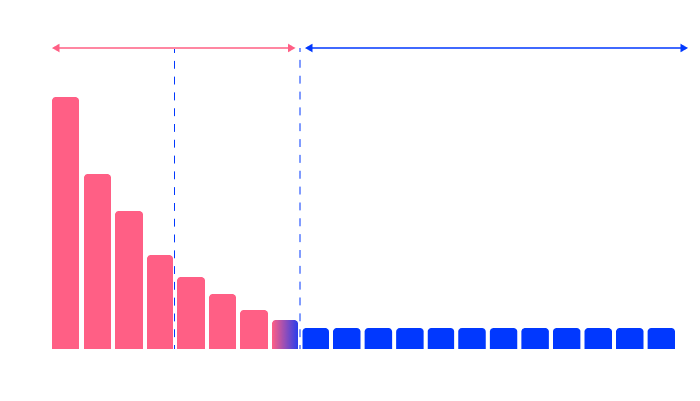
CMAX is an agentic SEO platform built for that gap. It deploys two lines of code, then its AI agents create and continuously update content targeting the long-tail keywords that typically represent over 90% of search demand, the product variations, filters, and category combinations a manual approach can’t cover fast enough. Results across campaigns have been observed within six weeks of deployment.
If you’re weighing an ecommerce SEO consultant against a scalable platform, the real question is capacity: CMAX picks up where individual expertise hits its ceiling.
Author
Jeremy Tang
Founder and CEO of CMAX
Jeremy Tang is the Founder and CEO of CMAX. With over 2 decades of experience in business consulting and digital marketing, he has successfully driven seven startup businesses, six of which achieved $1 million in revenue from zero in less than 16 months, 5 of which grew to multi-million dollar a year ventures without any external funding. Jeremy's expertise lies in streamlining business processes through technology and leveraging digital (in particular SEO) for business growth. He resides in Australia, travels extensively, and draws inspiration from his global experiences.