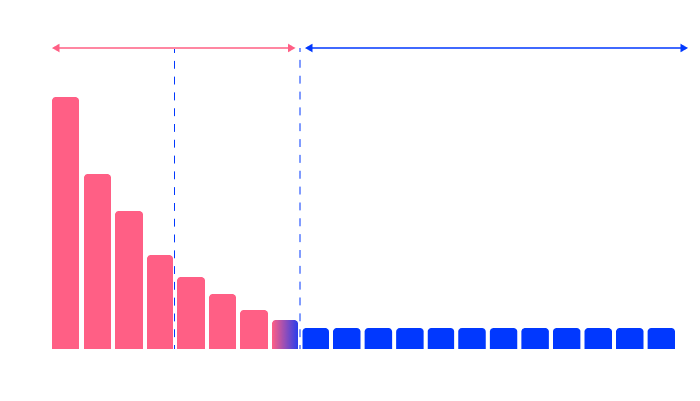
Most teams treat longtail keywords as a volume play: export a list, filter for low competition, publish pages. The problem is that word count and search volume alone don’t tell you whether a query represents a genuinely different intent or just another way of asking something you already answer. That distinction matters more now that AI-driven search surfaces longer, more conversational queries at scale. Getting it right means fewer wasted pages and stronger returns from the ones you keep. CMAX works with enterprise teams applying exactly this kind of intent-led prioritisation across large keyword sets.
Long-tail keywords still earn value through distinct intent.
Clearer intent in specific queries
Longtail keywords signal clearer intent because specific queries carry a defined task. A searcher typing “best cloud accounting software for construction firms under 50 employees” is comparing options against real constraints. One searching “does [product] integrate with Xero” is checking a requirement before a purchase decision. Both are close to conversion and easy to satisfy with a focused, direct answer.
Broad head terms bundle several of those jobs into one phrase. A page targeting “accounting software” has to serve the researcher, the comparison shopper, the buyer, and the curious student simultaneously. Satisfying all of them cleanly is difficult. A page built around a specific query has one job, and it can do that job well.
Longtail keywords are most effective when they are embedded within a broader search engine optimisation strategy that prioritises intent over volume.
AI expands queries, not page value
AI-era search has shifted how people phrase their queries. Natural-language inputs are more common, and the range of specific phrasings people use has grown. That creates more long-tail surface area, but it does not make every low-volume phrase worth a dedicated page.
A phrase earns its own page when it reflects intent that an existing page cannot answer cleanly. If a current page already covers the question, a new page adds duplication, not value. The filter is intent distinction, not query volume or word count. AI increases the number of expressive queries in circulation; teams still need to decide which of those queries represent a genuinely different question before committing to production.
Query structure matters less than intent distinction.
Specificity matters more than word count
What are long tail keywords? A keyword is long-tail because it is narrow in meaning and typically lower in demand. Word count is incidental. “CRM” is three letters and entirely broad. “CRM for independent insurance brokers” is six words and genuinely long-tail. The reverse holds too: a longer phrase can still point to a general topic and carry the same mixed intent as a head term.
What defines longtail keywords is the precision of the need they express, not the length of the string. A short query that names a specific product type, use case, or constraint belongs in the long-tail category. A longer phrase that gestures at a broad subject does not. The defining characteristic of a long tail keyword is its narrow meaning and lower competitive demand rather than its word count.
Split pages only for distinct intent
Keyword variants do not automatically earn separate pages. A new page is warranted when the variant changes something material: the user task, the product set in scope, the location, a compliance requirement, or the conversion path. When those factors shift enough that a single page would produce a vague or mixed answer, a separate page adds value. When they do not shift, a separate page adds duplication.
The practical test is direct: would a searcher using this variant expect a meaningfully different answer than a searcher using the existing page? If yes, the variant justifies its own page. If the difference is phrasing rather than purpose, consolidation serves both the reader and the site’s authority. Long tail keywords have gained renewed relevance as AI search systems increasingly surface natural-language and highly specific queries in generated results.
A prioritisation framework makes long-tail research usable.
Why long-tail still matters
What makes longtail keywords worth pursuing is that they capture distinct intent, surface demand that broader pages miss, and justify a page built to answer a meaningfully different question or buying need. That last condition is the filter most teams skip.
Longtail keywords sit at the intersection of intent research and web search optimisation, making a structured prioritisation framework essential for teams that need to decide which low-volume queries justify dedicated pages.
Specific queries tend to show stronger commercial or task-based intent because they carry real constraints. A searcher who includes a product type, location, comparison criterion, compatibility requirement, or use case has already narrowed their decision. That narrowing is a signal, and a page built around it can satisfy the query more precisely than a broad category page ever could.
AI-driven search has increased the number of expressive, natural-language queries people use. That does not mean every new wording variation warrants its own page. Teams still need to group those queries by answerable intent and build against the intent cluster, not the individual phrase.
Keyword tools compound the problem.[1] When search volume is split across many close variants or rolled up into a broader parent term, the tool underreports real demand. A phrase that looks thin in a volume column may represent a meaningful slice of qualified traffic once its variants are counted together. This is precisely why long tail keywords SEO analysis must go beyond raw volume and factor in intent clustering.
The practical test is straightforward: would a searcher using this phrase expect a different answer than the one an existing page already gives? If yes, a separate page creates value. If the phrase is another way to reach the same answer, it belongs on the page that already covers it.
Long-tail prioritisation works when teams weigh demand signals, intent clarity, commercial relevance, and page uniqueness together, instead of publishing against every low-volume term they can export.
Broad-to-specific scoring process
Prioritising longtail keywords works when teams start with a broad topic, then break it into the narrower intents sitting underneath it. For each candidate, run four checks before any page goes into production: Is there observable demand? Does the query carry commercial or informational value worth the investment? Does it reflect intent that an existing page cannot already satisfy? And would a searcher expect a meaningfully different answer than what they’d find elsewhere on the site?
That sequence is critical because the alternative, exporting every low-volume term from a keyword tool and publishing against each one, produces pages that compete with each other, dilute crawl budget, and rarely convert. Volume alone is not a signal. A query with modest search volume and a clear buying constraint can outperform a higher-volume phrase that points to a general topic already covered.
Longtail keywords deliver the most measurable return when each candidate phrase is evaluated as part of a deliberate SEO page optimisation process before any content is produced.
The scoring process keeps production decisions grounded in what the data actually shows. Demand signals can come from Search Console, paid search term reports, or on-site search logs, not just keyword tools. Commercial relevance asks whether ranking for this query moves a metric the business tracks. Page uniqueness asks whether the answer would be substantively different from anything already published.
Work through those four checks consistently and the list of viable long-tail targets shrinks to the ones worth building.
Measured Validation Reduces Wasted Content Production
Validate Demand Beyond Keyword Tools
A typical long tail keywords finder compresses long-tail demand. Variants get folded into parent terms, low-volume queries get suppressed, and the phrases your actual buyers use rarely survive the aggregation intact.
First-party sources close that gap. Search Console query reports show the exact strings triggering impressions and clicks, including low-frequency variants that never appear in third-party tools. Paid search term reports surface the language buyers use when money is on the line. Internal site search logs reveal what visitors type when they can’t find what they need. Sales and support transcripts capture the phrasing customers use before they ever reach a search bar.
Longtail keywords discovered through first-party sources tend to be more actionable than those from standard tools, which is why teams that want to find long tail keywords at scale are advised to combine Search Console data, paid search term reports, and on-site search logs.
Cross-referencing these sources against your keyword list identifies which long-tail candidates reflect real, expressed demand and which are tool artefacts with no observable audience behind them. That distinction is what separates pages worth building from pages that consume production budget and return nothing.
CMAX Proof Point
Validation at scale produces measurable outcomes. In one CMAX engagement, a B2B omnichannel hospitality retailer targeted longtail keywords across 5,000 long-tail product pages and generated over $1M per month in incremental SEO revenue within 8 months.
The same dynamics apply to any enterprise site with a large catalogue or broad service set. Most teams cover a small cluster of head terms and leave the surrounding product-level and query-level intents unaddressed.[2] That gap is where long-tail pages, built against validated demand, generate returns that head-term competition rarely allows.
Frequently Asked Questions (FAQ)
Are long-tail keywords still relevant in the age of AI?
Yes. AI-era search increases how often people use specific, natural-language queries, which makes long-tail coverage more relevant, not less.[3] They’re worth prioritising when they represent distinct intent and support a page that answers that intent more precisely than an existing asset can.
After identifying long-tail keywords, what should I do next?
Group them by shared intent first. Decide which variants can live on one page and which require separate pages, then prioritise the clusters with the clearest demand signals, strongest commercial or informational value, and the most defensible case for page uniqueness. Publishing before that review wastes production capacity on pages that duplicate what you already have.
Will a long-tail keyword rank for smaller parts of the phrase?
It can. Whether it does depends on whether the page satisfies the broader intent behind those shorter searches, not on how many times it repeats the same words.
Are short-tail keywords included inside long-tail keywords?
Sometimes, but that’s not what defines a long-tail keyword. Some highly specific queries are short in wording. Some longer phrases still express broad intent that doesn’t need its own page. Word count is not the test; intent specificity is.
How do you find long-tail keywords at scale?
Combine first-party query sources, including Search Console, paid search term reports, on-site search logs, and customer-facing transcripts, with an intent review process that removes duplicate wording and keeps only the differences that justify separate pages.
Longtail keywords are a recurring subject in any search engine optimisation blog because practitioners continue to debate how specificity and volume should be weighed against each other.
Two Lines of Code, Thousands of Long-Tail Rankings
Most SEO platforms stop at the head terms and leave the long tail to manual effort.
CMAX is an agentic SEO platform built to target thousands of longtail keywords at a scale and speed manual teams can’t match. Our AI agents deploy and continuously update content for the specific, high-intent queries that make up over 90% of search demand. Results typically begin within six weeks of deployment.
If your current strategy plateaus at the obvious keywords, CMAX captures the rest.
References [1] – https://searchengineland.com/guide/long-tail-keywords-seo [2] – https://www.charleagency.com/articles/ecommerce-seo-statistics/ [3] – https://developers.google.com/search/docs/fundamentals/ai-optimization-guide
Author
Jeremy Tang
Founder and CEO of CMAX
Jeremy Tang is the Founder and CEO of CMAX. With over 2 decades of experience in business consulting and digital marketing, he has successfully driven seven startup businesses, six of which achieved $1 million in revenue from zero in less than 16 months, 5 of which grew to multi-million dollar a year ventures without any external funding. Jeremy's expertise lies in streamlining business processes through technology and leveraging digital (in particular SEO) for business growth. He resides in Australia, travels extensively, and draws inspiration from his global experiences.