Most teams tracking AI brand visibility start with a single snapshot and call it a baseline. But AI outputs shift between platforms, change with prompt wording, and can mention your brand while describing it inaccurately. Without a repeatable measurement model that separates inclusion from citation share, positioning, and factual accuracy, you end up comparing noise. What follows is the audit and improvement process practitioners need to run this properly, informed in part by the source-level work CMAX does at scale for enterprise brands.
AI Brand Visibility Needs a Repeatable Measurement Model
Visibility Metrics That Actually Matter
Brand visibility is only useful when measured across five distinct signals: inclusion, citation share, answer positioning, sentiment, and factual accuracy. These signals frequently diverge, which is why tracking any one of them in isolation produces a misleading picture.
A brand can appear in an AI-generated answer and still lose ground. The answer might frame it for the wrong use case, pull from a low-authority source, or describe a product with errors that quietly erode buyer confidence before a conversation even starts. Inclusion without accuracy is exposure without value.
AI brand visibility encompasses more than a single metric, and knowing how it relates to broader search visibility helps teams build a measurement model that accounts for inclusion, citation share, and positioning across platforms.
Each signal tells a different part of the story. Inclusion confirms presence. Citation share reveals which sources are driving that presence. Positioning shows where in the answer the brand lands and whether it’s placed in the right decision context. Sentiment flags whether the framing is favourable, neutral, or subtly negative. When narrowing these signals to AI-specific platforms, AI visibility adds a layer that no traditional ranking report would surface: factual accuracy catches the errors that compound silently across every generated response.
Set a Stable Benchmark First
Before any measurement is meaningful, the conditions for measurement must be fixed. A credible benchmark locks in the prompt set, the AI platforms being tested, the buyer scenarios being modelled, and the review window before a single test runs.
Without that stability, later comparisons reflect changes in prompts or platforms rather than real shifts in visibility. The benchmark is what separates a repeatable measurement model from a one-off snapshot that can’t be acted on.
The Audit Should Start With Controlled Prompts
Audit Workflow for AI Visibility
An AI search visibility audit turns inconsistent AI outputs into a comparable picture of AI brand visibility that teams can track over time. The key is separating prompt design, platform testing, citation review, and page-level fixes into a repeatable sequence rather than running ad hoc checks that produce results you can’t stack against each other.
Start by defining the target outcome. Are you trying to appear in shortlist-style answers? Get accurately positioned for a specific category? Build stronger citation presence for a product, service, or use case? The outcome shapes every decision that follows.
From there, build a fixed prompt set across four query types: branded, category, comparison, and problem-solving. This mirrors how buyers actually research options, ask for recommendations, and evaluate fit. Prompts should stay fixed across test cycles so that changes in results reflect real AI search visibility movement, not changes in how questions were asked.
Run those prompts across your selected AI platforms and log five things for each response: whether the brand appears, where it appears in the answer, which sources are cited, how the brand is described, and whether factual details are correct. All five matter. A brand that appears but is described for the wrong use case or cited from a low-authority source has a visibility problem that inclusion rate alone won’t surface. AI brand visibility audits require this kind of structured workflow for logging inclusion, citation share, and answer positioning, and an AI visibility platform can support that process by systematising prompt testing and output comparison across multiple AI systems.
Then review the cited URLs and recurring third-party domains. These reveal which owned pages, publishers, forums, or review sites are actively shaping the answers. From that review, identify content gaps, entity mismatches, outdated claims, and missing proof assets on both owned and third-party sources. Those gaps are where the fix work starts.
Re-test the same prompt set after updates on the same schedule to check whether inclusion, citation share, positioning, and factual accuracy improved under comparable conditions.
Test Prompt Types Separately
Re-testing works only when the conditions stay fixed. Run the same prompts, on the same platforms, at the same interval after each round of updates. Any change to the prompt wording, platform selection, or timing introduces a variable that makes it harder to attribute movement to the content fixes rather than to drift in the model itself.
Prompt type separation is where many teams lose signal. Branded, category, comparison, and problem-solving queries behave differently in AI-generated answers, and they should be audited in separate groups. Strong brand-name results do not mean AI brand visibility holds up across broader recommendation prompts. A brand that appears consistently on its own name queries may still be absent when a buyer asks “which platforms handle long-tail SEO at scale” or “what should I use for programmatic content at enterprise level.” Those category and use-case prompts are where purchase decisions form, and strong branded performance gives no reliable indication of how the brand fares there. Assessing LLM brand visibility at the model level requires isolating how each LLM surfaces and describes the brand, which differs from tracking traditional search results.
Log each prompt type’s results independently: inclusion rate, position in the answer, cited sources, and whether the description is factually accurate and placed in the right decision context. When you compare runs over time, compare like with like. Branded against branded. Category against category. A composite score that blends all prompt types can mask a gap in exactly the query type that matters most to your buyers.
Treat each re-test as a controlled check, not a fresh audit. The benchmark set from Section 1 is what makes the comparison credible.
Source Attribution Explains Why Answers Change
Why Crawlable Pages Get Cited
AI systems retrieve and cite pages they can read, attribute, and interpret with confidence.[1] Google’s Search Essentials and structured data guidance make this concrete: pages with clear entity signals, explicit authorship, and well-structured markup give retrieval systems enough context to pull a specific claim and attach it to a named brand. Pages with weak structure, unclear ownership, or thin context are harder to parse and easier to skip.
That means a brand’s AI brand visibility is partly a function of how well its owned pages are built for retrieval. Explicit entity signals, brand name, product category, use case, and geographic scope stated clearly on the page, reduce the ambiguity a model faces when it summarises or compares options. Structured data accelerates that process by labelling what the content is, not just what it says.[1]
Track Which Sources Keep Appearing
Citation logs do more than confirm a brand appeared. Recurring URLs, publishers, and domains reveal the actual sources shaping how AI systems describe the brand, which is often a different picture than the brand’s own content strategy suggests.
A third-party review platform appearing in every citation log may be reinforcing accurate positioning, or it may be the source of an outdated product description the brand stopped using two years ago. A forum thread cited repeatedly may be excluding the brand from a recommendation set entirely. Recording which sources recur, and auditing what those sources say, turns citation tracking into a diagnostic tool rather than a vanity count. A team reviewing citations for an AI Brisbane query may find different dominant sources than one running an AI Perth query, because regional content ecosystems surface distinct publishers and review platforms.
AI brand visibility depends on which sources AI systems repeatedly retrieve and cite, and brands working with SEO services Sydney can apply the same source attribution principles, tracking recurring URLs, publishers, and third-party domains, to identify which pages are shaping or distorting their answers.
Accuracy and Positioning Determine Whether Visibility Is Useful
Mentions Need Context and Accuracy
Appearing in an AI-generated answer is only valuable when the answer is correct. A mention that misspells the brand name, attributes the wrong product tier, or places the brand in the wrong competitive category can actively mislead a buyer at the exact moment they are forming a shortlist.
The decision context matters as much as the mention itself. An enterprise software platform described as a small-business tool will be filtered out by the wrong buyers and ignored by the right ones. A category leader framed as a niche specialist loses positioning ground to competitors the model describes with more precision. Factual errors can persist when AI systems draw on cached or repeatedly cited sources.
Audit outputs should flag three things separately: spelling and naming accuracy, offer description accuracy, and decision-context fit. All three can fail independently.
AI brand visibility is only useful when a brand is described accurately and placed in the right decision context, and teams partnering with an SEO agency Perth can apply the same accuracy-auditing approach, correcting entity mismatches and outdated claims, to keep AI-generated answers aligned with the brand’s actual offer and positioning.
Use Before-and-After Prompt Audits
A single prompt run produces a snapshot, and AI outputs shift between runs even when nothing has changed. An anonymised before-and-after prompt audit controls for that variability by running the same fixed prompt set before any content or source changes are made, then re-running it after, under the same platform and timing conditions.
The comparison shows whether inclusion rate, citation share, answer positioning, and factual accuracy moved in the right direction across the same queries. The audit showed whether AI brand visibility improved across the same prompt set. That gives a visibility programme a measurable outcome rather than a directional impression, which is the standard a CFO-level conversation requires.
Improvement Comes from Source-Level Fixes
Fix the Pages AI Retrieves
Audit findings only produce results when they feed into page-level changes. Intent-matched pages give AI systems a clear signal about what the brand does, for whom, and in which context. Consistent entity signals across owned content reduce the ambiguity that causes models to misattribute a brand, assign it to the wrong category, or omit it from comparison answers. Current proof assets matter because AI systems retrieve from what is crawlable now, not from pages that were accurate two years ago.
The practical fix is specific: update pages so the brand name, product or service category, use case, and target audience appear together in crawlable, well-structured content. Vague positioning pages produce vague AI answers. Pages built around a defined buyer scenario give models something concrete to retrieve and repeat.
AI brand visibility improvements depend on well-structured, intent-matched pages, and brands working with SEO services Melbourne can apply the same source-level content principles, consistent entity signals, current proof assets, and clear attribution, to strengthen how AI systems retrieve and cite their pages.
Proof from Catalogue-Scale Coverage
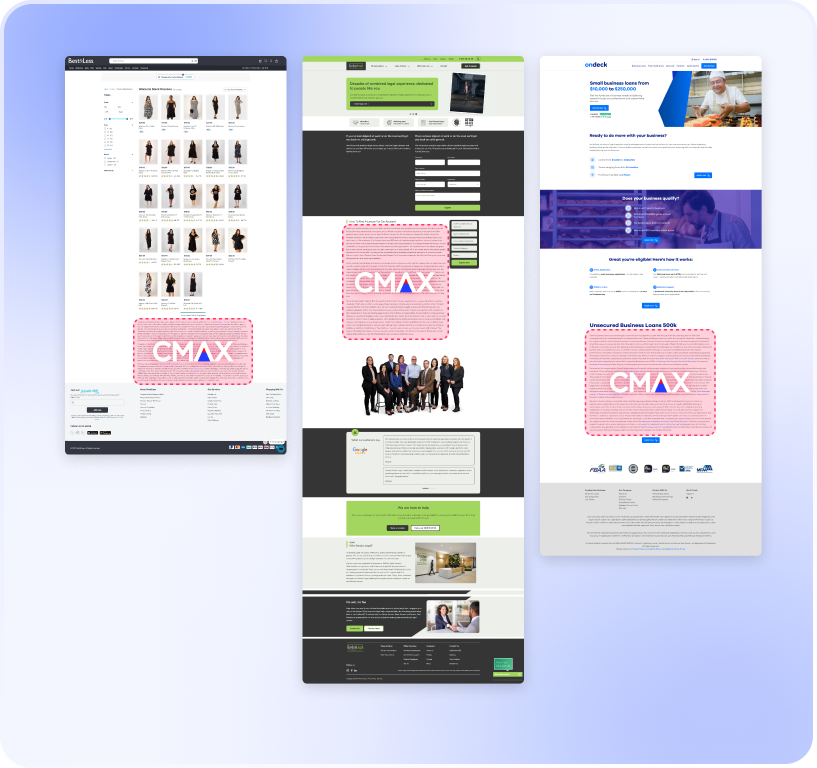
Scale amplifies this effect. In one CMAX engagement, a B2B omnichannel hospitality retailer added 5,000 long-tail product pages and generated over $1M per month in incremental SEO revenue within 8 months.[2] The same retrieval logic applies to AI visibility: broader page coverage creates more specific retrieval paths for niche queries and comparison prompts. When a model fields a narrow use-case question, a catalogue with 5,000 intent-matched pages offers far more citation candidates than one with fifty. For large catalogues and complex service sets, coverage depth directly expands the surface area AI systems can draw from when generating answers. AI brand visibility strengthens when AI systems retrieve pages with consistent entity signals and current proof assets.
Does Reddit affect AI search results?
Reddit threads can shape AI answers when they are publicly crawlable and repeatedly cited. AI systems pull from Reddit because the platform carries first-hand experience, direct product comparisons, and problem-solving language that most brand sites do not publish in the same unfiltered form. If a thread ranks well and gets cited often, its framing of your brand can appear in generated answers whether or not it reflects your current positioning.
AI visibility vs traditional SEO?
Traditional SEO, sometimes called AI SEO when applied to AI-driven discovery, tracks rankings, clicks, and landing-page performance inside search engines. AI visibility tracks whether AI systems mention the brand, describe it accurately, place it in the right decision context, and cite credible sources inside generated answers. The two disciplines share some inputs, particularly crawlable, well-structured pages, but the success metrics diverge significantly.
AI brand visibility strategy increasingly intersects with AI and SEO practice, as the signals that help pages rank in traditional search, crawlability, entity clarity, and authoritative attribution, also influence how AI systems retrieve and cite brand content. Understanding SEO and AI as complementary disciplines helps teams allocate effort across both discovery channels.
How to fix AI brand hallucinations?
Start with the owned layer. Correct inconsistent product, service, and entity details across your pages, clarify use cases and naming conventions, and replace vague claims with attributable facts that models can repeat with less distortion. Hallucinations often trace back to conflicting information across owned and third-party sources rather than a single bad page.
Which platforms influence AI answers most?
There is no universal answer. The most influential sources vary by model and query type. Check your citation logs to identify which publishers, forums, documentation sites, review platforms, and owned pages appear most often, then prioritise fixes based on what is actually shaping answers for your specific queries.
AI brand visibility builds on foundational content principles, and teams who want to define SEO in relation to AI-driven discovery will find that the same clarity of entity signals, crawlable structure, and intent-matched pages underpins both disciplines.
Can AI visibility drive conversions?
AI visibility can support conversions when the answer surfaces the brand at a high-intent decision moment and the cited page matches that intent closely enough to continue evaluation. Adapting SEO for AI retrieval ensures that the cited page aligns with the user’s query context. If the cited page forces the user to restart their research, the visibility gain does not translate to pipeline.
AI Answers Are the New Search Results, Your Content Needs to Show Up in Both
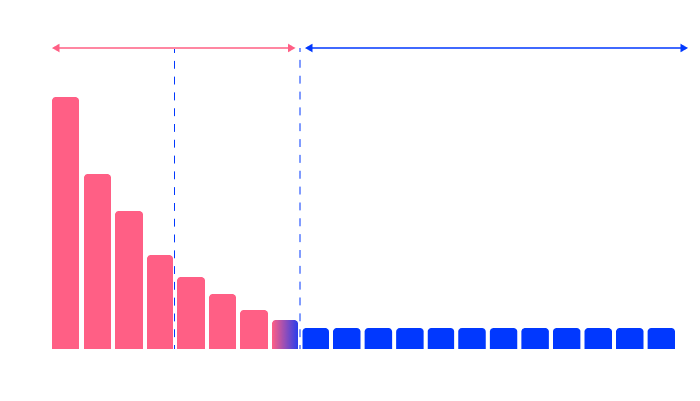
Most brands optimise for traditional rankings and ignore the 90% of search demand sitting in long-tail queries. That’s the same traffic AI systems pull from when they generate answers.
CMAX is an agentic SEO platform that deploys and continuously updates content across thousands of long-tail keyword variations, the specific phrases your customers actually type and speak. Two lines of code connect it to your site, AI agents handle content creation and iteration at scale, and measurable organic traffic gains typically appear within six weeks. The more intent-matched, crawlable content your site holds, the more surface area AI models and search engines have to cite you accurately.
If your brand isn’t showing up in AI-generated responses, the fix starts with the content layer beneath them.
References [1] – https://developers.google.com/search/docs/appearance/structured-data/intro-structured-data
Author
Jeremy Tang
Founder and CEO of CMAX
Jeremy Tang is the Founder and CEO of CMAX. With over 2 decades of experience in business consulting and digital marketing, he has successfully driven seven startup businesses, six of which achieved $1 million in revenue from zero in less than 16 months, 5 of which grew to multi-million dollar a year ventures without any external funding. Jeremy's expertise lies in streamlining business processes through technology and leveraging digital (in particular SEO) for business growth. He resides in Australia, travels extensively, and draws inspiration from his global experiences.