Most shortlists for SEO services Sydney start with rankings, case study screenshots, or agency awards. But ranking snapshots rarely tell you whether the traffic is qualified, whether the technical foundations can support growth, or whether reporting will connect what was done to what the business actually gained. The more useful question is whether a provider’s process, priorities, and accountability hold up once the work is underway and results are still forming. CMAX is one provider built around that kind of structured, outcome-linked SEO methodology for enterprise teams.
Sydney SEO Should Be Judged Beyond Rankings
Goals, Technical Health, Useful Content
Judging SEO services Sydney on rankings alone can hide the issues that usually decide whether SEO pays off. A ranking snapshot tells you where a page sits at a point in time. It does not tell you whether that page is attracting buyers, whether it can be crawled and indexed reliably, or whether it connects to anything else on the site. When evaluating any SEO company Sydney businesses shortlist, the issues that matter most sit underneath the ranking number: unqualified traffic that never converts, pages blocked from crawling or weakly linked within the site, indexation gaps, and service content that collects impressions without generating enquiries. A stronger assessment checks whether search demand is landing on the right pages and moving users toward a sale, booking, or lead.
What Good Sydney SEO Looks Like
A practical evaluation framework checks whether the provider has defined the commercial goal, the technical priorities, the content gaps, the reporting logic, and who owns implementation. That structure shows whether the work can compound over time, rather than producing isolated ranking wins with no clear business link. For any SEO services in Sydney provider worth considering, this framework separates credible strategy from surface-level promises.
Use this checklist when assessing any Sydney SEO provider:
- Commercial alignment: SEO goals should map to qualified leads, booked consultations, or online revenue, not position averages.
- Technical sequencing: Crawling, indexing, speed, and internal linking issues should be resolved before new content is scaled.
- Distinct page intent: Service, product, and location pages should each answer a specific search intent, such as suburb-level demand, comparison queries, or detailed long-tail needs, rather than repeating near-duplicate copy.
- Outcome-linked reporting: Reports should connect work completed to movement in search visibility, conversion behaviour, and the next decisions the team needs to make.
- Clear ownership: The provider should specify who owns content, data, and implementation decisions throughout the engagement, with no ambiguity when changes need approval or deployment.
- Staged timelines: Technical fixes, new page creation, and authority signals appear in reporting at different points; timelines should reflect that sequence, not compress it.
Provider Fit Depends on Strategy and Market Context
Sydney Market Context and Intent
Sydney searches don’t behave as a single market. A query from someone in Parramatta looking for a commercial fit-out contractor carries different urgency, catchment expectations, and service scope than the same category search from a CBD postcode. Suburb-level and service-area searches often signal a buyer closer to a decision, while broad city-level queries tend to attract earlier-stage research traffic.
A provider that treats all Sydney demand as one pool will build page structures that miss those distinctions. That is why SEO services Sydney plans often need tighter local intent mapping. Before recommending any architecture, a credible provider should show how it maps intent across CBD, metro, and suburb-level queries separately, and how that mapping drives which pages get built, how they’re structured, and what conversion action each one is designed to support. Choosing the best SEO services Sydney means checking strategy alignment, not just ratings. SEO services Sydney and SEO services Melbourne share many technical and content fundamentals, yet each market carries distinct suburb-level intent patterns and competitive dynamics that a provider’s local strategy should reflect.
Industry Complexity and SEO Fit
Generic content production breaks down quickly when an industry adds friction to the publishing process. Legal review, compliance sign-off, long buying cycles, and large product or service catalogues all change how pages are briefed, approved, and measured. An enterprise SEO services Sydney engagement, for example, must absorb those review layers without stalling output across hundreds of pages. A provider without experience in those conditions tends to produce volume without the query-level specificity those industries require, and duplication becomes a problem before results appear.
The relevant question is whether the provider’s process can absorb review steps without stalling output, and whether it can cover query-level demand across a large catalogue without creating near-duplicate pages that compete with each other. For leaner operations, small business SEO services Sydney engagements face a different constraint: tighter budgets demand faster proof of return, so the provider must prioritise fewer, higher-impact pages rather than broad catalogue coverage. That process discipline is what separates a provider that fits a complex engagement from one that works only in simpler environments. Businesses benchmarking SEO services Sydney providers against interstate options may find it useful to review how a SEO agency Perth approaches local intent mapping and reporting accountability as a reference point for evaluating methodology.
Process and Reporting Reveal How an Agency Works
Transparent Methods and Realistic Timelines
A credible SEO services Sydney provider should explain what it will audit first, what gets fixed first, what content they believe is missing, and how each action is expected to move results. That sequence tells you more than a ranking promise ever will.
A credible provider can name the order of operations because they’ve thought through the dependencies. Technical fixes that unblock crawling and indexing come before new content is scaled. Page-level gaps are identified before briefs are written. Authority signals are built after the site can actually receive and pass them. When a provider skips that logic and leads with projected ranking timelines, the plan has no structural foundation.
Timelines should be framed as staged progress. Technical improvements, new page launches, and trust signals show up in reporting at different points, and a provider who conflates them is either inexperienced or managing expectations poorly. Any discussion of SEO services pricing should appear alongside this staged breakdown so costs are tied to specific deliverables rather than vague monthly retainers.
The process and reporting standards that define quality SEO services Sydney engagements are largely consistent with what well-run SEO services Brisbane campaigns require: clear audit sequencing, outcome-linked reporting, and defined content ownership.
Reporting Tied to Business Outcomes
Useful reporting answers three questions: what work was completed, what changed in crawling, indexing, and visibility as a result, and whether the traffic arriving is qualified enough to generate leads or sales.
If a report only shows ranking movement or session volume, it’s describing activity, not outcomes. The traffic metric worth tracking is whether visitors are reaching the right pages and taking the next step, whether that’s a form submission, a booking, or a product purchase. Tying SEO services cost to these conversion outcomes gives businesses a concrete way to measure return.
Reporting should also make the next action obvious. If a provider’s monthly report requires a separate conversation to interpret, the reporting logic isn’t working. The document itself should surface what changed, why it changed, and what the team does next. For businesses weighing how much does SEO cost in Australia, this level of transparency turns a pricing conversation into a value conversation.
Whether reviewing SEO services Sydney or SEO services Canberra, the clearest indicator of provider quality remains the same: a documented process that connects technical fixes and content decisions to measurable business outcomes.
AI-Search Claims Need Careful Evaluation
Evaluate AI-Search Visibility Claims
AI-search visibility has become a selling point for many SEO providers, but the claims vary widely in rigour. Any AI SEO services Sydney provider should specify which surfaces it measures and where attribution breaks down. A strong claim names the specific surfaces being measured, such as AI Overviews, Bing Copilot responses, or Perplexity citations, identifies which source pages or citations are influencing those surfaces, and acknowledges where attribution breaks down.
Without that specificity, a provider can produce reporting that sounds precise while failing to show what actually changed. Ask directly: which pages are being cited, on which surfaces, and how is that tracked? If the answer is vague, the reporting is decorative.
When assessing SEO services Sydney providers, businesses evaluating generative-search visibility should also explore the broader relationship between AI and SEO to understand which signals and source-page qualities influence AI-surface citations.
Brand Safety in AI Content
For sensitive industries or high-stakes pages, the question to ask a provider is not whether AI was used in content production. The question is what stopped unsupported claims from being published.
Brand-safe AI workflows depend on three things: approved source assets that constrain what the AI can draw from, human review before content goes live, and clear sign-off rules for regulated language, policy-relevant updates, or claims that carry legal or reputational risk. A provider that can describe those constraints specifically, including who holds sign-off authority and at what stage, is operating with accountability. A provider that describes AI content production without mentioning review steps or ownership rules is describing a process with no floor on what gets published.
Evidence Should Connect Work to Business Outcomes
CMAX Proof Point
Numbers without context are easy to dismiss. Here is one with both.
A B2B omnichannel hospitality retailer with $500M+ annual revenue worked with CMAX to add 5,000 long-tail product pages. Within 8 months, the programme delivered $1M+ per month in incremental SEO revenue.
The mechanism behind that result is worth noting. A catalogue that size cannot be covered by a handful of head terms. The retailer’s customers searched across thousands of specific product, use-case, and specification queries that a conventional content programme would never reach at speed. Scaling long-tail coverage at that volume is precisely where programmatic SEO earns its place. This is the kind of catalogue-scale problem SEO services Sydney engagements need to solve.
Sydney businesses with large service or product catalogues face the same structural gap. A small set of high-volume terms rarely reflects how buyers actually search when they are close to a decision. Suburb-level queries, service-specific combinations, and comparison-stage long-tail terms sit outside what most SEO programmes prioritise, and that is where revenue is left uncaptured. Businesses that need affordable SEO services Sydney can look for staged proof points that tie each phase of work to measurable commercial gains.
For SEO services western Sydney businesses rely on, catalogue-scale coverage across suburb and service combinations is often the difference between visibility and irrelevance. The same outcome-focused criteria used to evaluate SEO services Sydney providers, measurable visibility gains, qualified traffic, and transparent methodology, apply equally when reviewing SEO services Gold Coast campaigns for comparable business benchmarks.
Shortlist Using Operating Criteria
When comparing providers, methodology, data ownership, communication cadence, and the leading indicators expected before revenue lifts appear are more revealing than case study headlines.
Those factors show how a provider operates when results are still forming. Weak process, vague accountability, and poor implementation discipline tend to surface in the first 90 days, before rankings move and before a CFO asks for the numbers. A shortlist built on operating criteria gives you a basis for that conversation before you sign anything.
Is programmatic SEO risky for rankings?
Programmatic SEO creates ranking problems when pages reuse thin templates, publish near-duplicate copy, or target queries with no distinct intent. The risk is architectural, not inherent to the approach. It supports growth when each page has a real purpose, the source data is structured, internal linking is deliberate, and quality checks stop low-value pages from being indexed at scale.
How does AI search impact traditional SEO?
AI search changes how users discover and compare information, but it still depends on crawlable, structured, trustworthy pages as source material. Traditional SEO remains the foundation because weak site architecture, unclear entities, or thin content limit both classic rankings and AI-surface visibility.
SEO services Sydney strategies are increasingly shaped by how AI search engines retrieve and attribute source content, making structured, crawlable pages more important than ever for both classic rankings and AI-surface visibility.
How to scale SEO content for large catalogues?
SEO services Sydney engagements scale better when page creation follows clear query patterns, uses structured product or service data, and separates genuinely distinct intents from terms that should resolve to the same page. Review for duplication before rollout, not after index bloat appears.
How to maintain brand safety with AI content?
Brand safety is easier to maintain when AI drafts are constrained by approved source material, reviewed by a human editor, and blocked from publishing sensitive claims, regulated language, or policy-relevant updates without sign-off.
How to grow organic traffic after a plateau?
After a plateau, growth usually comes from finding uncovered long-tail demand, removing technical bottlenecks that suppress existing pages, and improving pages that already attract impressions but fail to convert or rank strongly enough to win clicks.
Two Lines of Code, Thousands of Long-Tail Keywords
Most SEO platforms target the same high-volume terms everyone else is chasing.
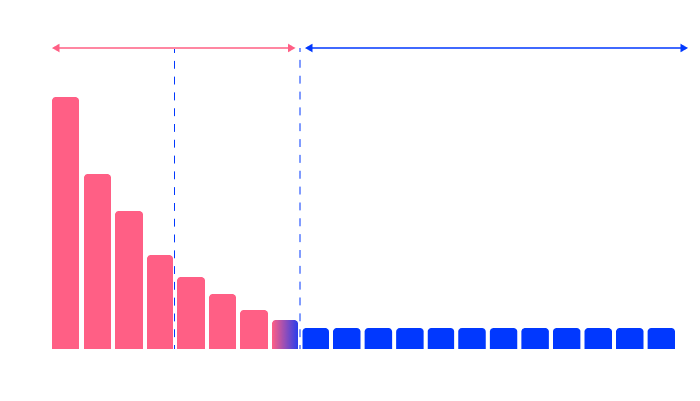
CMAX is an agentic SEO platform built to capture the 90% of search demand that sits in the long tail, the thousands of specific, high-intent queries your customers actually type. Our AI agents deploy and continuously update content at a scale and speed manual teams can’t match, with integration as light as two lines of code. Results from CMAX campaigns have been observed within six weeks of deployment.
For Sydney businesses comparing SEO services providers, that means a measurable path to organic traffic growth without rebuilding your team or your tech stack.
Author
Jeremy Tang
Founder and CEO of CMAX
Jeremy Tang is the Founder and CEO of CMAX. With over 2 decades of experience in business consulting and digital marketing, he has successfully driven seven startup businesses, six of which achieved $1 million in revenue from zero in less than 16 months, 5 of which grew to multi-million dollar a year ventures without any external funding. Jeremy's expertise lies in streamlining business processes through technology and leveraging digital (in particular SEO) for business growth. He resides in Australia, travels extensively, and draws inspiration from his global experiences.