Search visibility used to be straightforward: track your rankings, estimate your click share, report the number. But a page can hold its position in organic results while quietly disappearing from AI-generated answers, or worse, appearing with the wrong context attached to your brand. When rankings and retrieval start telling different stories, a single visibility score stops being useful. You need a way to measure presence across both surfaces. CMAX works in this space, helping teams track and grow organic visibility where traditional metrics and AI answer signals intersect.
Search Visibility Now Means Measurable Presence Across Search Surfaces
Visibility Across Search Surfaces
Search visibility has traditionally been measured through ranked positions, impression counts, and click-through rates. Those signals still matter. What’s changed is that search results now include AI-generated answers alongside classic organic listings, and a brand can appear, get cited, or get misrepresented in those answers without any of it showing up in a standard rank tracker.
A complete picture of search visibility now covers both layers: classic result exposure, meaning where a page ranks, how often it appears, and how many clicks it earns, and AI-answer presence, meaning whether a brand or page is retrieved for a query, whether the answer attributes the source, and whether the description is accurate.
Search visibility now extends well beyond ranked positions, and tracking AI brand visibility helps confirm whether a brand is being retrieved, cited, and described accurately across AI-generated answers.
Rankings Can Mask Visibility Loss
Tracking AI search visibility separately from organic rankings reveals gaps that conventional dashboards miss. A page can hold its organic position while an AI system answers the same query from a competing source, paraphrases the original page without attribution, or describes the brand with outdated or incorrect context.
In that scenario, rank-tracking tools report no change. The page is still indexed, still positioned, still technically visible in classic results. But the brand’s presence in the answer layer has weakened, and the reader asking that query may never reach the page at all. Teams that prioritise AI search visibility optimisation can address these blind spots before they compound. Visibility loss of that kind won’t surface in a rank report. It requires a separate measurement layer, an AI search visibility audit, that checks retrieval, attribution, and factual accuracy across generated answers.
Traditional ranking metrics and AI answer metrics describe different kinds of presence.
Ranking Metrics vs AI Retrieval
Traditional search visibility scores estimate exposure from rank position and expected click behaviour. A page ranked third for a given query carries an assumed impression volume and a predicted click-through rate. That chain is well-established and measurable through standard reporting tools.
AI-answer visibility runs on a different chain entirely. The first question is whether the content is retrieved for the prompt at all. The second is whether the system can attribute it to a specific source. The third is whether the answer preserves the original meaning accurately. The fourth is whether the brand entity is connected correctly to the claims being made. A page can perform well on the first chain and fail at every step of the second.
Search visibility metrics are evolving precisely because AI and SEO now operate across overlapping but distinct retrieval systems, where a page can rank well in classic results while remaining absent from generated answers. These are distinct measures. They describe different kinds of presence, and conflating them produces a visibility score that looks stable while actual brand exposure shifts.
What Impressions Do Not Show
Search Console impressions confirm that a result appeared in classic search for a given query. They do not show whether an AI answer cited the brand by name for that same query, whether the page was reused without attribution, or whether the generated summary introduced factual or framing errors. Gaining LLM search visibility requires tracking these AI-specific signals separately from classic ranking data.
A brand can accumulate thousands of impressions in classic search while an AI system simultaneously describes it in the wrong category, omits a key product detail, or attributes the information to a competitor’s page. Impressions will not surface any of that. Catching it requires a separate measurement layer built specifically for generated answers, such as an LLM visibility tracker designed to flag missing or incorrect citations in real time. Search visibility gaps become clearer when classic impression data is read alongside aeo signals that track whether content is being retrieved and attributed inside AI-generated answers. Ongoing LLM visibility monitoring closes the feedback loop, giving teams a continuous read on how generated answers represent the brand across prompts.
Evidence Shows Why Ranking and Retrieval Can Diverge
Why Pages Drop From Answers
A page can hold its ranked position and stay fully indexed while appearing less often in AI-generated answers. The reason is structural: retrieval systems select content based on how directly a page states the needed fact, how clearly the answer is organised, and how easy it is for the system to identify and attribute the source.
A page that buries its key claim in paragraph four, or wraps it in qualifying language, loses ground to a competing page that leads with the same fact plainly. Rank position does not change. Retrieval frequency does. That gap is where search engine visibility, measured as rank alone, starts to mislead.
Search visibility can decline on AI search engines even when a page holds its classic ranking, because retrieval systems may favour competing sources that state the needed fact more directly or make attribution easier.
Long-Tail Coverage at Scale
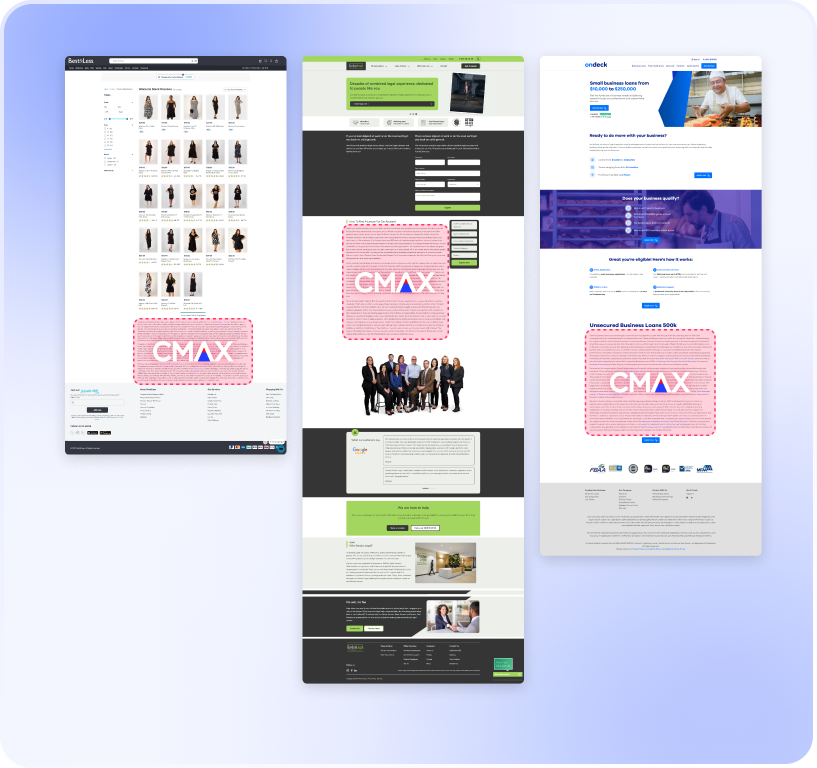
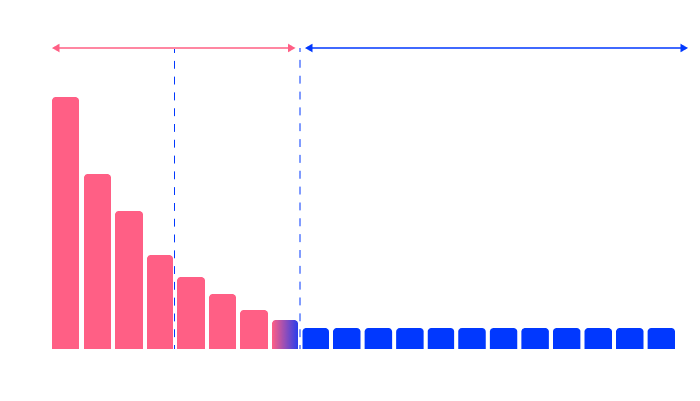
The same retrieval logic that governs individual queries operates at scale across thousands of them.[1] A site with narrow content coverage can rank well for head terms and still be absent from the long tail of specific, intent-matched queries where AI answers are most active.
In one CMAX engagement, a B2B omnichannel hospitality retailer published 5,000 long-tail product pages and recorded a 255% organic traffic increase over 12 months. The mechanism is directly relevant here: broader long-tail coverage multiplies the number of specific queries where a site can be retrieved, matched to intent, and surfaced across both classic results and AI answers. Each additional page targeting a distinct query variant is another opportunity for retrieval, attribution, and accurate representation in generated answers.
Better measurement comes from a mixed visibility scorecard.
AI Search Measurement Corrections
A practical AI-era scorecard redefines search visibility by checking whether content appears, gets attributed, and stays accurate across both classic results and generated answers.
Start with classic rankings, but segment by query cluster. A reliable search visibility tool lets teams break performance into head terms, long-tail terms, branded terms, and comparison queries, which behave differently and should never collapse into a single average score. A blended number hides the clusters that are actually moving.
Layer in impressions alongside clicks and CTR. When impressions hold steady but CTR drops, exposure is present but something in the result, whether the title, snippet, or format, is no longer pulling the click. That gap is worth investigating before it widens.
For the same query set tracked in classic search, record whether AI answers mention the brand, page, or product at all. Absence here is a signal even when rankings look fine.
Separate direct citations from uncited paraphrases. Both indicate the content was retrieved, but only a direct citation confirms the brand received visible attribution. Paraphrases without attribution contribute to answer coverage without contributing to brand recognition. Adjusting content structure and sourcing signals to improve retrieval and attribution is where AI search optimisation has the most direct impact.
Building a mixed scorecard for search visibility is more straightforward when an AI visibility platform consolidates classic ranking data alongside AI mention, citation, and accuracy signals in one reporting view.
Check whether the answer describes the brand accurately across category, offer, and factual claims. A mention that misrepresents the product or omits a key differentiator can be more damaging than no mention.
Note sentiment and framing in answer language. Whether the brand appears as a primary option, a secondary mention, or a qualified alternative affects how the answer positions it relative to competitors.
Finally, review which source pages are retrieved most often. If a weaker or outdated page is shaping answer coverage instead of the intended one, that is a content and structure problem the scorecard can surface early.
Interpret all signals together, not alone, because rankings, traffic, mentions, and citation quality often move on different timelines.
Signals to Combine in One Scorecard
Rankings, impressions, click-through rate, mentions, citations, sentiment, and accuracy each capture a different slice of search visibility. Tracked in isolation, any one of them can produce a false reading.
Traffic is the most common single-metric trap. A page can hold steady click volume while AI systems answer the same query from a competing source, paraphrase the brand without attribution, or introduce framing errors that go undetected because no traffic drop triggers a review. The ranking report looks fine. The visibility picture does not.
Combining signals closes that gap. When rankings, impressions, and CTR are read alongside mention frequency, citation rate, answer accuracy, and sentiment, shifts that would otherwise stay hidden become visible early. A drop in direct citations while rankings hold is a signal worth flagging for LLM brand visibility, since it may indicate the brand is losing presence in AI-generated answers even as traditional metrics remain stable. A change in how the brand is framed in generated answers, from primary option to qualified alternative, is a signal. Neither shows up in a rank tracker alone.
Search visibility reporting becomes more complete when sge SEO signals, such as whether content appears in AI-generated overviews and how accurately it is summarised, are combined with rankings, impressions, and click-through data in a single scorecard.
The practical approach is to run both sets of signals against the same query clusters at the same reporting interval. Where they move together, the read is reliable. Where they diverge, that divergence is the finding worth investigating. Reading these signals together gives a more reliable picture of search visibility.
The practical takeaway is to measure presence, not position alone.
Presence Matters More Than Position
Tracking AI visibility across generated answers reveals gaps that a ranking score alone cannot. A ranking score tells you where a page sits in a list. It does not tell you whether the brand appeared in a generated answer, whether that answer attributed the source, or whether the description was accurate. Treating search visibility as a presence metric across both ranked results and generated answers gives a fuller picture: brand visibility either holds because the brand appears, gets attributed, and is represented correctly, or it does not.
That distinction has reporting consequences. A visibility score built only from rank positions can hold steady while AI systems answer the same queries from competing sources, paraphrase the page without attribution, or misrepresent the offer. The number looks fine; the actual presence has shifted.
Search visibility measured as presence across both ranked results and generated answers is a priority that practitioners at an LLM SEO agency Melbourne apply when classic ranking scores no longer reflect full retrieval exposure.
Leading Indicators Beyond Clicks
Rankings and click volume tend to move slowly. Share of voice, citation quality, and answer accuracy often shift earlier, which makes them more useful as forward signals.
If a brand’s citation rate drops across a tracked query set while rankings hold, that gap can indicate retrieval is weakening before traffic reflects it. If answer accuracy changes, the brand may be appearing but being described in ways that affect how searchers perceive it, again before any click metric moves.
Monitoring these signals alongside classic metrics means visibility changes surface when there is still time to act on them, rather than after traffic has already declined.
How to measure AI search visibility?
Measure AI search visibility by checking whether your brand or pages appear in generated answers for the queries you already track in classic search. For each appearance, note whether the answer cites the source directly or only paraphrases it without attribution. Check whether the wording is accurate, category, offer, and key facts. Then compare those signals against rankings, impressions, and clicks for the same query set to see where the two pictures diverge.
Does search visibility increase conversion rates?
Higher search visibility puts the brand in front of more relevant searches, which expands conversion opportunity. Conversion rate itself still depends on intent match, landing-page clarity, and whether the search surface sends traffic that is ready to act.
How to improve visibility for long-tail keywords?
Cover specific query variants with direct language, a single clear page intent, and enough factual detail for both search engines and AI systems to retrieve the page confidently for that exact search. Broad pages that address many variants loosely tend to lose out to focused pages that answer one query well.
Difference between search visibility and share of voice?
Search visibility is a broader measure of how often and how prominently a site appears across results and answers. Share of voice narrows that to how much of the available exposure the brand holds relative to competitors in the same query set.
How to maintain visibility in AI search overviews?
Content that stays current, states key facts plainly, uses consistent brand and entity signals, and makes important claims easy to match and attribute holds its position in AI search overviews more reliably than content that buries the core answer in qualifications or lets factual details go stale.
Rankings Plateau, Presence Doesn’t Have To
CMAX is an agentic SEO platform built to capture demand across the long tail, where over 90% of search and AI traffic lives.
Our AI agents deploy and continuously update content targeting thousands of keyword variations, the specific ways your customers actually search for what you sell. Two lines of code connect CMAX to your site. From there, every new page works like another node in a growing network: more content, more surface area, more search visibility across both traditional results and AI-generated answers. Most teams see measurable results within six weeks.
If your current strategy covers a fraction of the keywords that matter, CMAX closes the gap at a scale and speed manual workflows can’t match.
References [1] – https://ahrefs.com/blog/long-tail-keywords/
Author
Jeremy Tang
Founder and CEO of CMAX
Jeremy Tang is the Founder and CEO of CMAX. With over 2 decades of experience in business consulting and digital marketing, he has successfully driven seven startup businesses, six of which achieved $1 million in revenue from zero in less than 16 months, 5 of which grew to multi-million dollar a year ventures without any external funding. Jeremy's expertise lies in streamlining business processes through technology and leveraging digital (in particular SEO) for business growth. He resides in Australia, travels extensively, and draws inspiration from his global experiences.