Most lists of SEO optimisation techniques read the same way: a stack of tactics with no indication of which ones actually move numbers for a team your size. The harder question is sequencing, knowing whether to fix a crawl issue, split a page by intent, or invest in links first, based on what your Search Console data already shows. That priority order is where reliable growth starts. CMAX works with enterprise teams applying exactly this kind of evidence-led approach to scaled organic programmes.
Reliable SEO gains still come from fundamentals.
The most dependable SEO optimisation techniques still start with fundamentals.
Crawlable pages that match intent.
Effective SEO optimisation begins with access. Search systems have to reach a page before they can rank it. When crawl or rendering friction blocks access, even well-written content sits outside the index and captures nothing. Beyond access, the page needs a clear primary topic, one that search systems can attribute without ambiguity, and it needs to answer the specific query that brought the visitor there, not a loosely related theme that happens to share a keyword.
A clear grasp of SEO optimisation techniques starts with understanding SEO and how it works at a foundational level, including how search systems crawl, index, and rank pages based on relevance and authority signals.
Pages built around a single, well-defined intent tend to produce more dependable ranking gains than pages that try to serve several different queries from one URL. The mechanism is straightforward: a tighter topic match makes it easier for search systems to attribute relevance, and a more precise answer reduces the gap between what the searcher expected and what they found.
People-first content still matters.
Keyword placement alone does not move rankings when the page still leaves the core question unanswered. Content earns reliable SEO improvement when it helps a searcher do something concrete, complete a task, compare options, or reach a decision, rather than signalling topical relevance without delivering on it.
This holds in AI-influenced search as much as in traditional results. Strong search engine optimisation techniques focus on pages that demonstrate genuine usefulness, which is exactly what generative answers draw from. A page that walks a searcher through a real decision carries more weight than one that mentions the right terms without resolving the need behind them. The same principle applies whether practitioners spell it SEO optimisation techniques or use another regional variant.
SEO optimisation techniques built on crawlability and intent remain the foundation even as practitioners explore AI in search engine optimisation to understand how generative systems discover and surface content.
The most reliable techniques are easiest to prioritise.
Fix crawl and index barriers first.
Technical hygiene produces the clearest early win because it removes blockers that are already costing you visibility. Among available SEO strategies, fixing these barriers first makes the strongest case for where to start. Noindex tags applied to the wrong pages, broken canonicals pointing authority at URLs that shouldn’t hold it, weak internal linking that leaves pages undiscovered, and rendering issues that prevent search systems from reading page content, these are common, diagnosable, and fixable without waiting for new content to mature. When a page already targets a query with real demand, removing the access barrier can surface rankings the site was already eligible for.
Build pages for distinct query clusters.
Search Console regularly reveals that a single broad page is attracting impressions across queries with different modifiers, buying stages, or problem types. Clarifying what is SEO strategy at the query-cluster level helps teams decide which pages to build next. One URL cannot answer all of them cleanly. Dedicated pages, each built around a distinct intent, outperform the catch-all because each one can match the specific query, align the title, and satisfy the need behind the click. The signal to act is visible in the data: separate query clusters with different modifiers are a direct brief for page expansion. Among the most dependable SEO optimisation techniques, SEO content optimisation stands out because aligning page content to a specific query intent directly improves relevance signals that search systems use to determine ranking eligibility.
Strengthen near-winning pages with links.
Relevant internal and external links carry the most weight when they support pages that already earn impressions and partial rankings. A page sitting at position eight or nine has demonstrated relevance; what it often lacks is authority and clearer topical context. Internal links from related pages reinforce the topic cluster. Relevant backlinks add external trust. Both move the needle faster on pages with existing demand than on pages starting from zero.
Reliable prioritisation depends on evidence and timing.
Reliability-ranked SEO evidence rundown.
A practical way to prioritise SEO optimisation techniques is to rank them by three checks: does a technique remove a known constraint, can its effect be observed in a defined page group, and does it capture demand that already exists? Techniques that clear all three tend to produce earlier, more attributable movement. Teams still asking what is SEO optimisation can start with these three checks as a framework for deciding where to focus first.
When ranking SEO optimisation techniques by reliability, teams increasingly ask how their existing approach maps to SEO for AI search, particularly as AI-generated answers change which queries produce traditional click-through results.
Technical access fixes rank first. Crawl, render, canonical, and indexation barriers stop pages from reaching search systems at all. Removing them surfaces demand the site is already eligible for but currently can’t reach. The effect is observable in Search Console within a defined page set, which makes it one of the cleaner signals to track.
Intent-specific page expansion ranks second. When a single generic page is split into pages that each match a distinct query cluster, relevance improves, title alignment tightens, and click eligibility rises for searches with specific needs. The before-and-after comparison in Search Console, impressions and query breadth by page group, shows whether the split created genuinely new coverage or just redistributed existing traffic.
Internal linking improvements rank third. Better internal linking helps search systems discover related pages, attribute topical context, and pass relevance signals to URLs that carry commercial weight. The effect is indirect but measurable over time through crawl coverage and ranking spread.
Relevant backlink acquisition ranks fourth. External authority has the most impact once pages are already useful, indexable, and close to page-one visibility. Acquiring links before those conditions are met tends to produce weaker, harder-to-attribute results.
Large-Scale Content Production
Large-scale content production sits lower on the priority list for one reason: it only delivers reliable results after a team has confirmed that its templates, intent targeting, and review process produce distinct pages rather than near-duplicates. Scale amplifies whatever is already working. Applied too early, it amplifies thin coverage instead.
The test is straightforward. Before scaling, a team should be able to point to a page set where each URL targets a separate query cluster, carries its own entities and qualifiers, and earns impressions for searches that other pages in the same set do not. If that condition holds, scaling the same approach extends coverage. If it does not, adding volume adds duplication risk.
B2B Retail Proof Point
For teams pursuing SEO optimisation Australia businesses can learn from, catalogue-scale coverage illustrates the approach. One CMAX engagement with a B2B omnichannel hospitality retailer shows what this looks like in practice. The retailer added 5,000 long-tail product pages and reached $1M+ per month in incremental SEO revenue within 8 months.
The mechanism was intent specificity at query level. Generic category pages could not cover the range of ways buyers searched for specific products, configurations, and use cases. Dedicated long-tail pages could. Each page answered a narrower, higher-intent search that the existing site structure was leaving unaddressed. An SEO optimisation Melbourne retailer might apply the same long-tail logic to local product searches.
SEO optimisation techniques that support large-scale page expansion are particularly relevant for organisations researching enterprise SEO services Sydney, where catalogue-depth coverage of long-tail queries has driven measurable incremental revenue gains.
For enterprise and B2B sites, this is the recurring gap: broad solution or category pages stop matching how buyers actually search once those buyers move past awareness into evaluation. Catalogue-scale long-tail coverage closes that gap, but only after the page framework has been validated on a smaller set first.
Lean Teams Need a Repeatable Measurement Cycle
Compare Page Types Before and After
Sitewide Search Console totals are a poor decision tool. Impressions can climb while a specific fix does nothing, or a content cluster can quietly stall while overall clicks hold steady. The signal becomes useful when you segment it.
Reviewing page-type data is how teams confirm which SEO optimisation techniques actually shifted behaviour. A before-and-after review by page type or template group tells you whether a specific fix, cluster, or page set produced a real change. Compare impressions, clicks, and query breadth for that group in the period before the change against the period after. If a technical fix on a product template lifted impressions across that template, that’s a repeatable signal. If a new intent cluster attracted queries that weren’t appearing before, that’s evidence the page is earning discovery. Sitewide totals would have buried both. Among the most practical SEO optimisation tips a lean team can adopt, this segmented comparison ranks near the top.
SEO optimisation techniques that rely solely on click volume as a success metric can mislead teams when zero click search behaviour means impressions rise while clicks stay flat, making Search Console query data a more complete measurement signal.[1]
Judge Fixes and Content Differently
Technical fixes and content programmes do not move on the same clock, and holding them to the same timeline produces bad calls. Different search engine optimisation methods demand different review windows, and conflating them leads to premature conclusions.
A crawl or indexation fix on a page that already has demand can show movement within weeks, because the demand existed before the fix removed the barrier. A new content programme works differently. Pages need to be indexed, discovered across queries, picked up by internal links, and accumulate enough external trust signals before a stable trend appears. That process takes months, and the absence of early movement is not evidence the programme is failing.
Set separate review windows for each. Expect earlier signals from technical work. Give content programmes the runway they need before drawing conclusions. Applying these search engine optimisation tips consistently turns a one-off review into a repeatable measurement cycle.
Scaled content works when duplication is controlled.
Keep each scaled page distinct.
Large content sets hold their value when each page targets a separate intent and carries its own supporting detail. That means distinct entities, specific examples, relevant qualifiers, comparison angles, or local context, whichever signals make the page genuinely different from the one beside it in the same template.
Superficial wording changes do not achieve this. Two pages that cover the same topic with synonyms swapped and sentences reordered are functionally identical to a search system evaluating topical coverage. The test is whether a reader landing on each page would find something the other page does not offer. If the answer is no, the pages compete with each other rather than expanding coverage.
Sequence scale after proven gains.
The operating order matters. Restore crawl and indexation access first. Then expand into intent clusters that already show demand in Search Console. Scale production only after measured gains confirm the next tranche adds new coverage rather than more duplication.
This sequence reduces the risk of producing hundreds of pages that index poorly, attract no queries, and dilute the authority of pages already earning impressions. Measured gains from the first expansion, new queries appearing, impressions rising on a defined page group, clicks following, give a clearer signal that the template, intent targeting, and review process are working before volume increases. Sequencing work this way keeps SEO optimisation cost proportional to measured returns rather than speculative volume.
SEO optimisation techniques for scaled content programmes often benefit from the structured oversight that enterprise SEO consultants provide, particularly when teams need to sequence intent-cluster expansion without introducing near-duplicate pages that dilute rather than extend topical coverage.
Scale is a multiplier. It amplifies what is already there, whether that is quality or duplication.
Frequently Asked Questions (FAQ)
How can SEO be scaled with a small team?
Small teams scale SEO more reliably by sequencing work rather than spreading effort across everything at once. Remove technical blockers first, crawl issues, broken canonicals, noindex errors, because those fixes surface demand the site is already eligible to capture. From there, reuse a consistent page framework only for query clusters that have already shown demand in Search Console. Review results by page type, not sitewide totals, so the next round of effort follows patterns that are already producing movement.
What SEO tasks can be automated?
Automation earns its place on repetitive, rules-based work: internal linking suggestions, metadata checks, page creation from approved inputs, and reporting exports. Intent decisions, content review, and quality control still need human judgement. Automating those steps without oversight is where scaled content programmes produce near-duplicates instead of distinct pages.
How do you measure SEO results?
Measurement tells a team whether its SEO optimisation techniques are producing real change or just activity. Start with a clear before state in Search Console and analytics. Track indexed pages, impressions, clicks, ranking spread, and conversions, then watch whether specific page groups begin attracting queries that were not visible before the change. Sitewide totals can move in either direction while hiding whether a specific fix or content cluster actually drove the shift.
How long does SEO take to work?
Timing depends on the starting constraint. A technical fix on a page with existing demand can show movement within weeks. A new content programme typically needs months before enough pages are indexed, discovered across queries, and trusted enough to show a stable trend.
How do long-tail keywords improve SEO traffic?
Long-tail keywords match narrower searches with clearer intent. That specificity makes it practical to build pages that answer the exact need behind a query, rather than forcing one generic page to compete across many different searches with different goals.
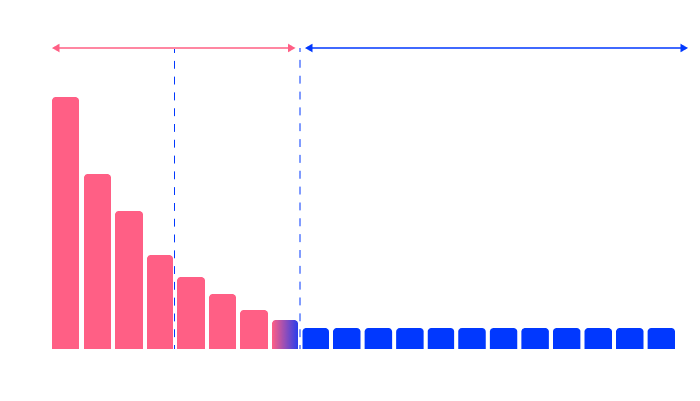
SEO Techniques Scale, Staff and Hours Don’t
Most SEO optimisation techniques work. The problem is doing enough of them, fast enough, with a small team.
CMAX is an agentic SEO platform built to close that gap. It deploys and continuously updates content across the thousands of long-tail queries your customers actually type, the 90% of search demand most strategies never reach. Two lines of code connect it to your site; AI agents handle production, optimisation, and iteration from there.
The result is a growing content footprint that compounds over time, with measurable traction typically visible within six weeks.
References [1] – https://sparktoro.com/blog/2024-zero-click-search-study-for-every-1000-us-google-searches-only-374-clicks-go-to-the-open-web-in-the-eu-its-360/
Author
Jeremy Tang
Founder and CEO of CMAX
Jeremy Tang is the Founder and CEO of CMAX. With over 2 decades of experience in business consulting and digital marketing, he has successfully driven seven startup businesses, six of which achieved $1 million in revenue from zero in less than 16 months, 5 of which grew to multi-million dollar a year ventures without any external funding. Jeremy's expertise lies in streamlining business processes through technology and leveraging digital (in particular SEO) for business growth. He resides in Australia, travels extensively, and draws inspiration from his global experiences.