Most organisations start looking for enterprise SEO consultants after the same realisation: recommendations exist, but nothing ships. The audit deck is solid, the keyword opportunities are mapped, yet fixes stall in developer queues, legal review, or handoffs between regional teams that never agreed on ownership in the first place. The gap is rarely strategy. It’s governance, sequencing, and accountability across shared teams. That’s the problem this piece works through, and it’s the operating reality CMAX builds its enterprise consulting engagements around.
Enterprise SEO Consulting Fits Organisations With Complex Sites and Shared Ownership
Enterprise SEO Consultants for Complex Sites
Enterprise SEO consultants are brought in when SEO performance depends on decisions spread across product, engineering, content, analytics, and regional or business-unit owners. On-page changes alone won’t move the needle when the real blockers sit inside cross-functional workflows, technical architecture, or measurement gaps that no single team owns.
Their job is to diagnose exactly where those breakdowns occur, then translate that diagnosis into a rollout plan that multiple teams can actually execute. That means mapping which decisions belong to which owners, where handoffs stall, and what needs to change at template or platform level before any recommendation can ship.
Enterprise SEO consultants are often engaged at the programme level, while an enterprise SEO specialist may be embedded within a specific business unit or template team to carry recommendations through to implementation.
How Consultants Differ From Agencies
Standard SEO agencies typically package SEO inside a broader channel programme, which suits businesses that need production capacity across content, paid, and organic. Enterprise SEO consultants operate differently. They’re judged on whether they can define the real bottleneck, set a defensible order of operations, and keep multiple teams aligned to the same implementation plan once the audit document leaves the room.
That accountability is narrower and more specific. An agency can absorb execution work across a team; a consultant is responsible for the diagnosis being right and the prioritisation holding up when it meets internal dependencies. For organisations where the gap is strategic clarity rather than production volume, that distinction shapes which model fits.
Enterprise SEO Consulting Scope Should Be Clear Before Procurement
What an Enterprise Audit Covers
Enterprise SEO services delivered at scale do more than flag broken links and missing meta descriptions. A credible enterprise SEO audit maps how the site handles crawlability, indexation controls, internal linking logic, template behaviour, CMS constraints, duplication risks, and ownership handoffs between regions or business units.
That last item carries more weight than most procurement briefs acknowledge. On a site where product, engineering, content, and regional teams each control different sections, an audit that stops at technical findings is only half the job. The deliverable should also define what is in scope to fix, what depends on another team’s sign-off or roadmap, and what cannot change without template or platform work. Enterprise SEO optimisation services typically package these technical deliverables alongside the boundary-setting that prevents recommendations from landing in a document and staying there. Enterprise SEO consultants scoping an audit will typically clarify whether content production sits with internal teams or whether a SEO content writing company needs to be factored into the implementation plan before procurement begins.
Before signing off on an audit, ask the consultant to show you how they handle scope boundaries. If the answer is vague, implementation will be too.
Governance Affects Implementation Speed
Approval chains, legal review, and developer queues are where high-priority SEO fixes stall on large sites. A technically sound recommendation means little if no one owns the sign-off, no one creates the ticket, and no one sequences the release across shared teams.
Governance design is therefore part of the consulting scope, not an afterthought. Enterprise SEO consultants should map who approves what, where the queues form, and how to sequence fixes so engineering time goes to changes with the widest page-level impact first. Sites that skip this step routinely find that six months after an audit, the highest-priority items are still waiting on a sprint that never opened.
Consultant fit becomes clearer when options are compared on operating model.
Consultant-led vs agency-led models
The operating model question comes before the shortlist. A consultant-led model suits organisations that already have internal developers, content owners, or analysts in place but need senior diagnosis, clear prioritisation, and someone who can align stakeholders across product, engineering, and regional teams. An enterprise SEO consultant engaged under this model provides strategic direction while the internal team handles production. The gap is strategic, not production-based.
An agency-led model fits a different problem: when the main constraint is execution capacity and the business needs external support to produce content, ship technical changes, or run reporting. If your team can define the work but can’t build it, an agency’s production depth is the right lever. If your team can build but can’t agree on what to build first, an enterprise SEO expert with diagnostic rigour is the right fit.
Conflating the two leads to procurement mismatches where a business pays for production it doesn’t need or hires a strategist when the real gap is throughput.
Service-line long-tail mapping process
A service-line long-tail mapping process converts fragmented ownership into a structured rollout plan. Enterprise SEO consultants link each service area to the search terms it should cover, the page type required, the team responsible, and the measurement checkpoints that confirm whether rollout is working.
Enterprise SEO consultants focused on closing coverage gaps across thousands of service or product pages often identify whether the organisation needs SEO content writers to execute the production volume the rollout plan requires.
The process runs in sequence:
- Inventory service lines, regions, and business-unit ownership so every search opportunity ties to the team that can approve, build, and maintain the page.
- Group long-tail queries by intent, template need, and landing-page type so the architecture reflects how users actually search and what page experience each query requires.
- Identify existing pages, content gaps, and duplication risks across categories, locations, and adjacent service terms before any new pages are proposed.
- Assign creation, approval, and technical implementation handoffs for each mapped opportunity so ownership doesn’t dissolve between strategy, content, and engineering.
- Prioritise SEO optimisation rollout by business impact, implementation effort, and CMS or developer dependency so the roadmap reflects execution reality rather than a ranked keyword list.
- Define measurement stages for indexation, qualified organic sessions, conversions, and revenue or pipeline contribution so reporting can separate launch activity from actual business impact.
Proof and Measurement Separate Serious Enterprise SEO Consultants from Risky Promises
What Credible Proof Looks Like
Proof and measurement separate serious enterprise SEO consultants from risky promises. Credible proof has four components: a documented starting baseline, a defined implementation scope, a clear timeframe, and a measurable business change tied to that scope. Without all four, a case study is a story, not evidence.
Ranking guarantees and fast-result promises are warning signs. Enterprise SEO depends on template changes clearing legal review, fixes moving through developer queues, and indexation lag running its course before traffic shifts register. Any consultant who sidesteps those dependencies in their pitch will run into them during delivery.
When evaluating proof, ask for the baseline organic sessions and conversions before the engagement started, which templates or site sections were in scope, how long implementation took, and what changed in qualified organic traffic, conversions, or revenue after launch. Organisations reviewing enterprise SEO services Sydney providers should expect this level of baseline proof as a minimum standard. If a consultant can’t answer those questions with specifics, the proof doesn’t hold.
Catalogue-Scale Proof for Enterprise SEO
Enterprise growth rarely comes from ranking a handful of head terms. It comes from closing coverage gaps across thousands of product or service variations, each representing a distinct search intent that a single optimised page can’t capture.
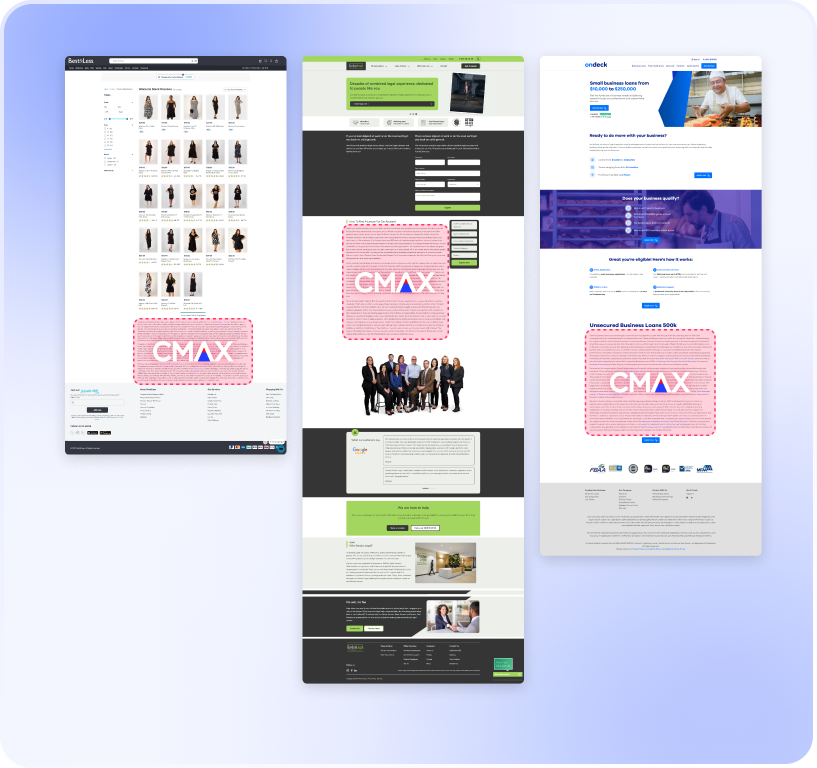
In one CMAX engagement, a B2B omnichannel hospitality retailer added 5,000 long-tail product pages and generated over $1M per month in incremental SEO revenue within 8 months. The mechanism was catalogue-scale coverage, not head-term optimisation.
Based on CMAX’s client portfolio analysis, most enterprise sites carry the same dynamic: significant search demand sits across long-tail variations that existing page templates don’t cover. Closing that gap at scale is where measurable revenue impact is found. The competitive landscape for SEO in Sydney reinforces this pattern, where large retailers and service providers leave substantial long-tail demand unaddressed.
Enterprise SEO consultants building credible measurement frameworks are also accounting for SEO for AI search as a distinct visibility layer that affects how catalogue-scale content is surfaced beyond traditional ranking signals.
Executive Decision Criteria Should Focus on Implementation Reality and ROI Measurement
Shortlist for Implementation Reality
A shortlist built on presentation quality alone will fail at the implementation stage. For a business evaluating enterprise SEO Melbourne options, the questions that separate a credible shortlist from a risky one are operational: Has the consultant mapped your CMS constraints? Do they know where developer access is gated? Have they accounted for approval chains across regional or business-unit owners?
A consultant who can’t answer those questions specifically hasn’t scoped the work, they’ve scoped a pitch. The strongest shortlists weight whether the proposed work can survive your internal dependencies: release cycles, legal review, shared engineering queues, and the capacity of regional teams to support rollout at scale.
Enterprise SEO consultants increasingly factor in how AI in search engine optimisation is reshaping crawl prioritisation and content evaluation when advising executives on long-term measurement frameworks.
Executive Reporting for SEO ROI
Aggregate traffic movement is not executive reporting. It conflates SEO performance with brand demand shifts, paid channel spillover, and seasonal patterns that have nothing to do with what the consultant delivered.
The value of enterprise SEO consultants becomes measurable when reporting connects indexation changes and qualified organic sessions to conversions, revenue, or pipeline movement, within the agreed implementation scope and timeframe. It shows which templates changed, which rollouts launched, and what shifted in the periods that followed. That level of segmentation is what lets a Head of Digital present SEO results to a CFO without having to caveat every number.
If a consultant’s reporting framework can’t separate their work from unrelated channel activity, the ROI case will always be contested. For teams benchmarking against the SEO Melbourne market specifically, local competitive data should feed into that segmentation so regional performance is reported on its own terms.
Enterprise SEO consultants helping executives build ROI reporting will often distinguish organic search performance from broader SEO services marketing activity so that channel attribution remains defensible across shared campaign budgets.
Frequently Asked Questions (FAQ)
How do you prioritise enterprise SEO issues?
Enterprise SEO issues are prioritised by weighing likely business impact against implementation effort, then adjusting for dependencies. Whether the focus is SEO geelong or a national programme, prioritisation follows the same impact-versus-effort framework. Template changes, engineering access, and legal review all affect sequencing. A fix that scales across thousands of pages typically ranks ahead of one that affects a single URL, even if the single-page fix is technically simpler.
What does an enterprise SEO audit include?
A credible enterprise SEO audit covers crawl and indexation controls, internal linking, template behaviour, duplication risks, and CMS constraints. It also addresses measurement setup and the operational handoffs required to move recommendations through content, development, and approval workflows.
Enterprise SEO consultants advising on content governance at scale may recommend engaging a SEO copywriting company when internal teams lack the capacity to produce optimised copy across all mapped service-line or product-category pages.
How do enterprise SEO consultants work with developers?
Consultants translate findings into scoped technical tickets, specifying whether the impact sits at template level or page level. Fixes are sequenced so engineering time goes first to changes that improve many pages at once rather than isolated corrections.
Which enterprise SEO metrics matter to executives?
Executives care about metrics that connect SEO work to business outcomes: indexed coverage for priority templates, qualified organic sessions, conversions, and revenue or pipeline change within the defined rollout scope. For a business investing in SEO queensland or any other regional market, the same metrics apply at the local level.
How do you measure enterprise SEO ROI?
Enterprise SEO ROI is measured by comparing agreed cost and implementation scope against incremental organic conversions, revenue, or pipeline over time. Segmentation is required to separate SEO impact from unrelated channel changes, brand demand shifts, or seasonality.
Enterprise SEO Needs Scale, CMAX Was Built for It
Most enterprise SEO consultants focus on audits, recommendations, and roadmaps. Execution stays on your plate.
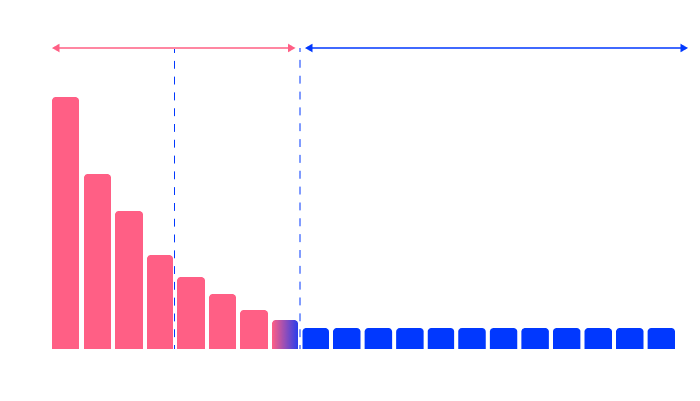
CMAX takes a different approach: it’s an agentic SEO platform that deploys and continuously updates content targeting thousands of long-tail keywords, the 90% of search demand most strategies leave on the table. Two lines of code connect it to your site, and our AI agents handle content creation, optimisation, and refresh at a speed manual teams can’t match. Results are typically observed within six weeks of deployment.
If your team has plateaued with conventional consulting, CMAX gives you programmatic scale without the headcount.
Author
Jeremy Tang
Founder and CEO of CMAX
Jeremy Tang is the Founder and CEO of CMAX. With over 2 decades of experience in business consulting and digital marketing, he has successfully driven seven startup businesses, six of which achieved $1 million in revenue from zero in less than 16 months, 5 of which grew to multi-million dollar a year ventures without any external funding. Jeremy's expertise lies in streamlining business processes through technology and leveraging digital (in particular SEO) for business growth. He resides in Australia, travels extensively, and draws inspiration from his global experiences.