Most of what gets sold as an SEO content writing company is really just drafting with a keyword list attached. The strategy, briefing, review gates and performance reporting that make content actually rank and convert are either missing or bolted on as extras. If you’ve been burned by that gap before, the distinction matters: you need to know what a full search-content workflow looks like so you can spot what’s missing in your current setup. CMAX operates across that full workflow, from keyword discovery through publishing and ongoing measurement.
An SEO content writing company spans more than writing.
Search-led content writing
What is SEO content writing? It starts with a specific search need, and every structural decision follows from there. The SEO content writing meaning, in plainer terms, is producing content that is shaped by query data before a single word is drafted. Keyword research, page architecture, internal linking and refresh planning are built around query intent from the outset. They’re not retrofitted onto generic copy once a draft exists. A page written that way targets a distinct search task from the first sentence, which is a different brief entirely from producing content and optimising it afterwards.
An SEO content writing company coordinates strategy, briefing, review and reporting around the work of SEO content writers, with each draft built on intent research rather than produced in isolation. For teams that need an SEO copywriting Sydney agencies recommend, the first filter is whether the provider runs a full search-content workflow. As a content writing service Sydney businesses can rely on, CMAX.AI builds every engagement around that workflow from day one.
What should and should not be covered
A credible SEO content writing company defines its scope in writing, so buyers know exactly what they’re purchasing. The following boundaries are a practical reference.
A full search-content workflow should include:
- Strategy and keyword research
- Search-intent clustering and briefing
- Subject-matter inputs and source standards
- Drafting, editing and approval workflows
- Publishing support and update planning
- Reporting on coverage, traffic and conversions
A credible provider should not:
- Promise guaranteed rankings or traffic
- Assume paid media management unless it’s explicitly scoped
- Publish unapproved claims in regulated topics such as legal, financial or medical content
- Sell generic copy without search intent or an upkeep plan as SEO content
If a provider can’t tell you which of the above inclusions are in scope and which aren’t, that’s a signal the engagement will produce copy, not a content programme. The distinction has direct consequences for what gets measured and what gets delivered.
Buyers researching an SEO content writing company will sometimes encounter the term SEO copywriting company used interchangeably, and while both describe providers that align written content with search intent, the scope of strategy, briefing and reporting can differ significantly between vendors.
The process should run from discovery to reporting.
Workflow before drafting
Keyword discovery, intent clustering, content briefs and subject-matter inputs are not pre-work, they are the decisions that determine whether a page earns a ranking or competes with itself. A credible SEO content writing company builds this sequence into its operating model so nothing reaches a writer without a validated intent target. Intent clustering groups related queries by search task, so each page targets one distinct need rather than fragmenting authority across overlapping topics. Delivering SEO content writing services at scale depends on getting this clustering right before a single draft is opened. The brief then carries that intent forward: it tells the writer which query the page must satisfy, which sources meet the evidence standard and where the page sits within the broader topic architecture. Briefs built to this standard are what separate SEO friendly content writing services from providers that hand writers a keyword and a word count. Without that sequence locked in before drafting begins, writers fill gaps with plausible copy rather than specific answers, and the resulting pages are harder to rank and harder to update. Structuring each deliverable around heading hierarchy, defined subtopics and defined link targets is where SEO web content writing discipline shows up in the finished page.
Publishing through reporting
Whether you are hiring an SEO copywriter Melbourne teams have vetted or onboarding a national provider, the reporting loop is what determines whether content keeps compounding or stalls after launch. Pages that go live without a refresh plan, internal linking logic or performance baseline have no mechanism for improvement after launch. Post-launch data shows which pages are gaining new rankings, which are losing ground to nearby topics, which need stronger internal links to pass authority and which are too similar to justify keeping separate. Reporting that feeds back into production decisions, rather than sitting in a separate dashboard, is what turns a content programme into a compounding asset. The same operating model that governs brief creation should govern refresh cycles and consolidation calls. Providers offering SEO copywriting Melbourne, or any other metro-specific service, should tie local performance data back into the same production cycle. An SEO content writing company owns the end-to-end content production workflow, whereas an enterprise SEO specialist typically focuses on technical infrastructure, crawl health and authority-building programmes that sit outside the content pipeline.
Quality control should be visible at every stage.
People-first quality signals
Keyword frequency and template compliance are the wrong primary measures for SEO content. A page that hits a target keyword 12 times but fails to answer the actual query will not hold rankings, and it will not convert the reader who arrived expecting a specific answer. What separates a credible SEO content writing company is how it checks quality, not how fast it drafts.
Strong SEO content gets reviewed first against query match: does this page satisfy the specific search task it was built for? Second, does it add something a reader could not find by scanning three other results? Third, does it show real subject knowledge, the kind that comes from source inputs, SME review or documented methodology, rather than surface-level rephrasing?
Google’s own guidance on people-first content frames these as the right signals.[1] They are also the signals that hold up when algorithms update.
Review gates and source rules
Scale introduces drift. As page volume grows, factual accuracy, brand language and duplication risk all degrade without structural controls.
Defined review gates fix this. Each draft moves through a sequence: intent check, source verification, brand language review, duplication scan. The sequence does not change because a deadline is tight.
Approved source standards matter most where claims carry legal, financial or medical weight. Any SEO copywriter Australia businesses engage should follow explicit source standards and review gates, with sign-off rules defined per content category rather than editorial discretion applied inconsistently across a large content run.
AI-assisted production requires the same controls, documented explicitly. Which claims require human verification? Which sources are approved? What triggers a compliance review? Those rules need to be written down before production scales, not retrofitted after a problem surfaces.
An SEO content writing company must establish clear editorial controls as AI in search engine optimisation continues to reshape how drafts are produced, reviewed and approved at scale.
Outcomes Should Be Measured Beyond Rankings Alone
Metrics Beyond Rankings
A ranking gain tells you a page appeared in results. It does not tell you whether anyone clicked, whether those visitors matched your target audience, or whether any of them converted.
Useful reporting tracks four things: topic coverage growth (are you winning visibility across a broader set of queries?), long-tail expansion (are new, high-intent searches surfacing pages that weren’t ranking before?), qualified traffic (are the visitors arriving ones your commercial model actually needs?), and conversion contribution (are those pages driving assisted revenue or direct conversion behaviour?).
The value of a SEO content writing company shows up in coverage growth and conversion contribution, not just rank movement. A forward-looking provider will increasingly factor in SEO for AI search when evaluating whether content is earning visibility across evolving retrieval environments, not just traditional blue-link results.
Each metric answers a different commercial question. Coverage and long-tail expansion show whether the content programme is building durable search presence. Traffic quality and conversion data show whether that presence is commercially productive. Reporting that stops at position tracking leaves the CFO-level question unanswered.
Attributed Client Proof
In one CMAX engagement, a B2B omnichannel hospitality retailer added 5,000 long-tail product pages and reached $1M+ per month in incremental SEO revenue within 8 months.
That result came from catalogue-scale long-tail coverage, disciplined page production and ongoing performance learning, applied consistently across a large page set. Isolated blog output at low volume does not produce the same compounding effect.
An SEO content writing company contributes a measurable content layer to the broader SEO services marketing mix, with reporting that ties page-level visibility gains to qualified traffic and assisted conversion rather than rankings alone.
The same operating model applies to any programme targeting the long tail at scale: coverage breadth, production discipline and continuous optimisation drive the outcome, not any single high-performing page.
Frequently Asked Questions (FAQ)
How do you scale SEO content without losing quality?
Quality holds when scale is built on standardised briefs, approved sources, review checkpoints and update rules. Those controls keep intent matching, factual accuracy and brand language consistent as page volume grows. Without them, drift is inevitable: writers interpret briefs differently, sources go unverified and brand language shifts page by page.
Is programmatic SEO risky for rankings?
Programmatic SEO creates problems when it publishes thin, duplicative or unsupported pages at scale. It supports search visibility when each page targets a distinct query pattern, adds specific information and passes the same review standards as any manually produced page. The risk is in the production discipline, not the method itself.
How long does programmatic SEO take to implement?
Implementation time depends on template complexity, data readiness, approval workflows and publishing integration. The practical constraint is operational setup, not draft generation. Organisations with clean data and defined approval chains move faster than those resolving those questions mid-project.
When to use programmatic vs traditional SEO?
Programmatic SEO fits large sets of repeatable, high-intent searches: product, location and comparison patterns. Traditional SEO suits category education, thought leadership and pages that require a bespoke argument, expert interpretation or a distinct editorial voice. Most enterprise programmes use both.
What questions to ask an enterprise SEO agency?
Ask how the agency handles intent research, brief creation, subject-matter review, publishing ownership, refresh cycles, AI controls and outcome reporting. Those process details reveal whether it runs enterprise-scale content operations or is reselling bulk copy production under a different label.
While an SEO content writing company focuses on the full discovery-to-publishing content workflow, enterprise SEO consultants typically concentrate on technical audits, authority strategy and cross-channel search governance at an organisational level. A SEO content writing company that can answer every one of those questions is demonstrating operational depth.
Most SEO Content Gets Published and Forgotten
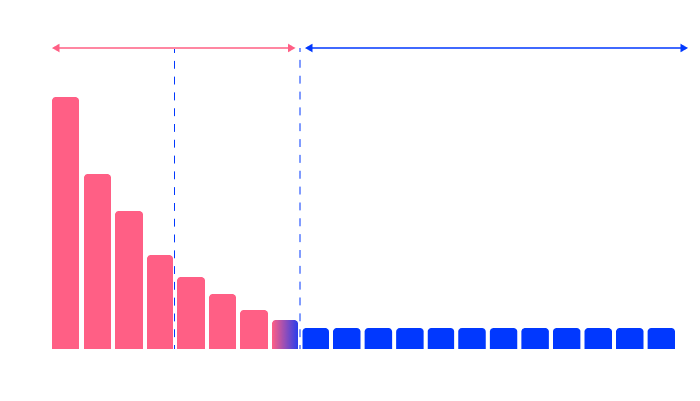
CMAX works differently. Our agentic SEO platform deploys two lines of code, then continuously creates and updates long-tail content targeting the 90% of search demand most SEO content writing company providers never reach. Each page is built to capture high-intent queries at a scale and speed manual teams can’t match, and our agents keep optimising after publish, not before. Clients have observed measurable traffic growth within six weeks of launch, with one ISP account recording 3,747 new rankings in its first month.
If your current process stops at drafting and posting, you’re leaving most of your addressable search traffic on the table.
References [1] – https://developers.google.com/search/docs/fundamentals/creating-helpful-content
Author
Jeremy Tang
Founder and CEO of CMAX
Jeremy Tang is the Founder and CEO of CMAX. With over 2 decades of experience in business consulting and digital marketing, he has successfully driven seven startup businesses, six of which achieved $1 million in revenue from zero in less than 16 months, 5 of which grew to multi-million dollar a year ventures without any external funding. Jeremy's expertise lies in streamlining business processes through technology and leveraging digital (in particular SEO) for business growth. He resides in Australia, travels extensively, and draws inspiration from his global experiences.