Programmatic content can add thousands of pages to a site in weeks, but the number that actually get indexed and drive revenue depends on whether each page carries enough distinct value to justify its own URL. That distinction, between automation that helps users and automation that just multiplies thin templates, is where most scaled SEO projects either hold up or collapse. CMAX works in this space, building programmatic page sets with structured review gates and quality controls designed to keep large rollouts on the right side of that line.
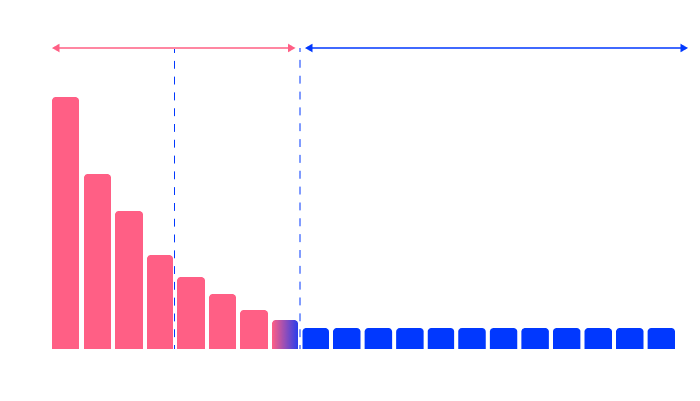
Programmatic content scales only when pages add distinct value.
Templates With Structured Inputs
Programmatic content works through a repeatable page framework combined with structured data fields. Those fields, whether location data, product attributes, pricing context, or query-specific answers, are what make each URL a genuinely different answer to a different long-tail intent. The framework stays consistent; the inputs change the substance.
That distinction is what separates scalable programmatic content from a page-swapping exercise. Replacing a city name or product label inside otherwise identical copy produces a different URL, but the same page. Search engines recognise the pattern.[1] Visitors get nothing they could not have found on the parent page. Structured inputs that materially change the answer are what give each URL a reason to exist.
Automation vs Search Manipulation
Anyone asking what is programmatic should start with the line Google’s published spam guidance draws.[2] That guidance does not prohibit automation. The line it draws is one of purpose. Scaled pages become a compliance risk when they exist primarily to capture rankings rather than to help a user complete a task or answer a specific query. Automation that produces pages with original utility, answers a searcher could not get from a generic template, sits on the acceptable side of that line.
The practical implication: the mechanism of production is not the risk factor. The value delivered to the searcher is. A programme built on shallow inputs and recycled copy is risky at ten pages or ten thousand. A programme built on distinct, query-matched data can scale without triggering that threshold.
Programmatic content is most effective when each template targets a specific query variant, which is why the principles behind longtail SEO, matching precise user intent with a meaningfully differentiated answer, sit at the core of any scalable page strategy.
Quality thresholds decide whether scaled pages are indexable.
Unique Inputs and Clear Intent
A page earns indexation when it serves a defined query, answers a specific question, and draws on inputs that materially change the answer. Effective programmatic content meets that bar only when each variation reflects a genuine shift in what the searcher needs. Swapping a city name or product label while keeping everything else identical does not qualify. The content must shift in a way that reflects the actual difference in what the searcher needs, whether that is a different constraint, a different decision context, or a different answer altogether. Strong SEO content development at the planning stage defines these differentiators before a single page is built.
Making Similar Pages Useful
Locality pages are among the most common candidates for exclusion, and the fix is concrete rather than cosmetic. A page becomes more defensible when it includes details that change what a visitor actually does: service-area boundaries, local stock availability, delivery terms, applicable regulations, or FAQs tied to that specific query. A place name dropped into generic copy does not change the decision. Specific, locally accurate data does. Treating each page as an exercise in content creation for SEO means matching the intent behind every query variation with information that genuinely serves it. Programmatic content programmes that generate large filtered URL sets should apply the same uniqueness standards used in faceted navigation SEO, where each parameter combination must add distinct user value rather than producing near-duplicate pages. Disciplined SEO content creation at the production step keeps each generated page above the quality threshold rather than inflating the URL count.
Why Similar Pages Get Excluded
Large page sets fail to index cleanly for predictable reasons. Search engines may exclude or consolidate near-duplicate content patterns rather than index each one. Weak internal paths compound the problem: pages that are hard to discover through a shallow crawl are less likely to be indexed at all. Thin supporting data and canonical signals that point to a single representative URL accelerate that consolidation. The result is a published page set that is far larger than the indexed one, with most of the work invisible to search.
Operational Controls Keep Programme Pages From Drifting Thin
Pre-Publication Review Controls
Weak template logic does not stay contained. Once publishing starts, a flawed rule replicates across every URL the system generates. That is why governance should ideally happen before the first page goes live, not after a crawl report flags the damage.
Programmatic content that relies on real-time data feeds or personalisation logic overlaps closely with SEO dynamic content, making pre-publication review controls especially important to ensure rendered pages meet quality standards before they are indexed.
Pre-publication review covers five areas: template logic, source fields, factual claims, internal links, and indexation rules. Each one needs an owner who can approve or block before generation runs. Approving them individually sounds slow; skipping them is slower, because remediation at scale means touching thousands of pages rather than one template.
Engagement Expectations Checklist
A sound programmatic content engagement runs through explicit review gates at each stage. Stakeholders need the ability to approve, revise, pause, or stop the rollout before thin patterns or unsupported claims spread sitewide. The checklist below defines what each gate covers.
Scope defines the page set, target query families, and the specific data fields that will make one URL meaningfully different from another.
Template review confirms which content stays fixed, which fields vary, where claims need source support, and where unsupported or non-compliant statements are blocked before generation.
Data validation checks that source fields are complete, current, and distinct enough to justify separate pages, rather than producing near-duplicates from shallow input changes.
Internal linking logic maps how content hub SEO structures, child pages, and related pages will be reachable through a shallow crawl path, and confirms those links reflect real topic relationships.
Indexation rules specify which URLs are indexable, canonicalised, merged, or held back until they carry enough unique value and supporting data to stand alone.
QA sampling tests rendered pages for factual accuracy, duplicate patterns, broken template logic, missing fields, and thin outputs before the full set goes live.
Measurement defines baseline rankings, indexed-page counts, conversions, and the time window used to judge performance, so the rollout is assessed on search visibility and business contribution, not page count alone.
Publishing thousands of pages is an output. What a CFO needs to see is an outcome. Before a programmatic content rollout goes live, set a documented baseline: which non-brand keywords the site currently ranks for, how many pages are indexed, what conversion volume those pages generate, and over what timeframe you expect movement. Without that baseline, any post-launch data is directionally interesting but commercially unverifiable.
Programmatic content ROI becomes measurable when the page set is built around long tail SEO demand patterns, because tracking non-brand rankings and conversions at the query level reveals which specific intent clusters are driving real business contribution.
Performance measurement should track indexed-page counts against the total published set, non-brand ranking positions across the target query families, and the revenue or lead contribution attributable to those pages, not aggregate site traffic. A page set that adds 4,000 URLs but moves none of them past page two has not delivered SEO value; it has added crawl load.
Based on CMAX’s client portfolio data, measurement baselines differ depending on regional search volume and competitive density, making locally calibrated benchmarks essential before any large-scale rollout.
Tie the assessment window to realistic search timelines. Indexing, ranking, and conversion data from a large page set typically stabilises over weeks, not days.[3] Define that window before launch so stakeholders are not drawing conclusions from incomplete data.
Internal Linking at Scale
Internal linking at scale works when it follows real topic relationships rather than blanket automation. Category hubs should link to child pages that genuinely belong under them; related-page rules should reflect query proximity, not alphabetical proximity. Crawl-depth limits matter because a page buried six clicks from the homepage is harder for search engines to discover and harder for users to reach through natural navigation.
That structure also signals to search engines why one page cluster exists separately from another, which reduces the risk of similar URLs being treated as duplicates of a single canonical page.
Evidence Matters More Than Publishing Speed
Google’s Practical Quality Bar
Google’s Search Essentials and spam policies set a practical threshold for programmatic content: scaled publishing is acceptable when pages help users complete a task or answer a specific query.[4] The risk begins when pages exist primarily to capture rankings rather than to serve a searcher’s actual need. Automation is not the violation. Publishing pages that offer no utility beyond occupying a URL is.
That distinction shapes every template decision. A page built around a defined query, populated with inputs that materially change the answer, and connected to a logical crawl path sits on the right side of that line. A page that swaps a city name into generic copy and calls it unique does not.
Programmatic content strategies increasingly intersect with AI and SEO as practitioners look to see how machine-generated signals influence quality thresholds and indexing outcomes at scale.
Client Proof by Mechanism
The revenue case for programmatic content is clearest when the page set maps directly to demand patterns that category pages cannot cover. In one CMAX engagement, a B2B omnichannel hospitality retailer added 5,000 long-tail product pages and reached $1M+ per month in incremental SEO revenue within 8 months.
The mechanism is straightforward: large catalogues and broad service sets generate thousands of specific search queries that a handful of top-level pages will never rank for. Unlike broader content marketing and SEO strategies that target head terms, each long-tail page targets a demand pattern the category page misses. At 5,000 pages, those individual signals compound. The 8-month timeframe reflects indexed coverage building into rankings, then rankings converting into measurable revenue contribution, not an overnight result from publishing volume alone.
A useful decision framework makes approval easier.
Four Questions Before Publishing
Before a page set goes live, every URL should be able to answer four checks cleanly.
Who does this page serve? A defined audience with a specific query is the starting point. If the answer is vague, the page has no clear reason to exist.
Which unique inputs change the content? Surface-level variable swaps, a city name, a product label, a category term, do not constitute meaningful differentiation. The inputs must materially alter the answer the page delivers.
Why does this URL merit indexation rather than consolidation? Across different types of SEO content, if the page covers intent already handled by an existing URL, merging or canonicalising is the stronger call. A new indexed page should fill a gap, not duplicate coverage.
What metric will determine whether it performs? Define the signal before publishing: ranked position, organic sessions, conversions, or revenue contribution against a set baseline and timeframe. Page count is not a performance metric.
When to Revise or Reject
A page that cannot pass those four checks cleanly should not go live as written. Revise when the template logic is sound but the data inputs are too shallow to differentiate the output. Merge when two URLs target the same intent and one can absorb the other without losing query coverage. Reject when the page overlaps with an existing URL, repeats claims that lack source support, or adds too little query-specific value to justify a separate indexed page. Catching these cases before publication is faster than correcting thin patterns across thousands of live URLs.
Programmatic content and automated SEO share the same core risk, that weak template logic multiplies across thousands of URLs, so a clear four-question approval framework helps teams catch thin patterns before they reach indexation.
Is programmatic SEO considered spam?
Programmatic SEO is not inherently spam, but programmatic content becomes risky when pages are published at scale mainly to capture rankings, without original utility for the visitor.[5] Google’s spam policies draw the line at purpose: pages built to help users complete a task or answer a specific query sit on the acceptable side. The automation method is secondary; the value delivered to the searcher is what Google’s guidance actually evaluates.
How to avoid duplicate content in programmatic SEO?
Publish only when each page has unique inputs that materially change the answer. Local constraints, product differences, pricing context, and distinct query intent all qualify. A new URL with recycled copy and a swapped city name does not. If the content a visitor reads would be functionally identical across two URLs, those pages are candidates for consolidation, not separate indexation.
How to handle internal linking at scale?
Plan a hierarchy of hubs, child pages, and related-page rules before publishing. New URLs should be reachable within a few clicks and connected by topic logic. Sitewide automation that links everything to everything produces shallow signals; structured crawl paths tied to real topic relationships give search engines a reason to treat each cluster as distinct.
How to scale programmatic content without losing quality?
Review templates, data sources, factual claims, QA checks, and indexation rules before launch. Weak template logic that reaches thousands of URLs is significantly harder to correct after the fact than before the first page goes live.
How to measure programmatic SEO ROI?
Compare indexed coverage, non-brand rankings, conversions, and revenue or lead contribution against a defined baseline and timeframe. Published page volume is an output metric, not a performance metric.
Programmatic content teams are also paying closer attention to AI search engines as a distribution channel, since retrieval-based results surfaces raise new questions about how scaled pages are evaluated and surfaced.
Scale Demands More Than Speed, It Demands Control
CMAX is an agentic SEO platform built for programmatic content at enterprise scale.
Our AI agents deploy and continuously update pages targeting thousands of long-tail keywords, the 90% of search demand most businesses never reach. Two lines of code connect CMAX to your site; results typically surface within six weeks. Every page is built to carry distinct value, not just fill an index.
We built CMAX because scaling content without quality controls isn’t growth, it’s risk.
References [1] – https://developers.google.com/search/docs/essentials/spam-policies [2] – https://developers.google.com/search/docs/essentials/spam-policies [3] – https://developers.google.com/search/docs/appearance/ranking-systems-guide [4] – https://developers.google.com/search/docs/essentials/spam-policies [5] – https://developers.google.com/search/docs/essentials/spam-policies
Author
Jeremy Tang
Founder and CEO of CMAX
Jeremy Tang is the Founder and CEO of CMAX. With over 2 decades of experience in business consulting and digital marketing, he has successfully driven seven startup businesses, six of which achieved $1 million in revenue from zero in less than 16 months, 5 of which grew to multi-million dollar a year ventures without any external funding. Jeremy's expertise lies in streamlining business processes through technology and leveraging digital (in particular SEO) for business growth. He resides in Australia, travels extensively, and draws inspiration from his global experiences.