LLMO has started appearing in strategy decks and Slack threads, but most definitions stop at “optimise for AI” without explaining what actually changes in your workflow. The core distinction is practical: SEO earns clicks from a results page, while large language model optimisation earns inclusion inside the answer itself. That difference affects how you structure content, attribute claims, and measure outcomes. CMAX works across both disciplines, helping teams scale query-specific content that search engines and AI systems can retrieve, verify, and cite.
LLMO Targets AI Answer Visibility
What LLMO Means
When people search for the llmo meaning, they find a practice still taking shape. LLMO, short for large language model optimisation, refers to practices that help AI systems retrieve, interpret, and cite content when generating conversational answers. The context that makes this distinct is the moment of selection: when a user asks a direct question, the model must choose which source material to rely on. LLMO is the work that influences that choice.
A standard LLM definition covers the architecture and training of large language models themselves. LLMO narrows the focus to how content creators and marketers can shape material so those models are more likely to surface it.
LLMO is fundamentally concerned with AI visibility, specifically the likelihood that an AI system will select, quote, or cite a page when generating a conversational answer rather than simply ranking it in a results list.
The term is not yet standardised. Spellings vary, unrelated acronym expansions exist, and the practice is sometimes folded under adjacent labels like GEO or AEO. Define it on your own terms early, or the definition gets borrowed from somewhere less precise.
LLMO vs SEO Outcomes
SEO mainly aims to improve visibility in search engine results. LLMO focuses on increasing the chances that a page is used as supporting evidence, quoted text, or a cited source inside an AI-generated answer.
That gap is practical, not cosmetic. SEO earns a click from a results page. LLMO earns inclusion inside the answer itself, before the user decides whether to click anything. A page can rank well and still never appear in an AI answer if the content is too vague to quote, too ambiguous to attribute, or too broad to match a specific question cleanly.
Both outcomes matter. They draw on overlapping technical foundations, but they measure success differently and reward different content decisions.
SEO and LLMO Diverge in Practice
What AI Systems Need
AI-answer visibility can depend on several page-level factors that SEO alone doesn’t fully address. A page needs to be easy to crawl, tied to a consistent entity, explicit about who is making each claim, and written in passages that can be lifted into an answer without extra interpretation.
That last point is where most pages fall short. Broad marketing copy buries the answer. A paragraph that gestures at expertise without naming the source of the claim gives an AI system nothing concrete to cite. Pages that perform well in AI retrieval tend to answer one question cleanly per section, state facts in a form that stands alone when extracted, and attribute claims to a named author, organisation, or data source rather than leaving them floating.
Clear authorship and unambiguous facts aren’t editorial niceties. They’re the signals an AI system uses to decide whether a passage is reliable enough to quote.
Access and Interpretation Controls
Technical controls split into two categories: access and interpretation.
Robots rules and stable URLs determine whether a crawler or AI fetcher can reach the page at all. Schema markup and clearly attributed facts determine whether the content, once reached, can be parsed and treated as reliable source material.
A technically reachable page can still be a weak citation candidate. If the claim is vague, the author is unnamed, or the fact can’t be verified against a source, the page is accessible but not trustworthy enough to cite. Fixing crawl access is the floor. Source clarity is what lifts a page from indexed to cited. llmo practitioners working on AI search visibility need pages that are technically reachable, clearly attributed, and written in passages precise enough for an AI system to extract without misrepresenting the original claim.
LLMO Needs a Measurable Workflow
AI-Answer Visibility Workflow
A practical llmo workflow starts with the prompts people actually use, then works backward from a measurable answer outcome. Publishing more content without first auditing what AI systems are retrieving and citing is the wrong starting point.
LLMO requires a structured, repeatable workflow, and an LLM SEO consultant can help map the prompts buyers actually use, audit which sources appear in AI answers, and identify the content gaps preventing accurate citation.
Step 1: Collect the prompts. List the recurring questions your buyers, prospects, or support teams type into AI tools. Include comparison questions, definition queries, and problem-led prompts. These reveal where AI answers are vague, incomplete, or wrong before you’ve changed a single page.
Step 2: Record what appears. For each prompt, note which pages, brands, or publishers the AI cites. Log whether your content is mentioned, cited, or absent. That distinction separates a visibility gap from a content-quality gap, and the fix for each is different.
Step 3: Verify the facts. Check every factual statement in the AI answers against the actual source pages. Unsupported or distorted claims tell you whether the problem sits with the model, the source, or both. Don’t assume accurate retrieval without checking.
Step 4: Identify the gaps. Flag missing query coverage, weak source attribution, and passages on your pages that are too vague to quote cleanly. Sections that imply expertise without naming the source of the claim are the most common citation liability.
Step 5: Rewrite for extractability. Expand pages so key facts are explicit, attributable, and stated in a form that can stand alone when pulled into an answer. An AI system should not have to guess the context of a claim to reuse it accurately.
Re-run the same prompt set on a fixed schedule to compare citations, answer quality, and source consistency before and after changes, using the same prompts so you can judge whether the edits changed retrieval rather than the test itself.
LLMO Scorecard Metrics
Consistency in testing is what separates a measurement programme from a guessing game. Run the same prompt set before and after any content change, and the delta tells you whether retrieval shifted. Swap the prompts between rounds and you lose the ability to attribute the change to your edits rather than the question itself.
A repeatable llmo scorecard tracks four distinct layers. Visibility metrics capture whether your content appeared at all. Citation-quality checks confirm whether the answer used your content correctly, quoting accurate facts rather than distorting or paraphrasing them into something you never claimed. Accuracy checks verify that the cited material matches what the source page actually states. Business signals connect those appearances to assisted visits or downstream conversions, so the scorecard answers a question a CFO will ask: did showing up in AI answers produce anything measurable?
Separating these layers matters because appearing in an answer and being used correctly are different outcomes. A model can mention a brand while misrepresenting the claim, or cite a page while stripping the context that made the fact meaningful. Tracking citation quality alongside raw visibility catches that gap early, before a distorted answer reaches a buyer who then fact-checks it against your actual page.
LLMO measurement depends on consistent, scheduled prompt testing, which is why some organisations work with an LLM SEO agency to maintain the same audit cadence and compare citation quality before and after content changes.
Run the scorecard on a fixed cadence, log the results, and treat each round as a baseline for the next.
Content Coverage Changes Retrieval Opportunities
CMAX Proof Point
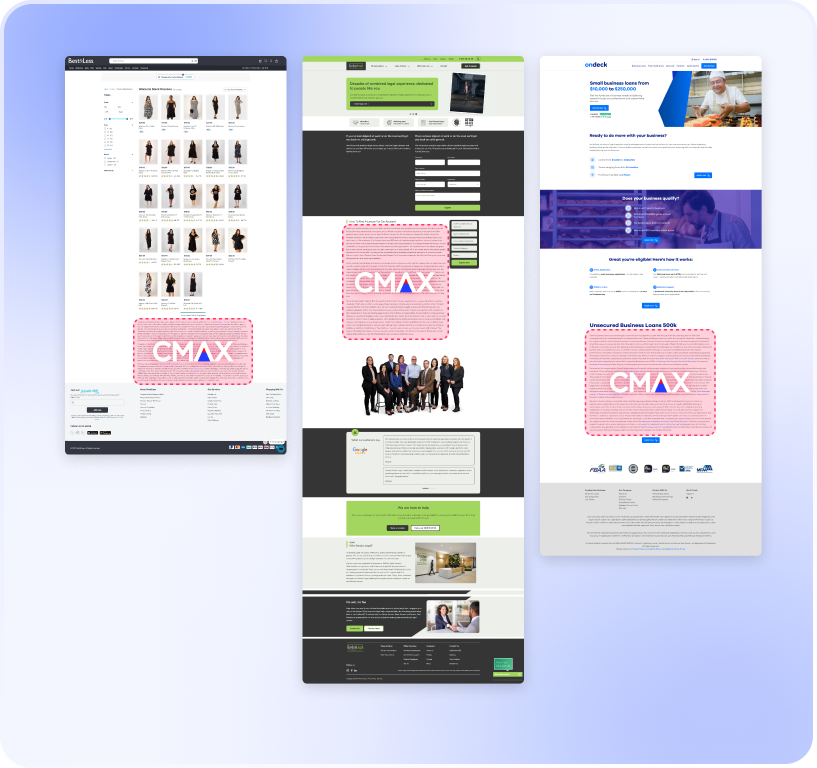
Coverage volume can affect how many retrieval opportunities exist for AI systems. A site with 1,000 pages gives a model a narrow surface to draw from. A site with 15,000+ pages, each targeting a specific query, gives it far more precise source material to match against a user’s question.
In one CMAX client engagement, a fintech lender scaled from 1,000 to 15,000+ pages by May 2023 and achieved 1,400+ new rankings in 6 weeks. The retrieval logic is the same for LLMO: when a site covers more of the long tail with query-specific pages, AI systems have more precise source surfaces to retrieve and cite. Generic category pages force a model to generalise. Query-specific pages give it something concrete to quote.
LLMO principles apply regardless of market, and teams pursuing LLM SEO Australia face the same core challenge of ensuring query-specific pages are crawlable, source-clear, and precise enough to be cited in AI-generated answers.
Before-and-After Prompt Audit
A before-and-after prompt audit makes the coverage impact measurable. Run the same prompt set before and after a content expansion, then compare whether AI tools produce less generic answers, cite more specific pages, and attribute facts to clearer sources.
The comparison has to use identical prompts. Changing the wording between rounds introduces a variable that obscures whether coverage drove the improvement or the prompt did. Keep the prompt set fixed, and the audit answers a practical question: did deeper coverage create retrievable evidence for more of the questions people actually ask? That answer is either yes, no, or partially, and each outcome points to a specific next action.
LLMO Complements SEO, Not Replaces It
Why SEO Still Matters
SEO foundations do not become redundant when AI answer visibility enters the picture. A page that is hard to crawl, poorly structured, or vague about who is making a claim is a weak candidate for both search rankings and AI citations. Discoverability, clear organisation, and source credibility are prerequisites for either channel to work. AI systems retrieve from the same web that search crawlers index, so a technically inaccessible or poorly attributed page fails at both stages.
LLMO and LLM SEO share the same technical foundations, meaning the practices that help AI systems retrieve and cite content are built on the same crawlability, structure, and source clarity that underpin strong search performance.
The Practical Takeaway
SEO builds discoverability and llmo builds answer visibility. Both depend on the same verified source base, and that dependency is what makes them complementary rather than competing priorities.
The same page may need to earn a search click, support an AI citation, and hold up under scrutiny from a buyer who fact-checks the answer. A content strategy that maintains separate claims for search and AI creates inconsistency that neither channel rewards. A single, well-sourced, clearly attributed page serves all three demands at once.
The practical implication: strengthening your SEO foundations, crawl access, structured markup, stable URLs, explicit authorship, directly improves the conditions under which AI systems retrieve and cite your content. There is no version of strong LLMO performance that sits on a weak SEO base.
LLMO builds on the same verified source base as search engine optimisation, so the technical hygiene and content clarity that earn search rankings also improve the odds that AI systems will retrieve and cite the same pages in conversational answers.
Frequently Asked Questions (FAQ)
How do I measure LLMO performance?
Test a fixed set of prompts on a regular schedule and track three things: whether your pages are cited, whether the cited facts are accurate, and whether those appearances correlate with assisted visits or conversions. Keep the prompt wording identical each round. Changing the phrasing between tests makes it impossible to tell whether visibility shifted or the question did.
How do you optimise content for LLMs?
Make important facts explicit, attribute claims clearly, keep URLs stable, and write passages that answer a specific question cleanly enough to be quoted directly. Pages structured this way reduce the inference a model has to do, which improves the odds of accurate retrieval and reuse.
Can LLMO and SEO work together?
Yes. SEO improves the likelihood that content is discovered and parsed at crawl level; LLMO improves the likelihood that the same content is selected and cited inside AI-generated answers. Both work best when they share the same technical foundations and the same verified facts.
How do I get my brand cited in AI answers?
Publish source-clear, query-specific pages that state attributable facts directly rather than relying on broad marketing language or vague category copy. Citation follows clarity and coverage.
Does Google SEO affect LLM optimisation?
It can. Pages that are technically accessible, semantically clear, and already strong as search sources are often easier for AI systems to retrieve and treat as answer evidence. Weak search foundations typically make citation harder.
Long Tail SEO Built for the Age of AI Answers
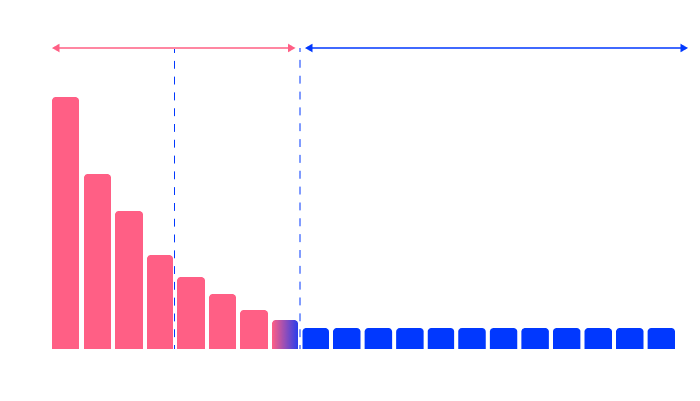
Most search demand, over 90%, lives in the long tail, and that’s exactly where AI-driven answers pull their sources.
CMAX is an agentic SEO platform that deploys and continuously updates content across thousands of long-tail keywords with just two lines of code. Our AI agents target the high-intent queries your competitors aren’t staffed to reach, delivering measurable organic growth in as few as six weeks. As large language model optimisation reshapes how content gets retrieved and cited, the brands with broad, precise, well-structured content have a structural advantage.
CMAX gives your team that advantage at a scale and speed manual workflows can’t match.
Author
Jeremy Tang
Founder and CEO of CMAX
Jeremy Tang is the Founder and CEO of CMAX. With over 2 decades of experience in business consulting and digital marketing, he has successfully driven seven startup businesses, six of which achieved $1 million in revenue from zero in less than 16 months, 5 of which grew to multi-million dollar a year ventures without any external funding. Jeremy's expertise lies in streamlining business processes through technology and leveraging digital (in particular SEO) for business growth. He resides in Australia, travels extensively, and draws inspiration from his global experiences.