What LLM SEO Australia means
LLM SEO Australia means making an Australian brand easier to find and cite across Google search and AI answers. That comes down to three things: clearer entities, crawlable pages, and content that directly answers the questions buyers actually ask.
LLM SEO Australia is not a separate channel sitting next to your existing search work. It is the same fundamentals, applied to the way AI features pull answers from the web.
Google uses the same eligibility criteria for AI answers as it does for standard search results. The pages that rank well are the same ones AI systems cite.
So the real question is whether your site already covers the specific questions your buyers ask, with clear product and entity details that Google and AI systems can actually read.
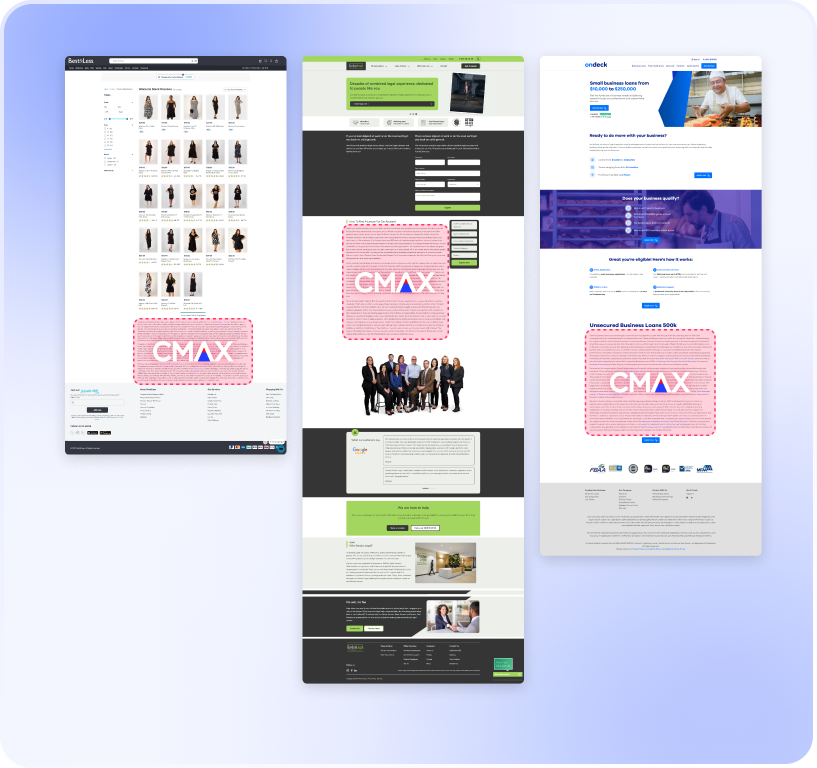
CMAX works from that premise. Our agents build coverage across the long-tail searches that decide visibility in both classic search and AI answers, and LLM SEO fits squarely inside that work.
LLM SEO Australia is an extension of search, not a separate game.
Google confirms that the same SEO best practices apply to AI features in Search. A page must already be indexed and eligible for a snippet before it can appear as a supporting link in AI Overviews or AI Mode.
AI engines retrieve from Google, so if Google cannot read and index your page, AI cannot cite it either. Think of it like a library catalogue: if your book is not in the catalogue, a librarian cannot recommend it, no matter how good the book is.
Why search fundamentals still matter
Weak indexing, thin coverage, or a confusing site structure blocks visibility before any AI layer gets involved. Google states there are no extra technical requirements to appear in AI Overviews or AI Mode beyond standard Search eligibility.
LLM SEO services is search fundamentals applied to a new interface, and AI SEO optimisation starts with the same foundations. Businesses exploring an AI SEO course or experimenting with ChatGPT for SEO will quickly find that what is generative AI for search comes back to the same answer: indexed, crawlable pages win.
The differences between SEO, AEO, and GEO are mostly about emphasis.
Different emphasis, same foundations
Traditional SEO is measured by rankings and organic traffic. Generative search optimisation shifts the measure toward whether a page can serve as a concise answer, a trusted source, or a clearly named entity in an AI response.
The channel is not new. The measuring stick has moved.
Coverage and freshness still decide visibility
The practical difference between SEO, AEO, and GEO is less about new tactics and more about what an LLM SEO agency does to cover the specific commercial questions customers ask, and how regularly those pages are refreshed before the information goes stale. Google processes roughly 15% new searches every day.
AI search engine optimisation depends on long-tail coverage and regular content refreshes in both classic search rankings and AI retrieval. Understanding AI and SEO together means accepting that freshness is now a competitive variable, not a maintenance task.
Generative search optimisation is, in that sense, just good SEO with a shorter shelf life.
Clear product pages and entity signals help brands show up more reliably.
Product pages and entities improve inclusion
The work of an LLM SEO consultant often starts with a product page that spells out dimensions, materials, use cases, service areas, and related ranges. Both buyers and Google’s crawlers need something concrete to work with.
Before content is expanded, LLM SEO audits can establish whether weak coverage, stale information, crawlability, or unclear entity details are the main constraints on visibility.
Google confirms that local results are based on relevance, distance, and prominence, and that businesses with complete, accurate information are more likely to appear in local search results. Complete business details also support generative AI search engine optimisation, because local AI systems rely on concrete signals when they assess relevance.
For businesses based in Queensland, AI SEO Brisbane follows the same logic: local entity clarity is the foundation. Entity clarity, crawlability, and useful content form the practical basis of LLM SEO Australia.
How CMAX supports long-tail coverage
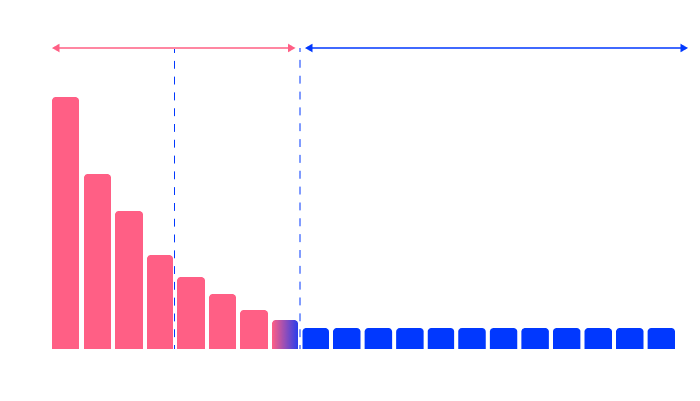
Over 90% of search and AI demand is in the long tail. That means thousands of specific queries, not a handful of broad terms.
Answer engine optimisation services need coverage at scale to reach that demand.
CMAX is the Agentic SEO Platform built for that scale problem. CMAX is trained on human-reviewed, client-approved content, so what gets deployed reflects your brand, not a generic template.
An AI SEO content generator that operates without human review produces generic output; ours does not. CMAX targets the 90% of search demand in the long tail, injecting and refreshing content for LLM SEO Australia as customer search behaviour shifts.
This lets answer engine optimisation Australia expand coverage without a CMS migration.
Frequently Asked Questions (FAQ)
How do I know if my business appears in AI search results?
A practical starting point for AI LLM SEO audits is Search Console, where impressions from AI Overviews and AI Mode can be reviewed alongside conventional search performance. You can also run the commercial and informational queries most relevant to your category and check for three things: a cited source, a supporting link, or a named entity in the answer.
Why might AI-driven visits be missing from website analytics?
A brand can appear inside an AI answer without the user ever clicking through, so no session is recorded in analytics. Search Console captures AI feature impressions separately, meaning the two tools need to be read together for an accurate picture.
Cited sources, supporting links, and named entities give answer engine optimisation services three concrete indicators for reviewing AI visibility.
Can outdated business listings affect what AI says about a brand?
Yes. Inconsistent details across listings can confuse how platforms reconcile your entity, particularly for local queries where address, category, opening hours, and service area all influence relevance.
Google explicitly states that inaccurate Business Profile information can reduce visibility in relevant local searches, and LLM SEO Australia depends on those details staying consistent.
LLM SEO Australia Extends Search Fundamentals
LLM SEO Australia makes most sense as search fundamentals applied to a new interface. When Google and AI systems can find, index, and connect your content, they have clearer sources to cite across both search results and AI answers.
In regulated industries, AI visibility faces additional constraints. SEO for accountants shows why scalable content systems need approved source material, precise controls, and compliance-ready output.
The same logic applies anywhere a brand cannot afford to publish first and fix later.
CMAX is built around the coverage problem. Its Full Body SEO approach helps brands deploy and keep refreshing useful content across the many specific searches buyers use, because visibility comes down to how much of that demand you cover and how current you keep it.
Automated Content Generation and Dynamic Internal Linking do the repeatable work. Smart Optimisation keeps it performing.
The simplest way to find your gaps is to look at where AI answers are already forming around your category and check whether your brand is in the picture.
If you’re curious as to how you’re performing on AI, book in a Missing Customer Map review with our Growth Team.
Author
Jeremy Tang
Founder and CEO of CMAX
Jeremy Tang is the Founder and CEO of CMAX. With over 2 decades of experience in business consulting and digital marketing, he has successfully driven seven startup businesses, six of which achieved $1 million in revenue from zero in less than 16 months, 5 of which grew to multi-million dollar a year ventures without any external funding. Jeremy's expertise lies in streamlining business processes through technology and leveraging digital (in particular SEO) for business growth. He resides in Australia, travels extensively, and draws inspiration from his global experiences.