Most pitches for a gemini SEO service list deliverables that look identical to a standard SEO retainer, making it hard to tell what you are actually paying extra for. The difference usually sits in a narrow layer of work: entity clarity, citation readiness, prompt-led content gaps, and measurement that can separate AI-surface visibility from ordinary organic performance. Knowing where that boundary falls is what lets you compare proposals on scope and proof rather than promises. CMAX publishes its own scope, pricing logic, and outcome reporting so teams can benchmark proposals side by side.
Gemini SEO Pricing Starts With Defined Scope
Pricing Follows Scope and Capacity
Gemini SEO service fees are shaped by four variables: the workstreams in scope, the site’s size and structural complexity, the baseline benchmarking required before any changes begin, and the specialist time needed to implement and measure the work.
A larger site with fragmented architecture and no existing AI-search measurement baseline will cost more to prepare than a well-structured site with clean indexing and analytics already in place. That’s not a pricing quirk, it reflects the actual work required.
One variable that should never drive pricing: promised Gemini mentions. No credible proposal prices on citation guarantees because Google’s own documentation states that eligibility for AI-generated results does not guarantee appearance in them.[1] Fees tied to placement promises are a red flag, not a value signal.
Audit Versus Monthly Retainer
Two engagement models suit different starting points.
A fixed audit and benchmark works for teams that need a documented view of where they stand before committing to ongoing spend. As an SEO service Melbourne businesses can scope before signing, the engagement should define current eligibility signals, content and technical gaps, and measurement readiness, a clear baseline the team can act on or take to a CFO.
A monthly retainer picks up from there. It covers implementation support, testing, reporting, and iteration as search behaviour shifts and AI result formats evolve. Because generative search is still changing, the retainer structure allows the work to adapt without renegotiating scope every quarter.
The right model depends on how much is already known about the site’s current state. For teams evaluating SEO Melbourne providers, that baseline clarity is what separates a productive retainer from premature spend.
When scoping a gemini SEO service engagement, buyers often evaluate what a gemini SEO agency includes in its retainer before comparing pricing models.
Traditional SEO and Gemini Work Partially Overlap
Included Work Versus Traditional SEO
A gemini SEO service typically combines standard SEO foundations with a narrower layer of AI-search preparation. For an SEO service Sydney teams are evaluating, any proposal worth considering should separate which deliverables support all search surfaces from which are specifically intended to improve readiness for generative results. A gemini SEO service draws heavily on the same foundations as SEO for AI search, which is why proposals should clearly separate deliverables that serve all search surfaces from those targeting generative results specifically.
Several workstreams remain squarely in traditional SEO territory. Technical crawlability, indexing, canonicals, internal linking, and page performance are foundational because AI systems still depend on accessible, well-structured pages that search engines can crawl, interpret, and serve. Search-intent mapping, content briefs, on-page optimisation, and editorial updates are also standard deliverables unless the proposal explicitly defines how that work shifts for conversational queries, comparison prompts, or answer-style result formats.
The genuinely additional scope sits in three areas.
Entity clarity tightens brand, product, author, and topic signals so AI systems can more reliably identify who the site represents, what each page covers, and where the site holds topical authority.
Citation readiness improves factual consistency, explicit source attribution, and page structures that make claims, definitions, and comparisons easier for AI systems to quote, summarise, or reference accurately.
Prompt-informed gap analysis examines the follow-up questions, objections, and comparison angles users raise in conversational search, then identifies where the site lacks dedicated pages, missing sections, or direct answers. Where a gemini SEO service sits relative to the broader SEO vs GEO debate helps buyers identify which deliverables belong to traditional search optimisation and which address generative-engine visibility as a distinct workstream.
A proposal that bundles all six workstreams without distinguishing them makes it harder to assess what you’re actually paying for and what’s already covered by existing SEO activity.
AI-search measurement design defines how observed visibility, citations, clicks, and downstream conversions will be tracked separately from conventional rankings, so reporting does not confuse AI-surface exposure with standard organic gains.
Extra Gemini-specific scope
The extra scope that defines a gemini SEO service usually sits in four areas outside a standard SEO retainer: entity clarification, citation-ready content improvements, prompt-led gap analysis, and AI-search measurement design. Together, these areas form the gemini SEO layer that separates this engagement from conventional organic work.
Entity clarification tightens the signals around your brand, products, authors, and topic clusters so AI systems can more reliably identify who the site represents and where it holds authority. Citation-ready content improvements address factual consistency, explicit source attribution, and page structures that make claims and comparisons easier for AI systems to quote or summarise accurately. Prompt-led gap analysis maps the follow-up questions, objections, and comparison angles users raise in conversational search, then identifies where the site lacks dedicated pages or direct answers. Because LLM SEO covers surfaces beyond Google, including Bing Copilot and Perplexity, the gap analysis also flags content that performs well in traditional search yet fails to surface in large-language-model responses.
Measurement design is where this scope becomes commercially defensible. Without a framework that separates AI-surface visibility from conventional organic performance, a rise in impressions or citations can look like progress while Search Console clicks and qualified leads stay flat. A properly scoped measurement layer for SEO for gemini tracks observed AI appearances, Search Console clicks, assisted conversions, and revenue against a single baseline period, so the reporting tells you whether broader visibility is changing commercial outcomes or only lifting top-of-funnel activity.
When designing measurement for a gemini SEO service, teams sometimes also review what a gemini aeo agency tracks to understand how answer-engine visibility metrics differ from standard organic reporting.
Each of these four areas requires specialist time to scope, implement, and iterate as AI result formats change. That time is what drives the additional cost above a traditional retainer.
Measurement Must Separate Visibility from Business Impact
Eligibility Is Not Placement
Google’s own documentation states that eligibility for AI-generated results carries no guarantee of appearing in them.[1] That distinction shapes what a credible gemini SEO service proposal should commit to the work it will complete and honestly define as a deliverable.
A proposal worth signing specifies the work it will complete, the dependencies that need to be resolved before that work can land, and the observed outcomes it will track over time. Placement promises are not a deliverable. Any provider offering guaranteed inclusion in Gemini results is selling something Google itself does not offer.
What a proposal can commit to: crawlability improvements, entity clarity, citation-ready content, prompt-informed gap coverage, and a measurement framework that captures what actually happens in AI-surface results over a defined period.
Reporting Needs One Baseline
Whether scoping an SEO service Australia providers offer as an audit or a retainer, reporting needs one baseline. Visibility gains mean little without a commercial anchor. Useful reporting holds observed AI visibility, Search Console clicks, assisted conversions, qualified leads, and revenue against the same baseline period. That single reference point lets a team see whether broader AI-surface exposure is shifting pipeline or only lifting top-of-funnel activity.
A gemini SEO service measurement plan should account for zero click search behaviour, since AI-generated results can surface a brand without producing a click that appears in Search Console data.
Without that baseline, a rise in AI citations can look like progress while click volume, lead quality, and revenue stay flat. Reporting structured this way gives a Head of Digital something concrete to bring to a CFO: not a screenshot of an AI result, but a line showing whether that result changed behaviour downstream.
Milestone reviews should be built into the engagement from the start, with agreed intervals for comparing actuals against the baseline rather than waiting until contract renewal to ask whether the work moved the numbers.
Proposal Quality Depends on Boundaries, Milestones, and Proof
Ownership and Milestones Matter
A Gemini SEO proposal is only as useful as what it assigns and when. Before signing, check that the document names who owns content production, technical fixes, analytics configuration, and approval cycles, and that it attaches milestone dates to each. Vague scope creates a convenient excuse when delivery slips.
Delays in SEO engagements rarely come from a weak strategy. They come from unresolved dependencies: a dev team that hasn’t prioritised crawl fixes, a legal review that stalls content sign-off, an analytics setup that nobody confirmed was in scope. A proposal that surfaces those ownership questions upfront gives both sides a shared accountability structure from day one, and gives you something concrete to present internally when timelines are questioned. For an SEO geelong engagement, smaller-market sites often carry legacy technical debt that directly affects milestone timelines, so proposals should account for that complexity explicitly.
Organisations comparing a gemini SEO service proposal against locally scoped options such as GEO services Sydney should check that milestones, ownership, and reporting baselines are documented to the same standard regardless of engagement type. When scoping an SEO queensland provider for regional implementation, unresolved dependencies such as local hosting constraints or distributed content teams should be flagged in the proposal before work begins.
One Evidence-Backed Client Proof
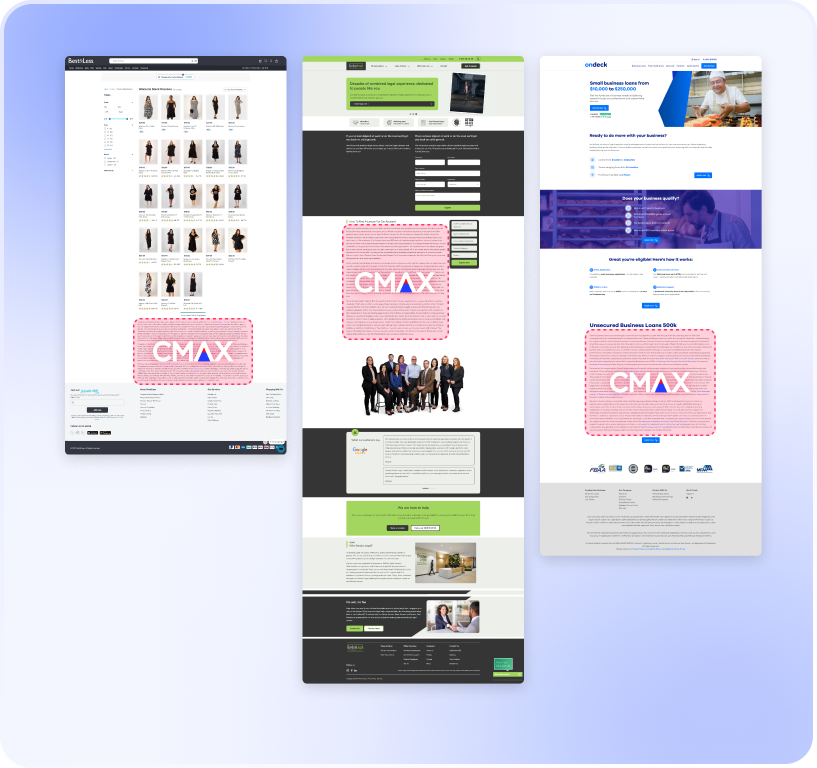
Broad content expansion tied to real product demand produces measurable commercial outcomes, and the numbers from one CMAX engagement illustrate the scale that’s possible. In a CMAX client engagement, a B2B omnichannel hospitality retailer added 5,000 long-tail product pages through CMAX and drove over $1M per month in incremental SEO revenue within 8 months.
The same catalogue-scale logic applies to Gemini SEO proposals that include meaningful content expansion. AI systems draw on pages that cover the full range of questions, comparisons, and product-level queries customers actually search. A proposal built around a small set of head terms leaves most of that demand unaddressed. Scope that maps to real search volume, across thousands of long-tail variants, is what connects visibility to revenue.
Frequently Asked Questions (FAQ)
How to measure success of AI SEO?
Track observed appearances and citations in AI-generated results alongside Search Console clicks, assisted conversions, qualified leads, and revenue. A rise in AI visibility only carries weight when it connects to commercial outcomes, so reporting should show whether broader exposure is moving leads and revenue, or only lifting top-of-funnel activity. For any business asking is SEO marketing worth it, this connection between visibility and revenue is the metric that answers the question.
How to rank my business in Gemini?
No provider can credibly guarantee placement in Gemini. The practical approach is to improve crawlability, entity clarity, factual consistency, and coverage for the questions, comparisons, and objections customers actually search, then measure whether that work produces observed visibility over time.
What does Gemini SEO include?
A gemini SEO service typically covers baseline benchmarking, technical and SEO optimisation work that also supports traditional SEO, plus additional tasks: citation-readiness improvements, prompt-informed content-gap analysis, entity refinement, and AI-search measurement setup.
Buyers researching a gemini SEO service frequently ask how its scope compares with a gemini aeo service, particularly around whether answer-engine optimisation tasks are included or priced separately.
How much does Gemini SEO cost?
Costs are shaped by the scope of work required, the site’s complexity, the level of benchmarking and reporting involved, and whether the engagement is a fixed audit or an ongoing retainer with implementation and iteration built in.
How long does Gemini SEO take?
Timelines depend on implementation speed, content dependencies, analytics readiness, and how frequently the site can publish and test updates. Proposals should define milestones and review periods rather than imply immediate placement in AI-generated results.
Gemini SEO Demands Scale, CMAX Was Built for It
Most Gemini SEO services add headcount, meetings, and monthly retainers to cover a handful of queries.
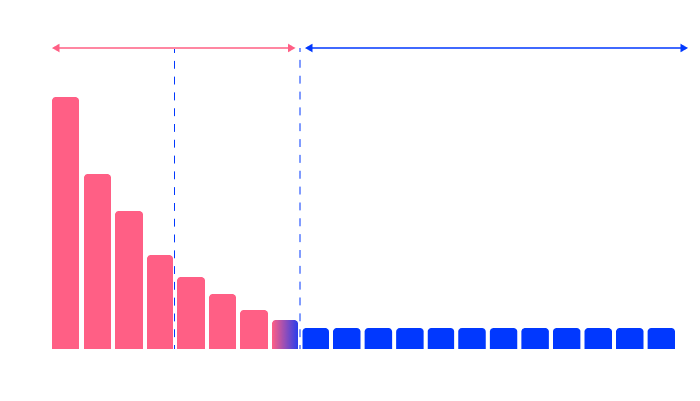
CMAX takes a different approach: an agentic SEO platform that deploys and continuously updates content across thousands of long-tail keyword variations with just two lines of code. Over 90% of search and AI demand sits in the long tail, the exact territory where Gemini and AI-generated results pull their answers. Our AI-powered agents target those high-intent queries at a speed and scale that manual teams or traditional retainers can’t match.
Teams typically start seeing measurable results within six weeks of deployment.
References [1] – https://developers.google.com/search/docs/essentials/spam-policies
Author
Jeremy Tang
Founder and CEO of CMAX
Jeremy Tang is the Founder and CEO of CMAX. With over 2 decades of experience in business consulting and digital marketing, he has successfully driven seven startup businesses, six of which achieved $1 million in revenue from zero in less than 16 months, 5 of which grew to multi-million dollar a year ventures without any external funding. Jeremy's expertise lies in streamlining business processes through technology and leveraging digital (in particular SEO) for business growth. He resides in Australia, travels extensively, and draws inspiration from his global experiences.