Most organisations start looking for an enterprise SEO consultant after headcount alone stops solving the problem. The real trigger is usually complexity: fragmented demand across product lines, regions, or service categories, combined with approval chains and technical systems that slow every change down. When that’s the constraint, adding more people to the backlog doesn’t move the work forward any faster. The question becomes whether you need orchestration, production capacity, or embedded ownership. CMAX works with enterprise teams facing exactly that kind of structural bottleneck.
Enterprise complexity, not company size, drives the need.
Execution Capacity Signals
An enterprise SEO consultant becomes useful when search demand is split across many products, regions, or service lines, and the internal team can’t keep keyword mapping, page briefs, approvals, publishing, and optimisation moving at the speed the site structure requires.
That gap rarely comes from a lack of effort. It comes from volume. A team of two to five can manage a focused content programme. They struggle when the same programme needs to run simultaneously across a software suite, three regional markets, and a services catalogue, each with its own keyword clusters, page types, and publishing queues. The work doesn’t slow down because the team is underperforming; it slows down because the coordination load exceeds what any small team can absorb without a dedicated orchestration layer.
Organisations evaluating specialist support will often encounter both an enterprise SEO consultant and an enterprise SEO company as options, and the distinction typically comes down to whether the engagement requires embedded strategic ownership or a broader team delivering production, reporting, and execution in parallel.
Governance Across Teams
For an organisation that needs enterprise SEO Melbourne teams can rely on, governance across brand, legal, product, and publishing controls is the first test. Pressure rises when those controls sit with different teams. A change to templates, claims, internal linking, or page copy can stall at any one of those checkpoints unless someone owns the approval path and the rules for scaling safely.
This is where complexity compounds. A single template update might require sign-off from legal on compliance language, product on feature accuracy, and brand on tone, in sequence, with no shared system tracking where the change sits. Without a defined governance model, scaled content production doesn’t just slow down; it introduces inconsistency that accumulates across hundreds of pages. An enterprise SEO consultant’s value in this context is structural: they define who approves what, at which stage, so publishing can move without sacrificing accuracy or brand control.
The right model depends on the constraint.
Match Model to Constraint
When evaluating enterprise SEO services, the choice between a consultant, a generalist agency, and an in-house hire comes down to where the bottleneck actually sits.
A consultant is often the strongest fit when the core problem is orchestration: getting brand, legal, product, and publishing teams aligned on a shared rollout path. That requires someone who can hold the strategy across stakeholders and systems without being absorbed into daily execution.
A generalist agency tends to add more value when the gap is production output. If the brief is clear and the approvals are fast, volume is the constraint, and an agency model can fill it. An enterprise SEO consultant tends to be the stronger fit when the constraint is cross-stakeholder orchestration and governance, whereas a B2B SEO agency may be better suited when the primary gap is production output and campaign execution across a defined channel mix.
An in-house hire suits organisations that need embedded ownership of backlog management, internal reporting, and day-to-day decision-making. The trade-off is that an internal hire is rarely positioned to challenge the systems and approval structures they sit inside. Ongoing enterprise SEO optimisation services, such as crawl-budget management, schema governance, and indexation monitoring, often fall outside the scope an internal generalist can maintain at scale. When an enterprise SEO consultant is being evaluated against other models of support, organisations sometimes also consider an AI SEO agency as an alternative where automated content production and optimisation workflows are the primary gap rather than strategic orchestration.
Signs Specialist Support Matters
Headcount alone does not resolve structural problems. An enterprise SEO consultant is the more defensible choice when:
- Technical debt is blocking template rollout and no internal owner has the authority or scope to clear it. An enterprise SEO expert can diagnose the root cause across platform layers and prioritise fixes by revenue impact.
- Approval chains are slowing publishing to a pace the site’s competitive position cannot absorb
- Regional or service-line teams are targeting overlapping queries, splitting authority across URLs that should consolidate or differentiate. An enterprise SEO specialist brings the orchestration function needed to align these teams under a single taxonomy and targeting framework.
- Reporting cannot connect organic landing page performance to assisted conversions, qualified pipeline, or closed revenue
When any of these conditions are present, adding more people to the existing workflow compounds the friction rather than resolving it.
Scaled coverage must stay accurate and distinct.
Unique Search Purpose Per Page
Product, problem, location, and intent variants expand coverage without duplication only when each page serves a genuinely different search purpose. A page that helps a buyer compare deployment options serves a different function than one that validates local availability or moves a procurement lead toward an enquiry. The failure mode is publishing variants that repeat the same claims with minor wording changes, search engines consolidate them, and buyers find nothing new.
Each page needs a distinct job: comparing options, solving a named problem, confirming regional fit, or advancing a specific stage of evaluation. If two pages would give the same answer to the same question, they belong on one URL. Deciding which variants warrant their own page and which should merge is precisely the orchestration an enterprise SEO consultant provides at scale.
Service-Line Long-Tail Mapping Process
A service-line long-tail mapping process turns one core page into defensible variant clusters by deciding which query patterns need their own page, which belong on the same URL, and what unique proof or compliance detail each page must carry.
Start with one core service line and list the exact commercial terms already generating qualified enquiries, proposal discussions, or sales conversations, drawn from search, paid search, site search, or CRM notes. Split those terms into product, problem, location, and intent variants so each cluster reflects a distinct search purpose.
Merge close variants that would need the same answer. Separate variants that require different proof points, compliance language, regional details, or conversion paths. Assign one primary page type to each cluster: core service, industry use case, problem page, or location page.
Teams practising enterprise SEO at scale and building variant page clusters often assess whether AI SEO services can accelerate brief production and page drafting without compromising the compliance language, regional proof points, and unique search purpose each page must carry.
Define what each page must contain, who it is for, what constraint it addresses, what questions it resolves, and what evidence or approvals support it. Then check the map against existing URLs, internal linking, and templates so new pages fill uncovered demand, support crawl paths, and avoid competing with live content.
Evidence Should Prove Execution Can Scale
Catalogue-Scale Proof Point
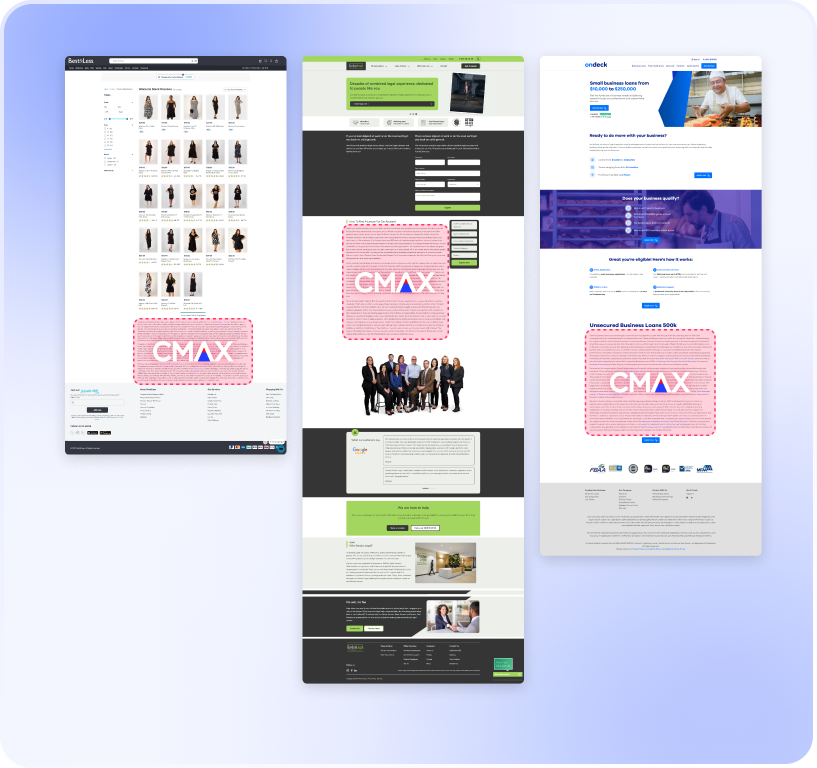
Claims about scale are only credible when the numbers hold up to scrutiny. In one CMAX engagement, a B2B omnichannel hospitality retailer added 5,000 long-tail product pages and reached $1M+/month in incremental SEO revenue within 8 months. For teams evaluating enterprise SEO services Sydney organisations have engaged, scaled proof points like these illustrate what is possible.
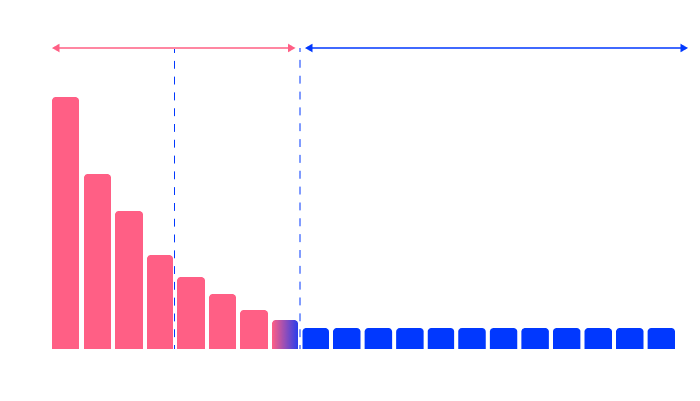
The mechanism behind that result applies broadly to large enterprise sites. A wide catalogue or deep service offering generates far more high-intent query combinations than a small set of head terms can capture. Based on CMAX’s client portfolio analysis, most of that demand sits in specific product, problem, location, and intent variants, queries that a handful of core pages will never rank for, regardless of how well those pages are optimised. Covering that demand requires pages built for distinct search purposes, published at a pace and volume that manual workflows cannot sustain.
Metrics That Show Compounding
Publishing more pages is only meaningful if those pages get indexed, attract qualified visits, and contribute to pipeline or revenue. What an enterprise SEO consultant tracks is whether indexed-page growth, organic sessions, assisted conversions, and revenue or pipeline move together rather than in isolation.
Indexed-page growth confirms the site structure and crawl paths are working. Organic sessions confirm those pages are reaching relevant audiences. Assisted conversions connect organic visits to deals in progress. Revenue or pipeline data closes the loop between SEO activity and commercial outcomes.
Enterprise SEO consultants focused on long-tail catalogue expansion and measurable pipeline contribution operate differently from a SEO content marketing agency, whose primary output is editorial volume and brand awareness rather than governed, intent-mapped page coverage tied to assisted conversions and revenue data.
Reading any one metric alone creates a misleading picture. A spike in indexed pages with flat assisted conversions signals a targeting or quality problem. Strong organic sessions with no pipeline contribution points to an intent mismatch. The full set, tracked over time, shows whether scaled coverage is compounding or stalling.
How to measure enterprise SEO ROI?
Because enterprise SEO pricing varies with scope, measuring ROI requires comparing implementation cost against assisted conversions, closed revenue, or qualified pipeline attributed to organic landing pages over a defined period. Separate early indicators from commercial outcomes: indexation rates and qualified traffic growth appear first; pipeline and revenue contribution follows. Reading both together gives a more accurate picture of whether the programme is compounding.
In-house SEO vs enterprise SEO consultant?
Clarifying what is a SEO consultant helps distinguish the division of responsibilities between an embedded hire and an external adviser. An in-house SEO lead suits organisations that need embedded ownership of backlog, stakeholder relationships, and daily execution, while an enterprise SEO consultant is often a better fit when the harder problem is setting strategy, aligning teams across functions, and getting rollout done across complex systems and approval paths where no single internal owner currently has the authority or bandwidth.
Enterprise SEO consultants working at scale increasingly need to account for how AI and SEO interact, particularly as AI-generated content raises new questions about quality control, duplication, and indexation across large page catalogues.
How does AI search impact enterprise traffic?
AI search can reduce clicks on broad informational queries.[1] Enterprise sites are less exposed when pages target specific products, named problems, locations, and transactional or evaluation intent that still requires a direct site visit to resolve.
Enterprise SEO consultants advising on traffic forecasting must now account for the growing role of AI search engines, which tend to affect broad informational queries more than high-intent, product- and problem-specific pages.
How to manage SEO for global enterprise sites?
Each market should own localisation, market-specific proof, and publishing approvals. Central governance sets the rules for templates, technical standards, duplication control, and reporting. That division keeps markets from fragmenting the strategy while still moving at local speed.
How long does enterprise SEO take to show results?
Timelines vary with crawlability, template readiness, approval speed, and how much high-intent demand the current site leaves uncovered. Indexation, rankings, and qualified visits typically move first; full pipeline or revenue impact follows once those pages accumulate authority and conversion history.
Scale Is the Constraint Most SEO Teams Won’t Name
CMAX is an agentic SEO platform built for enterprises that have outgrown manual workflows.
Our AI agents map product, service, location, and intent variations into thousands of long-tail pages, deployed with two lines of code and continuously refreshed to stay accurate, on-brand, and compliant. Where a traditional enterprise SEO consultant coordinates strategy across fragmented teams and systems, CMAX handles the execution layer at a speed and scale those teams can’t staff for. Results have been observed in measured cases within six weeks of deployment.
If your organic growth has plateaued and your board wants pipeline data, not promises, CMAX gives you the infrastructure to capture the 90% of search demand most competitors leave on the table.
References [1] – https://developers.google.com/search/docs/appearance/ranking-systems-guide
Author
Jeremy Tang
Founder and CEO of CMAX
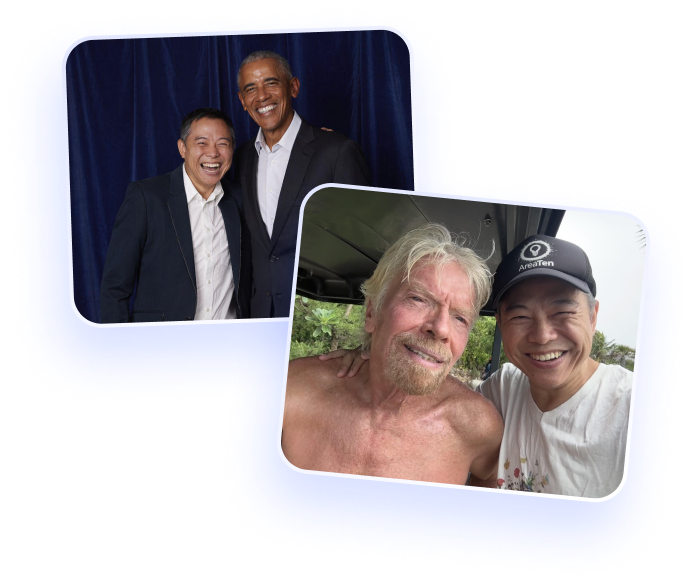
Jeremy Tang is the Founder and CEO of CMAX. With over 2 decades of experience in business consulting and digital marketing, he has successfully driven seven startup businesses, six of which achieved $1 million in revenue from zero in less than 16 months, 5 of which grew to multi-million dollar a year ventures without any external funding. Jeremy's expertise lies in streamlining business processes through technology and leveraging digital (in particular SEO) for business growth. He resides in Australia, travels extensively, and draws inspiration from his global experiences.