Choosing an enterprise SEO company gets harder when you manage multiple domains, markets, or site sections that all need to work under one set of standards. The real gap most teams hit is governance: who owns template decisions, who controls new page creation, and who resolves conflicts when local teams and central brand requirements pull in opposite directions. Size and reputation matter less than whether a provider can run a single operating model across your entire site estate. CMAX works with multi-site organisations where that kind of structural control is the starting point, not an afterthought.
The right enterprise SEO company fixes governance first.
Multi-site governance at scale
Enterprise SEO services break down when decision rights are unclear. Without a defined operating model, central teams and local teams pull in opposite directions: one domain publishes a service page that duplicates intent already owned by another, a regional team creates a new page type that conflicts with the shared template, and no one has the authority to resolve it quickly.
A workable governance model sets explicit rules for templates, content, redirects, and exceptions before any of that happens. Central teams hold the standards; local teams publish within approved limits. The result is a site estate where page types stay consistent, intents stay distinct, and optimisation choices don’t contradict each other across domains.
When evaluating an enterprise SEO company, ask how they define and enforce those decision rights across your full domain set, not just the flagship site.
Technical control for revenue pages
Governance failures show up in the crawl before they show up in rankings. Faceted URLs that multiply without canonical control, redirect loops that waste crawl budget, and orphaned sections that sit outside the internal linking structure all pull crawl attention away from the pages that matter: product pages, service pages, and location pages that generate qualified visits and enquiries.
An enterprise SEO company with genuine technical control can identify where crawl attention is being absorbed and redirect it toward revenue-generating page groups. Slow indexation on a new product category or a location rollout has a direct commercial cost, and the right enterprise SEO partner treats it that way.
An enterprise SEO company building scalable governance frameworks may draw on AI SEO services to automate crawl scheduling, flag indexation anomalies, and surface duplicate intent patterns across large site estates more efficiently than manual audits allow.
Strong Shortlists Separate Operating Fit from Agency Size
Differentiated Content Across Sites
Agency size tells you very little about whether a provider can run a multi-site content programme without creating the problems it was hired to solve. The question worth asking in any shortlisting conversation is specific: how does this agency turn a shared brand theme into distinct search intents across different markets, product sets, or page types?
An enterprise SEO marketing company that can answer this clearly will describe a process. One that can’t will default to talking about content quality in the abstract. Without a defined method for assigning intent by domain, folder, or page type, the default outcome is recycled copy across sites, thin location pages that rank for nothing, or two domains competing for the same keyword and splitting authority between them. An enterprise SEO company must demonstrate how it prevents cross-site cannibalisation and thin location pages, capabilities that overlap with those of a SEO content marketing agency when differentiated content strategies need to be executed consistently across multiple domains and markets.
Shortlisted providers should be able to walk through a concrete example of how they’ve separated intent across a site estate, not just assert that they do it.
Reporting Tied to Outcomes
Task-list reporting is a governance failure dressed up as transparency. Knowing that 40 redirects were fixed or that 12 pages were published tells leadership nothing about whether those actions moved qualified traffic, leads, or revenue.
Useful enterprise reporting connects each technical fix, template release, or content rollout to a specific page group, site, or market. That structure lets stakeholders trace which changes preceded measurable shifts in business outcomes, and which didn’t. When reporting can’t make that connection, accountability fragments across teams and the operating model becomes impossible to improve.
Ask shortlisted agencies to show a live or anonymised reporting example before any contract discussion begins. Organisations shortlisting an enterprise SEO company may also encounter the category of AI SEO agency, which applies machine-learning tooling to crawl prioritisation, content gap analysis, and template optimisation at scale, making it a distinct but relevant point of comparison during evaluation.
Enterprise SEO company shortlisting corrections.
Size does not equal fit
An enterprise SEO company is defined by its operating model, not its headcount. A larger agency can still be a poor fit for multi-site programmes. If approvals, implementation, QA, and reporting sit in separate teams with different priorities, standards break down at the domain level. Multi-site SEO depends on one operating model that can enforce consistent rules across domains, markets, and releases, not a handoff chain between departments that each own a slice of the work.
Unlike SEO companies for small business, an enterprise partner must enforce standards across dozens of domains and markets. When shortlisting an enterprise SEO company, buyers sometimes also consider engaging an enterprise SEO consultant to conduct an independent governance audit before committing to a full-service retainer, so structural issues are diagnosed without vendor bias.
Four questions cut through the noise during shortlisting:
- Who owns governance, technical SEO, and content rules across all domains? If those decisions pass between separate departments, expect delays and conflicting outputs when a template change touches indexing and content simultaneously.
- How are template changes tested before rollout? Ask specifically who signs off when a change affects indexing, internal linking, or conversion pages. A credible answer names a process and a person, not a general QA philosophy.
- Who resolves competing priorities? Brand standards, local market requests, legal or compliance requirements, and SEO priorities will conflict. The agency should have a named escalation path, not an ad hoc negotiation each time.
- What controls prevent duplicate page types, cannibalisation, and orphaned content at scale? The answer should describe a publishing rule or governance mechanism that stops new pages from targeting an intent already owned elsewhere in the site estate, not a retrospective audit after the damage is done.
Agencies that answer these questions with specifics have built an operating model. Those that answer with credentials have not.
Inspect Whether Reporting Rolls Up by Domain, Page Group, Market, and Business Outcome, So Leadership Can See Operating Patterns Instead of Disconnected Deliverables
Reporting structure is a governance signal. When dashboards show task completion rather than outcome movement, leadership cannot tell whether a template release lifted qualified traffic in one market, whether a redirect fix recovered a revenue page group, or whether a content rollout compounded across sites or stalled at one domain. Ask any shortlisted enterprise SEO company to show a live or anonymised reporting view, then check whether it groups performance by domain, page template, market, and business metric. An enterprise SEO Melbourne team that ties reporting to outcomes can show exactly how each domain contributes to portfolio-level growth. If the answer is a spreadsheet of completed tickets, that is a delivery model built around activity, not accountability.
As enterprise SEO company programmes grow in complexity, the relationship between AI and SEO can help teams evaluate how automated signals and machine-learning ranking factors should inform reporting and governance decisions. For enterprise SEO services Sydney stakeholders reviewing dashboards, this layer of insight is especially relevant when automated ranking signals vary across regional markets.
Cheap Retainers Can Fragment Execution
Lower retainers tend to narrow scope to audits, strategy decks, or ticket creation. Implementation then falls to internal developers, regional content teams, or third-party contractors, each working from different priorities and timelines. The result is uneven rollout across sites: one market gets a template fix while another waits months for the same change to clear an internal queue.
That fragmentation slows the compounding effect that multi-site SEO depends on. Fixes, internal linking improvements, and new page launches build on each other when they ship consistently across the estate. When they ship in patches, the gains stay isolated. Before signing, confirm whether the retainer covers end-to-end implementation or stops at recommendations, and who owns rollout when the agency’s scope ends.
Multi-site proof should show scalable operating systems.
B2B retail long-tail proof
What separates a credible enterprise SEO company is documented, repeatable evidence. Proof of multi-site capability should show an operating system at work, not a one-off win on a single domain.
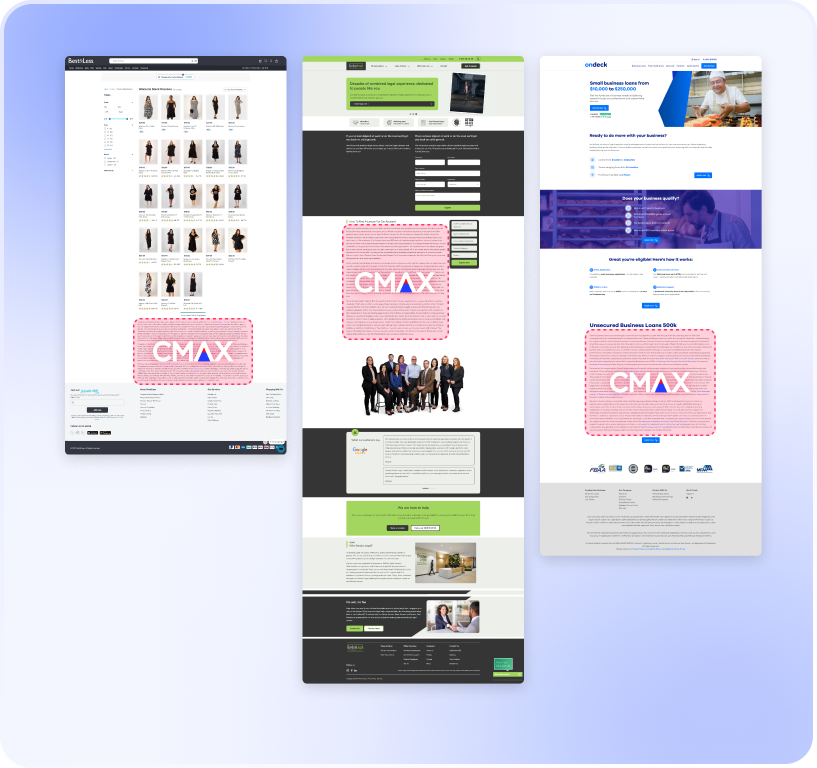
In one CMAX engagement, a B2B omnichannel hospitality retailer added 5,000 long-tail product pages and drove $1M+/month in incremental SEO revenue within 8 months. The result came from catalogue-scale coverage, repeatable page production, and consistent governance applied across a large product set. Manual workflows cannot hold that structure together at volume. Templates break, intent overlaps, and orphaned sections accumulate faster than any team can audit them by hand.
The catalogue-scale proof described above is particularly relevant when evaluating an enterprise SEO company alongside a B2B SEO agency, since both must demonstrate repeatable page production, long-tail coverage, and consistent governance across complex product or service hierarchies.
The same dynamics apply to enterprise multi-site programmes. When a provider can deploy and govern thousands of pages across domains without execution degrading, that is the operating system worth evaluating. Ask how the result was produced, not just what the number was.
Audit scenarios before selection
A pre-selection audit run on an anonymised version of your site estate can reveal structural problems before a contract is signed. Repeated templates, orphaned sections, redirect chains, indexation gaps, and overlapping keyword targets are all diagnosable at this stage.
What the audit reveals is as useful as the audit itself. A provider who surfaces specific structural issues and explains the fix mechanism is demonstrating diagnostic depth. A provider who returns a list of general recommendations without tracing them to page groups, templates, or crawl patterns is showing you their ceiling. Run the scenario before you commit.
How to coordinate enterprise SEO with in-house teams?
Coordinating with an enterprise SEO company requires defined decision rights, handoff points, implementation owners, and escalation paths before work begins. Central marketing, regional teams, developers, and content stakeholders each need a clear lane, without one, duplicate requests and conflicting priorities slow every release cycle. Transparency around enterprise SEO pricing at the retainer level also helps internal teams allocate budgets and scope responsibilities without friction.
How to prevent keyword cannibalisation across multiple sites?
A shared keyword map that assigns primary intent by domain, folder, page type, or market is the structural fix. Publishing rules then block new pages from targeting an intent already owned elsewhere in the estate, so the problem doesn’t rebuild itself with every content sprint.
How to maintain brand consistency in multi-site SEO?
Control reusable messaging, compliance language, and on-page components at the template level. Local teams edit only approved fields tied to market-specific details, location, service availability, local proof, and the core brand layer stays intact across every domain.
How to track SEO performance across multiple domains?
Dashboards grouped by domain, page template, market, and business metric show whether gains came from a specific template release or a one-off win. That structure lets leadership distinguish a repeatable operating model from isolated results.
What are the main challenges of enterprise SEO governance?
Fragmented ownership, conflicting CMS workflows, duplicate templates, delayed technical releases, and weak controls over new page creation are the recurring failure points. Reporting models that can’t trace accountability across teams and sites make all of them harder to fix. Teams often ask what is enterprise SEO when governance gaps surface, because the answer reframes the discipline as an operational capability rather than a channel tactic.
When assessing an enterprise SEO company’s forward-looking capability, it is worth asking how their approach accounts for visibility in AI search engines, where traditional ranking signals are increasingly supplemented by generative and retrieval-based results.
Most Enterprise SEO Breaks at Scale, CMAX Was Built There
CMAX is an agentic SEO platform purpose-built for multi-site, high-page-count programmes.
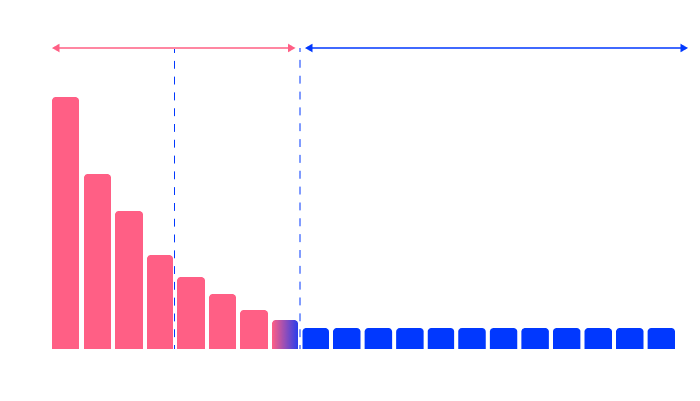
Where traditional approaches stall at hundreds of pages, CMAX deploys AI agents that create, interlink, and continuously update content across thousands of long-tail keyword targets, the 90% of search demand most enterprises leave on the table. Two lines of code connect it to your existing stack, and measurable traffic movement typically appears within six weeks. Every page the platform produces strengthens the broader content network, reducing cannibalisation and crawl waste rather than adding to it.
If you’re evaluating an enterprise SEO company on governance, technical control, and scalable content differentiation, CMAX gives you a framework you can present with numbers attached.
Author
Jeremy Tang
Founder and CEO of CMAX
Jeremy Tang is the Founder and CEO of CMAX. With over 2 decades of experience in business consulting and digital marketing, he has successfully driven seven startup businesses, six of which achieved $1 million in revenue from zero in less than 16 months, 5 of which grew to multi-million dollar a year ventures without any external funding. Jeremy's expertise lies in streamlining business processes through technology and leveraging digital (in particular SEO) for business growth. He resides in Australia, travels extensively, and draws inspiration from his global experiences.