Most teams tracking AI search analytics run into the same problem early: the answers change between captures, so it is hard to tell whether visibility actually moved or the measurement did. The difference matters, because reporting built on inconsistent prompts and mixed capture conditions will show movement that has nothing to do with your brand’s real performance. Getting this right starts with reproducibility, not tools. CMAX works with enterprise teams solving exactly this kind of measurement challenge at scale.
Reliable AI search measurement starts with reproducibility.
Stable answer sets
AI search analytics is only defensible when the same prompt returns answer sets that are consistent enough across dates, locations, devices, and platforms to separate a real visibility change from normal answer drift.
That consistency requirement is the foundation. Without it, a drop in brand mentions could reflect a genuine shift in how an AI system represents your category, or it could reflect nothing more than a different device state or a slightly reworded capture query. Those two outcomes call for completely different responses. Reproducibility is what makes the difference legible.
Reproducible AI search analytics depends on how each AI search engine handles the same prompt across dates, locations, and devices, because answer drift on any single platform can distort visibility reporting if capture conditions are not held constant.
This means capture conditions must be fixed before reporting begins, not adjusted after results look unexpected. Location, device, signed-in state, and platform must be held constant across every reporting cycle. When they are, movement in the data carries weight. When they are not, the data carries noise.
Visibility is not ranking
Tracking AI search visibility requires its own framework, because it can move even when conventional rankings stay flat. Answer engines make separate decisions about whether to mention a brand, which sources to cite, and how early those mentions appear in the response.
A brand can hold a top-three organic position and still be absent from every AI-generated answer on that topic. The reverse is also true: a brand with modest rankings can appear prominently in AI answers if its content is structured in a way that answer engines draw on. Conventional rank tracking does not capture either scenario. Measuring AI visibility requires its own metrics, its own prompt set, and its own reporting logic, built specifically for how generated answers work.
The Metrics That Describe Visibility, Not Rankings
Prompt-Level Mention Rate
When an AI system returns a generated answer, there is no position one to chase. The output is a paragraph, a list, or a summary, and your brand either appears in it or it doesn’t. Prompt-level mention rate captures exactly that: across a fixed set of queries, how often does your brand show up in the answer at all? That frequency figure is more actionable than average rank because it maps directly to how AI systems actually behave. A brand can hold stable rankings in conventional search while its mention rate across AI platforms drops, rises, or varies wildly by query type.
Separate Metrics by Question
Collapsing AI visibility into a single score hides the reason performance moved. Share of voice, citation presence, mention position, sentiment, and citation accuracy each answer a different question. Share of voice tells you how often your brand appears relative to competitors across the same query set. Citation presence tells you whether the answer links back to your source. Mention position tells you how early in the response your brand appears. Sentiment tells you whether the reference is favourable, neutral, or negative. Citation accuracy tells you whether the answer represents your brand correctly, which matters because a citation that misquotes your product or pricing can do more damage than no citation at all.
Platform and Query Coverage
Effective AI search engine optimisation depends on cross-platform coverage, because ChatGPT, Google AI Overviews, and Perplexity do not produce the same answers for the same topic.[1] Each system applies different source selection logic, formats responses differently, and draws on different citation pools. Knowing which AI search engines are being monitored is essential, since each platform produces distinct answer formats and citation patterns that affect how visibility metrics are recorded. Teams working on AI search optimisation (the common spelling variant) should note that a brand appearing prominently in Perplexity may be absent from AI Overviews entirely. Measuring on one platform and assuming the result transfers is a reporting gap, not a methodology. Cross-platform AI search analytics, paired with a query set broad enough to reflect how real users phrase the same intent, gives teams a picture of AI visibility that holds up under scrutiny.
A prompt library turns volatile answers into usable reporting.
Measurement readiness checklist
AI answers shift. A prompt library holds the measurement steady so that when visibility moves, you know the movement is real. Standardising prompts and capture conditions is what makes AI search analytics reproducible.
The setup works only if it is standardised before reporting begins. That means prompts are written once, version-controlled, and reused exactly as written. Ad hoc wording changes between cycles make week-to-week comparisons unreliable because the answer engine may respond differently to a rephrased query, not because your visibility changed. A disciplined AI SEO practice depends on this kind of consistency from the first capture onward.
Each prompt should be assigned to a named intent group: brand queries, category queries, comparison queries, or problem-aware queries. That grouping tells you where visibility is strong and where it is absent, rather than averaging across query types that behave differently. Teams building SEO for AI strategies use these intent groups to prioritise content gaps by category rather than reacting to individual query fluctuations.
A well-structured AI search analytics prompt library should include queries tested specifically against Google AI Search, since AI Overviews can produce different source selections and citation patterns than other answer platforms for the same topic.[2] The relationship between SEO and AI grows tighter as more platforms adopt generative answer formats, making cross-platform prompt coverage a baseline requirement.
Platform coverage must stay fixed across every reporting cycle. If you add or drop a platform mid-cycle, coverage changes look like visibility changes. Check the same platforms every time.
Record location, device, and signed-in state for each capture. Each variable can alter the answer set, and undocumented variation is a source of false signals.
Save every answer capture with a date and timestamp. When something shifts, you need to know when it shifted and whether the change appeared across all platforms or only one.
Log mentions, citations, position, sentiment, and citation accuracy as separate fields. Collapsing them into a single score hides the reason performance moved.
Flag broken, missing, or incorrect citations as distinct issues. A missing citation and an inaccurate one call for different fixes, and treating both as simple visibility losses delays the right response.
Weekly and monthly comparisons use the same prompt set so movement reflects answer changes rather than measurement drift.
Fixed-prompt comparison example
Consistency in measurement is what separates a defensible report from an educated guess. Fixed-prompt comparisons give AI search analytics the stability it needs to surface real movement. When the query wording, platform, location, and capture method stay fixed across every reporting cycle, a shift in mention rate or citation presence points to a real change in how the AI system is answering, not to a difference in how the analyst ran the check.
A before-and-after prompt library works because it removes the analyst as a variable. If a brand drops out of answers between week one and week three, the fixed setup lets the team confirm that the prompt, platform, and conditions were identical, which makes the finding actionable rather than ambiguous.
Organisations building an AI search analytics measurement framework sometimes consult an AI search optimisation agency to establish baseline prompt libraries and fixed capture conditions before running their first before-and-after comparison.
Client proof point
The same logic that governs prompt-library discipline governs content coverage. In one CMAX engagement, a B2B omnichannel hospitality retailer added 5,000 long-tail product pages and recorded $1M+ per month in incremental SEO revenue within 8 months, alongside a 255% organic traffic increase over 12 months.
The measurement principle transfers directly to AI search analytics: a small head-term sample will miss the long-tail answer patterns that drive performance at scale. Businesses that need AI Brisbane teams can trust will find that broad query coverage reveals these long-tail patterns across local markets. Retailers and service providers seeking AI Perth specialists can rely on will see similar gains when their prompt libraries reflect the full range of regional queries. AI systems draw on a wide query surface, and a prompt library built around a handful of broad terms will leave much of the answer activity unmonitored. Coverage breadth and measurement consistency reinforce each other.
Review cadence determines whether insights change decisions.
What weekly reviews catch
Weekly reviews are the earliest warning system in an AI search analytics setup. Run them to catch prompt-level visibility swings before they compound, flag broken or missing citations while the content issue is still fresh, and identify abrupt platform behaviour changes, including shifts tied to sge generative AI in search, that would otherwise skew month-end numbers. A single week of unreviewed drift can make a monthly comparison look like a strategic shift when it was a platform anomaly.
What monthly reviews compare
Monthly reviews operate at a different resolution. Where weekly checks surface acute changes, monthly comparisons revealed through AI search monitoring tools show patterns: which platforms are consistently citing your brand, where sentiment is trending negative across multiple answer sets, and whether citation accuracy is slipping on specific content types. These patterns point to content gaps and source-quality issues that no single weekly snapshot will expose. A recurring misrepresentation in AI-generated answers, for example, calls for a content fix, not a measurement adjustment.
Practitioners running AI search analytics programmes in Australia, including those working with SEO services Melbourne-apply the same weekly and monthly review cadences to track prompt-level visibility shifts and citation accuracy across local and global platforms.
What quarterly reviews connect
Quarterly reviews are where AI search visibility data earns its seat in a broader performance conversation. At this cadence, teams can map visibility trends against assisted conversions, organic traffic movement, and content investment priorities. Causation claims should stay cautious at this stage: a quarter of correlated data is a signal worth investigating, not a proof point worth presenting to a CFO as settled. The value of the quarterly review is in identifying which patterns are durable enough to act on.
How to track AI search visibility?
AI search analytics starts with a fixed prompt library that records whether your brand is mentioned, whether it is cited as a source, how early in the response that mention appears, and whether the answer represents your brand accurately. Run the same prompts across every platform you monitor on a consistent schedule. Without that fixed structure, you cannot tell whether a visibility shift reflects a real change in how AI systems treat your brand or a change in how you ran the query.
Teams building an AI search analytics programme often come from a background in AI and SEO, where the focus shifts from ranking positions to prompt-level mention rates, share of voice, and citation accuracy across answer platforms.
Can you measure AI search attribution?
Direct attribution is rarely credible at the prompt level. Most teams measure it indirectly by combining prompt-level visibility data with assisted conversions, branded search lift, referral patterns, and landing-page trends over time. A single prompt driving a single conversion is almost never provable; a pattern across weeks of data is.
How to measure ROI for AI search?
Compare changes in prompt-level visibility and citation quality against downstream outcomes: assisted conversions, qualified organic sessions, and the cost of producing or improving the content tied to those prompts. That comparison gives you a defensible input-to-output view without overstating causation.
How to track AI Overview traffic?
Monitor landing pages that are picking up impressions or clicks alongside known AI Overview queries. Cross-reference Search Console and your analytics platform for page-level changes that align with those query patterns in timing and direction.
How does AI search affect organic traffic?
AI search moves organic traffic in both directions. Knowing what is AI search helps teams anticipate how answer formats redirect clicks. Prominent AI answers can suppress some clicks. At the same time, accurate citations and brand mentions drive discovery, assisted visits, and follow-up searches that show up elsewhere in your data.
Readers new to AI search analytics sometimes search for define SEO when they mean to explore how AI-generated answer visibility differs from the conventional search engine optimisation metrics they already track.
Long Tail Traffic Doesn’t Wait for Manual SEO
Most organic strategies chase the same high-volume keywords, and plateau.
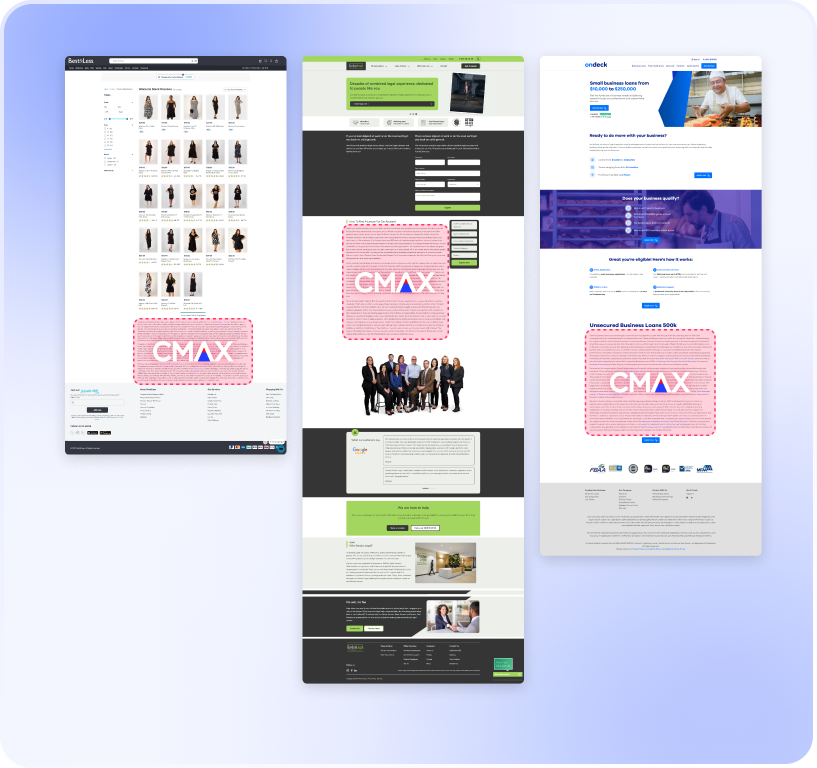
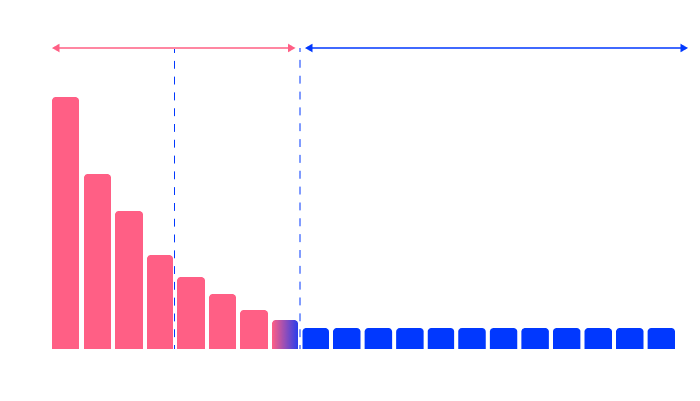
CMAX is an agentic SEO platform built to capture the 90% of search and AI demand that sits in the long tail. With just two lines of code, it deploys and continuously updates content targeting thousands of keyword variations at a speed manual teams can’t match. Results typically start showing within six weeks.
If you’re evaluating how AI search analytics reshapes visibility measurement, the same principle applies: the signals that matter most are spread across countless prompts, platforms, and queries. CMAX helps brands show up where that demand actually lives.
References [1] – https://developers.google.com/search/docs/appearance/ranking-systems-guide [2] – https://developers.google.com/search/docs/appearance/ranking-systems-guide
Author
Jeremy Tang
Founder and CEO of CMAX
Jeremy Tang is the Founder and CEO of CMAX. With over 2 decades of experience in business consulting and digital marketing, he has successfully driven seven startup businesses, six of which achieved $1 million in revenue from zero in less than 16 months, 5 of which grew to multi-million dollar a year ventures without any external funding. Jeremy's expertise lies in streamlining business processes through technology and leveraging digital (in particular SEO) for business growth. He resides in Australia, travels extensively, and draws inspiration from his global experiences.