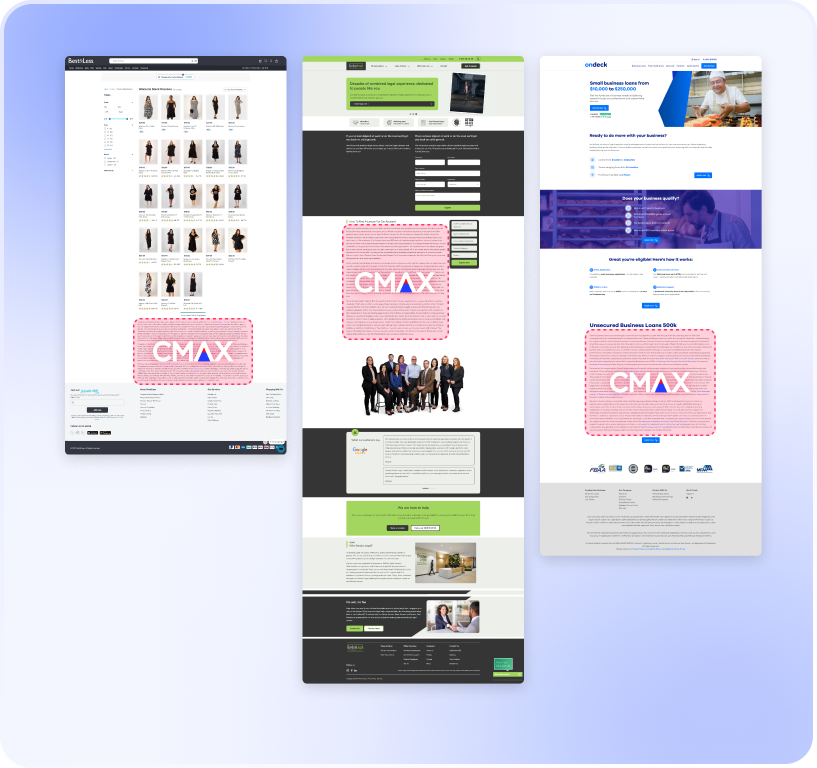
Most SEO location pages fail because the only thing that changes between them is the city name. If the content, the offer, and the answer stay the same regardless of geography, you haven’t built local relevance. You’ve built duplicates. The difference between a useful location page and a doorway page comes down to whether the place actually changes what the visitor needs to know. That distinction is where most scaling strategies break down. CMAX has helped teams work through this at suburb scale, and the pattern is consistent: pages earn their place only when local evidence backs them up.
SEO Location Pages Work When Local Intent Truly Differs
Why Name Swaps Fail
SEO location pages work best when the local intent behind each URL genuinely differs. Swapping a city name into an otherwise identical page does not create a locally relevant page. It creates a copy with a different noun.
A page earns local relevance when the query behind it implies something that genuinely changes for that geography: service availability, travel or response logistics, branch coverage, area-specific eligibility, or local decision factors that shift what a visitor needs to know before they act. If none of those things change, the page answers the same question as every other location variant. Search engines treat it that way, and so do users.
The failure mode is predictable. A team builds 50 city pages from one template, changes the heading and the first paragraph, and expects each URL to rank for its target location. The pages index, compete with each other, and often lose to a single well-built service page that covers the same ground without the duplication overhead.
SEO location pages deliver ranking value only when each URL reflects a real geographic difference, which is the same principle that underpins location pages SEO as a discipline focused on intent-matched, place-specific content.
When Separate GEO Pages Help
City, suburb, and county pages justify separate URLs when the geography itself changes the search opportunity or the content a visitor needs.
That threshold is met by concrete differences: coverage boundaries that exclude certain postcodes, service eligibility rules that vary by area, distinct branch ownership or operating hours, or a different set of questions users ask before they enquire in that location. When those differences exist, a separate page serves a distinct user. When they do not, a separate page serves the URL count. A business targeting SEO Melbourne may face different service-area boundaries than one focused on SEO in Sydney, and those differences are exactly what justify building separate pages.
SEO location pages are most effective when they target queries with genuine place-based specificity, making them a natural fit for SEO longtail strategies where suburb- or city-level searches carry lower competition and higher conversion intent.
Useful local pages earn eligibility through concrete evidence.
What gives local pages value
A local page earns its place by answering questions a visitor can only resolve at the geography level. That means stating clearly where the service is available, what exclusions or coverage limits apply in that area, which nearby locations are also served, and what local proof or navigation signals confirm the visitor has landed on the right page. Without those specifics, the page is doing the same job as the national or category page, just with a suburb name dropped in. Well-constructed location pages demonstrate genuine local relevance to users and crawlers alike. The discipline of location pages SEO requires this kind of evidence-first thinking, and the same principles apply when considering SEO for AI search, where retrieval systems reward specificity over boilerplate.
Doorway-page risk explained
Google Search Central defines doorway pages as pages created to rank for similar queries without adding clear user value.[1] Google treats SEO location pages as doorway pages when they scale faster than distinct evidence can support them. The result is several URLs pointing to the same offer, the same copy, and the same call to action, with no meaningful difference in content or purpose. Google does not need to issue a formal penalty for this to hurt; pages that offer nothing distinct are more likely to be ignored or consolidated in practice, which quietly erodes the coverage the team was trying to build.
Generic vs differentiated pages
A generic service page reads identically regardless of which suburb you slot into the heading. A differentiated local page carries evidence tied to that specific place: exact coverage boundaries, travel or delivery conditions, area-specific eligibility rules, local landmarks that help a visitor orient, or constraints that only apply in that geography. That place-bound detail is what separates a page that ranks and converts from one that competes with itself. SEO location pages are built around geographic intent and local proof, whereas product pages SEO focuses on transactional signals and item-level differentiation, two distinct page types that each require their own eligibility criteria before scaling.
A simple decision test prevents duplicate sprawl.
Location-page correction checklist
Before publishing, test each of your SEO location pages against these assumptions. Does this geography produce a distinct search intent? Does the page carry evidence tied specifically to this place? Is there a clear reason this URL needs to exist separately from an existing page?
If all three answers are yes, the page earns its place. If any answer is no, the page needs rework before it goes live. Sound location SEO practice starts with this filter applied consistently at the planning stage.
The most common failure point is the third question. Teams often assume that covering a new suburb or county automatically justifies a new URL. It does not. A page that targets “plumber in Riverside” with the same copy as “plumber in Oakdale,” differing only in the city name, resolves to the same answer for the same query. Google sees two pages competing for overlapping intent; users see no reason to trust either one over a stronger, consolidated page.
The correction is straightforward: if the only change is the place name, consolidate. Fold the content into a parent page, strengthen the coverage signals there, and use internal linking to surface the relevant geography. A single well-evidenced page almost always outperforms two thin ones targeting the same intent from different URLs. This principle becomes even more critical in multiple location SEO campaigns, where the temptation to replicate pages across dozens of geographies can quickly outpace the distinct evidence available for each.
SEO location pages benefit from a rigorous decision test before publication, and the same structured thinking is reshaping AI engine optimisation, where content quality signals matter more than sheer page volume.
Run this test at the planning stage, before content is written or URLs are indexed. Fixing duplicate sprawl after the fact costs significantly more time than preventing it.
Frequently Asked Questions (FAQ)
Consolidate, canonicalise, or noindex
Consolidation fits pages that answer the same query with the same content, merge them into one stronger URL. Canonical tags fit near-duplicates that must exist for technical or user-flow reasons, signalling to Google which version should be treated as primary. Noindex fits pages users may still need on site but that lack enough distinct value or intent to compete as search landing pages.
Internal links over page volume
Unlike SEO product pages, which can often share a single catalogue structure, location pages need distinct local evidence to justify separate URLs. When nearby locations target overlapping searches, clear internal linking, defined parent-child relationships between area pages, and a single well-defined purpose for each URL usually do more than publishing extra pages that cannibalise the same intent.
Metrics that justify more pages
The clearest sign that new location pages are additive is a geography-level pattern: pages get indexed, earn impressions for the intended locations, and generate qualified enquiries that are not being absorbed by broader existing pages.
SEO location pages that pass the eligibility test, distinct intent, distinct evidence, clear purpose, tend to contribute measurably to SEO website traffic by capturing geography-level queries that broader service pages cannot address with the same precision.
Suburb-scale proof point
An SEO package Melbourne provider, for example, faces different suburb-level search behaviour than SEO packages Sydney or SEO packages Brisbane campaigns, and that variation shapes how granular page strategies need to be.
In one CMAX engagement, a regional ISP expanded to 6,637 suburb-specific pages and improved SEO traffic by 86% in 12 months. Pages were built around suburb-level demand and local points of interest. Suburb-by-suburb search behaviour only expands coverage when each page reflects a real place-based difference.
When to keep expanding
Expanding beyond the first few locations makes sense only after early pages show a repeatable pattern of indexation, impressions, and enquiry quality by geography, not a one-off lift that stronger consolidation or better internal linking could have captured.
How do you handle local SEO for businesses with multiple locations?
Map pages only to locations with distinct demand, coverage, or operational differences. Support each page with unique local details, accurate internal linking, and clear signals about which branch, service area, or footprint the page represents.
Is it better to create separate service pages for each location?
Separate service-in-location pages work best when both the service and the location change what the user needs to know, differences in availability, eligibility, logistics, or proof. Broad service pages are usually stronger when those local differences are too small to justify their own URLs.
How do you create genuinely unique content for location pages?
Unique content is what separates useful SEO location pages from copy-swapped duplicates. Unique location-page content comes from real operational differences: coverage boundaries, eligibility rules, travel considerations, branch details, local FAQs, customer proof, and nearby-area navigation. Rewriting the same copy with new suburb names does not produce unique content.
SEO location pages sit within a broader optimisation ecosystem, and AI in search engine optimisation helps explain how automated signals increasingly influence which locally targeted pages earn visibility.
Does Google penalise duplicate location pages?
Duplicate location pages are more likely to be ignored, merged in practice, or create internal competition than trigger a formal penalty, particularly when they offer little beyond repeated boilerplate and target overlapping intent.
Which works better for local SEO: a location page or service-in-location?
A location page fits searches where users are comparing what is available in one area. A service-in-location page fits searches where users want a specific service in a named place. The stronger format depends on which intent the query expresses, and that choice determines whether SEO location pages or broader service pages serve the user better.
Thousands of Location Pages, Zero Boilerplate
CMAX is the agentic SEO platform built for long-tail scale.
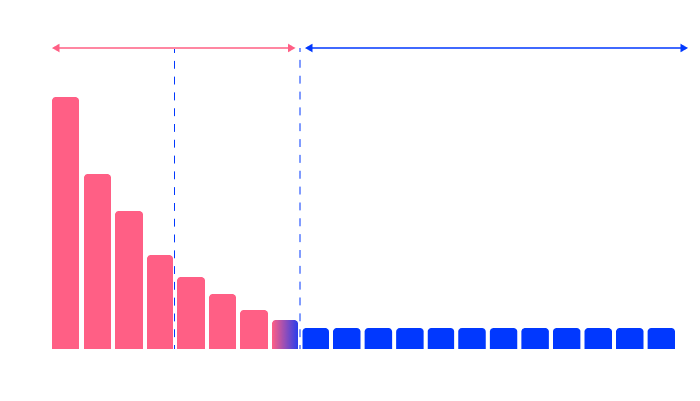
Over 90% of search demand sits in long-tail queries, the city-plus-service, suburb-plus-need searches most teams never get to. CMAX deploys AI agents that create, publish, and continuously update location-level content across thousands of those terms, each page built with distinct local relevance rather than swapped headings. Two lines of code connect it to your site, and results typically surface within six weeks.
If your team has been weighing whether to build location pages in-house or outsource them one by one, CMAX replaces that tradeoff with programmatic speed that doesn’t sacrifice page quality.
References [1] – https://developers.google.com/search/docs/essentials/spam-policies
Author
Jeremy Tang
Founder and CEO of CMAX
Jeremy Tang is the Founder and CEO of CMAX. With over 2 decades of experience in business consulting and digital marketing, he has successfully driven seven startup businesses, six of which achieved $1 million in revenue from zero in less than 16 months, 5 of which grew to multi-million dollar a year ventures without any external funding. Jeremy's expertise lies in streamlining business processes through technology and leveraging digital (in particular SEO) for business growth. He resides in Australia, travels extensively, and draws inspiration from his global experiences.