SEO for recruitment agencies gets complicated the moment you realise your site serves two audiences with almost opposite intent. Job seekers want open roles, salary detail, and a fast application path. Employers want proof you can fill their vacancies in the sectors and locations they hire for. When both audiences land on the same pages, neither journey converts well. Splitting those intent paths, and measuring each one separately, is where most recruitment sites stall. CMAX helps enterprise teams scale that kind of query-specific page coverage without duplicating content across hundreds of combinations.
Recruitment SEO Works Best With Two Intent Paths
Separate Candidate and Employer Journeys
The way SEO for recruitment agencies works in practice is by separating candidate and employer journeys, because a recruitment agency site serves two audiences with fundamentally different goals, and search reflects that split. Candidates search for open roles, salary ranges, and application details. For anyone wondering how do recruitment agencies work in Australia, the candidate-side experience starts here: job seekers land on listing pages, filter by role type, and apply directly. Employers search for proof that an agency covers their sector, can support their hiring volume, and operates in the markets they care about.
When both audiences land on the same pages, neither gets a clear answer. A hiring manager scanning for sector specialism does not want to wade through job listings. A candidate looking for a finance role in Manchester does not need a pitch about retained search. Separate page paths let each visitor reach the content that matches their query without friction or confusion. On the employer side, commercial models vary by market. Agencies asking how do recruitment agencies make money Australia will find that the answer shapes which service pages to build and how to position them for search.
SEO for recruitment agencies, like SEO for travel agents, requires building separate page paths for users with very different goals, in recruitment, those are job seekers researching roles and employers evaluating specialist hiring support.
Build Pages for Each Search Purpose
Each query type maps to a different page type, and each page type supports a different conversion action. Live job listings capture candidates ready to apply. Evergreen role pages hold rankings for job-type searches that persist after individual vacancies close. Sector pages signal specialism to both audiences but serve different purposes depending on who lands there. Employer service pages address hiring problems, not candidate phrases. Location pages connect the agency to the markets it actively recruits in.
A site that relies only on live listings misses the searches that happen between postings. A site without employer-facing service pages leaves buying-intent queries unanswered. Both gaps cost the agency traffic it has already earned the authority to rank for.
Page structure should reflect search intent exactly.
Use live jobs and evergreen pages
Live job listings serve one purpose: capturing candidates who want an open vacancy right now. Evergreen role and industry pages serve a different one: holding ground for searches like “finance jobs Melbourne” or “warehouse operative roles” long after any individual listing closes. The underlying demand for those role types doesn’t disappear when a vacancy fills. A site that relies only on live listings loses visibility every time a role is removed, because there’s no permanent page left to rank. Pairing both page types keeps candidate traffic stable across the full hiring cycle. SEO for recruitment agencies requires managing live job listings, evergreen role pages, and employer service pages simultaneously, a fundamentally different structural challenge from SEO services for ecommerce website, where product catalogues and transactional intent dominate the page architecture.
Target employer problems on service pages
Employer-side searches carry buying intent. Queries like “specialist recruiter,” “executive search,” or “temporary staffing” signal that someone is evaluating providers, not looking for a job. Effective SEO for recruitment agencies starts here, on employer-facing service pages that address hiring problems directly: sector specialism, location coverage, and the specific recruitment challenge the client is trying to solve. Mixing candidate and employer content on the same pages dilutes both. Each audience needs its own conversion path.
Remove or refresh expired job posts
Google Search Central expects JobPosting structured data to stay accurate.[1] When a vacancy closes and the page stays live without being updated, search results can surface a role that candidates can no longer apply for. The practical fix is straightforward: remove the page, redirect it to a relevant evergreen or category page, or clearly mark the role as closed. Leaving expired listings indexed creates a poor user experience and signals to Google that the site’s job content can’t be trusted.
Performance Improves When Both Audiences Are Measured Separately
Split Queries by Audience Intent
Ranking reports rarely tell you which audience is underperforming. Search Console does, if you segment it correctly. Filtering queries by intent, candidate-side terms like “warehouse jobs Birmingham” versus employer-side terms like “specialist logistics recruiter”, shows whether visibility is growing for one audience while stalling for the other. That split makes it possible to isolate the weaker side before touching templates or individual pages, so fixes go where the gap actually is. Effective SEO for recruitment depends on this kind of segmentation, because a single blended report hides which audience is dragging performance down.
SEO for recruitment agencies increasingly intersects with how search itself is changing, and exploring SEO for AI search can help agencies understand how candidate and employer queries may be surfaced differently in AI-driven results.
Query-Specific Pages Can Scale Long-Tail Demand
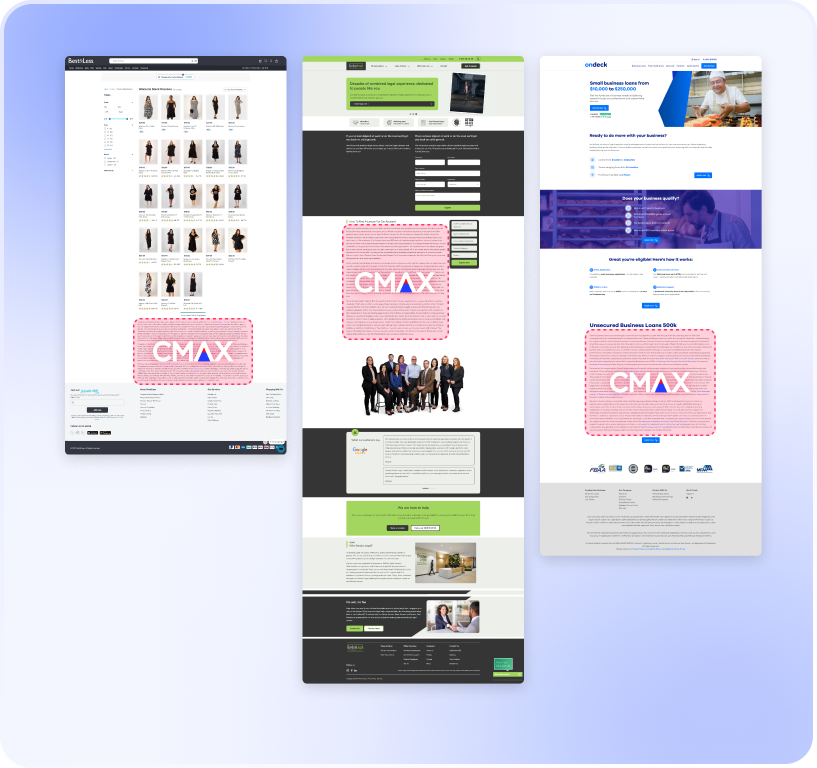
Broad terms like “recruitment agency” carry mixed intent and heavy competition. The specific queries, role plus location, service plus sector, seniority plus industry, carry clearer intent and convert at higher rates. In one CMAX engagement, a compensation law firm published 1,607 query-specific landing pages and grew SEO traffic 114X in 12 months. Recruitment follows the same long-tail pattern: a single agency can generate hundreds of high-intent combinations across roles, services, and locations, each answering a query that a broad page never would.
Use CRM and Fill-Rate Evidence
Rankings show position. They do not show whether a candidate applied or whether an employer submitted a brief. CRM outcomes, application volume, interview quality, and vacancy-fill rates give a more reliable before-and-after view because they connect traffic to the actions that generate revenue. If candidate traffic rises but application volume stays flat, the page is attracting the wrong searches or failing at conversion. If employer page visits grow but qualified enquiries do not follow, the content is likely missing the hiring problem the visitor actually came to solve.
Priorities Become Clearer with a Dual-Audience Checklist
Dual-Audience SEO Readiness Checklist
A dual-audience SEO readiness check gives a recruitment agency a fast way to identify whether jobs, service pages, location coverage, structured data, or conversion tracking is the main constraint on candidate or employer growth. A dual-audience checklist is what makes SEO for recruitment agencies actionable. Run through each item below and note where gaps appear, as those gaps are where to prioritise.
Candidate pages cover live jobs, evergreen roles, and sectors. A site that relies only on temporary listings loses visibility the moment a vacancy closes.
Employer service pages target hiring problems and recruitment services. Pages that repurpose candidate-facing language for a B2B audience will not rank for the searches that signal buying intent.
Location pages reflect the markets the agency actively serves, with local hiring detail specific to each area, not the same copy pasted across every town.
Expired vacancies are removed, redirected, or clearly marked closed. Stale listings erode trust and contradict Google Search Central’s accuracy requirements for JobPosting pages.[1]
Role and sector pages carry information that does not repeat across individual listings, typical responsibilities, hiring context, salary ranges, or market-specific conditions that give each page a reason to exist independently.
Navigation separates job-seeker and employer journeys from the first click. Users who have to decode a mixed-intent menu often leave before converting.
SEO for recruitment agencies must serve two distinct audiences, candidates and employers, within a single site, whereas SEO for retailers typically centres on a single buyer journey from discovery through to purchase, making the dual-audience diagnostic unique to the recruitment context.
Search Console reporting splits candidate queries from employer queries so each audience’s growth or decline is visible on its own terms, not buried in aggregate traffic figures.
Conversions Are Tracked Beyond Rankings, Including Applications, Qualified Client Enquiries, and Downstream Recruitment Outcomes
Fix Cannibalisation Before Technical Edge Cases
Thin role pages, stale listings, and mixed navigation are where cannibalisation typically starts for recruitment sites. When multiple pages target the same terms with only minor differences, a generic “marketing jobs” page, a near-identical sector page, and three expired listings still indexed, Google has no clear signal about which page to rank. The result is diluted visibility across all of them. Even among the best SEO agencies Australia, this structural overlap is the first issue flagged in a recruitment site audit.
This pattern is usually a bigger blocker than the technical edge cases that get more attention. Hreflang conflicts, crawl depth, and render timing matter, but they rarely suppress a well-structured site the way duplicate intent does. A recruitment agency with 40 near-identical role pages and no clear employer service path will see cannibalisation drag performance before a missing canonical tag does. For firms looking for SEO agencies Australia, the ability to diagnose mixed-intent pages like these is a baseline capability worth verifying early.
SEO for recruitment agencies is fundamentally a lead generation exercise on the employer side, which is why the principles behind SEO for lead generation, tracking qualified enquiries, not just rankings, apply directly to measuring client acquisition from service and sector pages. Among top SEO agencies in Australia, this connection between cannibalisation cleanup and lead quality is well established.
The fix starts with auditing which pages share query overlap, then deciding whether to consolidate, differentiate, or remove. Experienced SEO agencies Melbourne professionals will typically map every indexed URL against its target query before recommending merges or redirects. A page that adds salary context, hiring demand, or sector-specific detail earns its own URL. A page that restates the same three sentences with a different job title does not. Clearing that structural debt frees Google to assign clear rankings to pages that actually serve distinct queries, and frees candidates and employers to land on pages built for them.
The Strongest Strategy Balances Scale with Page Quality
Expand Combinations Without Duplicating Content
Large recruitment sites grow by layering role, sector, and location combinations, finance recruiter Manchester, warehouse jobs Leeds, executive search in healthcare, but volume alone does not produce rankings. Each page needs information that is specific to that combination: salary context for the role in that market, local hiring demand, compliance considerations relevant to the sector, or candidate expectations that differ by geography. Without that distinct detail, pages compete with each other and give Google no reason to index the full set. The mechanism is straightforward: specificity justifies indexing; duplication collapses it. Even agencies ranked among the top 10 recruitment agencies in Australia still need distinct page content for each role-location combination.
As SEO for recruitment agencies evolves alongside changing search technology, learning about AI in search engine optimisation can help agencies anticipate how content quality and page relevance signals are being interpreted at scale.
Prioritise the Weaker Audience First
Before adding more pages, identify which audience is underperforming. Search Console query data will show whether candidate searches or employer searches are generating impressions and clicks. CRM data will show whether the traffic that does arrive converts into applications or qualified client enquiries.
Once the weaker audience is clear, prioritise the pages, internal links, and conversion tracking tied to the query groups that already show demand signals. Chasing new combinations while the existing candidate or employer journey leaks traffic is a poor use of resource. Fix the path that already has evidence of intent, then scale from there. That principle is what makes SEO for recruitment agencies a discipline of precision, not just volume.
Frequently Asked Questions (FAQ)
How does SEO help staffing firms get more clients?
Staffing firms win client enquiries when service, sector, and location pages rank for searches that signal active hiring needs. Queries like “specialist recruitment support,” “executive search healthcare,” or “urgent hiring [city]” carry buying intent. A page built around that intent, with clear sector coverage and delivery evidence, gives a hiring manager a reason to enquire rather than bounce.
Can SEO help recruitment agencies attract candidates?
Yes, when the page structure matches how job seekers actually search. Live job listings capture immediate demand. Evergreen role guides and location-relevant content keep pulling in searches for role requirements and sector opportunities long after individual vacancies close. The combination covers both the active applicant and the passive one researching options.
Should job postings be indexed?
Job postings should be indexable while the role is open and the listing is accurate. Once a vacancy closes, the page needs updating, removal, or redirection. Google Search Central expects JobPosting structured data to stay current, and a candidate landing on a closed role wastes their time and signals poor site quality to search engines.[1]
What SEO tips/keywords would you suggest for a recruitment agency?
Prioritise keyword combinations that layer role, industry, service, and location modifiers together. “Finance recruiter London,” “warehouse jobs Birmingham,” and “executive search healthcare” each map to a distinct intent and a distinct page type. Broad single-word terms rarely convert because they carry no signal about what the searcher actually needs. The clearest way to think about SEO for recruitment agencies is as a system that matches each keyword combination to a dedicated page serving a single intent.
How can recruitment agencies use local SEO?
An agency looking for SEO agencies Melbourne or SEO Melbourne support can start by building location pages for the markets it actively serves. Align Google Business Profile coverage with those same areas, and add local hiring context specific to each market. Repeating the same copy across every town page produces thin content that ranks poorly and tells neither candidates nor employers anything useful about local conditions.
SEO for recruitment agencies shares structural similarities with other professional services that serve distinct audience segments, much like SEO for migration agents, where separate intent paths for applicants and referring professionals must be addressed through different page types.
Two Audiences, Thousands of Keywords, One Platform
Recruitment agencies fight for visibility on two fronts, candidate searches and employer queries, often with a small team and limited content output.
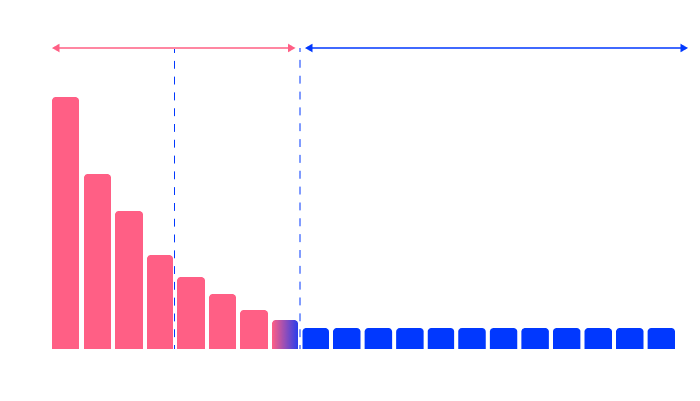
CMAX is an agentic SEO platform built to close that gap at scale. It deploys and continuously updates content targeting the long-tail keywords that make up over 90% of search demand, covering the role-specific, location-specific, and industry-specific terms recruitment sites need but rarely have pages for. Results typically begin within six weeks, not quarters.
If your organic strategy stalls because you can’t produce and maintain content fast enough, CMAX gives a lean team the output of a large one, with two lines of code.
References [1] – https://developers.google.com/search/docs/appearance/structured-data/intro-structured-data
Author
Jeremy Tang
Founder and CEO of CMAX
Jeremy Tang is the Founder and CEO of CMAX. With over 2 decades of experience in business consulting and digital marketing, he has successfully driven seven startup businesses, six of which achieved $1 million in revenue from zero in less than 16 months, 5 of which grew to multi-million dollar a year ventures without any external funding. Jeremy's expertise lies in streamlining business processes through technology and leveraging digital (in particular SEO) for business growth. He resides in Australia, travels extensively, and draws inspiration from his global experiences.