SEO for ChatGPT starts where traditional SEO does: crawlable pages, clear structure, and trustworthy content. The difference is what happens after indexing. In a conversational search, your page needs to be retrieved, quoted, and attributed across follow-up questions, not just ranked for a single query. That shifts the focus from position tracking to source coverage, citation monitoring, and whether your content actually answers the specific question a prompt is asking. CMAX works with enterprise teams applying these principles at scale through programmatic content built for both traditional and AI-driven search.
ChatGPT visibility still starts with foundational SEO.
Crawlable, parsable, trustworthy pages
SEO for ChatGPT still depends on the same foundational work that supports traditional search visibility. ChatGPT can only cite pages that connected retrieval systems can access and interpret. That dependency makes the technical basics non-negotiable: crawlable URLs, readable HTML text, consistent page rendering, and sourcing a reader can verify.
If a page sits behind a login, blocks key crawler agents, or relies on JavaScript-rendered content that retrieval systems can’t parse, it’s effectively invisible regardless of how well the copy is written. The same signals that support traditional search visibility, clean crawl paths, publicly accessible content, verifiable attribution, carry directly into AI-driven retrieval.
SEO for ChatGPT builds on the same crawlability and trust signals that underpin aeo SEO, meaning the technical and content fundamentals practitioners already know remain the starting point for AI-answer visibility.
Indexing plus answer-friendly structure
Indexing puts a page into consideration, but it doesn’t guarantee use. AI systems are more likely to draw from pages that present the answer clearly: descriptive headings that signal what the section covers, a direct response positioned near the top of the section rather than buried in supporting detail, and evidence or attribution that shows where the claim comes from.
A page that ranks well but buries its core answer in paragraph four, or makes claims without attribution, gives a retrieval system less to work with. Structure and sourcing aren’t cosmetic choices, they’re what makes a page extractable. The gap between “indexed” and “cited” often comes down to whether the answer is findable within the page, not just whether the page itself is findable.
Retrieval changes what visibility actually means.
Retrieved, quoted, and attributed
Traditional search visibility has a clear metric: a ranking position on a results page. ChatGPT visibility works differently. A page either gets retrieved and used in an answer, or it doesn’t, and that outcome can shift every time the query wording changes, the user narrows their question, or a follow-up pushes the conversation toward a more specific scenario.
A page that earns a citation on a broad prompt may not hold up when the user asks a more precise follow-up. What SEO for ChatGPT actually measures is whether a page keeps being retrieved, quoted, or linked as the conversation evolves, across rephrased queries, narrower intent, and edge cases the original page may not have been written to address. That’s a higher bar than holding a stable ranking. SEO for ChatGPT sits at the intersection of traditional and conversational discovery, which is why practitioners increasingly explore aeo vs SEO to understand where foundational ranking signals end and answer-engine retrieval begins.
Access and facts over decoration
LLM SEO as a broader discipline centres on how retrieval systems read and reuse text. Crawler permissions, login walls, JavaScript-heavy rendering, and blocked resources can all reduce the likelihood that a page gets pulled into an AI-generated answer, regardless of how well-designed the page looks to a human visitor. The same retrieval principles apply across AI answer systems, which means gemini SEO follows the same access and structure requirements.
Plain, factual copy carries more weight in this context than visual treatment. A retrieval system extracts meaning from structured, accessible text. Design elements, embedded images without alt text, and content locked behind authentication have little machine-readable value. Pages that are publicly accessible, clearly written, and factually explicit give retrieval systems something to work with.
A practical workflow makes ChatGPT visibility measurable.
What changes when search becomes an answer
A practical audit for SEO for ChatGPT should test five things directly: whether key pages are accessible, whether the site covers the questions people actually ask, whether the copy is easy to cite, whether citations and referrals are being logged, and whether a page holds up when the conversation gets more specific.
Confirm access. Check whether important pages are crawlable, publicly accessible, and readable without logins, blocked scripts, or restrictive crawler rules. Good SEO optimisation at this stage means removing every barrier between the retrieval system and your main content. If a retrieval system cannot reach the main content, the page is out of consideration before relevance even enters the picture.
Audit topic coverage. Compare real customer questions against existing pages to find uncovered use cases, entities, locations, and long-tail variants. AI systems cannot cite an answer your site never published, so gaps in coverage are gaps in citation opportunity. Effective SEO strategies treat this step as a map of every question the site should answer but currently does not.
Businesses running a ChatGPT visibility audit as part of their SEO for ChatGPT strategy, particularly those based in New South Wales, sometimes work with an aeo agency Sydney to localise topic coverage and track citation patterns against regionally phrased prompts.
Improve citation-worthiness. Rewrite weak sections into direct factual answers with clear headings, plain-language explanations, and attributed evidence where a claim needs support. Treat these rewrites as SEO recommendations that prioritise clarity over keyword density. A retrieval system extracts the point it can read clearly; it does not infer what a vague paragraph was trying to say.
Set up tracking. Log a fixed query set, record which sources are cited, and separate AI referral sessions from other traffic sources. One-off prompts produce noise; a consistent query log over time produces a pattern you can act on.
Test follow-up behaviour. Run the same prompt through likely follow-up questions to see whether the page still gets used when the conversation shifts from broad intent to a narrower scenario, comparison, or edge case.
Run the same prompt through likely follow-up questions to see whether the page still gets used when the conversation shifts from broad intent to a narrower scenario, comparison, or edge case.
Build a before-and-after baseline
A single prompt test tells you almost nothing. ChatGPT answers shift with wording, context, and what the user asked two turns earlier, so a one-off check produces a snapshot that may not hold the next time someone phrases the question differently.
What holds up is a logged sample. Pick a fixed set of prompts that reflect real customer intent, run them consistently, and record which URLs get cited, how often, and whether those citations persist when the conversation narrows. A follow-up question that moves from “what is programmatic SEO” to “how does programmatic SEO work for B2B product pages” is a different retrieval event, and a page that appeared in the first answer may drop out of the second.
SEO for ChatGPT prompts a closer look at SEO vs aeo when follow-up queries reveal that pages optimised purely for blue-link rankings are not always the same pages being retrieved and quoted in conversational answers.
Log referral sessions separately from other organic traffic so you can distinguish pages that earn repeat AI citations from those that appeared once. Citation frequency and referral session data together give you a workable before-and-after baseline, even accounting for answer variability.
Run this cycle before and after any content or technical change. The gap between the two states is your signal: which pages held across follow-up questions, which dropped out at the narrower scenario, and where coverage gaps are costing you retrieval opportunities.
Evidence shows why source coverage and specificity matter.
Client proof on source coverage
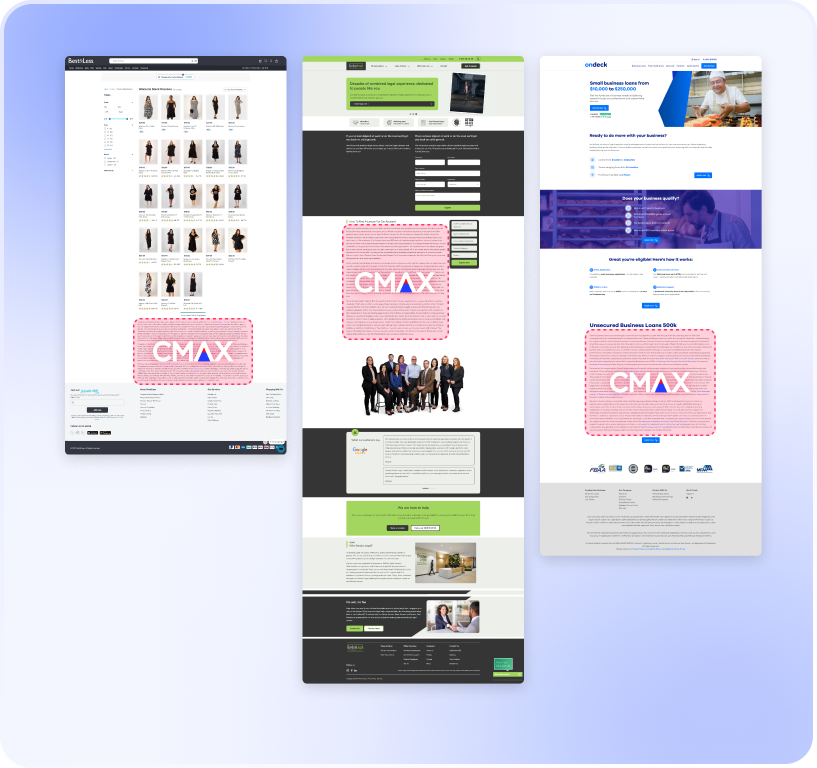
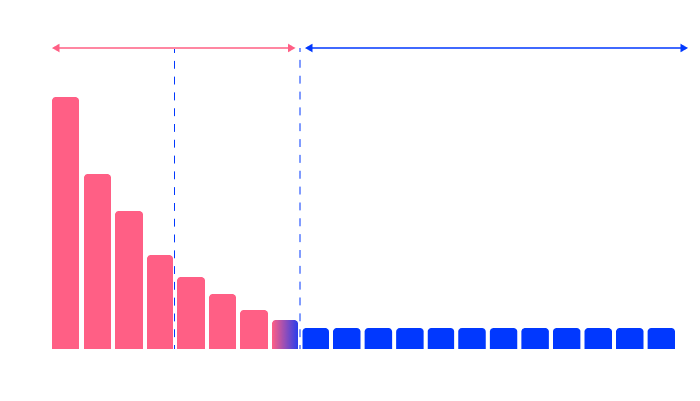
The coverage principle reflects a pattern observed in traditional SEO, and the same logic carries directly into AI retrieval. The same coverage principle underpins SEO for ChatGPT: more specific source pages give retrieval systems more to match against. In one CMAX engagement, a B2B omnichannel hospitality retailer added 5,000 long-tail product pages and lifted organic traffic 255% in 12 months. Each additional page created a new retrieval opportunity: a specific question, a narrower product variant, a location-qualified query that a broader page would never have matched. Retrieval systems face the same constraint. A page that does not exist cannot be cited. Wider, more specific source coverage gives AI systems more chances to match a narrower prompt with a page that answers it directly, rather than defaulting to a competitor whose content is more granular.
Whether the focus is SEO for restaurants or SEO for jewellers, the principle holds: pages that answer specific queries give retrieval systems more to cite. A business investing in SEO Melbourne, for example, benefits from pages that answer the precise local queries retrieval systems match against. For companies focused on SEO in Sydney, the same advantage applies when locally specific content covers the full range of questions potential customers ask.
SEO for ChatGPT shares the same emphasis on specific, retrievable content that drives aeo marketing, where broader topic coverage and direct factual answers increase the chances a page is quoted across varied prompts.
The practical takeaway
Foundational SEO remains the base layer. Crawlability, indexing, and clean page structure are prerequisites, not differentiators. ChatGPT visibility depends on what sits on top of that base: whether your site answers specific questions in a form that is easy to retrieve, quote, and attribute, and whether you have the tracking in place to know which pages are actually earning citations. A site with broad, vague coverage will lose ground to one that has published direct, sourced answers across the full range of questions its audience asks. Coverage depth and citation monitoring are where the gap opens.
Frequently Asked Questions (FAQ)
How do I optimise my website to rank in ChatGPT and SearchGPT?
Treat ChatGPT visibility as a retrieval and citation problem. There is no separate ranking system to crack. Make pages publicly accessible, topically precise, and written to answer a specific question directly. Where a claim needs support, attribute it clearly so a retrieval system can extract the point without inferring what you meant.
How do you make your website appear on ChatGPT?
Pages are more likely to be cited when they are publicly accessible, relevant to the prompt, and written so an AI system can pull a clear factual answer without filling in missing context. A login wall, a blocked crawler, or a page that buries the answer three paragraphs down all reduce the chance of appearing.
How do you reliably measure visibility in ChatGPT?
Run a fixed prompt set on a regular cadence, log which URLs are cited each time, and track whether those pages persist when follow-up questions get more specific. Cross-reference that pattern with AI referral sessions in your analytics to separate pages that earn repeat citations from those that appear once and drop out.
When working through SEO for ChatGPT, businesses that want hands-on support rather than a DIY audit sometimes turn to a ChatGPT SEO agency to manage access checks, citation tracking, and content restructuring on their behalf.
How does ChatGPT choose its sources?
Source selection favours pages that are accessible, relevant to the prompt, and rich in extractable facts. Explicit wording, clear structure, and attributable evidence carry more weight than visual design, because retrieval systems read text, not layout.
How Does ChatGPT Work For SEO?
SEO for ChatGPT shifts the exercise from pure rankings to coverage and citation. Technical fundamentals still apply, but visibility increasingly comes from being the clearest available source for a specific question across the full range of ways that question gets asked.
For organisations scaling their SEO for ChatGPT efforts across multiple markets, knowing what aeo services in Australia cover, from access audits to citation monitoring, can help teams align their local content strategy with the retrieval behaviours of AI-answer systems.
From Ranking Pages to Getting Cited
Most SEO strategies still chase blue-link positions.
CMAX is an agentic SEO platform built to capture the long-tail demand where over 90% of search and AI traffic actually lives. It deploys and continuously updates content for the thousands of ways customers search for what you sell, across traditional search and AI-driven answer engines. With just two lines of code, CMAX programmatically targets high-intent keywords at a scale and speed manual teams can’t match.
As visibility shifts toward being retrieved and quoted in conversational results, broad coverage of specific, well-structured content matters more than ever.
Author
Jeremy Tang
Founder and CEO of CMAX
Jeremy Tang is the Founder and CEO of CMAX. With over 2 decades of experience in business consulting and digital marketing, he has successfully driven seven startup businesses, six of which achieved $1 million in revenue from zero in less than 16 months, 5 of which grew to multi-million dollar a year ventures without any external funding. Jeremy's expertise lies in streamlining business processes through technology and leveraging digital (in particular SEO) for business growth. He resides in Australia, travels extensively, and draws inspiration from his global experiences.