AEO marketing is showing up in more strategy conversations, but most teams are still treating it as a rebrand of SEO rather than a shift in how content gets used. The difference matters: when a search feature or AI assistant pulls an answer directly from your page, visibility depends on whether that page was structured to be extracted, not just ranked. That changes how you write, how you review, and how you measure what’s working. CMAX works with enterprise teams adapting their content operations to this kind of answer-first visibility.
AEO Marketing Reflects an Answer-First Visibility Shift
AEO in Marketing
In marketing, aeo marketing refers to the practice of structuring content so that search features and AI assistants can extract a usable answer directly from the page. The aeo meaning in marketing centres on this answer-first approach to organic visibility.
AEO marketing begins with a clear sense of what the acronym covers. The term aeo stands for answer engine optimisation, and exploring aeo means in plain language is a useful starting point for teams new to the answer-first visibility shift. At its simplest, the aeo meaning is a shorthand for optimising content toward direct-answer surfaces rather than click-dependent rankings.
It’s worth being precise here because the acronym gets used loosely. AEO is not a separate acquisition channel sitting alongside SEO. It’s a change in how SEO content gets interpreted and surfaced once an engine decides it can answer a query without requiring a click. The underlying discipline is the same; what shifts is the formatting standard and the evaluation criteria applied to existing pages.
How Visibility Changes
The practical consequence is straightforward. Users now encounter brand information inside summaries, featured answers, and AI assistant responses before they decide whether to visit a site at all. A page that ranks well can still be absent from those surfaces if its main point is buried or its wording is ambiguous.
That changes the goal. Earning a blue-link click was the traditional measure of organic visibility. AEO adds a prior step: the page must earn inclusion in the answer itself. A brand that appears in a featured summary or an AI-generated response has influenced the user before any click happens. A brand that doesn’t appear there has ceded that moment entirely, regardless of its ranking position.
AEO marketing focuses on structuring content for answer engines, and reviewing aeo vs SEO helps clarify how the two approaches differ in how visibility is earned and measured.
The implication for content teams is direct: ranking and answer inclusion are related but no longer the same outcome.
AEO visibility depends on answer-ready content design.
Answer-ready content structure
Answer engines pull from pages that follow a predictable pattern. The page names the question explicitly, delivers the answer near the top in plain language, then layers in the context, definitions, examples, or evidence a reader or model is likely to need next.
That sequence is critical because answer engines are matching query intent to extractable content. A page that buries its main point inside three paragraphs of background copy gives the engine less to work with. A page that opens with a direct, clearly worded answer gives the engine a clean extraction target, and gives the reader an immediate reason to keep reading. This is the core design challenge behind aeo marketing.
The structure is not complicated. Name the question. Answer it. Support it. Repeat that pattern for each sub-question the topic raises. AEO marketing shares foundational principles with GEO generative engine optimisation, as both disciplines require content to be structured so AI-driven surfaces can extract and surface accurate responses. Teams building a SEO marketing plan should apply the same question-answer-support sequence to their publishing workflow, because the pattern serves both traditional search and answer engines.
Clear answers and checkable evidence
Stating a claim plainly is the first requirement. The second is attribution. Answer engines and readers both respond better when it is clear who is making the claim and on what basis. Grasping SEO marketing meaning is a useful starting point here: the traditional approach has always rewarded pages that pair relevance with authority signals, and answer engines extend that same expectation.
For technical, regulated, or comparative claims, sourcing is essential. A page that asserts a product feature, a compliance position, or a market comparison without documentation gives neither the engine nor the reader a way to verify it. That gap reduces the likelihood of extraction and increases the risk of the page being passed over in favour of one that does cite its sources. Across the broader SEO marketing digital landscape, the same principle holds: credibility depends on verifiable detail.
The practical fix is to attach evidence at the point of the claim: a linked source, a methodology note, a date, a named authority. Checkable specifics build the credibility that answer visibility rewards.
Brand teams need new publishing and review habits.
AEO assumptions to correct
Rankings are a useful signal, but they no longer describe the full visibility picture. A common misconception about aeo marketing is that it replaces SEO entirely. Answer surfaces operate on different criteria: a page earns inclusion when it is specific, attributable, and easy for both a machine and a reader to interpret quickly. A page that ranks in position three can still be invisible in an AI summary if its core point is buried in the third paragraph or wrapped in vague introductory copy.
AEO changes how SEO content is formatted and evaluated when an engine can answer the query without sending a click. Treating aeo and SEO as overlapping practices helps teams avoid treating one as a replacement for the other. The underlying discipline is the same; the formatting requirements are stricter.
As brand teams refine their publishing workflows, aeo SEO as an integrated practice helps content get formatted for both traditional rankings and answer-surface inclusion.
A few assumptions worth correcting before a team rewrites a single page:
- Keyword repetition is not the priority. Making the page’s entities, topic boundaries, and answer wording unambiguous does more for answer inclusion than hitting a keyword density target.
- Late placement costs visibility. If the main point appears after several sentences of scene-setting, answer engines are likely to skip it or extract a weaker passage instead.
- Unsupported claims create extraction risk. Pages that make technical, regulated, financial, or comparative claims without sourcing or documentation are harder for engines to treat as reliable, and harder for readers to verify.
- AI-generated drafts need a review gate. For any content touching regulated, medical, financial, or comparative territory, a subject-matter review before publication is a workflow requirement, not an optional step.
The publishing habit that follows from all of this: state the answer early, support it with checkable evidence, and review before the page goes live.
AEO Measurement Needs Answer Inclusion, Citation Quality, and Query Coverage, Not Just Average Position or Sessions
Accuracy Through Workflow Design
Answer extraction errors rarely come from bad intent. They come from rushed publishing: a claim written without a source, a product named three different ways across five pages, a technical point that cleared a copywriter but never reached a subject-matter expert.
Accuracy improves when the workflow is sequenced correctly. Source factual claims before drafting, so writers are filling in confirmed information rather than reaching for plausible detail. Use one consistent name for every product, feature, and entity across the site, because answer engines treat naming inconsistency as ambiguity and may surface a version of your content you didn’t intend.[1] Require subject-matter review before any page with regulated, technical, or comparative claims goes live.
That sequence does more than reduce errors. It produces pages with unambiguous wording and traceable evidence, which are exactly the properties that make content easier for an answer engine to extract and attribute correctly. Pages written quickly and checked loosely tend to carry vague phrasing and unsupported statements, and those are the pages most likely to be skipped over or misrepresented in an answer surface.
AEO measurement, then, starts before a page is published. Query coverage and citation quality are downstream outcomes of how content is built and reviewed upstream. Teams that treat accuracy as a workflow problem, rather than an editing pass at the end, produce pages that hold up in answer surfaces and in front of a CFO asking how the investment is performing. Teams exploring a GEO marketing strategy face similar attribution questions when tracking answer-surface performance.
AEO marketing measurement requires tracking answer inclusion and citation quality, and reviewing SEO vs aeo frameworks can help teams understand which metrics belong to each discipline when building a reporting structure.
Better Measurement Shows Whether AEO Is Working
Client Proof Point
Query coverage is the clearest proxy for answer visibility, and the relationship between the two is direct. For brands pursuing aeo Australia visibility, the proof point from one CMAX engagement illustrates how coverage expansion drives results. Based on a CMAX client engagement, a fintech lender expanded from 1,000 to 15,000+ pages targeting suburb-level terms and long-tail loan intents. Based on CMAX’s engagement data, within 6 weeks the site gained 1,400+ new rankings.
The same dynamics apply to aeo marketing because answer visibility also grows when pages match the precise wording of a query, not pages that approximate it. A small set of broad pages leaves most query variants unaddressed. Scaling to thousands of specific, answer-ready pages means more queries have a matching page to pull from, which increases the surface area for citation and inclusion.
An aeo Sydney engagement would follow the same suburb-level logic, and GEO services Sydney illustrates how geographically targeted content can expand query coverage across precise intent variants.
Enterprise AEO Measurement
Rankings remain a useful signal, but they no longer capture the full visibility picture. Enterprise teams need a measurement layer that reflects how answer surfaces actually work.
That means tracking four things: which priority queries trigger brand mentions or citations in answer features; how often those mentions draw from the intended page or source; how query coverage shifts across the full topic set over time; and whether those answer appearances assist downstream visits, leads, or revenue through other channels.
Assisted influence is the metric most teams are missing. A brand mention inside an AI-generated summary may not produce a direct click, but it can shape the consideration that leads to one. Attribution models built only around last-click or session data will undercount that effect.
Frequently Asked Questions (FAQ)
Do backlinks still matter in AEO?
Backlinks remain a relevant signal.[2] They support credibility and help engines discover pages, but they don’t make a page answer-ready on their own. A well-linked page that buries its main point or makes unsupported claims can still be passed over. AEO also depends on whether the page states a direct, extractable answer and backs it with wording and evidence a reader can verify. That combination of signals is what makes aeo marketing effective over time.
How long does it take to see results from AEO?
Timelines vary. Crawl frequency, existing domain authority, how quickly new pages go live, and how much current content needs restructuring into question-led, answer-ready formats all affect how fast changes register. There’s no single figure that applies across sites. Working with an aeo agency can accelerate the shift to answer-ready formats and reduce the time spent on structural rework.
How do you measure AEO at the enterprise level?
Track which high-priority queries produce brand mentions, citations, or answer inclusion across search features and AI surfaces. Then connect those appearances to downstream engagement, lead quality, assisted conversions, or revenue influence. A team handling SEO marketing Sydney campaigns would apply the same measurement framework to local answer surfaces.
What ROI benchmarks are early AEO adopters reporting, and how are they measured?
Early reporting is uneven. Many teams are separating direct click performance from assisted influence for the first time. The more defensible approach compares before-and-after query coverage, citation presence, conversion assistance, and channel-mix shifts rather than forcing AEO into a single benchmark figure.
How do I justify increased investment in AEO?
The case strengthens when reporting shows important questions go unanswered in your category, competitors appear more often in answer surfaces, or paid search is carrying demand that broader, clearer organic coverage could support over time.
AEO marketing practitioners looking for hands-on support may find it useful to explore what an aeo agency Sydney offers in terms of content auditing, answer-ready formatting, and enterprise visibility measurement.
Long Tail Coverage Built for the Answer-First Era
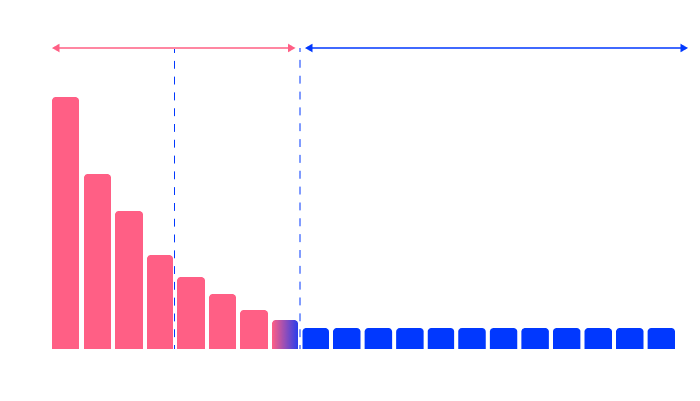
Most SEO platforms focus on a narrow slice of high-volume keywords.
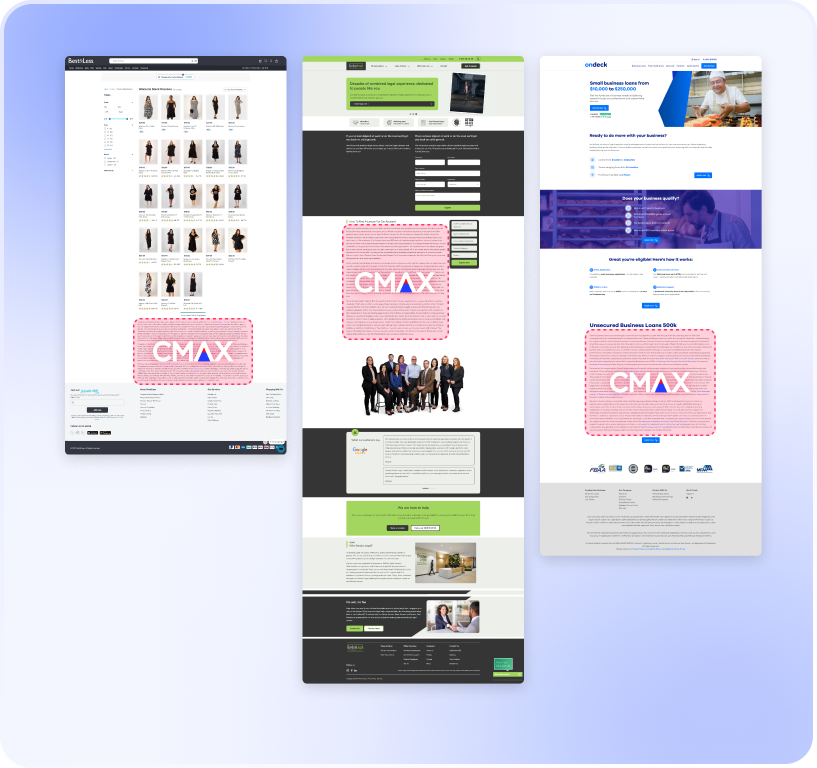
CMAX is an agentic SEO platform that targets the other 90%-the long tail queries where high-intent buyers actually search. With two lines of code, our AI agents deploy and continuously update content across thousands of keyword variations, capturing demand that traditional strategies leave on the table. As search shifts toward answer-ready formats and AEO marketing gains traction, that breadth of structured, specific content becomes a competitive advantage.
Teams using CMAX have observed measurable organic traffic gains within six weeks of deployment.
References [1] – https://developers.google.com/search/docs/fundamentals/creating-helpful-content [2] – https://developers.google.com/search/docs/fundamentals/creating-helpful-content
Author
Jeremy Tang
Founder and CEO of CMAX
Jeremy Tang is the Founder and CEO of CMAX. With over 2 decades of experience in business consulting and digital marketing, he has successfully driven seven startup businesses, six of which achieved $1 million in revenue from zero in less than 16 months, 5 of which grew to multi-million dollar a year ventures without any external funding. Jeremy's expertise lies in streamlining business processes through technology and leveraging digital (in particular SEO) for business growth. He resides in Australia, travels extensively, and draws inspiration from his global experiences.