Most people also ask SEO advice starts with “add an FAQ section,” which is exactly why so many FAQ sections sit on page after page without ever surfacing in Google’s PAA boxes. The selection is algorithmic, not structural, and the difference between pages that appear and pages that don’t usually comes down to how clearly a single question is answered, not how many questions are listed. That distinction shapes every decision covered here, from question selection to format to measurement. CMAX works with enterprise teams applying this kind of query-level precision at scale.
People Also Ask Visibility Comes From Selection, Not Submission
How Google Chooses PAA Answers
People also ask SEO visibility depends on whether Google can extract a clear answer, not on whether a team has applied for inclusion. There is no application process, no dedicated PAA schema type to switch on, and no markup that creates eligibility on its own. The algorithm assesses whether a page contains a clear, extractable answer to a live query it already associates with that topic.
That framing changes where teams should focus. The lever is page quality relative to a specific question, not a technical configuration. If Google cannot isolate a complete, direct answer from the surrounding content, the page is unlikely to be selected regardless of how well it ranks for the broader term.
Understanding people also ask SEO means recognising how answer-focused optimisation fits into the broader landscape, which is why many practitioners also explore aeo vs SEO to see how each discipline targets different SERP features and user intents.
PAA vs FAQ and Snippets
To grasp what is serp in SEO, think of the results page as the surface where PAA, snippets, and FAQ rich results each occupy distinct positions. People Also Ask, FAQ rich results, and featured snippets are three separate features with different triggers, layouts, and selection logic. A page can appear in PAA without earning a featured snippet. A page can carry FAQ markup without surfacing in PAA at all. The selection criteria do not overlap cleanly, so treating a win in one feature as a proxy for eligibility in another leads to misread results and misdirected effort.
Teams that conflate these features often optimise for the wrong signal. FAQ markup may clarify page structure for Google, but it does not create a PAA shortcut. Each feature rewards a different kind of content decision, and PAA specifically rewards pages that answer a discrete question in a form Google can extract and display independently.
Question selection shapes whether a page can appear.
Finding viable PAA questions
Before selecting questions, it helps to clarify what are SEO keywords: they are the specific phrases searchers type into Google, and viable PAA targets are simply keywords phrased as questions. The most reliable of these come from sources that reflect how searchers actually phrase a query: live search results, Search Console query data, customer language from sales and support conversations, and the follow-up questions that expand when a PAA box is opened. These sources capture real demand as it exists in the index. This is why is SEO so important for question targeting: without grounding selections in actual search behaviour, teams optimise for questions no one asks.
Competitor FAQ pages are a weaker starting point. They tend to mirror site architecture or brand messaging rather than the questions users type into Google. A question that makes sense in a navigation menu may have no meaningful search volume behind it, which means optimising for it produces no measurable PAA exposure.
The practical filter is simple: if the question appears in live results or Search Console, Google has already associated it with a topic. That association is the signal worth acting on. The starting point for people also ask SEO is identifying questions searchers already frame in practice, and it helps to see how aeo SEO frames the same challenge of structuring content so that search engines can extract and surface direct answers.
Measuring incremental PAA impact
PAA visibility does not automatically translate to new traffic. A page that earns a PAA appearance for a query it already ranked for may simply shift where the click happens, not expand the total number of queries the page reaches.
A before-and-after view of impressions, clicks, and rankings in Search Console separates these two outcomes. If impressions rise across a broader set of queries after an answer update, the page has extended its query footprint. If impressions hold flat and clicks redistribute, the change is positional rather than additive. That distinction drives the next editorial decision: whether the page needs further question coverage or a different answer format.
Answer Format Affects How Well Google Can Extract a Response
PAA Optimisation Workflow
A repeatable workflow removes the guesswork that makes PAA results hard to attribute. Effective SEO strategies depend on isolating variables: when teams change multiple page elements at once, a visibility shift could trace back to any of them. Working through one query, one page decision, and one answer change at a time means any lift or stagnation points to a specific edit.
The workflow runs in four steps.
Confirm the exact question. Check live search results and Search Console to identify the precise wording Google already associates with the page or topic. Paraphrasing the question at this stage introduces a mismatch before the work begins.
Decide where the answer lives. If the existing page already satisfies the broader search intent, add the question there. If the current page targets a different intent, a dedicated page is the cleaner call.
Write the question as a heading. The on-page heading should mirror the user’s wording closely enough to signal a direct match. Rewording it to suit internal style or brand tone weakens the signal.
Place the answer immediately below. Choose the format that resolves the query fastest: a short paragraph for definitions or explanations, a list for steps or options, a table for comparisons, an image or video where visual explanation does the work. Careful SEO optimisation at this step means letting format follow the query type, not a house preference.
Choosing the right answer format for people also ask SEO sits within a wider shift toward aeo marketing, where content is deliberately structured to satisfy machine-readable extraction across multiple answer-driven surfaces.
Each step produces one measurable output, which keeps the feedback loop clean, which is why people also ask SEO gains come from linking each edit to a measurable outcome.
Track impressions, clicks, rankings, and page changes before judging the outcome, so the team can tie any visibility shift to the specific rewrite.
Direct answers and useful formats
Before assessing whether a PAA edit worked, log the baseline: impressions, clicks, rankings, and the exact state of the page before the change. Without that record, any movement in Search Console is noise. A single tracked variable, one question, one page, one answer rewrite, is what lets the team say with confidence that the edit drove the shift.
Measuring the outcomes of people also ask SEO accurately requires teams to grasp the distinction covered in SEO vs aeo, since ranking signals and answer-extraction signals do not always move in the same direction or respond to the same page changes.
On format: the answer should resolve the query in the fewest steps possible. A direct answer placed immediately under the matching question heading is easier for Google to extract than a paragraph that spends two sentences contextualising before it gets to the point. Delay the answer and the extraction window closes.
Format choice follows query type, not preference. A question asking how to complete a process calls for a numbered list. A page built around SEO for restaurants might answer with a numbered list of steps rather than a paragraph, because the searcher expects actionable sequence. A comparison question works better as a table. A question that depends on visual context may warrant an image or video. A short paragraph is the right call when the query has a single, factual resolution. The query determines which format resolves fastest.
Treat format as a testable variable. Change the format, record the date, and check whether PAA impressions shift in the following weeks. That discipline is what separates a repeatable optimisation process from a one-off guess.
Measured execution reveals what improves PAA visibility.
Why concise Q&A sections help
Concise extraction is what makes people also ask SEO work at scale. A concise Q&A section works because Google can isolate a complete answer without losing the surrounding topic context. The page needs to satisfy the broader subject first, that’s what establishes relevance, then answer the narrower question in a form that can stand on its own.
If the page only contains the Q&A block without the supporting content, Google has no topic signal to anchor the extraction to. If the Q&A is buried inside dense paragraphs, the answer boundary becomes unclear. Both conditions reduce extractability. The structure that performs is: page earns relevance on the broad topic, then delivers a self-contained answer to the specific question immediately below a matching heading.
Query-specific coverage at scale
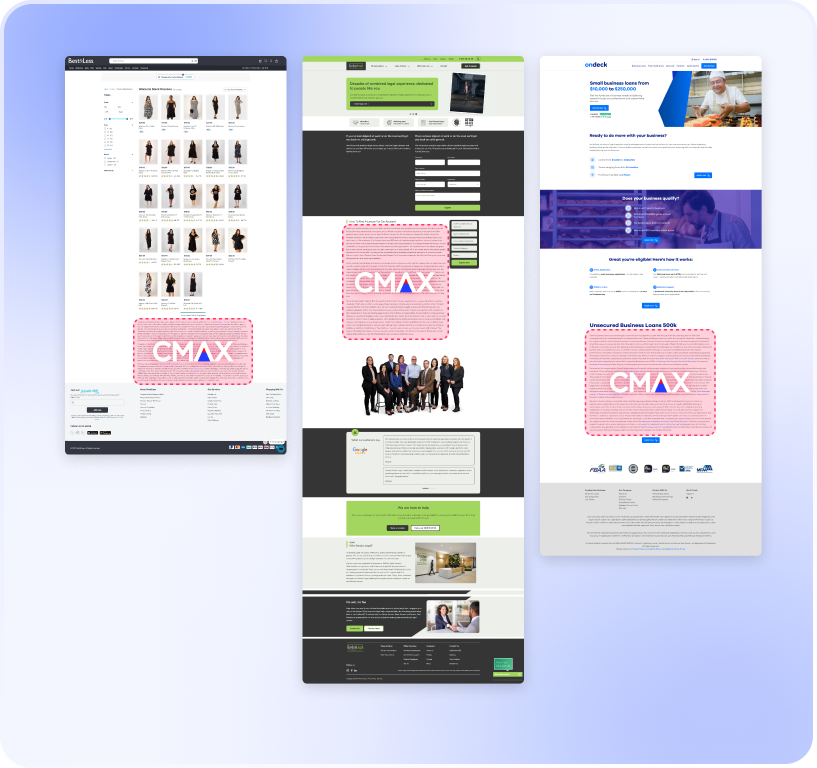
The same extraction logic that applies to a single Q&A section compounds when applied across a large set of query-specific pages. In one CMAX engagement, a fintech lender earned 1,400+ new rankings in six weeks by expanding into query-specific long-tail pages, each one built around how a distinct segment of searchers framed the same underlying need.
For People Also Ask, broader question coverage gives Google more exact answer targets to assess. A single page answering one question creates one extraction opportunity. A set of pages, each matched to a distinct query variant, creates many. The volume of viable targets tends to shift PAA visibility at scale more than incremental refinements to a single URL. A business needing SEO Melbourne can apply the same query-specific expansion to capture local question variants. Similarly, a team investing in SEO in Sydney would broaden its question coverage by matching pages to the way local searchers phrase their queries.
Businesses pursuing people also ask SEO alongside locally targeted campaigns may find that GEO services Sydney offers a practical entry point for combining question-led content with location-specific search visibility.
Honest expectations prevent the most common PAA mistakes.
Why FAQ boilerplate stalls
Most FAQ sections stall at the same point: they repeat broad marketing copy rather than resolving a specific search question with a concrete distinction, mechanism, or example. A paragraph that describes a product category in general terms gives Google nothing to extract that it cannot find on dozens of competing pages. The answer has to be specific enough to stand on its own, one question, one direct resolution, one piece of detail that makes the answer worth surfacing over alternatives. Generic copy fails that test regardless of how well the surrounding page ranks. Unlike a one-off FAQ rewrite, people also ask SEO requires ongoing measurement to separate real gains from zero-click impressions.
Interpreting zero-click PAA outcomes
PAA visibility can satisfy a user’s question before they click, so judging performance on page clicks alone will undercount the real impact. A more complete read looks at whether the page starts appearing for a wider set of related queries after the update. That expansion in query footprint signals that Google has associated the page with a broader topic cluster, which increases discovery even when the first interaction happens on the results page. Impressions across new queries, tracked in Search Console before and after the edit, give a clearer picture of whether the change extended reach or simply shifted where an existing click landed.
As LLM SEO reshapes how algorithms extract and rank answers, teams should factor algorithmic answer surfaces into their PAA performance benchmarks. Shifts in SERP layouts driven by gemini SEO also affect where and how question-based content appears, making static measurement frameworks unreliable over time.
Teams refining their people also ask SEO strategy should also be aware of GEO generative engine optimisation, as AI-generated answer surfaces are reshaping how question-based content gets surfaced beyond traditional search results.
Frequently Asked Questions (FAQ)
Does FAQ schema help with People Also Ask?
FAQ schema can clarify page structure for Google, but it carries no dedicated requirement for People Also Ask and does not create eligibility on its own. If the page does not answer the query clearly, adding markup changes nothing. Schema is a structural signal, not a selection lever. The underlying answer still has to resolve the question in a form Google can extract.
How do you optimise for People Also Ask?
Optimising for People Also Ask follows a consistent sequence: select real user questions drawn from live search results and Search Console, decide whether the question fits an existing page or warrants a new one, answer the query plainly in the format that resolves it fastest, and measure whether impressions, clicks, or rankings shift after the edit. Each step is discrete so any visibility change can be traced to a specific decision rather than a bundle of simultaneous updates.
How do you use People Also Ask for keyword research?
People Also Ask surfaces adjacent questions and follow-up intents that keyword tools often miss. Those questions reveal how searchers frame a topic after their first query, which helps teams decide whether a subject needs a tighter on-page section, a dedicated page, or a different answer format altogether. Treating PAA as a live signal of real query language gives teams a more accurate picture of demand than competitor FAQ pages, which tend to reflect site structure rather than how people actually search.
Organisations working on people also ask SEO who want hands-on support with answer-optimised content may benefit from partnering with an aeo agency Sydney to guide question research, page decisions, and performance measurement.
Most Search Demand Is Long Tail, Most SEO Strategies Ignore It
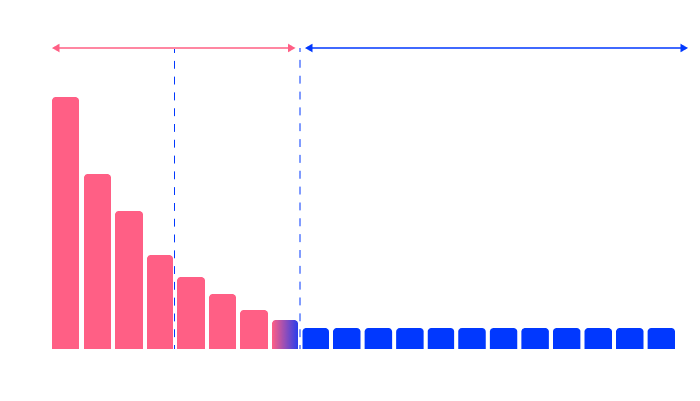
Over 90% of search and AI demand sits in long-tail queries, including the question-based searches that populate features like People Also Ask.
CMAX is an agentic SEO platform built to capture that demand at scale. With two lines of code, our AI agents deploy and continuously update content targeting thousands of the specific, high-intent phrases your customers actually type. Every new page acts as another node in a growing network, more content, more visibility, more traffic. Results typically begin within six weeks.
If your current approach plateaus on head terms while long-tail opportunities go unclaimed, CMAX was built for exactly that gap.
Author
Jeremy Tang
Founder and CEO of CMAX
Jeremy Tang is the Founder and CEO of CMAX. With over 2 decades of experience in business consulting and digital marketing, he has successfully driven seven startup businesses, six of which achieved $1 million in revenue from zero in less than 16 months, 5 of which grew to multi-million dollar a year ventures without any external funding. Jeremy's expertise lies in streamlining business processes through technology and leveraging digital (in particular SEO) for business growth. He resides in Australia, travels extensively, and draws inspiration from his global experiences.