Most teams exploring AI for SEO start by automating content production, then work backwards to figure out quality controls, sourcing rules, and measurement. That sequence is the problem. The gains from AI across research, clustering, technical QA, and reporting only hold when the workflow defines what’s approved before anything gets drafted or published. For enterprise teams managing thousands of URLs, that structure matters even more. CMAX is one platform built around this supervised approach, pairing programmatic scale with the review gates large sites require.
AI for SEO Works Best With Supervised Workflows
AI for Large-Site SEO Tasks
When teams apply AI for SEO to large-site workflows, the biggest gains come from offloading repeatable, high-volume processing. Thousands of URLs, hundreds of query clusters, and a team of two to five people cannot manually process Search Console exports, write briefs, run QA checks, and produce reporting summaries at the pace the site demands.
AI is most useful when it handles that processing load. Query research, clustering, content brief generation, QA checks, and reporting summaries are all high-volume, repeatable tasks where AI can significantly reduce the time these tasks take. The relationship between SEO and AI shapes every stage of this work, from research through to publishing. Page creation, publishing decisions, and prioritisation stay with the team. That division is deliberate: AI accelerates the inputs; people govern the outputs.
The broader relationship between AI and SEO spans every stage of the workflow, from query research through to publishing and measurement. Teams operating in SEO in the age of AI need supervised workflows that keep human judgement at the centre of every publishing decision. How AI affects SEO depends largely on whether that supervisory layer is in place.
Human Review Decides What Ships
Faster inputs only create value if the review layer holds. Before any page ships, a human reviewer needs to answer four questions: Are the sources trustworthy? Is the intent worth targeting commercially or informationally? Does this URL add something another page on the site does not already cover? Is the output accurate and safe to publish?
These are judgement calls, and AI cannot make them reliably. A model can surface a query cluster and draft a brief, but it cannot weigh whether a source is authoritative in your specific vertical, or whether a near-duplicate URL will dilute rather than grow your indexed footprint. Skipping this gate is where scaled AI SEO programmes run into search-quality problems. The workflow only holds when the review step is non-negotiable.
Large-site growth depends on the right AI use cases.
Turn query data into clusters
A static keyword list captures what you already know to look for. AI can process Search Console queries, internal site-search terms, and paid-search language together, grouping them into long-tail topic clusters that surface repeated demand themes, modifier patterns, and low-volume opportunities your existing list never reaches. At scale, that gap is where most untapped traffic lives.[1] Applying AI for SEO at scale requires the same disciplined input controls that any SEO AI implementation depends on, particularly when clustering thousands of long-tail queries into actionable page briefs. An AI SEO analyser can accelerate this clustering step, scoring each query group by search volume, competition, and topical coherence before a strategist reviews the output.
Group intent beyond wording
Similar wording can hide completely different intents. AI-assisted intent analysis is more reliable when it sorts queries by the job the searcher is trying to complete, the funnel stage they are in, and the page template that can satisfy that need. A query like “enterprise CMS migration checklist” and “CMS migration cost” share vocabulary but belong to different funnel stages and require different page treatments. Running a SEO AI audit across these grouped queries confirms whether existing pages already satisfy each intent or whether new pages are needed.
Match each cluster to one page
Each cluster should map to one page purpose, one approved evidence set, and one conversion path. Applying AI for SEO at this stage keeps content planning governable and stops a single URL from trying to answer multiple intents at once, which dilutes relevance and complicates performance attribution.
Flag scaled technical gaps
Page-by-page audits break down at thousands of URLs. AI can scan across templates to surface repeated duplication, thin page patterns, missing topical entities, and internal-link gaps that only become visible when you look at the site as a system. Treating this scan as AI SEO optimisation means prioritising fixes by template class rather than individual URL. Issues that repeat across a template class need a template-level fix, and AI can identify which templates are the source.
The Supervised AI SEO Workflow from Research to Reporting Keeps Teams in Control
Define Controls Before Drafting
The most common failure point in AI-assisted SEO is sequencing. Teams open a prompt, ask for a draft, and only then try to retrofit source rules, review criteria, and success metrics around whatever the model produced. That order is backwards.
Before any content is drafted, the team needs four things locked down: the approved inputs AI can draw from, the source rules that determine what evidence is acceptable, the review gates that decide whether output is ready to publish, and the metrics that will confirm whether the page was worth creating at all. Without those controls in place first, review becomes subjective and measurement becomes an afterthought.
The Supervised AI SEO Workflow
A supervised AI for SEO workflow keeps control by moving in one direction: from source collection to post-publication measurement. Each stage has a defined input, a human review step, and a clear success check before the next stage begins.
The supervised workflow that makes AI for SEO effective is the same structured approach that defines responsible AI SEO practice, moving from approved source collection through QA to post-publication measurement.
- Collect approved sources, establish which data sets, documents, and references AI is permitted to use before any analysis starts.
- Cluster long-tail queries, group Search Console queries, internal site-search terms, and paid-search data into topic clusters that reveal demand themes and modifier patterns.
- Map each cluster, assign one intent, one funnel stage, and one page template per cluster.
- Build a brief, specify approved evidence, required entities, and conversion goals before drafting begins.
- Draft against the brief, the brief is the prompt boundary; open-ended generation is not the method here.
- Run QA, check factual accuracy, duplication, internal links, and template fit before any URL is published.
- Measure after publication, track visibility, engagement, conversions, and page-type performance against the success metrics defined in step one.
The sequence is fixed. Skipping or reordering stages is where quality and search safety risk enters the workflow. This sequence works as a practical AI SEO guide that teams can repeat across page types.
Even within a structured AI for SEO workflow, the judgment of an experienced SEO copywriter remains valuable at the brief-review and QA stages, where source credibility and intent alignment require human assessment.
Search-safe execution depends on quality controls and evidence.
Avoid low-value scaled pages
Scaled pages create search-quality risk when they add little original information, rely on weak sourcing, or cover near-identical intent without a clear reason for a separate URL to exist. Google’s spam policies treat mass-produced pages that don’t meaningfully serve a distinct query as a quality violation, regardless of whether a human or an AI produced them.[2] The risk compounds on large sites because template-level problems replicate across thousands of URLs before anyone notices.
When AI for SEO is used to scale output, SEO content writing still requires a human review gate to confirm that each draft is accurate, non-duplicative, and grounded in approved evidence before it is published.
Start with a reviewed cluster
Unlike unsupervised automation, AI for SEO with reviewed clusters reduces search-quality risk. A safer rollout publishes one reviewed page for a low-volume cluster with approved evidence and a single clear intent. For an AI SEO Brisbane team scaling product pages, a reviewed cluster is the safest starting point because it gives editors a contained scope to validate before expanding. Expand only after that page earns measurable visibility and engagement against the purpose it was built to serve. This approach gives teams a real signal before committing to scale: if a tightly scoped, well-evidenced page doesn’t gain traction, the cluster brief or template needs revision before it runs across hundreds of variants.
Enterprise long-tail proof point
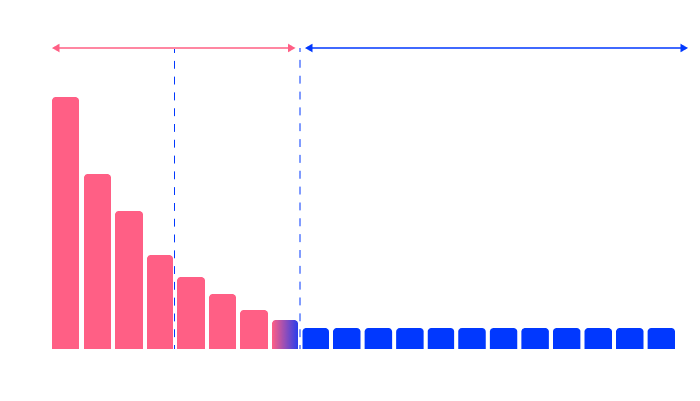
In one CMAX engagement, a B2B omnichannel hospitality retailer published 5,000 long-tail product pages and drove $1M+ per month in incremental SEO revenue within 8 months. The result came from catalogue-scale long-tail coverage, targeting specific product, feature, and use-case queries that head-term SEO leaves uncovered. Based on CMAX’s client portfolio data, head terms capture a fraction of actual search demand, and the remaining volume sits in specific, lower-competition queries that only scale with quality controls in place.
Reporting Should Connect Visibility, Behaviour and Business Impact
Pair Visibility with Engagement
Search Console impressions and clicks confirm whether pages are surfacing for the queries they were built to target. That data alone does not tell you whether the page is working. Analytics data closes the gap: time on page, scroll depth, goal completions, and assisted conversions show whether visitors who arrived from those queries stayed, engaged, and took the action the page was designed to drive. Both signals are necessary. Impressions without engagement suggest a relevance or quality problem; engagement without impressions suggests a discovery or indexation problem.
Reconcile Results by Segment
Sitewide organic totals obscure which decisions produced results. Executive reporting is more defensible when rankings, indexed URL counts, assisted conversions, and revenue are broken out by page type, query cluster, and publication cohort. That structure lets you show which template performed, which cluster drove pipeline, and which cohort justified the workflow investment, rather than asking a CFO to trust an aggregate number that mixes high-performing pages with ones still gaining traction.
When AI for SEO is embedded into a wider SEO marketing strategy, reporting becomes more meaningful because visibility, engagement, and conversion data can be tied back to specific workflow decisions rather than treated as a single sitewide metric.
Use Matched Baseline Comparisons
Comparing AI-assisted pages against matched non-AI pages with similar intent, age, and authority separates the workflow’s effect from external variables: seasonality, shifts in brand search volume, indexation changes, or unrelated site updates. Without a matched baseline, it is difficult to attribute performance gains to the AI-assisted process rather than to favourable conditions that would have lifted any page published in the same window. Matched baselines are what make AI for SEO measurable rather than anecdotal.
How to measure AI SEO success?
Check whether the targeted page set gains relevant impressions and clicks in Search Console, then confirm those visits satisfy intent through engagement and conversion signals in your analytics platform. A page that ranks but doesn’t convert hasn’t succeeded. Comparing performance against a matched non-AI baseline separates the workflow’s contribution from seasonal shifts or unrelated site changes.
Is AI content safe for enterprise SEO?
AI-generated content can be used in enterprise SEO when teams review it against approved sources, align it to a distinct search intent, and check it for duplication, accuracy, and page usefulness before publishing. The review gate is what makes it safe, skipping it is where risk enters.
How to avoid thin content in programmatic SEO?
Each URL needs a specific query cluster, evidence or detail the template can genuinely vary, and a clear purpose that no existing page already covers. When those three conditions aren’t met, the page adds little and creates search-quality risk.
How to rank in AI search overviews?
Pages cited in AI search experiences tend to answer one question clearly, use specific evidence, and present information in a format that systems can extract and attribute without ambiguity.[3] The relationship between generative AI and SEO comes down to how citation-ready content is structured, with precision working for you and breadth working against you.
Teams using AI for SEO increasingly need to consider how their pages are discovered and cited by AI search engines, making clear structure and specific evidence more important than ever.
How to report AI SEO ROI to executives?
Connect page cohorts to indexed growth, organic conversions, assisted revenue, and the incremental lift versus a matched non-AI baseline. Reporting a sitewide organic number tells a CFO nothing about whether the AI-assisted workflow paid off.
Most SEO Teams Automate the Wrong Step First
CMAX is an agentic SEO platform built for long-tail scale.
Where most AI-for-SEO approaches stop at drafting, CMAX deploys autonomous agents that research, produce, publish and continuously update content across thousands of keyword variations, with two lines of code. The platform targets the 90%+ of search demand that sits in long-tail queries, the high-intent terms conventional strategies rarely reach at speed. Results have been observed within six weeks of deployment across measured accounts.
If your current stack can’t move faster than your keyword list grows, that’s the gap CMAX was designed to close.
References [1] – https://ahrefs.com/blog/long-tail-keywords/ [2] – https://developers.google.com/search/docs/essentials/spam-policies [3] – https://developers.google.com/search/docs/appearance/structured-data/intro-structured-data
Author
Jeremy Tang
Founder and CEO of CMAX
Jeremy Tang is the Founder and CEO of CMAX. With over 2 decades of experience in business consulting and digital marketing, he has successfully driven seven startup businesses, six of which achieved $1 million in revenue from zero in less than 16 months, 5 of which grew to multi-million dollar a year ventures without any external funding. Jeremy's expertise lies in streamlining business processes through technology and leveraging digital (in particular SEO) for business growth. He resides in Australia, travels extensively, and draws inspiration from his global experiences.