An AI SEO audit looks at whether your pages appear inside Google’s AI Overviews and AI Mode, not just where they rank in standard results. Ranking well and being cited in AI answers are two different things.
A page can sit on page one and still be invisible when someone asks Google a detailed product question, because Google chose a better-supported source instead. A generative engine optimisation agency examines exactly that gap: why a page with solid Google visibility still gets skipped in AI answers.
Coverage gaps, thin topic connections, and content that has not been refreshed in months are usually the cause. Most of those gaps sit in the long tail of searches your team has never tracked.
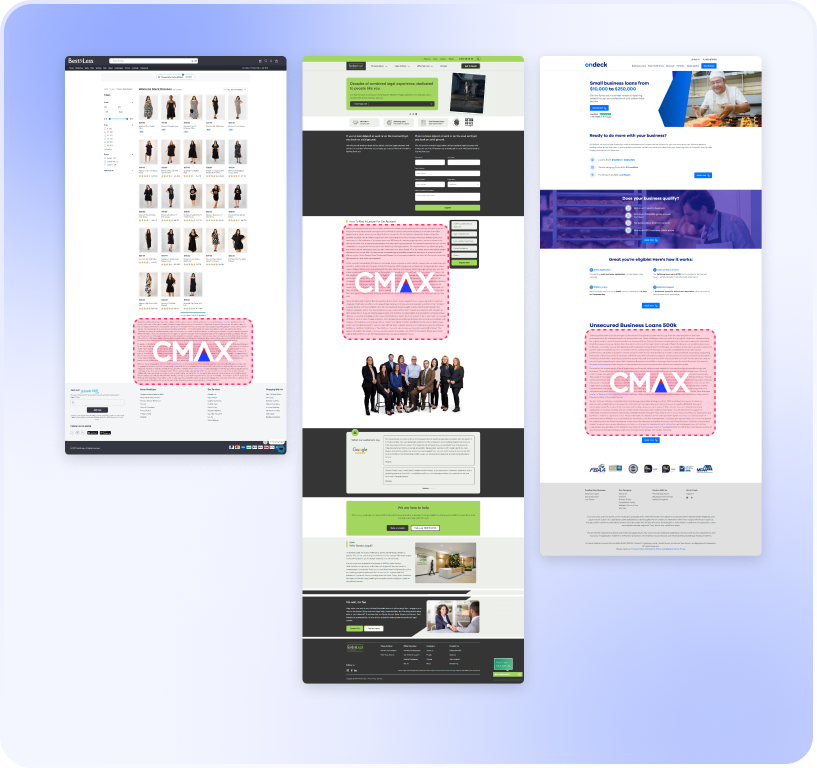
CMAX connects AI and SEO through an Agentic SEO Platform built to find and close those gaps at scale. Teams looking for a starting point often reach for an SEO analysis tool free of charge, but those tools report rankings and impressions, not whether your pages are being cited in AI answers.
This audit shows where your content is visible in Google’s AI experiences and where it is not.
Where AI cites, surfaces, or misses you
SGE AI SEO audits combine Search Console data with prompt checks to identify pages that Google’s AI Overviews and AI Mode are leaving out. Search Console’s generative AI report shows whether your URLs appeared in Google AI features, broken out by page, country, device, and date.
That country-level view means you can separate Google sge Australia performance from the United States, which matters if your sales are local. Prompt checks add the commercial layer: they test the actual questions buyers type, so you can see whether your most important pages are being cited, summarised, or skipped when someone asks a detailed product or service question.
Why rankings do not equal AI visibility
Think of Google’s AI answers like a panel of expert witnesses. Ranking tells you that you’re in the building.
Being cited means Google picked you to speak. You can be present and still never get the floor.
A page ranks well in standard results and still gets passed over in AI answers when Google does not see it as the clearest answer or part of a strong topic cluster around the query. Search Console’s AI reporting counts impressions when links to your site appeared in a generative AI feature, but it does not include a query dimension.
That is why AI SEO audits are needed to connect visibility patterns to the real searches that drive revenue. A semrush SEO audit tool can report rankings and impressions, but prompt checks are still required to find which detailed buyer questions are skipping your pages.
It measures the content, index, and freshness gaps that shape AI search visibility.
Coverage, entities, index, and freshness
CMAX uses SGE AI SEO audits to examine coverage, entity connections, indexability, and freshness across each commercially important page. Search Console captures crawl, index, and performance signals, so AI powered SEO services can use that data to identify content that has gone stale or become difficult for Google to retrieve.
Search Console also separates country and device patterns that affect local visibility, including signals relevant to a SEO audit Melbourne when Brisbane performance is different.
Long-tail gaps and missed demand
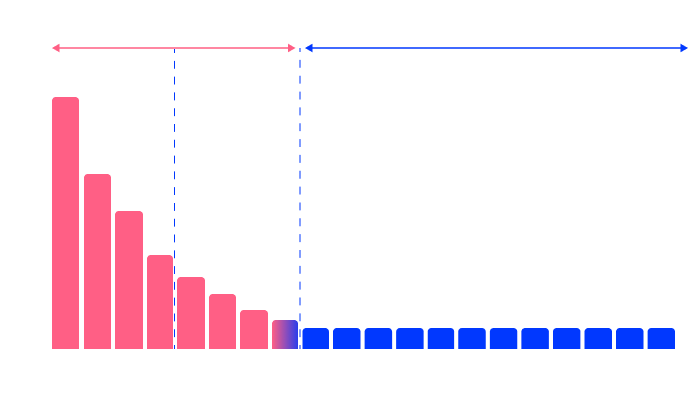
Over 90% of search and AI demand is in the long tail. Thin coverage usually means the site has no useful page or clear on-page answer for the specific ways buyers actually search.
Understanding what is generative engine optimisation starts with recognising that most search demand lives in those long-tail queries, not the obvious head terms your agency tracks. Google also reports that 15% of searches it sees every day are brand new, which is why an audit must measure how much demand is being missed because the content surface area is too narrow.
An AI SEO content generator can help fill that surface area at scale, provided the content is human-reviewed and accurate before it goes live.
It turns findings into a clear improvement programme for CMAX.
Prioritise fixes with Search Console data
Standard ranking reviews will not catch this. SGE AI SEO audits reveal when pages with solid Google visibility still get skipped in prompt checks for revenue-related questions because their answer coverage or surrounding context is thin.
Evidence for generative engine optimisation GEO comes from Search Console’s AI reports, which show impressions for URLs that appeared in generative AI features. Broader performance reports then show clicks, impressions, and position in Google Search, so teams can tell a visibility problem apart from an indexing problem and ACT on the pages most likely to move commercial outcomes first.
Why CMAX fits the gap
A generative AI SEO service is only useful if it can ACT on what the audit finds. CMAX is the Agentic SEO Platform, built for the scale problem these audits typically expose: too many long-tail gaps, too much content decay, and too much manual work to keep priority pages current.
CMAX is trained on human-reviewed, client-approved content. The platform approaches AI SEO optimisation by deploying and continuously refreshing approved content across any CMS, so the audit’s findings translate into action without rebuilding the site.
For teams that want to build internal capability alongside that, an AI SEO course can help marketers understand the logic behind AI search before they hand execution to the platform.
Frequently Asked Questions (FAQ)
Can Search Console show which queries trigger AI Overviews?
The dedicated generative AI performance report lists pages, countries, dates, and devices as its available dimensions, but it does not show the individual queries that triggered a feature. SGE AI SEO audits use that data to define the scope of review, then add targeted prompt checks to fill the gap.
Pairing both gives an AI SEO strategy the evidence it needs to identify which buyer questions lead to pages being cited, summarised, or skipped.
Do AI Overview impressions mean users actually saw my link?
An impression means Google counted your link as shown in a generative AI feature, not that a user noticed or clicked it. Page-level outcomes for a SEO audit Brisbane can differ from Melbourne because Google’s local results respond to location, even when the underlying service is the same.
Google also notes that when data is aggregated by property, multiple links from the same site in one search experience can count as a single impression. Compare impression trends with clicks and page-level outcomes before treating visibility as demand captured.
Does Search Console track AI visibility in ChatGPT or Perplexity?
No. Google describes Search Console as a tool to measure traffic and performance in Google Search. Citations inside ChatGPT or Perplexity are outside its scope entirely.
Reporting for a SEO audit Australia uses country-level performance data, and United States programmes can be assessed separately through Search Console. An AI SEO consultant uses Search Console to understand performance within Google’s index, while non-Google citations require separate prompt checks or dedicated monitoring.
SGE AI SEO audits keep the review grounded in Google index and prompt evidence; separate monitoring handles the rest.
SGE AI SEO Audits Start With Coverage Gaps
SGE AI SEO audits are most useful when they show which buyer questions your site answers in Google’s AI features and which ones it misses. AI visibility still comes back to Google’s index.
Strong rankings on a few obvious terms do not cover the thousands of specific searches that shape revenue.
CMAX builds from that gap. You are not losing to better SEO.
You are losing to coverage you do not have. Rather than functioning as a local SEO audit tool, CMAX focuses on the content gaps, freshness issues, and supporting context that determine whether priority pages appear in AI answers.
CMAX targets the 90% of search demand in the long tail, and applies SEO for AI search by expanding and refreshing content across search and AI so the site shows up for more of the ways customers actually search. If you want to understand your gaps before committing to a direction, the most straightforward next step is a diagnostic review, not a sales conversation.
Proper AI SEO optimisation is not a one-time audit; it is an ongoing process of closing gaps as search behaviour evolves.
If you’re curious as to how you’re performing on AI, book in a Missing Customer Map review with our Growth Team.
Author
Jeremy Tang
Founder and CEO of CMAX
Jeremy Tang is the Founder and CEO of CMAX. With over 2 decades of experience in business consulting and digital marketing, he has successfully driven seven startup businesses, six of which achieved $1 million in revenue from zero in less than 16 months, 5 of which grew to multi-million dollar a year ventures without any external funding. Jeremy's expertise lies in streamlining business processes through technology and leveraging digital (in particular SEO) for business growth. He resides in Australia, travels extensively, and draws inspiration from his global experiences.