SEO content writers do more than produce blog posts or persuasive copy. The role covers working out what a searcher actually needs, structuring a page to match that need, and keeping it accurate as products, terminology and search results shift.
For a business selling technical or specialised products, SEO copywriting must answer questions about specifications, applications and suppliers. A page written to sound good is not the same as a page built to answer the exact questions buyers type before they compare options.
That distinction is where most content marketing programmes lose ground.
That gap between general copywriting services and true SEO writing is where CMAX operates, applying intent-led content across the long-tail searches a product range actually attracts, rather than treating each page as a one-off writing job.
What an SEO Content Writer Actually Does
Intent, Structure and Updates
Within an organic search programme, an SEO content writer maps intent before touching title tags, meta descriptions or internal links. The role continues after publication, because query patterns, competitor pages and product offers shift.
Strong SEO content writing services include review and refresh cycles, not just first drafts.
SEO vs General Copywriting
A general copywriter or freelance writer is hired to persuade and stay on brand. An SEO content writer is also accountable for whether a page appears for the searches buyers actually run.
An SEO copywriter structures the page around those searches and the follow-up questions buyers ask. That changes the brief entirely: the page has to reflect the search task, answer follow-up questions, and signal relevance through structure and wording, not brand voice alone.
AI Drafts, Humans Decide
AI can accelerate first drafts, outlines and refresh workflows. Intent mapping, fact-checking and editorial judgement still require a person.
Before drafting begins, keyword research gives human editors the evidence needed to map intent and stress-test an outline. On pages that need to rank and convert, content writing for SEO still requires someone to decide what the page targets, which claims need verification, and whether the final copy is accurate and current, particularly where product details, compliance language or technical specifications are involved.
AI handles volume; a person decides what is true.
Why Search Intent Changes the Content Brief
Long-Tail Demand Changes Page Planning
One broad page rarely captures the full opportunity. Think of a menu at a restaurant: the category heading says “pasta” but the orders come in for specific dishes with specific modifications.
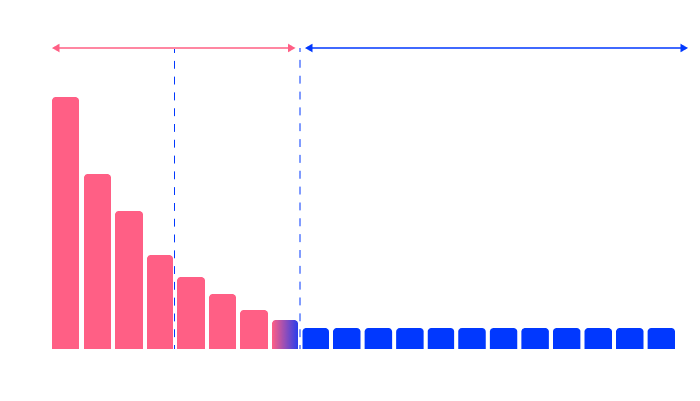
Search works the same way. Over 90% of search and AI demand is in the long tail, which means buyers are typing specific product names, application questions and buying comparisons, not just category labels.
An SEO content writer plans around those specifics, not just the homepage label.
Freshness Affects Visibility
Content written once and left alone drifts. Terminology changes, products update, buyer questions shift, and search results move with them.
A useful content strategy defines what signals a refresh and which pages matter enough to update, so an SEO content writing company can keep fast-moving pages aligned with the market. Publication is not the finish line.
Clear Answers Still Power AI Visibility
For brands chasing visibility in AI-generated answers, the practical requirement is clear, useful pages that answer real questions in the language buyers use. On-page SEO still depends on specific answers, clear headings and source pages that AI engines can interpret.
The interface changed; the need for well-structured source pages did not.
How This Role Supports Complex Industry Content
Intent-Led Writing for Technical Products
In complex categories, intent-led writing turns internal product knowledge into pages that reflect how buyers actually search. A buyer comparing products typically cares about capacity, specifications, installation requirements and service intervals, not marketing language.
Blog writing services and website copywriter output for technical products must preserve those details while remaining readable. Accuracy and clarity are both non-negotiable.
Where CMAX Fits
CMAX is the Agentic SEO Platform. CMAX targets the 90% of search demand in the long tail for brands that need approved, self-updating content at scale.
CMAX is trained on human-reviewed, client-approved content, so the output stays on brand and factually defensible. For complex product ranges, the real gap is rarely one missing page.
It is the many ways buyers search for the same offer across different stages of the purchase decision. The platform applies SEO website content writing across those long-tail searches while keeping intent-led answers current across search and AI.
Frequently Asked Questions
Does an SEO content writer need to be a subject-matter expert?
Not necessarily. In technical or regulated categories, a website content writer pairs with internal product, legal or compliance reviewers so the page stays readable without becoming inaccurate.
The SEO content writer’s job is to map intent, structure the answer and verify claims. The business’s technical team keeps the details defensible.
How can you measure whether SEO content is working?
The clearest measures are page-level impressions, clicks, queries won and non-brand traffic. Together they show whether an SEO copywriter is expanding useful search coverage.
Beyond visibility metrics, reporting from an SEO content writing agency should connect the work to assisted conversions, qualified leads and growth in long-tail searches. SEO blog writing that does not connect to pipeline is just publishing.
How long does SEO content take to rank?
There is no fixed timeline. Indexing, competition, site authority, internal linking and content quality all affect how quickly a page gains traction.
First clicks can appear within 6-8 weeks. Assess an SEO content writer across the programme’s progress rather than any single publication date.
SEO Content Writing Starts With Intent and Updates
An SEO content writer does more than draft pages. The job is to match real search intent, cover the follow-up questions buyers ask, and keep important pages current as search patterns change.
At CMAX, SEO writing starts with that discipline, and the platform’s Automated Content Generation, Dynamic Internal Linking and Smart Optimisation features maintain it at scale across the long tail.
CMAX addresses that gap through SEO content creation services focused on long-tail coverage, intent and continuous updates. Full Body SEO means you are covered across the searches buyers run, not just the obvious ones.
If your product range needs clearer, current answers across those searches, the first step is understanding where your gaps are. The Free SEO Fast Track with Area Ten gives you a diagnostic view of your current position with no obligation attached.
If you’re curious as to how you’re performing on AI, book in a Missing Customer Map review with our Growth Team.
Author
Jeremy Tang
Founder and CEO of CMAX
Jeremy Tang is the Founder and CEO of CMAX. With over 2 decades of experience in business consulting and digital marketing, he has successfully driven seven startup businesses, six of which achieved $1 million in revenue from zero in less than 16 months, 5 of which grew to multi-million dollar a year ventures without any external funding. Jeremy's expertise lies in streamlining business processes through technology and leveraging digital (in particular SEO) for business growth. He resides in Australia, travels extensively, and draws inspiration from his global experiences.