Multi location SEO gets complicated the moment a second branch goes live. Service pages, city pages, and branch pages start competing for the same queries, and without a clear system for which page owns which intent, rankings cannibalise instead of compound. The fix is structural: one domain, a defined hierarchy, and enough local proof on each page to justify its existence. CMAX works with multi-location businesses to build and scale that architecture programmatically.
Multi-location SEO works when each page owns distinct intent.
One domain beats separate location sites
Multi location SEO works best when every page has a defined search role, and a single domain is the foundation that makes this possible. A single domain gives service, market, and branch pages a shared authority base to draw from. Internal links flow freely between them, schema implementation follows one governance model, and performance tracking stays consolidated. Splitting locations across separate domains fragments that authority and creates a maintenance burden that compounds with every new branch added. For businesses running SEO for multiple locations, separate domains also tend to compete for the same terms, which is the problem multi-location SEO is supposed to solve, not replicate at the domain level.
Query ownership prevents cannibalisation
Cannibalisation rarely starts with a deliberate decision. It starts when a service page, a city page, and a branch page all target the same core phrase and Google has no clear signal about which one to rank. The fix happens before content is written or links are assigned: each page needs a defined search role.
A service page owns broad commercial intent. A location page owns market-specific comparison intent, covering questions about area coverage, suburbs served, or regional availability. A branch page owns visit intent, the searches that end with someone walking through a door. Multi location local SEO combines these layers so that each page type serves a distinct audience stage within every market.
Multi location SEO strategies are evolving alongside SEO for AI search, since AI-driven results surface place-specific signals differently than traditional ten-blue-links rankings.
Assign those roles first. Once each page has a distinct query purpose, content decisions become straightforward and link equity flows to the right destination rather than diluting across three pages that are quietly competing with each other. A disciplined multiple location SEO approach locks in that clarity from the start.
A clear location hierarchy prevents page overlap.
Match page type to local intent
Three page types do distinct jobs in a multi-location SEO architecture, and mixing those jobs is where overlap starts. The hierarchy that underpins multi location SEO should map each page to a single intent layer.
Service pages target the main commercial query. A user comparing providers or weighing up options lands here. The page answers what the business does and why it’s worth choosing, without anchoring to a specific suburb or branch.
Well-structured SEO location pages sit one level down and answer market-specific questions: which suburbs the business covers, whether a particular service is available in that area, and what makes that market distinct. These pages earn their place by answering questions a service page can’t answer at scale.
Branch pages are the most granular. Address, trading hours, directions, and contact details belong here. A user who already knows what they want and just needs to find the nearest branch is the target reader. At this level, location pages SEO performance depends on each branch page owning a query no other page on the site targets.
When each page type owns a different query, internal links reinforce the hierarchy rather than creating competition between pages that are all chasing the same phrase. Multi location SEO architecture in Victoria often draws on the same hierarchy principles behind AI SEO services Melbourne, where automated content signals still need distinct query ownership at the branch and suburb level to avoid cannibalisation.
Local proof reduces doorway risk
A page that swaps a city name into a copied service template gives users no reason to land there over the parent page. Search engines treat that pattern as a doorway risk, and the ranking results reflect it.
Branch-level details change that calculus. Staff information, turn-by-turn directions, location-specific reviews, branch FAQs, and local service context each give the page a distinct reason to exist. A user landing on a branch page should find information they couldn’t get from the service page or the location hub. That specificity is what separates a useful local page from a thin one.
A repeatable rollout keeps local pages useful at scale.
Multi-location rollout process
A repeatable multi location SEO rollout starts with market mapping. Teams that skip straight to content production typically end up with pages that share query intent, thin local detail, and no clear hierarchy to resolve the conflict later.
A structured rollout works in this order:
Map every target market and suburb. Start with geography, not content. List every market and suburb the business serves, then identify which already have pages and which are gaps. A team rolling out pages for SEO Melbourne would start by mapping every suburb in that market before producing a single page. This map becomes the source of truth for everything that follows.
Assign page roles for service, location, and branch intent. Each page gets one defined query role before a word is written. Service pages own the broad commercial query. Location pages answer market-specific questions. Branch pages cover address, hours, directions, and contact details. Roles assigned here prevent two pages from competing for the same search. The same principle applies when targeting SEO in Sydney, where dozens of overlapping suburbs make role assignment critical from the start.
Build templates that pull unique local proof fields. Templates should require inputs, not just accept them. Fields for suburb coverage, branch staff, local testimonials, and branch-specific FAQs force differentiation at the content level rather than relying on editors to add it manually.
Multi location SEO rollouts that include a major metropolitan hub often benefit from the same scalable frameworks applied in enterprise SEO services Sydney, where managing dozens of suburb-level pages under one domain is a common operational challenge.
Add internal links between parent and child pages. Service pages link to relevant location pages; location pages link to their branch pages. This passes authority through the hierarchy and signals to search engines which page owns which level of intent.
Connect each branch to its Google Business Profile. Branch pages and their corresponding profiles should carry matching name, address, and phone details so local search results and on-site pages reinforce each other.
Launch in waves so indexing and overlap can be checked. Releasing all pages simultaneously makes it harder to catch cannibalisation early. Staged launches let teams verify that new pages are indexing correctly and that no two pages are ranking for the same query before the next wave goes live.
Review Rankings, Clicks, Conversions, and Profile Actions by Market
Templates Need Market-Specific Proof
Location SEO depends on templates that pull market-specific proof before a page can go live. When every location page shares the same paragraph structure with only the city name swapped, search engines and users see the same page repeated across dozens of URLs. That pattern is what triggers doorway-page risk and suppresses rankings across the network.
The fix is to build templates that require unique inputs before a page can publish. Suburb coverage areas, branch staff names and roles, local testimonials tied to that branch, nearby landmarks, service availability specific to that market, and branch-level FAQs all give a page a reason to exist independently. These fields cannot be auto-filled from a central service page. They have to come from the branch itself.
When those inputs are present, each page answers a different set of questions. A user landing on a branch page in one suburb gets directions, staff context, and reviews from people in that area. A user landing on a branch page in another suburb gets the same template structure but entirely different content. The pages look related because they share a format; they rank separately because they carry distinct information.
Multi location SEO reporting across a national footprint frequently mirrors the measurement disciplines used in enterprise SEO services Melbourne, where market-level click and ranking data must be separated from sitewide averages to surface underperforming branches.
At scale, this distinction is what separates a multi-location SEO architecture that compounds over time from one that stalls after the first wave of pages goes live.
Market-level measurement proves whether the architecture is working.
Proof from suburb-specific page expansion
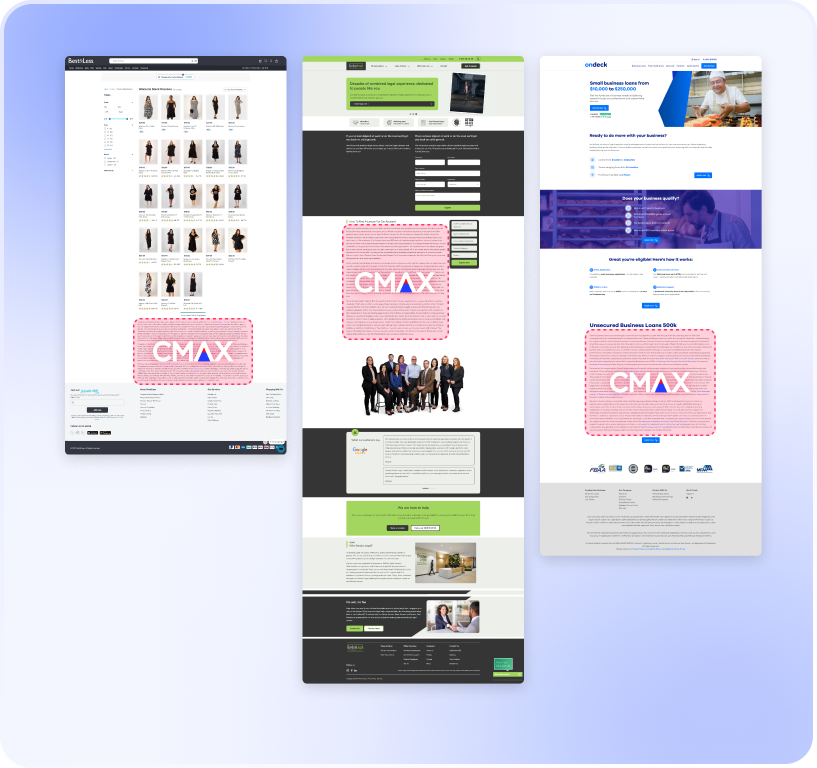
The scale question in multi-location SEO is whether granular local pages actually move the needle or just add maintenance overhead. In one CMAX engagement, a regional ISP scaled to 6,637 suburb-specific pages and recorded an 86% SEO traffic improvement over 12 months. The same dynamics apply in multi location SEO because local demand is fragmented by suburb, and a broad service page with a city name attached rarely wins those place-specific searches with enough consistency to matter.
When each page targets a defined slice of local intent, the network compounds. Pages that would have competed against each other instead cover distinct queries, and the traffic gains show up across the market rather than concentrating in one or two high-volume terms.
Multi location SEO increasingly intersects with developments in AI in search engine optimisation, particularly as search engines use machine learning to assess the relevance and distinctiveness of location pages at scale.
Report performance by market
Sitewide averages hide the locations that are underperforming. Location reporting should separate rankings, organic clicks, conversions, and Google Business Profile actions by individual market so the picture is clear: is a page winning discovery, driving branch visits, or quietly overlapping with another page that should own the query?
Multi location SEO measurement principles apply equally to SEO for real estate agents Australia, where suburb-level search demand is highly fragmented and broad service pages rarely capture the full range of place-specific queries.
That separation also surfaces cannibalisation before it compounds. If two pages are splitting clicks on the same term, market-level data flags it early. If a branch page is generating profile actions but no organic clicks, the gap points to a content or internal linking fix rather than a broader structural problem. Market-level reporting turns SEO optimisation into a location-by-location feedback loop, connecting each architecture decision to an accountable outcome.
Frequently Asked Questions (FAQ)
How do you handle local SEO for businesses with multiple locations?
The most reliable approach to multi location SEO is to keep one clear site hierarchy, assign each service, location, and branch page a distinct query purpose, and make every local page earn its place with branch or market details specific enough to justify its existence. A service page targets the main commercial query. A location page answers market-specific questions. A branch page covers address, hours, directions, and contact. Each layer has a job; none of them overlap.
Should location come first or service?
Service comes first when the searcher is comparing providers or solutions. Location comes first when the searcher needs a nearby branch, directions, opening hours, or confirmation that the business actually serves their area. The searcher’s intent at the moment of the query determines the page order, not internal preference.
How much duplicate content is acceptable?
Repeated structural copy is common across multi-location sites and is not automatically a problem. A page becomes hard to justify when its primary value is a city-name swap rather than unique local information, branch proof, or market-specific service context.
Multi location SEO shares structural parallels with SEO for migration agents Australia, since both require location-specific pages that demonstrate genuine local relevance rather than thin city-name substitutions.
How do you manage Google Business Profile for multiple locations?
Each branch needs its own accurate Google Business Profile that matches the branch details on the corresponding site page. That alignment lets users and search engines connect the listing to the correct location page, branch identity, and real-world visit information.
How do you track SEO results for each location?
Track each market separately using page-level rankings, organic clicks, conversions, and Google Business Profile actions. Market-level reporting shows whether gains are concentrated in a few branches, distributed across the network, or limited to visibility without corresponding local engagement.
What should you look for in a provider?
A credible multi location SEO agency will build distinct query roles before scaling pages. Look for a provider that audits each market individually, creates branch-level proof on every location page, and ties reporting back to real local engagement rather than aggregate traffic numbers.
Thousands of Location Pages, Zero Cannibalisation
CMAX is an agentic SEO platform built for scale.
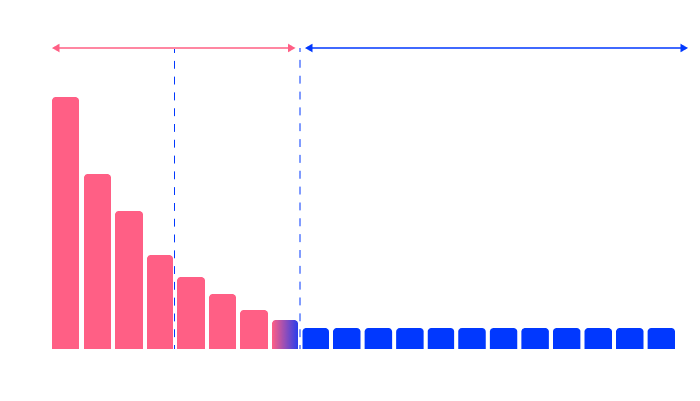
Our AI agents create and continuously update location-level content across every market you operate in, giving each page a distinct query role so nothing competes with itself. Instead of swapping city names into a single template, CMAX generates pages with unique local proof, staff, directions, FAQs, reviews, at a speed and volume manual teams can’t match. The platform targets long-tail, high-intent searches that account for the vast majority of organic demand, based on our first-party data.
Two lines of code deploy it; measurable location-level visibility improvements typically begin within six weeks of launch.
Author
Jeremy Tang
Founder and CEO of CMAX
Jeremy Tang is the Founder and CEO of CMAX. With over 2 decades of experience in business consulting and digital marketing, he has successfully driven seven startup businesses, six of which achieved $1 million in revenue from zero in less than 16 months, 5 of which grew to multi-million dollar a year ventures without any external funding. Jeremy's expertise lies in streamlining business processes through technology and leveraging digital (in particular SEO) for business growth. He resides in Australia, travels extensively, and draws inspiration from his global experiences.