Buyers search for the same product in dozens of ways. They compare, troubleshoot, and ask follow-up questions. Then add local modifiers and Google reports that 15% of daily searches are ones it has never seen before.
That means the list of searches your site should answer is never finished.
Machine learning SEO is how enterprise teams keep up with that moving target. It groups query variations by intent, surfaces adjacent topics, and flags long-tail searches, the specific, detailed queries buyers type instead of short general terms, that manual keyword lists routinely miss.
Keeping pace with that demand is one half of the problem. The other half is publishing at scale without losing approval control, especially when legal, product, and brand teams all need to sign off.
That is what a product led SEO motion requires at enterprise size.
Machine learning SEO helps enterprise teams cover more of the searches customers actually make
Intent patterns and content gaps
Think of your site’s content like a menu at a restaurant. Most enterprise sites only list the popular dishes.
Machine learning SEO reads every order customers have placed and flags the dishes the kitchen can make but never wrote down. That gap is where the demand is.
The practical gain for enterprise teams is faster clustering across thousands of queries, with human review deciding which opportunities fit the brand, product, and funnel stage. Buyers don’t search with one phrase.
They compare, troubleshoot, localise, and ask follow-up questions. Google’s 15% figure means new variations arrive daily, so coverage planning has to be continuous.
For teams running multi location SEO, the same intent can appear with a different suburb, store name, or service area attached. Machine learning in SEO can cluster those variations at a scale a manual spreadsheet cannot reach.
Why coverage keeps expanding
Even strong brands publish for only a fraction of the ways buyers search. Once comparison terms, troubleshooting queries, local modifiers, and industry-specific phrases are counted, the gap between what a site answers and what customers ask is usually significant.
The question “what is natural language search” becomes practical here: natural language processing examples from real search data show that buyers phrase queries the way they speak, not the way a product catalogueue is written, and those conversational queries often reveal intent that category pages never cover. Because the opportunity set keeps shifting, enterprise teams need a repeatable method to spot emerging demand, refresh existing pages, and claim gaps before competitors do.
The strongest approach combines continuous optimisation with human review and approval
Static SEO misses moving pages
One-off SEO recommendations age quickly. Competitor pages change, internal links move, and new queries appear.
Google describes Search as a system that uses many signals and extensive testing to assess relevance, which is why product pages SEO and the pages around a topic cannot be left untouched after publication.
AI SEO optimisation, done well, responds to that movement. It watches page performance, content freshness, and topic adjacency as conditions change, rather than issuing a single report and waiting for the next annual audit.
Human-approved continuous optimisation
Automated content generation handles the clustering and drafting. Human editors handle factual accuracy, compliance, and brand language.
That sequence matters, particularly in regulated categories where a wording error on a product page is a legal problem, not just a style issue.
Dynamic Internal Linking keeps pages connected as the site grows, so a new page does not sit in isolation where Google’s crawlers are unlikely to find it quickly. Automated SEO reporting surfaces changing opportunities before the next scheduled review, which means the team acts on fresh data rather than last quarter’s snapshot.
Editors retain approval before anything publishes.
AI and SEO workflows that skip the review step tend to produce content that performs briefly and then drifts. The approval layer is not a bottleneck; it is what keeps the output credible.
Enterprise teams need coverage that scales without losing control
Scale for regulated enterprise teams
Large enterprise SEO teams manage hundreds of pages, multiple stakeholders, and approval chains that make purely manual publishing too slow to keep pace with shifting search demand. SEO content optimisation at that scale requires documented briefing, overlap detection, and structured review before pages go live.
That structure also helps when evaluating the best SEO automation tools. The right question is not “how fast does it publish” but “how does it handle approval, compliance, and brand consistency across every page.”
An SEO automation platform built for enterprise is not just a production tool. It is a governance system that happens to create content.
SEO automation with AI that bypasses human review trades short-term speed for long-term brand risk, which is a trade most Marketing Directors would not knowingly make.
Approved assets, freshness, performance
CMAX is the Agentic SEO Platform. Our agents generate content trained on your approved brand assets, preventing hallucinations and off-brand output.
That means terminology, claims, and messaging stay consistent across every page, including SEO location pages.
What is predictive analytics in this context? It is using clicks, impressions, click-through rate, and average position from Google Search Console (Google’s free tool showing which searches your site appears for) to anticipate where a page is losing ground before positions drop visibly.
The platform does that work continuously rather than surfacing it in a quarterly report.
Frequently Asked Questions
Do you need programming skills for machine learning in SEO?
No. Most enterprise SEO workflows run through analytics platforms, crawlers, and Search Console data, without custom code. The work is broader than SEO blog writing services and depends on how well the platform interprets data and routes it through an approval workflow, not on whether anyone on the team can write a script.
An AI SEO analyser can help smaller teams get started, but at enterprise scale the priority shifts from analysis to governed publishing. An AI SEO course can teach the concepts, but the platform does the work.
What data does machine learning SEO need?
It starts with search performance data: queries, clicks, impressions, click-through rate, and average position, all documented in Google Search Console’s Performance report by query and page. Most enterprise teams then add crawl data, internal linking data, and conversion signals so recommendations reflect both search demand and business priorities.
Approved brand assets feed in separately, so the content the platform produces stays within the bounds legal and brand have already cleared.
How can I identify keyword cannibalization in AI-generated content?
Check whether multiple pages target the same intent. That kind of overlap is a keyword cannibalization SEO problem and a content architecture issue before it is a wording issue.
In Google Search Console, review Performance data by query and page, and look for one query associated with several URLs.
The fix is to consolidate, retarget, or strengthen one primary page rather than continue publishing near-duplicates. An AI SEO analyser will flag the symptom; fixing it requires a decision about which page owns the intent.
For location pages SEO, the same principle applies: each location page should answer queries that belong to it alone, not compete with the others.
Coverage beats clever every time
Most brands publish for a small slice of how customers actually search. The gap grows daily as new queries appear.
Machine learning SEO is the method enterprise teams use to close that gap at a scale manual processes cannot reach.
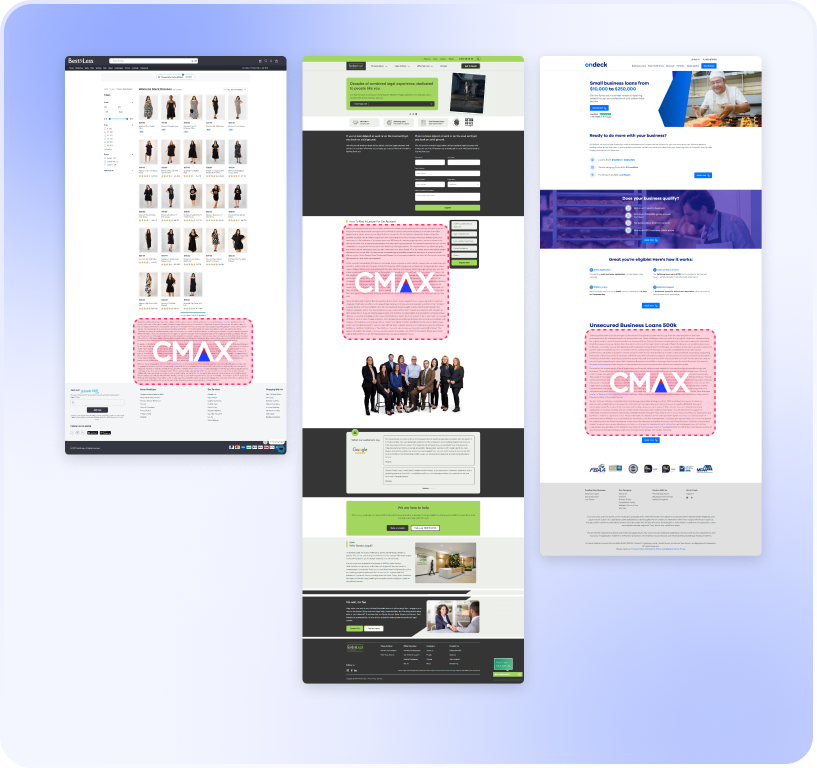
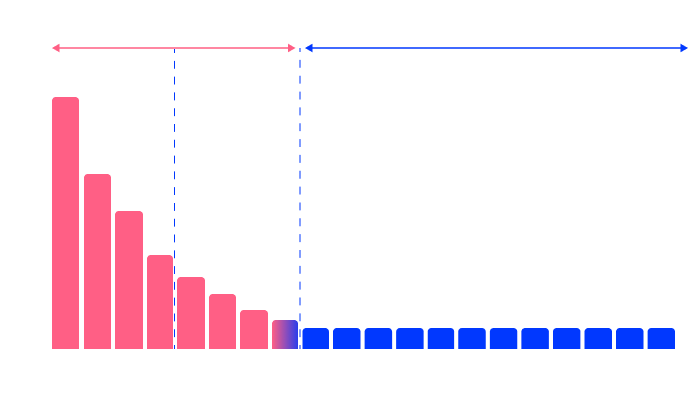
Our agents cluster intent, identify adjacent searches your site does not yet answer, and keep pages fresh as performance data changes, with human review before anything goes live. Over 90% of search and AI demand is in the long tail, and that is exactly where we work.
The hard part is not creating pages. It is putting the right content on them, keeping it accurate as the site grows, and doing that without asking your team to give up control over facts, compliance, or brand language.
That is what we do.
Author
Jeremy Tang
Founder and CEO of CMAX
Jeremy Tang is the Founder and CEO of CMAX. With over 2 decades of experience in business consulting and digital marketing, he has successfully driven seven startup businesses, six of which achieved $1 million in revenue from zero in less than 16 months, 5 of which grew to multi-million dollar a year ventures without any external funding. Jeremy's expertise lies in streamlining business processes through technology and leveraging digital (in particular SEO) for business growth. He resides in Australia, travels extensively, and draws inspiration from his global experiences.