Knowledge graph SEO means making sure search engines can connect your brand name, your products, and the facts that define who you are. Google does not simply read your website and figure it out.
It pieces together an understanding of your business from your site, your social profiles, your directory listings, and dozens of other sources, then checks whether they agree.
Gaps or contradictions between those sources leave your brand unclear. That matters because artificial intelligence SEO tools, which now summarise answers and shortlist brands, draw on exactly the same signals search engines do.
If the facts about your business are inconsistent, AI summaries will reflect that inconsistency. Consistent facts are not a technical nicety.
They are the reason one brand gets named and another does not.
Knowledge graph SEO clarifies who you are and what you mean
Think of your brand as a person with a file at a government office. Every document in that file needs to spell your name the same way, list the same address, and describe the same occupation.
When documents contradict each other, the clerk gets confused and starts guessing. Knowledge graph SEO is the discipline of making sure every document in Google’s file on your brand says the same thing.
When your company name, product names, ownership details, and profile links match across key pages and trusted third-party sources, search systems have fewer conflicting signals to resolve. Google describes its Knowledge Graph as a system that understands facts about entities from web content, open data, and licensed databases.
That is why consistent entity signals carry more weight than isolated keywords. A strong SEO strategy treats entity clarity as a foundation, not an afterthought.
Consistent brand facts across sources
Structured data SEO, which means adding hidden labels in a page’s code that tell Google what things are, can help search engines read page meaning more precisely. But structured data alone is not enough.
Knowledge graph SEO works best when visible page content, page titles, and referenced facts all say the same thing. Schema org for SEO and visible page content need to agree.
When they contradict each other, Google trusts neither.
Reduce ambiguity between similar entities
Entity clarity matters most when your brand name overlaps with a person, an acronym, a product category, or another company. The question what is schema markup concerns those hidden code labels specifically, but entity clarity requires more: categories, locations, founders, and official profiles all need to line up.
Google knowledge panels are built for entities the Knowledge Graph recognises, showing a quick snapshot based on Google’s reading of available web content. Disambiguating details can make the difference between being recognised and being overlooked.
Strong entity signals go beyond schema markup alone
Schema markup is one input into a much larger system. Search engines cross-check structured data against on-page wording, internal links, and corroborating references from across the web.
A page can have technically correct schema and still send conflicting signals if the visible content contradicts it.
A link building SEO service strengthens the corroborating references that help search engines trust an entity’s relationships across the web. References from credible, relevant sources ACT as votes that confirm what your own pages claim.
Schema needs content reinforcement
Google states that structured data provides explicit clues about a page’s meaning, but still relies on the page itself to determine eligibility for enhanced results. Structured data SEO examples that work well align markup with visible headings, product copy, and linked profiles.
Structured data examples that fail present facts in the code that contradict what the page actually says.
Knowledge panels reflect existing signals
Advice on how to get a Google knowledge panel should start with an honest point: panels reflect Google’s existing view assembled from multiple sources. You cannot request one.
You build the signals, and Google decides. In artificial intelligence in SEO, the same logic applies.
Generated outputs are only as reliable as the facts and signals they can consistently interpret. The real work is aligning the facts, relationships, and references that feed entity recognition in the first place.
Entity facts aligned at scale
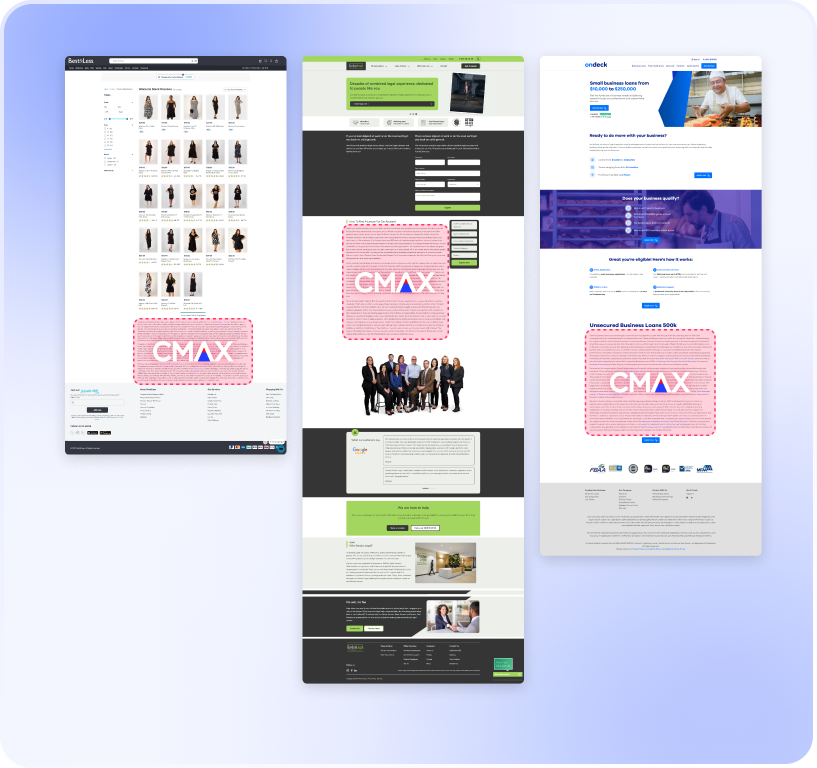
CMAX is the Agentic SEO Platform for brands that need clearer entity coverage across large and changing content sets. Our system combines long-tail content production, Dynamic Internal Linking, and ongoing updates.
The platform generates content trained on your approved brand assets, preventing hallucinations and off-brand output, so entity language stays consistent as pages multiply.
The best results come from coverage, freshness, and connected evidence
Search systems build confidence through repeated, consistent evidence across many relevant pages. The practical goal is to expand how often your brand appears in the right contexts, then keep those signals current as your market, product set, and search demand shift.
On large catalogues, faceted navigation SEO shapes how clearly variant pages reinforce the broader entity relationships a brand wants search systems to interpret.
Long-tail coverage builds recognition
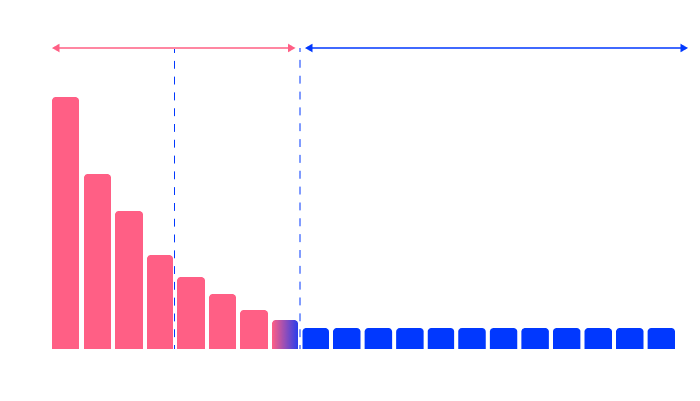
Google reports that around 15% of daily queries have never been seen before. The more specific questions your site answers about products, use cases, and brand relationships, the more often your entity appears where buyers actually search.
Over 90% of search and AI demand is in the long tail, the specific, detailed searches people type rather than short general terms. Those are the searches buyers make when they are close to a decision.
Fresh links and updates keep pace
Entity based SEO connects related pages while making entity relationships easier for search engines to follow across content clusters. Dynamic Internal Linking helps related pages reinforce each other.
Stale product names, outdated details, and superseded claims create conflicting signals. Human-reviewed updates protect accuracy and brand compliance over time.
Frequently Asked Questions (FAQ)
How can I check whether Google recognises my brand as an entity?
Search your brand name, brand plus category, and key product names. See whether Google returns a knowledge panel, a consistent homepage result, or other brand-specific features.
A practical knowledge graph example is a brand query returning a consistent homepage, official profiles, and a panel with matching details. Cross-check that your site, social profiles, and directory listings all use the same official name, descriptions, and links.
Google generates knowledge panels from its understanding of entities using information from across the web, so consistency across all sources is what drives recognition.
What should I do if my brand’s Knowledge Panel has incorrect information?
Identify whether the error appears on your own site, business profiles, or major third-party references. Google updates knowledge panels automatically as information changes across the web.
If you have claimed the panel, use Google’s feedback or edit processes, then fix the underlying source inconsistency so the same error does not keep resurfacing. For persistent knowledge panel errors, SEO experts usually trace the issue back to the source that first introduced the wrong entity detail.
Does my brand need a Wikipedia page to be in Google’s Knowledge Graph?
No. Google’s Knowledge Graph draws facts from content shared across the web, plus open source and licensed databases. Consistent site content, clear entity markup, corroborating profiles, and repeated topical coverage are more dependable than relying on a single external page to define your brand.
Schema markup for local SEO, business directory listings, and category-specific references each contribute. Semantic SEO, which means building content around connected topics and consistent facts rather than isolated keywords, does more for entity recognition than a Wikipedia page ever could.
Coverage beats a single citation
Knowledge graph SEO works when your facts show up the same way, in enough places, often enough to matter.
Knowledge graph SEO also supports an AI answer SEO strategy, where brands need consistent facts ready for summarised responses rather than only ranked links. When an AI engine retrieves from Google to build a summary, it assembles an answer from whatever facts it finds.
If those facts are consistent and current, your brand gets named accurately. If they are not, the summary either omits you or gets you wrong.
At CMAX, our agentic platform produces long-tail content trained on your approved content, so product names, categories, descriptions, and claims stay consistent as pages multiply. Dynamic Internal Linking connects that content so entity relationships stay legible to search systems, not just readers.
Momentum builds as signals accumulate
With CMAX, clients see first clicks in 6-8 weeks, with programmes maturing around month six as multiple pages, supporting references, and internal connections become established. Entity recognition compounds as coverage, consistency, and freshness improve together.
That is the mechanism behind clearer entity recognition. There is no Knowledge Panel shortcut, which is probably good news for anyone who has already tried one.
SEO strategy built on coverage and consistency compounds over time in a way a one-off fix never does.
Author
Jeremy Tang
Founder and CEO of CMAX
Jeremy Tang is the Founder and CEO of CMAX. With over 2 decades of experience in business consulting and digital marketing, he has successfully driven seven startup businesses, six of which achieved $1 million in revenue from zero in less than 16 months, 5 of which grew to multi-million dollar a year ventures without any external funding. Jeremy's expertise lies in streamlining business processes through technology and leveraging digital (in particular SEO) for business growth. He resides in Australia, travels extensively, and draws inspiration from his global experiences.