A GEO agency specialises in Generative Engine Optimisation, not geography. GEO is the work of making your content easy for AI systems to find, read, and cite when they build answers from web sources.
Geographic information systems, including gis data services and location intelligence software used by geotechnical consultants and spatial analysts, organise and analyse location-based data, which is a different field entirely.
Australian buyers rarely stop at one search term. They move through suburb, service, price, and comparison queries before they enquire, which is why chasing a handful of trophy phrases misses most of the opportunity.
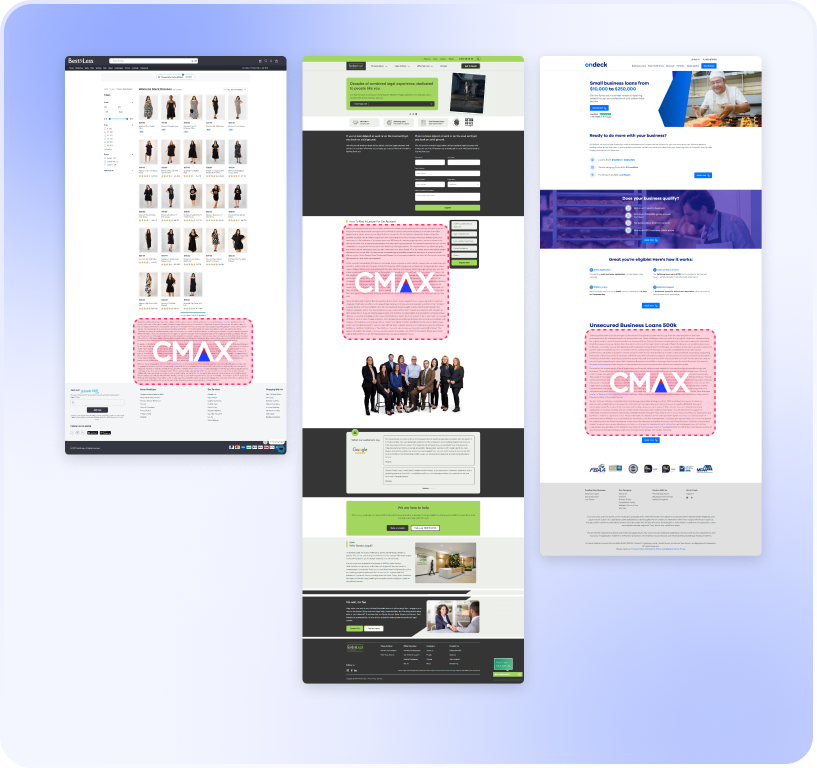
CMAX builds out long-tail content, the specific and detailed searches people type, and keeps it connected and current so your pages are positioned to be picked up across the questions buyers actually ask.
An Australian GEO agency helps brands appear in AI-generated answers.
What GEO means
A GEO agency specialises in Generative Engine Optimisation. GEO means making a brand’s content easier for AI systems to retrieve and cite: clearer page topics, stronger coverage of the questions buyers ask, and content that Google’s systems can connect to related pages.
Google now provides dedicated Search Console reporting for visibility in generative AI features, including AI Overviews and AI Mode. That matters for any Australian brand comparing agencies on this basis.
Why it matters in Australia
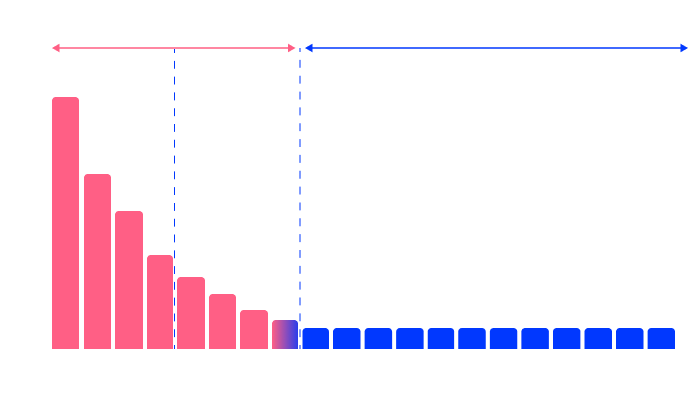
Australian buyers move through suburb, service, price, comparison, and availability queries before they enquire. A large keyword study found 91.8% of search queries were long-tail terms.
That is the demand space that decides whether an AI system cites your brand or a competitor’s.
Effective GEO services make content easier for AI systems to retrieve through clearer page topics, stronger question coverage, and connections between related pages. For brands comparing agencies, topic depth and detailed service pages carry more weight than a report celebrating three trophy phrases.
Firms offering geospatial services Australia-wide, or geotechnical consultants Australia relies on for site assessments, face the same content problem as any other specialist: if your pages don’t answer the questions buyers ask, AI systems cite someone else.
CMAX targets the long tail with fresh, connected content.
Long-tail coverage at scale
Most search and AI demand sits in the long tail. CMAX targets that majority of search demand by applying GEO SEO across commercial, informational, and comparison queries to expand your content surface area, which is how many of the ways customers search you have a useful answer for.
This matters in AI search because answer systems pull supporting detail from several relevant pages, not one. Geotechnical consultants Melbourne and geotechnical consultants Sydney both operate in competitive local markets where that breadth of coverage is the difference between being cited and being absent.
Agentic content, not templates
CMAX is the Agentic SEO Platform. CMAX is trained on human-reviewed, client-approved content, so output stays brand-safe and practical for regulated or approval-heavy teams.
It deploys across any CMS, so enterprise teams can improve search and AI visibility without replatforming.
The content isn’t generated and forgotten. Pages are updated regularly.
Think of it like a menu board at a café: if the prices and dishes on the board don’t match what’s actually available, customers lose trust and go elsewhere. If your underlying information goes stale, the pages mislead, and AI systems move on to sources that are current.
Freshness and internal linking
CMAX uses Dynamic Internal Linking and Full Body SEO so pages work inside a connected content system. Think of internal linking like the index at the back of a reference book: without it, finding one chapter tells you nothing about where related topics sit.
Dynamic Internal Linking means Google can follow a clear path between your related pages, which makes the whole site easier to retrieve and cite.
Although discussions of GEO vs SEO often focus on labels, freshness and internal linking are what determine whether Google can connect the dots across your content.
CMAX proves GEO value with measurable signals, not vague promises.
Faster evidence, clearer expectations
Most SEO programmes run by conventional agencies, using outdated methods, tell clients to expect results in six months. CMAX’s methods allow clients to start seeing clicks in 6 to 8 weeks.
When comparing agencies, the right question is whether the agency can show a credible path from new content coverage to early search signals, with a clear explanation of what’s being measured and why. A promise without a measurement plan is just a promise.
What to measure in GEO
Here is where attribution gets slippery, and it is worth understanding why.
Imagine your brand starts appearing more often in AI-generated answers. At the same time, your organic visits lift.
The instinct is to say the AI mentions caused the increase. But consider: ice cream sales and drownings both rise every summer.
Neither causes the other. Summer heat drives both.
The same pattern shows up in search: a visibility improvement you already had, or a content update made months earlier, can drive both the AI citation rate and the visit lift at once. Neither metric caused the other.
In this context, attribution in GEO means asking what the hidden driver is before claiming that AI mentions caused growth. That requires a baseline.
Rather than treating SEO vs GEO as a choice between competing channels, proof comes from Search Console, Google Analytics, and direct visit patterns, which are visits your analytics can’t trace to a source, plus evidence that content is earning long-tail visibility and citation eligibility. Google now reports impressions for URLs appearing in AI Overviews and AI Mode directly inside Search Console, with page, country, device, and date-level data available.
Built for teams that need scale
CMAX starts every engagement with analysis of existing Google Analytics and Search Console data so priorities reflect actual demand gaps rather than generic keyword lists. That ties the work to missed query classes, weak content clusters, and pages needing updates.
A location intelligence platform focuses on interpreting information organised by geographic position. CMAX focuses on the queries your customers are running that your content isn’t answering, whether those customers are searching for geotechnical consultants, gis data services, or any other specialist capability.
Frequently Asked Questions (FAQ)
Does GEO help Australian businesses that sell only locally?
Yes. Local buyers compare suburbs, service areas, pricing, and availability before they enquire.
If they use search or AI to make those comparisons, GEO helps your pages get retrieved for those specific queries. The practical work is clearer suburb and service coverage, stronger internal links between related local pages, and content that answers pre-sale questions in plain English.
For teams with presence across multiple cities, the same structure supports consistent local pages without adding noise.
Does GEO replace local SEO?
No. The distinction in SEO vs AEO is mainly one of emphasis. GEO gives Google and AI systems more useful local pages to retrieve and summarise, which strengthens the local foundations already in place.
It does not replace the fundamentals of local SEO.
Can AI assistants ignore a site if their search crawlers are blocked?
Yes, some can. OpenAI states that sites opted out of OAI-SearchBot will not appear in ChatGPT search answers.
Google also states that blocking crawl access via robots.txt can limit what its systems can analyse from a page, even if the URL still appears in results. Crawl access, which is how often Google’s software comes back to read a site, affects visibility regardless of whether a site uses a .com.au, .com, or .co.uk domain.
GEO agency Australia: coverage drives AI visibility
When comparing a GEO agency in Australia, the useful question is who can build practical coverage for the many specific ways buyers search. AI answers still depend on what ranks and connects in Google.
CMAX is the Agentic SEO Platform built around that reality. Expand content surface area across the long tail, keep pages fresh, connect them so Google has more to retrieve and AI systems have more to cite.
Debates about aeo vs SEO do not change the underlying reality: broad coverage, freshness, and connected content have become more important as AI has grown, not less. Mapping Australia’s search demand at the query level, across geotechnical consultants, location intelligence software, and geospatial services Australia providers alike, is what makes the difference between appearing in AI answers and being absent from them.
The most useful next step is finding out where your content has gaps. Book in a Missing Customer Map review with our Growth Team to see where your long-tail demand is going unanswered.
If you’re curious as to how you’re performing on AI, book in a Missing Customer Map review with our Growth Team.
Author
Jeremy Tang
Founder and CEO of CMAX
Jeremy Tang is the Founder and CEO of CMAX. With over 2 decades of experience in business consulting and digital marketing, he has successfully driven seven startup businesses, six of which achieved $1 million in revenue from zero in less than 16 months, 5 of which grew to multi-million dollar a year ventures without any external funding. Jeremy's expertise lies in streamlining business processes through technology and leveraging digital (in particular SEO) for business growth. He resides in Australia, travels extensively, and draws inspiration from his global experiences.