Generative engine optimisation Perth comes down to one question: when someone asks an AI tool a buying question instead of typing it into Google, does your business get named or ignored?
For a Perth business, that means your product names, service areas, and the specific questions your buyers ask all need to live on pages that AI systems can find and summarise. Effective AI search optimisation gives AI systems clear, concrete answers to retrieve from indexed pages.
Vague category pages and image-heavy layouts leave AI systems with nothing useful to work with.
Most vendors pitch this as something separate from SEO, which is where the confusion starts. Generative engine optimisation adds broader question coverage and a way to measure whether your indexed content appears in AI-generated answers.
It builds on the same foundations Google has always required, rather than replacing them.
In practice, effective generative engine optimisation services extend what good SEO already does, adding coverage across the specific questions buyers ask and measurement of whether your business gets cited or left out.
CMAX has worked through this question for Perth businesses: what changes, what stays the same, and what actually moves the needle.
Generative Engine Optimisation Means Making Your Business Easier for AI Answers to Find and Use
GEO helps Perth businesses appear in AI-generated answers by improving the pages, entities, and local signals that AI engines can retrieve and summarise. That means covering the specific products, use cases, suburbs, and buying questions your customers actually ask, then checking whether those pages are cited, omitted, or surfaced for queries that lead to enquiries.
Start with Crawlable Question Pages
Before a generative engine optimisation agency can improve AI visibility, the site needs pages Google can crawl, index, and read. Eligibility for Google AI features still depends on standard search requirements.
Think of each page as a well-labelled shelf in a stockroom: if the shelf exists and the label is clear, the system can find it; if the product is just sitting in a pile, nothing gets retrieved.
Build pages that answer one clear Perth question at a time in plain text. Thin category pages and vague copy leave AI systems with too little to summarise.
CMAX delivers answer engine optimisation services through crawlable content covering concrete questions like product capacity, lead times, and service options by application.
Keep Local Details Consistent
When your website, Google Business Profile, and service-area details match, you reduce confusion about where you operate and what you sell. Google allows up to 20 service areas and recommends keeping coverage within roughly two hours of driving time from your business base.
For Perth businesses spanning multiple suburbs or industrial zones, that consistency is what helps AI systems connect the right business to the right place. CMAX calibrates its output based on approved brand assets so details stay accurate across markets, including content for answer engine optimisation Australia.
GEO Builds on SEO Because AI Answers Still Draw from Google’s Index
GEO generative engine optimisation means broader content coverage and better measurement of how your pages appear in AI answers. It is not a separate optimisation system running alongside SEO.
Google has confirmed that the same SEO best practices apply to AI features, and the same indexing foundations underpin both.
AI Expands One Question
A single buyer prompt expands into several smaller searches covering product type, location, compliance, lead time, and price range. That is why a single broad category page rarely satisfies the full query.
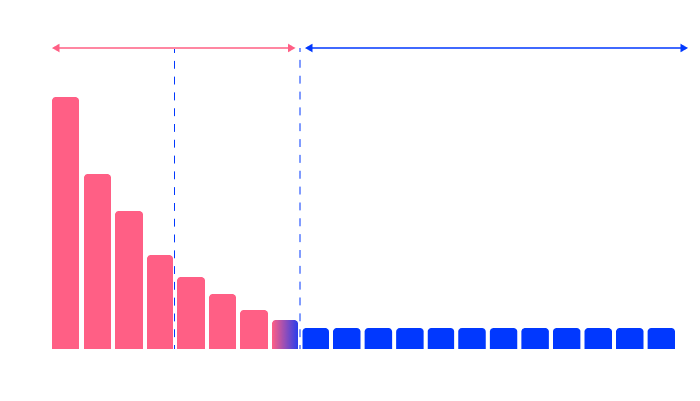
Over 90% of search and AI demand is in the long tail. Content structured around the exact ways buyers phrase specific searches consistently outperforms one generic page.
Strong AI search engine optimisation addresses those smaller intents directly, so your site has an answer wherever a buyer happens to enter the conversation.
Coverage and Freshness Matter Most
Google sees 15% entirely new searches every day. A static content library starts losing ground the moment it stops growing.
CMAX supports AI search visibility optimisation when a site publishes connected answers across related topics and refreshes them as products, service areas, and buyer language shift.
Content supporting answer engine optimisation Brisbane needs local evidence that matches buyer language in that city. The same principle applies to generative engine optimisation Perth: local details, current service areas, and up-to-date product information keep your pages relevant when AI systems retrieve answers.
Perth Businesses Can Apply GEO to Improve Visibility for Specialised Services
GEO pays off most for businesses whose buyers search in detailed, specific language rather than broad consumer terms. In Perth, that means building pages that reflect industry terminology, local delivery areas, and the specific job types buyers mention when comparing suppliers.
Cover Specialised Search Demand
Buyers typically search by application first: winery cooling, food-grade storage, custom stainless fabrication. A generic services page does not mirror those decision paths.
To optimise content for AI search, CMAX covers capacity ranges, materials, industries served, install contexts, and maintenance questions using generative engine optimisation tools, so the site has content to be cited in AI answers and found in Google when buyers search the way they actually search.
CMAX Scales Measurable Long-Tail Coverage
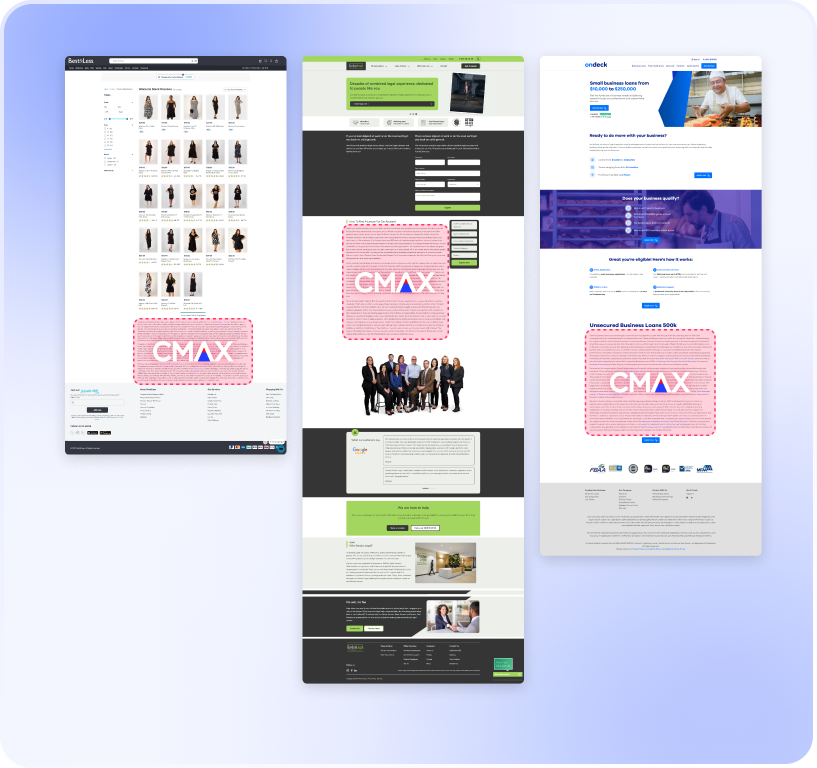
CMAX is the Agentic SEO Platform, built on the principle that Over 90% of search and AI demand is in the long tail. It applies search engine optimisation at that scale.
CMAX is trained on human-reviewed, client-approved content, which prevents off-brand output. Content is refreshed over time so reporting can track prompts, citations, omissions, Search Console movement, and enquiry impact against a defined method.
Frequently Asked Questions (FAQ)
How long does GEO take to show results?
GEO follows the same timeline as strong SEO because AI visibility depends on crawling, indexing, content coverage, and page trust. First clicks typically appear within 6 to 8 weeks, with programmes maturing around month six.
The first useful milestone is whether new pages are being discovered and surfaced for the right queries. That benchmark applies to generative engine optimisation Perth, and to any other market where local signals need time to establish.
Can small Perth businesses appear in AI-generated answers?
Yes. Smaller businesses can use answer engine optimisation to improve their position by publishing clear service pages, keeping local business information accurate, and answering narrow customer questions better than larger sites with thin local coverage.
Google notes that AI features can surface a wider and more diverse set of helpful links than classic search alone, which opens space for businesses with strong local relevance. Working with a digital marketing agency Perth or running online marketing Perth campaigns is easier when your content foundations are solid enough for AI systems to retrieve.
An answer engine optimisation agency can help identify exactly where those gaps sit.
Can AI search lead to sales without a website click?
Sometimes. An AI answer can influence which supplier gets shortlisted even when the buyer does not click immediately.
GEO measurement should track branded search lift, contact quality, and assisted conversions alongside raw traffic. For a specialist service brand, the value is often in being the option the buyer remembers when they are ready to request a quote.
Supplier shortlists influenced by digital marketing Perth searches differ from those in Adelaide because AI answers weight local relevance.
Generative Engine Optimisation Perth With Broader Coverage
Generative engine optimisation Perth is less about a separate AI tactic and more about whether your site covers the specific questions buyers ask. If you do not have useful content on the product, suburb, use case, or buying question, neither Google nor AI answers have much to retrieve.
Coverage comes first in AI engine optimisation, with freshness following as search terms and buyer questions change. As AI expands one prompt into several smaller searches, visibility goes to brands that keep adding, connecting, and updating the answers their market is already looking for.
It turns out “being findable” is still the job, and it always was.
The straightforward way to find out where you stand is to see exactly where your business is being cited, omitted, or found across AI answers right now.
If you’re curious as to how you’re performing on AI, book in a Missing Customer Map review with our Growth Team.
Author
Jeremy Tang
Founder and CEO of CMAX
Jeremy Tang is the Founder and CEO of CMAX. With over 2 decades of experience in business consulting and digital marketing, he has successfully driven seven startup businesses, six of which achieved $1 million in revenue from zero in less than 16 months, 5 of which grew to multi-million dollar a year ventures without any external funding. Jeremy's expertise lies in streamlining business processes through technology and leveraging digital (in particular SEO) for business growth. He resides in Australia, travels extensively, and draws inspiration from his global experiences.