Agency proposals often pitch AI search optimisation Sydney as a new channel, separate from the SEO you already run. It is the same work aimed at a wider target. Vendors use many labels, including generative engine optimisation GEO, GEO generative engine optimisation and AI engine optimisation. They all describe one job.
That job is making sure your site shows up across the searches customers type before they buy, compare or enquire. A generative engine optimisation agency should widen the specific answers your site gives at those moments.
Most Sydney businesses rank fine for their main category term and still lose the sale. Demand splits by suburb, product, price point and use case, and those searches go unanswered. For answer engine optimisation aeo, CMAX works on that split demand instead of relying on one category term.
The usual problem is coverage. The ranking on the main term is fine.
CMAX is the Agentic SEO Platform. We work with Sydney businesses on exactly this: expanding what a site answers so it shows up in more of the searches that lead to revenue, on Google and in the AI tools that pull from it.
This service helps Sydney businesses show up across more of the searches people actually make
Our approach to AI search optimisation sydney maps suburb-level demand and treats AI visibility as part of SEO. Demand breaks apart by product, suburb, urgency, price point, use case and problem. The gap is coverage.
Focus on the long tail
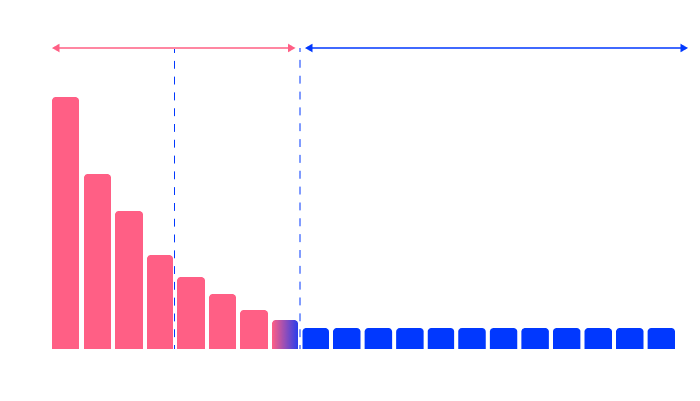
Long-tail searches are the specific queries customers type once they’ve defined the problem, such as “oak dining table delivery sydney” or “commercial lawyer for shareholder dispute sydney.” Over 90% of search and AI demand is in the long tail. The practical answer to what is generative engine optimisation starts with queries like the oak dining table one, and the broad category phrase comes second. Ask how many commercially useful ways customers describe what you sell your site actually answers. That is the test for any enterprise SEO agency sydney.
AI visibility still runs on SEO
AI visibility still runs on search engine optimisation. AI search changed the interface. The fundamentals stayed the same. Any explanation of what is answer engine optimisation has to include query fan-out, where an AI tool runs eight to 12 narrower searches before it builds an answer. Picture a bridesmaid asked where to hold the hens’ night. She doesn’t answer from memory. She makes phone calls: which venue takes 12 people, what the deposit is, which suburb it’s in. The venue that only says “great functions” never gets named, and the one that answers every call does. In this context, query fan-out means the AI tool makes many narrow phone calls, and your site is the venue that gets named only if its pages answer them.
You still can’t rank for something you don’t talk about.
It improves visibility by expanding coverage, keeping content fresh, and connecting pages properly
Three levers drive broader search visibility: more content surface area, fresher pages and stronger internal links. Google documents both its freshness systems and how it uses links for discovery and relevance, so this follows how Google works. We write in Australian spelling, which matters for answer engine optimisation australia.
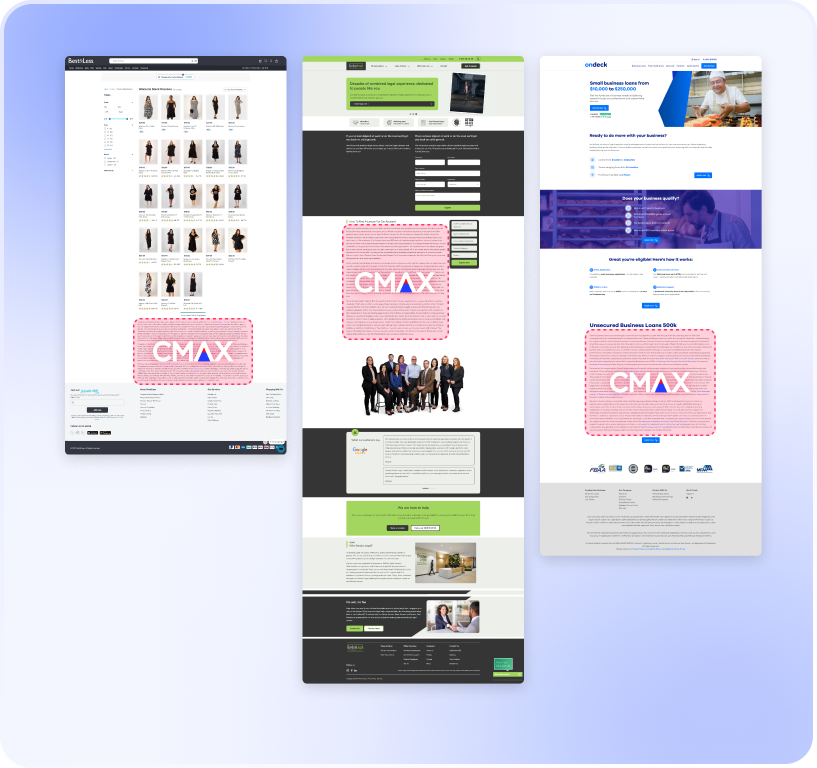
CMAX expands thin category, service and location pages around commercially useful long-tail topics, which is how you optimise content for AI search.
Refresh pages and expand coverage
On enterprise-scale sites, prioritise high-margin categories, priority services, major locations and pages with impressions but weak clicks in Search Console. Effective AI driven content optimisation starts with customer-targeted copy on new or existing collection, category and service pages. Those pages then answer more specific searches without becoming bloated or off-brand. Each page gets AI content optimisation that a person reviews. Our generative engine optimisation services cover this work.
Keep content connected and current
Content is perishable. Freshness systems are designed to surface fresher content where users expect it, and Google uses links both to find pages and as a relevance signal. CMAX applies Dynamic Internal Linking and Full Body SEO to connect related content, so priority pages are supported by the pages around them. Any LLM SEO strategy rests on the same base: fresh pages that link to each other.
It gives you a clearer way to measure progress and connect visibility to sales
In reporting, AI search visibility optimisation is measured by which searches your site actually appears for. We separate local query themes before broader performance analysis begins.
The right questions are these. Does your site appear for more commercially useful searches? Do those searches turn into qualified visits? Do the visits connect to enquiries, transactions or assisted revenue? CMAX structures answer engine optimisation services around those measures. Ranking movement on a single keyword tells you almost nothing about them. It does look good on a slide.
Track growth through Search Console
Search Console is Google’s free tool that shows which searches your site appears for, which also grounds a practical answer to what is AI search. Its Performance report shows clicks, impressions, CTR, average position, and breakdowns by query, page, country and device. Long-tail demand spreads across hundreds of low-volume queries that never appear in a standard keyword report. Track impressions across specific query themes, non-brand clicks, and whether new query clusters match your revenue-driving categories. Alongside any generative engine optimisation tools you trial, Search Console is the free baseline.
Built for CMAX measurement
CMAX targets the long tail, where most search demand sits, so our reporting covers that scope. We define progress as growth across commercial query themes. Brisbane and Perth have their own local query themes, so we treat answer engine optimisation brisbane and generative engine optimisation perth separately where local results differ. CMAX is trained on human-reviewed, client-approved content, and content is human-reviewed and client-approved before it goes live.
How long does AI search optimisation take to show results?
Timelines depend on the site, its competition and how the work is done. A large ecommerce site differs from a single-service firm with thin location coverage. Most SEO programmes run by conventional agencies, using outdated methods, tell clients to expect results in six months. CMAX’s methods allow clients to start seeing clicks in 6 to 8 weeks. We support AI search optimisation sydney by expanding crawlable local pages.
Why is ChatGPT showing wrong information about my company?
ChatGPT retrieves from the web, so outdated, inconsistent or incomplete information on your site or third-party listings is what it finds and repeats. Fix it by keeping addresses, hours, range, service areas and eligibility rules consistent across crawlable pages, and refresh them when the business changes. That is the core of answer engine optimisation for a business that wants to optimise for ChatGPT.
Why do some AI tools mention my business while others don’t?
Different tools use different retrieval systems, update cycles and source mixes. Nobody can promise inclusion. The usual cause is limited content surface area. If your site covers only the broad category and skips use cases, suburbs, product details or comparisons, AI systems have fewer reasons to include you. That is also the honest answer to how to rank in ChatGPT.
AI Search Optimisation Sydney, Broader Search Coverage
AI search optimisation Sydney means covering more of the specific searches customers use before they buy, compare or enquire. The value is broader, fresher coverage across the suburb, product, price point and use-case searches that influence real enquiries.
AI tools break one question into many narrower Google searches, so broad category pages leave revenue on the table. CMAX helps brands expand useful content across those long-tail searches, keep key pages fresh and connect them properly, so visibility grows across search and AI. Whether you buy generative engine optimisation services from us or elsewhere, the same coverage gaps need closing.
The Missing Customer Map review shows which searches your site answers today and which it skips. It takes the guesswork out of where to start.
If you’re curious as to how you’re performing on AI, book in a Missing Customer Map review with our Growth Team.
Author
Jeremy Tang
Founder and CEO of CMAX
Jeremy Tang is the Founder and CEO of CMAX. With over 2 decades of experience in business consulting and digital marketing, he has successfully driven seven startup businesses, six of which achieved $1 million in revenue from zero in less than 16 months, 5 of which grew to multi-million dollar a year ventures without any external funding. Jeremy's expertise lies in streamlining business processes through technology and leveraging digital (in particular SEO) for business growth. He resides in Australia, travels extensively, and draws inspiration from his global experiences.