AI ranking is how AI-led search systems decide which pages to retrieve, order and cite. Every question about how to rank in AI Overviews comes back to one thing: does the system have enough reason to pull your page?
Usually the answer is missing evidence on your own site. Effective LLM SEO starts by closing those gaps across your products, use cases, comparisons and objections.
For an enterprise site, AI ranking depends on whether product, comparison, integration and objection pages give the system enough to retrieve. A practical answer to “What is AI search?” is this: systems retrieve and combine evidence from pages that answer specific customer questions.
Closing the gap means building coverage at scale, and that is how you optimise content for AI search. No single ranking signal does it.
Teams can optimise content for AI search by updating prices, stock and regulations, and by linking important pages into a relevant cluster.
We work on this problem directly. Our agents expand content across the thousands of specific ways customers search, so your site has something useful to show AI systems when they come looking.
A scalable LLM SEO strategy uses approved brand assets and performance data to expand and refresh those pages. We ground generative engine optimisation services in Search Console data: landing-page clicks, impressions and the searches where pages appear.
Reliable generative AI search engine optimisation allows for query fan-out, which means one question can trigger several related searches before an answer is composed. A brand mention and AI search ranking also measure different things.
Recognition can come from a retailer, while a citation needs supporting evidence.
AI Ranking Needs Evidence On-Site
The practical problem is rarely a missing trick or tool. AI search visibility depends on whether your site explains the products, use cases, comparisons, questions, locations, integrations and objections customers search for.
Every gap gives AI systems one less reason to use your pages.
Retrieval, Ordering and Citation Differ
Picture a school library. You ask the librarian a question, and she pulls a stack of books off the shelves, puts the most useful on top, then quotes from one or two in her answer.
Pulling is retrieval, stacking is ordering and quoting is citation, and a book that isn’t on the shelf never makes the stack. In this context, AI ranking means three separate decisions about your pages, and the only way into any of them is having the page on the shelf.
There is no single leaderboard. Lists of top AI companies, an AI model benchmark ranking or an AI tools ranking score the models.
Those AI ranking lists say nothing about whether your pages get cited.
Google says AI Overviews and AI Mode may use query fan-out. That means an AI tool runs several smaller Google searches and builds its answer from what it finds.
Google also says responses and links can vary by model and technique.
Long-Tail Answers Improve Visibility
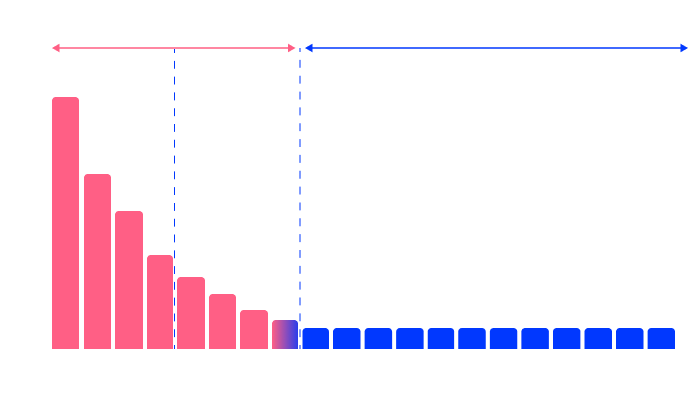
Search and AI visibility improve when your site answers the long tail: the specific, detailed searches people type, rather than broad terms like “frypan” or “business insurance.” How to rank in AI search comes down to useful answers across that long tail, including detailed product, location and integration questions.
One large keyword study found 91.8% of search queries were long-tail keywords. Content surface area is how many of those searches you have a useful answer for.
It is often the gap between ranking for obvious terms and being present when buyers ask detailed questions. Stronger AI visibility depends on covering that surface area.
Gains Come From Breadth, Freshness and Connections
At enterprise scale, AI ranking improves through three basics: broader coverage, fresher pages and clear internal links between related pages. AI makes thin coverage easier to expose, because an answer can combine evidence from many specific searches instead of one broad keyword.
A page that doesn’t exist is very hard to cite.
Breadth Wins in the Long Tail
Over 90% of search and AI demand is in the long tail. Enterprise sites need useful answers for product details, category questions, comparisons, integrations, eligibility, service areas and problem-led searches.
A retailer that targets only “frypan” hands retrieval opportunities to competitors when buyers search “non-stick frypan for induction cooktop” or “how to choose frypan size for a family of six.” For a retailer, “What is generative engine optimisation?” has a concrete answer: cover the detailed needs buyers actually have.
Freshness and Internal Links Matter
Google says links are a relevancy signal and that every page you care about needs a link from at least one other page on your site. Fresh pages matter too.
Prices, stock, regulations and buyer questions change, and pages go stale if nobody updates them.
Dynamic Internal Linking is one way an AI visibility platform connects related pages, so Google sees a cluster instead of isolated pages.
CMAX Makes the Strategy Scalable
CMAX turns AI ranking work into an operating model for teams that need breadth, speed, governance and reporting. The model runs on current on-site evidence and doesn’t depend on prompt tracking.
The goal is enough useful, current, connected evidence on your site for search and AI systems to retrieve.
CMAX Scales Long-Tail Coverage
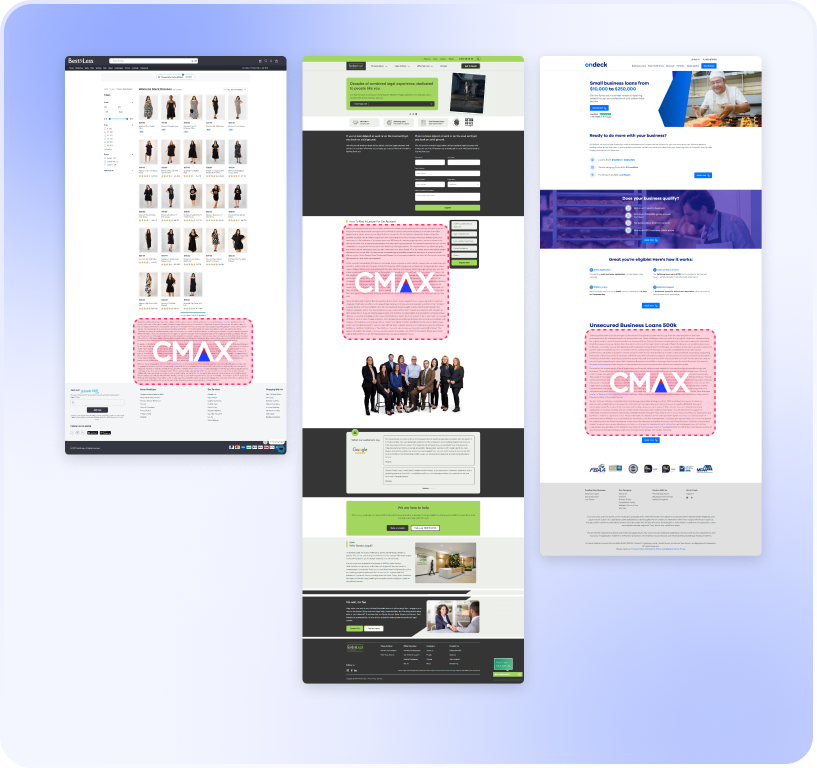
CMAX targets that long-tail demand by expanding content across the thousands of specific ways customers search for what you sell. CMAX is trained on human-reviewed, client-approved content.
That supports AI brand visibility and matters for brand safety in regulated or high-scrutiny categories.
Measure Progress With Real Search Data
We report on Search Console data: landing-page clicks, impressions and the searches where pages appear. This is more defensible than prompt tracking, which means tools that repeatedly ask ChatGPT questions and record whether your brand appears.
Prompt outputs vary. Search demand and page performance can be trended over time.
Frequently Asked Questions (FAQ)
Why can the same question produce different AI search results?
Google states that AI Overviews and AI Mode may use different models and techniques, so responses and links can vary. The same prompt can also trigger query fan-out, where the system runs several related searches before composing an answer.
The retrieval path shifts each time. In any serious competitive AI visibility benchmarking, one screenshot is weak evidence compared with patterns across many queries, pages and impressions.
Can AI mention my brand without citing my website?
Yes. A model may recognise your brand from retailers, review sites, directories, news coverage or partner pages without citing your own site.
A mention shows recognition. A citation shows your page was useful enough to support the answer.
Do AI mentions always drive website visits?
No. Some AI answers satisfy the question on the results page and the user does not click. Comparison, pricing, fit, sizing, stock and implementation questions still pull buyers to your site for deeper proof.
AI ranking pays off when those pages hold enough proof to earn retrieval and useful visits.
AI Ranking Starts With On-Site Evidence
At the page level, an AI Overview is more likely to draw from a site with useful evidence than from one relying on a separate AI playbook. CMAX is built around that gap: the coverage you don’t have across the long tail of real customer searches.
As the Agentic SEO Platform, CMAX supports generative engine optimisation GEO. We help teams expand and refresh content across the many specific ways buyers search, then keep those pages connected and current.
Why is generative engine optimisation important? AI didn’t replace SEO fundamentals, but it did make thin coverage easier to expose.
A review shows which customer searches your site has no answer for. It is the quickest way to see where the gaps are.
If you’re curious as to how you’re performing on AI, book in a Missing Customer Map review with our Growth Team.
Author
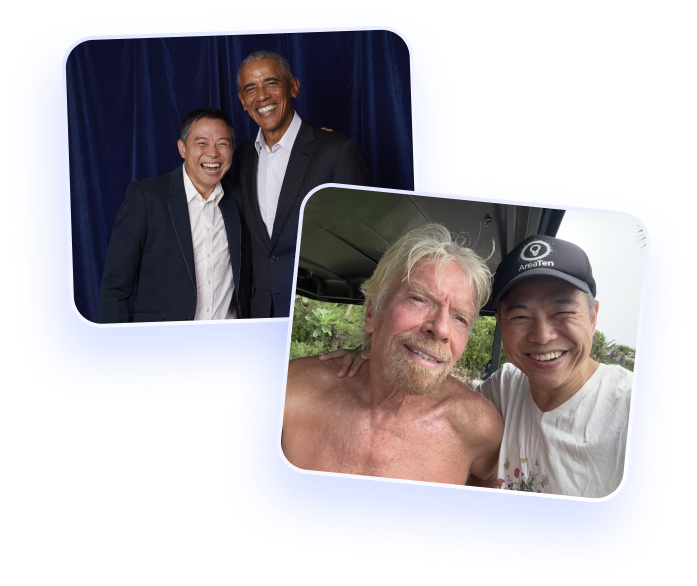
Jeremy Tang
Founder and CEO of CMAX
Jeremy Tang is the Founder and CEO of CMAX. With over 2 decades of experience in business consulting and digital marketing, he has successfully driven seven startup businesses, six of which achieved $1 million in revenue from zero in less than 16 months, 5 of which grew to multi-million dollar a year ventures without any external funding. Jeremy's expertise lies in streamlining business processes through technology and leveraging digital (in particular SEO) for business growth. He resides in Australia, travels extensively, and draws inspiration from his global experiences.