An AI LLM SEO audit shows where your site appears in search and AI answers, and where it quietly doesn’t. Most people think of a what is SEO audit question as a check on position in results.
A proper audit goes further: it maps the specific questions your customers are actually typing, identifies which pages answer them well, and surfaces the ones that don’t exist yet.
For most brands, a technical SEO audit will find crawl and indexing problems. The bigger find is usually the hundreds of specific customer questions that never got a proper page, which is what keeps a site out of AI answers even when it performs well on a broad category term.
That matters because AI tools retrieve from several narrow searches at once, building an answer from what they find across multiple specific queries, not from the one big category term your team watches. The best AI SEO tools and SEO ranking tools flag this gap immediately: your broad category term may rank well while dozens of specific customer questions go completely unanswered.
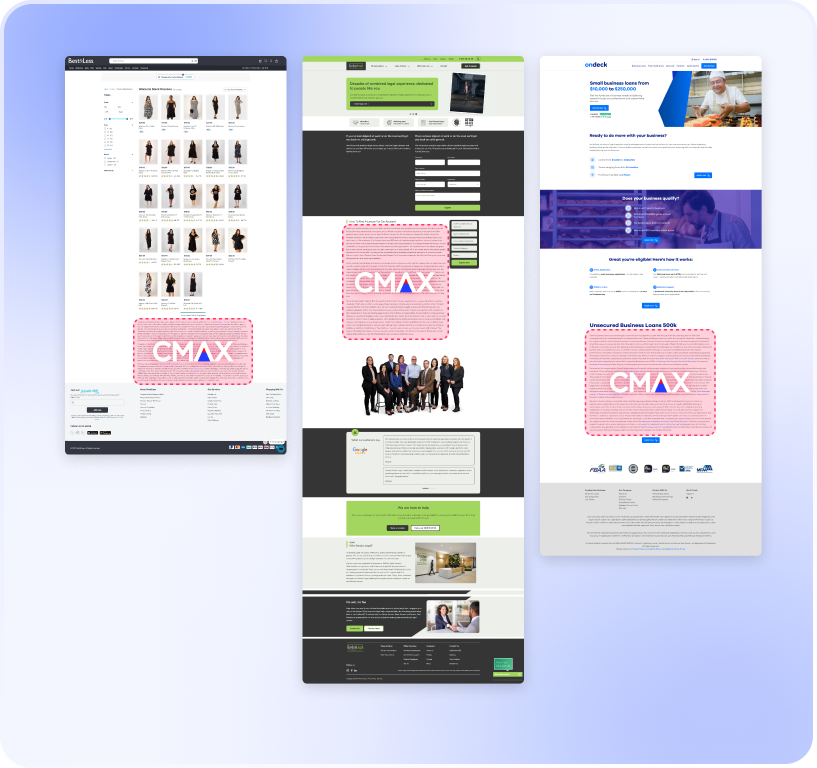
For LLM SEO Australia work, CMAX starts with what is already in Google Analytics and Search Console rather than a vague guess about what AI visibility means.
An AI LLM SEO Audit Shows Where Your Site Is Visible and Where It Is Missing From Search and AI Retrieval
Check Long-Tail Demand
Picture a hardware store with a single sign out front that reads “tools.” Inside, there are close to 400 product lines, and the tradie who drives twenty minutes knows exactly which socket set she wants.
If the sign only ever said “tools,” the store would still stock every variant, but it would only attract people searching for the obvious one.
In this context, LLM SEO means writing pages for the other 399 things your customers are already searching for. Most brands write the page for the obvious head term and leave the rest uncovered.
A competent audit identifies missing coverage across specific questions: for a homewares retailer, that might be “cotton versus bamboo towels” or “best bath sheets for hot sleepers.” Because LLM SEO depends on coverage across those narrower searches, a thin topic cluster can drop a site from the AI source set even when it holds a strong position on the broad term.
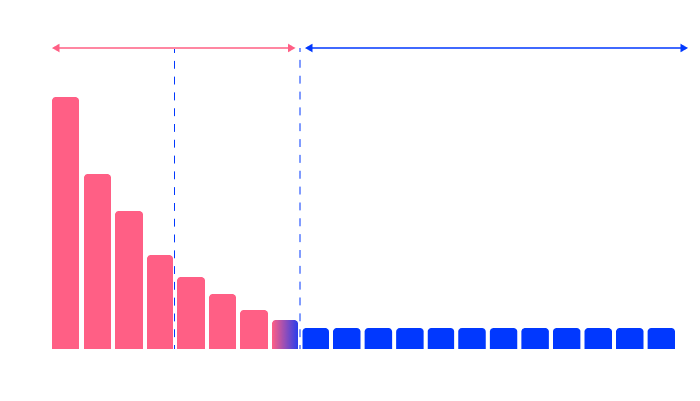
The real gap is rarely one keyword. Over 90% of search and AI demand is in the long tail: the specific, detailed searches people type, not the short category terms.
Using AI SEO tools to map that long-tail demand is where a proper LLM SEO optimisation programme begins.
Map Content Surface Area
An AI LLM SEO audit maps your pages against the phrases, subtopics, and formats real demand produces. Results sort into three groups: pages that answer the intent well, pages that mention the topic but fall short, and topics you don’t cover at all.
Content surface area is how many of the ways your customers search you actually have a useful answer for.
Google and AI systems can only retrieve pages they can discover and read. Thin or isolated content reduces the odds of being surfaced for related searches.
If you want to understand where LLM SEO services fit into this process, the answer starts with mapping that surface area before deciding what to build.
The Audit Looks Beyond Classic Position Tracking to the Signals That Affect Answer-Readiness
Review Retrieval Signals
A SEO technical audit checklist should cover crawlability, internal linking, citations, entity clarity, schema (hidden labels in a page’s code that tell Google what things are), and freshness. Those signals help search systems find a page, interpret what it covers, and connect it to related topics.
Google states that structured data gives explicit clues about the meaning of a page, and that a sitemap’s lastmod value may be used when consistently accurate to identify recently updated content. The SEO audit example that most surprises marketing teams is not a crawl error but a cluster of 40 answered customer questions sitting on pages too isolated to be retrieved.
Separate Strong and Weak Pages
Strong pages answer one clear intent, cover the follow-up questions a reader is likely to ask next, and sit inside a connected cluster. Heading structure, supporting evidence, and internal context are what a technical SEO audit consultant uses to distinguish a strong page from a thin or generic one.
A Good Audit Helps You Decide What to Fix First and How to Measure Progress
Prioritise Fixes by Impact
Unlike prompt tracking alone, AI LLM SEO audits prioritise content gaps, stale sections, and Dynamic Internal Linking across real pages. A generative engine optimisation agency can then sequence those changes by likely impact.
For teams with limited capacity, an LLM SEO agency audit functions as a sequencing tool: it tells you which fixes will move the most pages before you spend a day writing. The best AI SEO tools surface that sequence from data rather than gut feel, which is where SEO ranking tools that monitor indexed coverage and crawl patterns earn their place in the workflow.
Measure Real Visibility Gains
Reliable LLM search engine optimisation measurement uses Search Console clicks, impressions, indexed coverage, crawl patterns, and page freshness. Search Console is Google’s free tool showing which searches your site appears for.
Prompt tracking works as a spot check, but progress should be judged by visibility signals tied to real pages, real queries, and real demand. Spot-checking ChatGPT is a reasonable gut check; it is not a measurement system.
Frequently Asked Questions
How Often Should I Run an AI Visibility Audit?
Run a baseline audit before any major content programme, site migration, or internal linking change. After that, cadence follows your site’s pace.
Brands publishing frequently, adding product or service pages, or competing in fast-moving categories need regular checks on coverage, freshness, and crawl behaviour. For slower-moving sites, an LLM SEO consultant can schedule quarterly or twice-yearly reviews to catch content gaps, schema issues, and stale pages.
Do I Need to Test Every AI Engine, or Is ChatGPT Enough?
One engine is not enough. Different tools retrieve and summarise differently, and most AI experiences still draw heavily from what ranks in Google.
What is generative engine optimisation? It is the work of making pages discoverable, interpretable, and useful across different answer interfaces.
Audit the underlying search visibility, entity clarity, and page readiness first. Then use a small set of AI spot checks to see how that visibility shows up in answer interfaces.
Can I Just Ask ChatGPT to Audit My Own Brand?
ChatGPT works as a quick sense check, not a full audit. Explaining what is technical SEO audit requires evidence from site data, crawl behaviour, indexed pages, and Search Console performance.
A proper set of LLM SEO audits separates visibility gaps from interpretation gaps: when an AI answer omits your brand, those are two different problems with different fixes. Grounding decisions in indexed coverage, internal links, and Search Console data makes an AI LLM SEO audit more useful than a standalone ChatGPT check.
A reasonable rule: use ChatGPT to notice a problem, use site data to diagnose it.
AI LLM SEO Audits Start With Coverage Gaps
Audits are most useful when they show where your site is thin, missing, or too isolated to be retrieved. You are usually not losing because another brand has better performance on one big term.
You are losing because they cover more of the specific searches you still don’t answer.
The practical question is content surface area. CMAX targets the majority of search demand that sits in the long tail: the specific, detailed searches below the obvious head terms.
It connects generative AI optimisation to the same practical work: broader coverage, fresher pages, and stronger internal connections. That applies across retail categories and specialised fields such as SEO for accountants.
CMAX is the Agentic SEO Platform, trained on human-reviewed, client-approved content, and our agents use purpose-built auditing and analysis capabilities to surface the gaps that a manual review would miss.
Most SEO programmes run by conventional agencies, using outdated methods, tell clients to expect results in six months. CMAX’s methods allow clients to start seeing clicks in 6 to 8 weeks.
The most useful next step is to see your own numbers. If you’re curious as to how you’re performing on AI, book in a Missing Customer Map review with our Growth Team.
Author
Jeremy Tang
Founder and CEO of CMAX
Jeremy Tang is the Founder and CEO of CMAX. With over 2 decades of experience in business consulting and digital marketing, he has successfully driven seven startup businesses, six of which achieved $1 million in revenue from zero in less than 16 months, 5 of which grew to multi-million dollar a year ventures without any external funding. Jeremy's expertise lies in streamlining business processes through technology and leveraging digital (in particular SEO) for business growth. He resides in Australia, travels extensively, and draws inspiration from his global experiences.