Most agencies pitching AEO Australia agency services are running the same rank tracking they always have, just with a new label on the report. The real test is whether a provider can show you what AI systems are actually citing, which prompts trigger visibility, and whether any of that activity connects to qualified traffic or revenue. If you cannot separate citation measurement from traditional rankings, you cannot evaluate the pitch. CMAX works with Australian enterprises on exactly this kind of structured, measurable answer-engine programme.
Genuine AEO capability appears in the operating method.
Separate citations from rankings
AI citation visibility and traditional rank tracking measure different things. An aeo agency builds its method around this distinction from the start. Answer engines select sources based on how they interpret a prompt, extract specific claims, and assess page relevance to that query, not on where a URL sits in blue-link results. AEO (aeo meaning answer engine optimisation) capability shows up in whether a provider can track these citation events independently. A page can rank on page one and never appear in a cited answer. Another can sit outside the top ten and be pulled repeatedly into AI responses.
When evaluating an aeo Australia agency, understanding aeo vs SEO is essential because answer engines select sources based on prompt interpretation and claim extraction rather than the ranking signals that traditional SEO optimises for.
A credible aeo Australia agency treats these as separate measurement problems with separate reporting views. If a pitch deck shows only ranking movement as evidence of AEO performance, that’s a signal the agency hasn’t separated the two disciplines.
Define controls before rollout
Before any content goes live, an Australian AEO engagement should have the audit scope, content controls, review gates, and reporting rules locked in. That structure lets teams verify answer-focused pages and edits against four criteria: claim accuracy, approval status, structured consistency, and measurement readiness.
This matters more in Australia than the framing might suggest. Regulated industries, brand language requirements, and legal sign-off paths vary by sector and can affect what an answer engine is permitted to surface on your behalf. Setting review gates before rollout, rather than retrofitting them after content is published, keeps the programme auditable and reduces the risk of a cited answer carrying a claim that hasn’t cleared the right approvals.
The right reporting shows whether answers influence demand.
Track systems, prompts, and pages
Citation tracking only earns its place in a reporting stack when it captures three things: which AI systems are citing your pages, which prompt patterns trigger that visibility, and which URLs are being selected repeatedly as answer sources. Citation tracking should cover systems readers actually use, such as Perplexity Australia queries, to see which prompts surface your pages.
Without that granularity, you cannot tell whether your coverage is concentrated on commercially relevant topics or scattered across low-value, off-brief queries that happen to mention your domain. A report that shows citation volume without prompt-level or URL-level detail gives you a number with no diagnostic value. Standard SEO for Australia still matters, but citation tracking adds a layer traditional dashboards miss.
A credible AEO agency will log this data systematically, testing defined prompt sets across relevant AI systems and mapping results back to priority pages and topics. The optimisation Australia teams run should include answer-ready page checks alongside conventional indexation. An aeo Australia agency that tracks citation visibility across AI systems will often encounter overlapping disciplines such as GEO generative engine optimisation, which similarly focuses on how generative platforms surface and attribute content in response to conversational queries.
Link answers to business outcomes
Visibility in an AI answer is only commercially useful if it produces something measurable downstream. What separates an aeo Australia agency is whether reporting links cited answers to qualified sessions, assisted conversions, and answer-ready page indexation.
That connection lets you judge whether cited visibility is generating discoverable pages and commercially relevant visits. Ranking movement read in isolation cannot tell you that. A page can hold a strong position in blue-link results and still fail to appear in AI-generated answers on the prompts your buyers actually use.
The reporting structure should make that distinction visible. Qualified sessions and assisted conversions give a CFO-ready signal that cited answers are influencing demand, not accumulating impressions.
An Australian Agency Can Be Scored Consistently
Australian AEO Capability Scorecard
Scoring an aeo Australia agency starts with whether it can show a baseline, a clear method, controlled publishing, citation measurement, and outcome reporting. A simple scorecard cuts through competing pitches by checking those five things. If a proposal can’t show all five, it’s worth asking why.
Start with separation. A capable agency keeps AI citation tracking distinct from standard SEO rank reports and can explain what each view measures. Citation visibility tells you which AI systems are selecting your pages and on which prompts. Rank reports tell you where a page sits in blue-link results. Neither substitutes for the other.
Before any rollout begins, the agency should deliver an audit baseline covering current citation visibility, key page coverage, and answer-ready content gaps. Skipping this step means there’s no reference point to measure against later.
Content controls matter too, particularly in regulated categories. Changes to answer-focused pages should pass through defined review and approval gates before going live, covering regulated claims, brand language, and any content requiring legal sign-off.
Reporting should show cited pages, prompt patterns, and indexation status. That combination tells you which topics are surfacing in AI responses, which URLs are being selected, and whether priority pages are even eligible to appear.
Whether the query is aeo Sydney or a national brief, the same scorecard criteria apply. The same capability scorecard used to evaluate an agency applies equally when shortlisting an aeo agency Sydney, since documented baselines, citation measurement, and outcome reporting matter regardless of which city the provider operates from.
Finally, check the success metrics. Qualified sessions and assisted conversions should sit alongside citation counts. An agency accountable only for visibility screenshots has no skin in the commercial outcome.
The measurement plan reflects Australian governance and search behaviour, including local terminology, approval requirements, and the way national and location-based queries are phrased.
Australian market and governance fit
Australian governance requirements don’t sit outside the AEO brief, they shape it. An aeo Australia agency should shape its measurement plan around local terminology, approval paths, and national search behaviour before any prompt sets are finalised. Answer content that clears review in another market may need different wording, stronger evidence standards, or an entirely separate approval path before it can be published here. Regulated-claim categories, industry-specific disclosure obligations, and brand language that requires legal sign-off all affect what an answer-ready page can say and how quickly it can go live.
The measurement plan needs to reflect this. Governance requirements unique to aeo Australia engagements include regulated-claim review and national search behaviour mapping, so prompt sets should be built around the way Australian audiences actually phrase national and location-based queries. A prompt pattern that surfaces your pages in one market won’t automatically transfer. Terminology shifts, search intent shifts, and the pages that answer engines select shift with them.
An agency that treats Australian market fit as a footnote will produce citation tracking that misses the queries your buyers are actually running. The brief should specify which regulated claim categories apply, which approval gates sit between a content edit and publication, and which prompt patterns reflect genuine Australian search behaviour. Those inputs belong in the measurement plan from day one, not as a compliance layer added after rollout.
An aeo Australia agency operating in regulated or professional markets should be assessed with the same rigour applied to identifying the highest rated aeo agency within the consultancy sector Australia, where governance requirements, approval workflows, and evidence standards add measurable complexity to any citation-focused programme.
Proof matters more than relabelled SEO language.
CMAX proof point
Any agency can attach “AEO” to a service deck. The question is whether they can show what changed, by how much, and why. An Australia SEO agency that simply relabels its existing SEO package as “AEO” without adding citation measurement is offering a new name for the same deliverable.
In one CMAX engagement, a B2B omnichannel hospitality retailer added 5,000 long-tail product pages and generated over $1M per month in incremental SEO revenue within eight months. The mechanism was scaled, query-specific content matched to how buyers actually search, with before-and-after measurement to confirm the lift.
The same standard applies to AEO. An agency claiming answer-engine capability should be able to show citation visibility before rollout, citation visibility after, and the qualified sessions and assisted conversions that moved between those two points. Screenshots of AI mentions are not a result. A documented delta across tracked prompts, indexed pages, and commercial outcomes is.
Before committing to any provider, buyers researching an aeo Australia agency should ask how aeo services in Australia are scoped, baselined, and measured so that pilot results can be compared against real before-and-after citation and conversion data rather than relabelled SEO language.
Run a measured pilot first
Before committing to a full AEO engagement, run a scoped pilot with a defined baseline. That baseline should record current citation visibility, how many priority pages are indexed and answer-ready, qualified sessions arriving from answer-engine traffic, and assisted conversions attributed to those pages.
After a set period, the same metrics are measured again. If citation visibility has grown on commercially relevant prompts, if indexed pages have increased, and if qualified sessions have moved, the method is working. If those numbers are flat, you have that information before a larger budget is committed. A content agency Australia team contributing to the pilot should produce answer-ready pages that are structured for citation, not generic blog posts repurposed from an old editorial calendar.
An aeo Australia agency focused on AI-search visibility may also draw on GEO services Sydney when a client’s priority queries are concentrated in generative platforms that require location-aware, structured content to surface cited answers reliably.
Buyers who previously shortlisted a best SEO agency Australia now need to add citation measurement to their evaluation criteria. A pilot structured this way gives you something a ranking report never can: evidence that answer-engine work is changing discoverability and demand on topics you can actually track.
Frequently Asked Questions (FAQ)
What does an AEO audit include?
An AEO audit checks whether key pages are structured and written in ways answer engines can interpret clearly. From there, it maps gaps across citation visibility, indexation, content coverage, approval workflows, and reporting readiness. The output tells you which pages are eligible to appear as cited answers and which are not, and why.
How do you track AEO citations?
Citation tracking works by testing defined prompt sets across relevant AI systems and logging which brand, page, or domain is cited, how often it appears, which topics trigger it, and whether those mentions align with priority pages and commercially important queries. The prompt sets are the unit of measurement, not keyword rankings.
How long does it take to see results from AEO?
Results vary with crawl frequency, existing content quality, approval speed, and implementation scope. AEO is better assessed as an ongoing test-and-measure programme than as an immediate ranking-style win. A pilot with a defined baseline gives you the earliest reliable read.
How do you measure AEO success?
AEO success is measured through citation visibility, answer-ready page indexation, qualified sessions, and assisted conversions. That combination ties visibility gains to commercial activity rather than impressions alone. That structure is what makes an aeo Australia agency accountable for commercial signals, not visibility screenshots alone.
Are AEO agency services worth the cost?
AEO agency services are easier to justify when the engagement starts with a baseline and pilot. That structure lets you compare the cost against measured changes in cited answers, qualified traffic, and assisted revenue, rather than paying for a vague innovation layer with no before-and-after reference point.
Whether a buyer is assessing a national provider or a leading aeo agency Melbourne, the same FAQ criteria apply: can the aeo Australia agency show a documented audit, tracked citation changes, and commercially attributable outcomes from a structured pilot?
AEO Needs More Than a New Label, It Needs a Platform Built for It
Most agencies offering AEO in Australia are running the same SEO playbook with a fresh coat of paint.
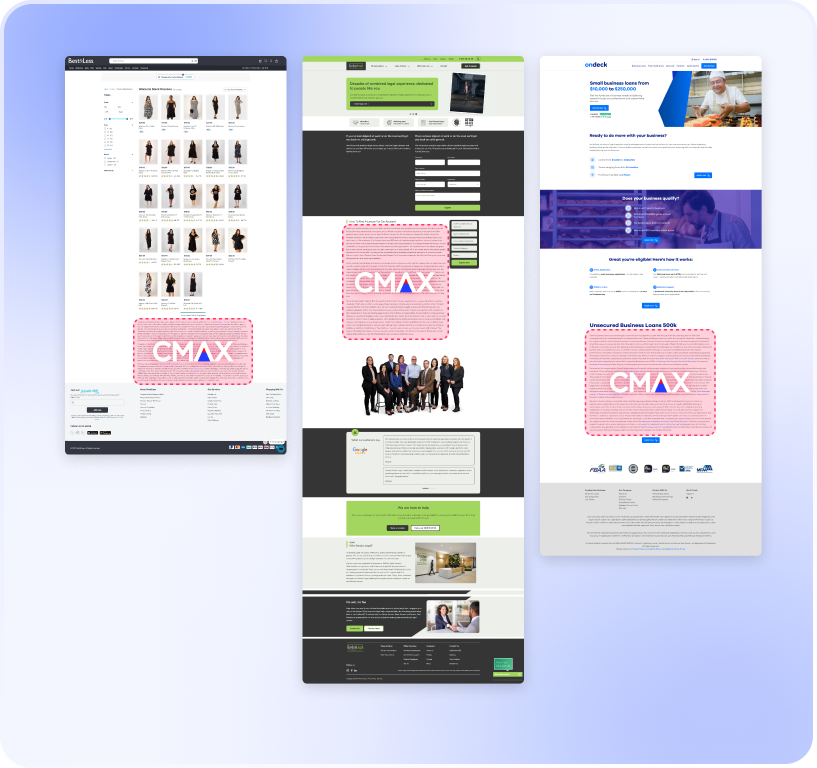
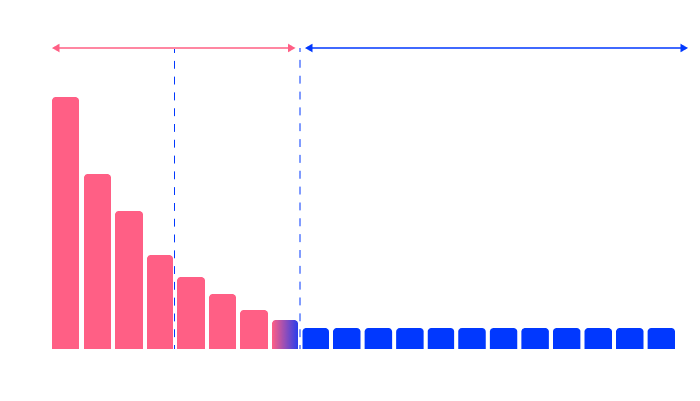
CMAX is an agentic SEO platform purpose-built to capture the long-tail demand that AI search surfaces, the 90% of queries most businesses never target. Our agents deploy and continuously update content across thousands of keyword variations with just two lines of code, so your pages appear where AI systems pull cited answers. Teams running CMAX have reported measurable traction within six weeks, tracked through citation visibility, indexed coverage and assisted conversions, not vanity rankings.
If you’re evaluating AEO capability for the Australian market, the question isn’t who talks about AI search, it’s who can show before-and-after proof that it moved qualified demand.
Author
Jeremy Tang
Founder and CEO of CMAX
Jeremy Tang is the Founder and CEO of CMAX. With over 2 decades of experience in business consulting and digital marketing, he has successfully driven seven startup businesses, six of which achieved $1 million in revenue from zero in less than 16 months, 5 of which grew to multi-million dollar a year ventures without any external funding. Jeremy's expertise lies in streamlining business processes through technology and leveraging digital (in particular SEO) for business growth. He resides in Australia, travels extensively, and draws inspiration from his global experiences.